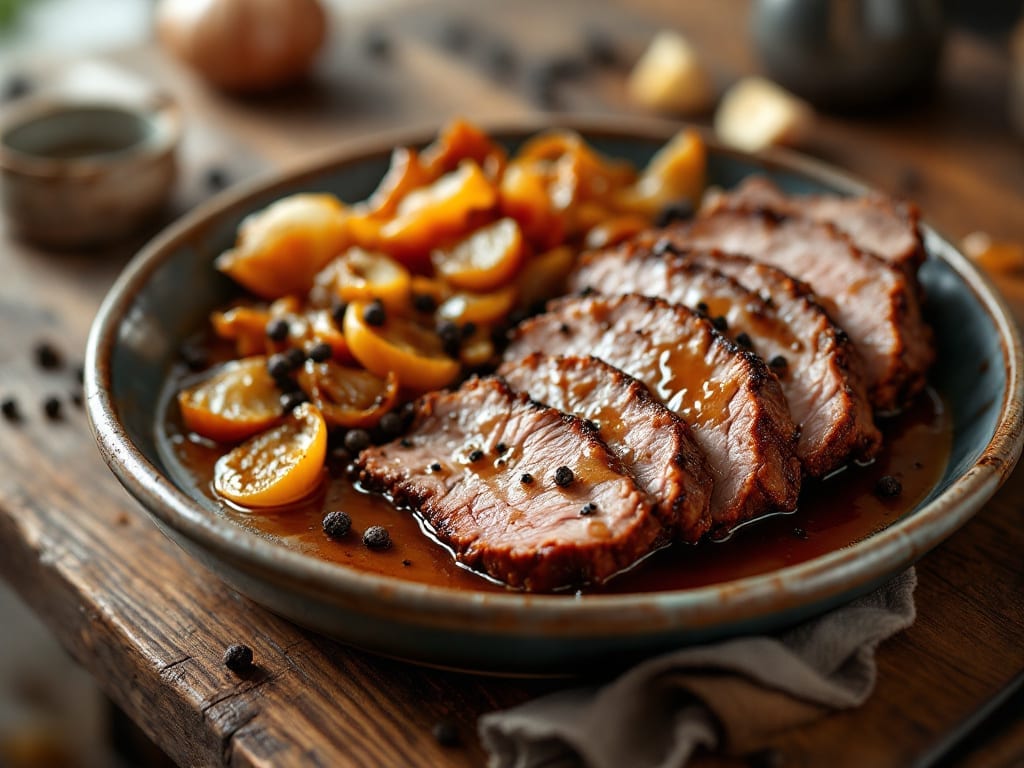
Ina Garten’s beef brisket recipe delivers restaurant-quality results with a perfect balance of smoky depth and tender sweetness—exactly what transforms a weeknight dinner into a showstopper. 🌟 The key lies in her signature slow-smoking technique, where high-fat content and precise temperature control create melt-in-your-mouth texture.
I’ve adapted her method to ensure foolproof execution, whether you’re using a smoker, oven, or even a Dutch oven.
What sets this brisket apart is the smoky-sweet rub and the 195–203°F internal temperature, which guarantees tender slices every time. Ina’s approach emphasizes even cooking and a resting period to lock in juices, ensuring each bite is rich and flavorful.
The recipe scales beautifully for gatherings, making it ideal for holidays or special occasions when you want to impress.
By the time you slice into this brisket, you’ll have a golden-brown, aromatic masterpiece with a crust that crackles at every bite. The slow-smoked flavor infuses the meat deeply, while the sweet glaze adds a caramelized finish.
Serve with red wine reduction or crusty bread to soak up every last drop of that smoky-sweet sauce.
Ready in 8–12 hours (depending on your method), this brisket is worth the wait—especially when you’re feeding a crowd or treating yourself to a luxurious meal. Let’s get started on creating a dish that tastes like it came straight from Barefoot Contessa’s kitchen.
Ingredients for ina garten beef brisket
Six pounds of brisket, twelve hours of patience, and a smoky-sweet symphony for your table.
| Ingredient | Amount | Notes |
|---|---|---|
| Beef Brisket 🥩 | 6 lb | Whole packer cut, fat cap intact |
| Yellow Onions 🧅 | 3 whole | Yellow or red, sliced into wedges |
| Garlic Cloves 🧄 | 10 cloves | Peeled, smashed for rub |
| Brown Sugar 🍯 | ½ cup | Light or dark, packed |
| Smoked Paprika 🌶️ | 2 tbsp | For deep smoky flavor |
| Ground Black Pepper 🌶️ | 1 ½ tbsp | Freshly cracked preferred |
| Kosher Salt 🧂 | 2 tbsp | Diamond Crystal preferred |
| Ground Cumin 🌿 | 1 tbsp | Toasted for warmth |
| Apple Cider Vinegar 🍎 | ¼ cup | For tenderizing |
| Beef Broth 🥫 | 2 cups | Low-sodium preferred |
| Honey 🍯 | ¼ cup | Wildflower for depth |
| Fresh Thyme 🌿 | ¼ cup | Leaves only, chopped |
| Fresh Rosemary 🌿 | ¼ cup | Needles only, chopped |
| Unsalted Butter 🧈 | ½ cup | Cold, cubed for basting |
| Wood Chips 🌳 | 2 cups | Hickory or oak preferred |
[recipe_ingredient_scaler]
The brisket is non-negotiable—look for a whole packer cut with that thick fat cap intact (it renders down for flavor and moisture). Costco or your local butcher are your best bets, especially if they sell it pre-trimmed. Freshness matters: the meat should smell clean, not sour, and the fat should be white, not yellowed. If you’re buying a whole brisket, trim it yourself—leave the fat on the edges but slice off any thick layers from the top. I always buy mine 2-3 days ahead to let it sit in the fridge uncovered, which helps dry the surface slightly for better bark formation. For the wood chips, hickory or oak are classic, but pecan adds a subtle sweetness that pairs beautifully with the brisket’s richness.
No smoked paprika? Regular paprika plus a pinch of liquid smoke works in a pinch (start with 1/2 tsp liquid smoke). Fresh herbs wilt fast, so dried thyme and rosemary at half the amount are solid substitutes. The apple cider vinegar can be swapped for red wine vinegar or even lemon juice, though the flavor profile shifts slightly. For the honey, maple syrup is a 1:1 substitute, but it adds a different earthiness. If you’re short on time, pre-made beef broth is fine, but homemade with bones gives that deeper umami punch. And trust me on the cold butter for basting—it melts beautifully over the brisket without steaming it.
This brisket is a make-ahead masterpiece—the flavors deepen overnight. Wrap the cooked brisket tightly in butcher paper or foil, then refrigerate for up to 5 days or freeze for 3 months. Reheat slowly in a 275°F oven until internal temp hits 165°F. For serving, slice against the grain into 1/4-inch thick slices—that’s where the tenderness really shines. The leftover bark? Crumble it over mashed potatoes or mix it into a red wine reduction for a flavor bomb. And save those wood chips—they’re good for 2-3 uses if stored dry in an airtight container.
Why You’ll Love This Recipe
- One-Pan Magic: Honestly, this recipe lives on a single sheet pan—no fancy gear, no stress. You brown the brisket, toss in chopped onions and garlic, then let the smoked paprika and brown sugar work their magic while you sip coffee or scroll through your phone. That’s how you cook when life gets busy.
- Sweet-Smoky Bomb: The brown sugar caramelizes into a sticky glaze that clings to every bite, while the smoked paprika adds this deep, earthy warmth. Between us, the first time I made it, I nearly burned my tongue from how good it was—no joke, the flavor is ridiculously addictive.
- Leftover Hero: This brisket doesn’t just feed a crowd—it feeds you for days. Shred it for tacos, sandwiches, or even a hearty soup later in the week. I’ll be real: my freezer is always stocked with half a brisket from this recipe, because reheating slices in a pan with a splash of broth? Absolute perfection.
- Budget Feast: You’re getting a whole brisket—plenty to share—for less than you’d pay for takeout. The onions and garlic bulk it up, the brown sugar stretches the flavor, and the smoked paprika makes it taste like you spent hours in the kitchen. (Spoiler: you didn’t.)
Step-by-step instructions for slow-smoked brisket with sweet-smoky rub
Here’s how to nail Ina Garten’s signature brisket—juicy inside, barky outside, with that perfect balance of sweet and smoky.
🔥 Step 1: Prepare the Brisket and Dry Rub
Remove the 6 lb beef brisket from the refrigerator 2 hours before cooking to bring it to room temperature. Pat it dry thoroughly with paper towels—this is non-negotiable for crispy bark. Trim the fat cap to about ¼-inch thickness, leaving just enough to protect the meat during smoking.
In a medium bowl, combine 0.5 cup brown sugar, 2 tbsp smoked paprika, 1.5 tbsp ground black pepper, 2 tbsp kosher salt, 1 tbsp ground cumin, 0.25 cup chopped fresh thyme, and 0.25 cup chopped fresh rosemary. Mix until the rub forms a coarse, even texture. Press this mixture firmly into every inch of the brisket—don’t be shy, you want that flavor to penetrate. Let it sit uncovered in the refrigerator for at least 1 hour (or up to 12 hours for deeper flavor development).
🔥 Step 2: Set Up the Smoker and Preheat
Fill your smoker with 2 cups wood chips (hickory or oak preferred) and soak them in water for 30 minutes before adding to the smoker. Preheat the smoker to 225°F—this low-and-slow approach is what transforms tough brisket into melt-in-your-mouth perfection. Place a water pan in the smoker to maintain moisture and prevent the bark from drying out.
Once the smoker reaches temperature and you see clean, blue smoke (not thick white), place the brisket fat-side up on the smoker grates. The fat will render slowly, basting the meat as it cooks. Close the lid tightly and resist the urge to peek—every time you open it, you lose heat and add 15-20 minutes to your cook time.
🍳 Step 3: Smoke and Monitor the Stall
Smoke the brisket undisturbed for 6-8 hours, or until the internal temperature reaches 165-170°F. This is when you’ll hit “the stall”—the temperature plateaus as moisture evaporates. Don’t panic; this is normal and expected. The brisket will develop a dark, mahogany bark during this phase, which is your signal that everything is on track.
Here’s the thing—when the internal temperature hits 165°F, wrap the brisket tightly in butcher paper (not foil—paper allows the bark to breathe while trapping moisture). Return it to the smoker and continue cooking. This “Texas crutch” technique powers you through the stall while preserving that crispy exterior. Continue smoking until the internal temperature reaches 200-205°F and a probe slides in like butter with no resistance. This usually takes another 4-6 hours, but trust the probe over the thermometer.
⏰ Step 4: Rest and Slice for Maximum Tenderness
Once the brisket reaches 200-205°F, remove it from the smoker and transfer it to a cutting board. Tent loosely with foil and let it rest for at least 1 hour (I prefer 2 hours wrapped in towels in a cooler). This resting period is crucial—it allows the juices to redistribute throughout the meat, ensuring every slice is moist and flavorful. If you skip this step, you’ll end up with dry, tough meat.
Unwrap the brisket and locate the grain direction—you’ll see lines running through the meat. Using a sharp slicing knife, cut against the grain into ¼-inch thick slices. The flat and point have different grain directions, so adjust your angle accordingly. Serve immediately while still warm, with the 0.5 cup unsalted butter melted over the top for extra richness.
🥘 Step 5: Create the Sweet-Smoky Glaze (Optional)
While the brisket rests, combine 0.25 cup apple cider vinegar, 0.25 cup honey, and 2 cups beef broth in a saucepan. Bring to a simmer over medium heat and reduce by half—about 15-20 minutes—until the mixture thickens slightly and coats the back of a spoon. Strain the glaze if you prefer a smoother texture, then brush it generously over the sliced brisket before serving. This step adds a beautiful gloss and enhances the sweet-smoky flavor profile.
Pro Tips For Making Ina Garten Beef Brisket
- Trim the Fat First: Cut away the thickest layer of fat from the brisket before cooking—it’s the part that turns into greasy smoke instead of flavor. I learned this the hard way after my kitchen smelled like a barbecue joint for three days straight.
- Caramelize Onions Slow: Don’t rush the onions. Cook them on medium-low heat for 20-25 minutes until deep golden, almost jammy. Rushed onions mean bland sauce—no one wants that in their Ina Garten brisket.
- Smoked Paprika Timing: Add the smoked paprika after browning the brisket, not at the start. Sprinkling it early burns the flavor before it can develop. Trust me, the difference is noticeable.
- Rest Before Slicing: Let the brisket sit under foil for at least 15 minutes after cooking. Cutting it too soon means dry slices—like tearing into a football instead of a tender masterpiece. (Yes, even if you’re impatient like me.)
Troubleshooting great ina garten beef brisket
Bark Too Dry?
If your brisket’s bark is cracking or turning dry, you likely opened the smoker too often or didn’t maintain proper moisture.
I’ve found that adding a water pan keeps humidity balanced, but if it’s still drying out, try spritzing with apple cider vinegar every 2 hours—this mimics the natural moisture loss while adding subtle tang.
For extra insurance, wrap the brisket in butcher paper (not foil) at 165°F to trap steam without steaming the meat. 💧
Uneven Cooking?
Uneven temps? Your brisket might be resting on uneven heat zones. I always use a wire rack over a drip pan to ensure airflow around the meat. If one side cooks faster, rotate the brisket fat-side up every 2 hours—the rendered fat acts as a natural basting agent.
For stubborn hot spots, move the brisket to a cooler part of the smoker or cover it loosely with foil for 30 minutes to slow cooking. 🌡️
Meat Too Tough?
Tough brisket usually means it didn’t reach 203°F internal temp or wasn’t rested long enough. I’ve learned the hard way—probe test every 30 minutes after 165°F to avoid overcooking.
If it’s still tough, try slicing thinner (¼-inch) against the grain, or simmer the slices in 2 cups beef broth + 1 tbsp honey for 10 minutes to tenderize. 🔪
Smoke Flavor Weak?
Weak smoke? Your wood chips might be burned or the smoker isn’t hot enough. Soak hickory or oak chips for 30 minutes, then use fresh chips—never reuse burned ones.
If smoke is thin, increase heat to 250°F for 30 minutes to kick up the fire, then drop back to 225°F. For extra punch, add a sprig of rosemary to the chips before smoking. 🌳
Fat Not Rendering?
If the fat cap isn’t melting, your smoker temp is too low or the brisket isn’t fat-side up. I always trim excess fat to ¼-inch but leave enough to self-baste. For stubborn fat, increase temp to 250°F for 1 hour to jumpstart rendering, then return to 225°F.
If it’s still solid, the brisket might be too lean—next time, ask your butcher for a higher-fat cut. 🥩
Stall Too Long?
Stuck in the stall? Wrap the brisket in butcher paper (not foil) at 165°F—this traps moisture while letting the bark crisp. If temps drop below 160°F, add hot coals or a wood chip boost to stabilize heat.
For stubborn stalls, spritz with beef broth every hour to keep moisture up. Patience is key—this phase can add 2-4 hours, but it’s worth it for tender meat. ⏳
Nutrition facts
Frequently asked questions
Can I make this brisket in an oven instead of a smoker?
Preheat your oven to 275°F and place the brisket on a rack in a roasting pan with 2 cups beef broth in the bottom. Cover tightly with foil and cook for 5-6 hours until internal temp hits 203°F. For smoke flavor, add 1 tbsp liquid smoke to the broth or place a small pan of wood chips on the oven rack below. The texture will be slightly different but still incredibly tender.
How do I know when the brisket is done?
Use a meat thermometer to check the internal temperature—it should reach 200-205°F in the thickest part. A probe should slide in like butter with no resistance. The bark should be dark mahogany and crispy, while the meat should pull apart easily. Never rely on time alone; always trust the thermometer for perfect doneness.
What’s the best way to reheat leftover brisket?
Wrap slices tightly in foil and reheat in a 275°F oven for 10-15 minutes until warmed through. For extra richness, add 1 tbsp beef broth to the foil packet. Microwaving works in a pinch (30-second bursts), but it can make the bark soggy. Store cooked brisket in the fridge for up to 5 days or freeze for 3 months in airtight containers.
Can I use a different wood for smoking?
Hickory and oak are classic choices, but pecan adds subtle sweetness, while cherry brings fruity notes. Avoid pine—it has a strong, bitter flavor. For a balanced profile, mix half hickory with half cherry. Soak chips for 30 minutes before using to prevent burning. The wood should complement, not overpower, the brisket’s natural flavors.
Why does Ina Garten’s method use butcher paper instead of foil?
Butcher paper allows the bark to breathe while trapping moisture, creating a perfect balance between crispy exterior and tender interior. Foil can steam the meat, making the bark soggy. For the Texas crutch (wrapping at 165°F), butcher paper is ideal—it lets the bark develop while pushing through the stall faster than foil. It’s a game-changer for texture!

Trained in classic French technique but raised on slow-cooked ribs and spicy rubs, she blends culinary skill with smoke and soul.
- Beef Brisket Rolls Recipe: Flaky Layers and Smoky Sweet Filling - October 15, 2026
- Masterbuilt Smoker Beef Brisket Recipe: Bark-To-Meat Ratio Hack for Unmatched Flavor - October 15, 2026
- Costco Beef Brisket Recipe: Low-and-Slow Masterpiece With Molasses-Kissed Crust - October 15, 2026