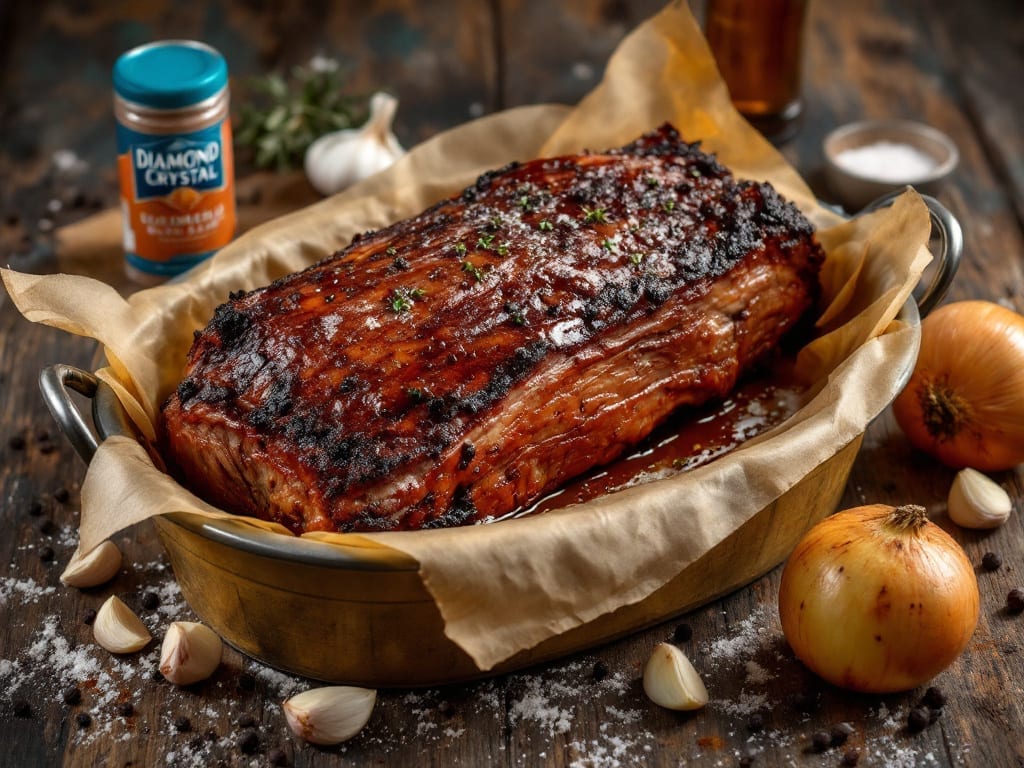
A molasses-infused brisket brine transforms tough beef into melt-in-your-mouth perfection in just 24 hours—no guesswork, no overcooking. Growing up, I learned from my grandfather that the secret to Texas-style brisket isn’t just smoke or heat; it’s the slow, deep penetration of flavor that happens long before the fire even lights.
This method guarantees tender, juicy brisket with a caramelized bark and layers of sweetness that’ll have your guests begging for seconds.
The process starts with a 24-hour brine that uses molasses, brown sugar, and spices to break down connective tissue while infusing deep, smoky-sweet flavor.
After brining, you’ll smoke the brisket low and slow—225°F for 12 hours—until it hits 203°F internal temperature, then rest it to let all those juices redistribute. The result?
A brisket so tender it falls apart at the touch, with a crust that’s crispy enough to stand up to a fork. Every bite delivers that perfect balance of molasses richness and smoky depth.
This isn’t just another brisket recipe—it’s a foolproof method that delivers restaurant-quality results at home, whether you’re smoking it in a backyard pit, using a slow cooker, or even sous-vide for extra precision.
The molasses brine cuts through the natural gameiness of brisket while adding a caramelized sweetness that pairs beautifully with classic sides like creamy mac and cheese or tangy coleslaw. Once you try this, you’ll never settle for dry, tough brisket again.
Ready to master the art of brisket? The key is patience—both in the brining and the cooking. But trust me, the payoff is worth every minute. Let’s get started on a brisket that’ll have everyone at the table asking for the recipe.
Ingredients for beef brisket brine
Four pounds of brisket meets molasses magic for brisket so tender it melts at first bite.
| Ingredient | Amount | Notes |
|---|---|---|
| Beef Brisket 🥩 | 4 lb | Packer cut, flat half preferred |
| Dark Molasses 🍯 | 1 cup | Unsulphured for best flavor |
| Light Brown Sugar 🍚 | 1 cup | Packed, not granulated |
| Diamond Crystal Kosher Salt 🧂 | 1 cup | Not table salt equivalent |
| Black Peppercorns 🌶️ | 1 tbsp | Freshly cracked preferred |
| Garlic Cloves 🧄 | 6 cloves | Smashed, not minced |
| Yellow Onion 🧅 | 1 whole | Quartered, skin on |
| Fresh Thyme Sprigs 🌿 | 4 sprigs | Or 1 tbsp dried thyme |
| Fresh Bay Leaves 🍃 | 2 whole | Dried works in pinch |
| Apple Cider Vinegar 🍎 | ½ cup | For tenderizing acidity |
| Beef Broth 💧 | 2 cups | Low-sodium preferred |
| Cold Water 💧 | 3 cups | Use filtered if possible |
| Worcestershire Sauce 🍶 | 1 tbsp | Reynolds preferred |
[recipe_ingredient_scaler]
The brisket is non-negotiable—packer cut, flat half if you can find it. Costco or your local butcher are the best bets; ask for the fat cap left on. The molasses? Grocery store brands work**, but Anthony’s Goods or Lyle’s are worth the splurge for that deep, smoky sweetness. Brown sugar should be packed—tap the measuring cup to settle it. For the salt, Diamond Crystal kosher is a must; it dissolves better than table salt and won’t over-salt your brine. The garlic and onion add depth, but don’t skip the thyme and bay leaves—they’re the secret to that restaurant-quality aroma.
No molasses? Maple syrup plus 1 tsp smoked paprika gets you close, though it won’t caramelize the same. Short on time? Cut the brine to 12 hours, but don’t skip it entirely—even 4 hours helps. The apple cider vinegar is key for tenderizing, but lemon juice works in a pinch. Worcestershire adds umami, but soy sauce at half the amount works if you’re out. The beef broth should be low-sodium; if yours isn’t, dilute it with water. And trust me on the cold water—hot water speeds up the brine but can cook the meat slightly.
This brine keeps in the fridge for up to 3 days if you want to prep ahead. Use a large, non-reactive container—I like those Cambro containers from restaurant supply stores. Once brined, pat the meat dry and let it sit uncovered in the fridge for 30 minutes before cooking. The brisket will last in the fridge for 3-4 days post-brine, but it’s best smoked within 24 hours. For leftovers, slice against the grain and reheat with a splash of beef broth—game changer for sandwiches.
Why You’ll Love This Recipe
- One brisket = three meals: shredded tacos, sandwiches, and next-day nachos. Between us, the second day is often better—the flavors meld into pure comfort, and it’s half the cost of takeout.
- No-Fuss Prep: I swear by this brine—just toss the brisket in a bag with molasses, salt, and peppercorns, then let the fridge do the work. No measuring cups, no stress, and zero cleanup until it’s time to cook.
- Deep, Smoky Magic: That molasses-sugar-salt combo? It turns tough brisket into something tender with a crust so rich, it’ll make your taste buds sing. Honestly, the first bite feels like a hug from a smoker pit.
- Weekend Feast Ready: Make this brine on Sunday, then slow-cook the brisket all day—perfect for game day, potlucks, or when you’re hosting people who think they know BBQ. (They won’t guess it’s brined.)
Step-by-step instructions for molasses-infused brisket brine
This brining method transforms tough brisket into fork-tender perfection through precise science and bold flavors.
Prepare the Brine Solution
In a large non-reactive container (I prefer a food-grade plastic bucket), combine the 3 cups cold water, 2 cups beef broth, 1 cup dark molasses, 1 cup light brown sugar, 1 cup diamond crystal kosher salt, 1 tablespoon black peppercorns, 6 smashed garlic cloves, 1 whole yellow onion (quartered with skin on), 4 sprigs fresh thyme, 2 whole fresh bay leaves, 0.5 cup apple cider vinegar, and 1 tablespoon Worcestershire sauce.
Use a long wooden spoon to stir vigorously until all ingredients are fully dissolved and the salt completely disintegrates. The molasses will create a thick, syrupy consistency—this is exactly what we want for maximum flavor penetration. Let the mixture sit for 10 minutes at room temperature to allow the aromatics to infuse fully.
Submerge the Brisket Completely
Rinse the 4 lb beef brisket thoroughly under cold water and pat it completely dry with paper towels. This step is crucial—any moisture left on the surface will dilute the brine’s effectiveness. Place the brisket in a zip-top bag or large container that can accommodate it fully submerged.
Pour the prepared brine over the brisket, ensuring it’s completely submerged. If using a bag, seal it tightly and press out any air bubbles. If using a container, weigh down the brisket with a plate or brining rack to keep it fully immersed. Place in the refrigerator for 24 hours—this full immersion period guarantees even moisture distribution and deep flavor infusion throughout the meat.
Monitor and Adjust the Brine
After 12 hours, check the brine level. The brisket will absorb liquid, so you may need to top it off with additional cold water to maintain complete submersion. Gently press down on the brisket to ensure it remains fully covered. This adjustment prevents surface drying while maintaining the proper brine concentration.
For the final 12 hours, the brisket should remain undisturbed in the refrigerator. The ideal brine temperature should stay between 34°F and 38°F—this cold range prevents bacterial growth while allowing the molasses and seasonings to work their magic. The brisket will develop a beautiful mahogany color and absorb enough moisture to become incredibly tender when cooked.
Prepare for Cooking
After 24 hours, remove the brisket from the brine and rinse it thoroughly under cold water to remove any residual brine. Pat it dry again with fresh paper towels—this step is essential for developing a proper crust during cooking. Let the brisket sit at room temperature for 1 hour before cooking to ensure even heat distribution.
The brisket should now be noticeably softer to the touch and infused with deep, complex flavors from the molasses, spices, and aromatics. This preparation transforms what would normally be a tough cut into melt-in-your-mouth perfection. Now it’s ready for your preferred cooking method—whether that’s smoking, braising, or slow roasting.
Pro Tips For Making Beef Brisket Brine
- Trim the Fat First: Skip the brine if you don’t trim the thick fat cap—it’ll turn greasy and uneven. Use a sharp knife to shave it down to about ¼-inch; this lets the molasses and salt penetrate better and keeps the crust crisp where it matters.
- Dissolve the Molasses: I used to toss molasses in cold and wonder why it clumped. Warm the brine liquid (water + sugar) to 160°F—just until the molasses blends smoothly. No lumps, no bitter pockets, and the flavor spreads evenly.
- Salt the Brisket Twice: Don’t rely on the brine alone—pat the brisket dry after removing it, then hit it with a fresh layer of kosher salt and cracked peppercorns. This guarantees a better crust and deeper flavor penetration than soaking alone.
- Use a Scale, Not Cups: Diamond Crystal kosher salt measures differently than table salt. Weigh your ¼ cup—it should be about 60 grams. Too little, and the brine tastes flat; too much, and you’ll end up with a salty brick. (Yes, I’ve done both.)
Regional styles of this beef brisket brine
Texas Pitmaster Style
This is where brisket brining gets its soul—deep, smoky, and slow-cooked over post oak or pecan wood for that iconic Texas flavor. After brining, I smoke the brisket at 225°F for 12-16 hours until it hits 203°F internal temperature.
The molasses brine pairs perfectly with Texas-style cooking, creating a caramelized bark that contrasts beautifully with the tender, juicy interior. I like to sprinkle coarse kosher salt and smoked paprika on the surface right before it hits the smoker for that extra crust. 🔥
Carolina Mustard Cut
In the Carolinas, they take brining to the next level by adding 2 tablespoons of yellow mustard to the brine for a tangy kick. The mustard tenderizes the meat while adding a bright acidity that cuts through the richness.
After brining, they often wrap the brisket in butcher paper during the last 2 hours of cooking to speed up the process without steaming the meat. The result? A brisket with a slightly sticky bark and a flavor profile that’s both sweet and tangy.
I’ve seen this style win awards at competitions!
Kansas City Sweet & Spicy
Kansas City loves their brisket brined with 1/4 cup of bourbon and 1 tablespoon of cayenne pepper for a spicy-sweet twist. The bourbon adds depth while the cayenne brings heat that lingers on the palate.
After brining, they often finish the brisket with a dry rub of brown sugar and chili powder before smoking. The smoke flavor in KC tends to be hickory-heavy, which pairs beautifully with the molasses brine.
For an extra kick, I like to add 1/2 teaspoon of ground cinnamon to the brine—it’s a secret I picked up from a Kansas City pitmaster.
New York Deli Approach
If you’re craving that classic corned beef brisket flavor, swap the molasses for 1 cup of beef broth and add 1/4 cup of apple cider vinegar and 1 tablespoon of coriander seeds to the brine.
After brining, slice the brisket thinly against the grain and serve on rye bread with mustard—just like a New York deli. The molasses can still be used, but reduce it to 1/2 cup and add 1/4 cup of honey for a sweeter, less smoky profile.
This style is perfect for sandwiches and quick meals. 🥪
Modern Sous-Vide Twist
For those who love precision, brining followed by sous-vide cooking is a game-changer. After the 24-hour brine, vacuum-seal the brisket and cook it at 160°F for 24 hours before searing it in a cast-iron skillet to develop that crust.
The molasses brine ensures the meat stays incredibly tender while the sear adds texture. I use a Anova Precision Cooker for this method, and it’s become a favorite for weeknight meals. The brisket comes out so tender, it’s almost like butter!
Nutrition facts
Frequently asked questions
Can I use a shorter brining time than 24 hours?
The full 24-hour brine guarantees maximum tenderness and flavor penetration, but you can cut it to 12 hours in a pinch. For best results, don’t go under 8 hours—the molasses and spices need time to work their magic. If short on time, consider a dry brine (just salt and spices) for 12 hours before cooking.
What’s the best way to store leftover brined brisket?
Wrap the cooked brisket tightly in plastic wrap or aluminum foil, then store it in an airtight container in the fridge for 3-4 days. For longer storage, freeze it for up to 3 months. To reheat, slice against the grain and warm gently with a splash of beef broth—this keeps it moist and flavorful. Never reheat dry!
Can I adjust the sweetness in the brine?
Reduce the molasses to ½ cup and add ¼ cup honey for a milder sweetness, or increase to 1½ cups for deeper caramelization. For a spicier twist, add 1 tsp cayenne pepper or ½ tsp smoked paprika**—both pair beautifully with the molasses. Balance is key!
Why does my brined brisket still taste salty after cooking?
This usually happens if the brine wasn’t fully rinsed off before cooking. Always rinse the brined brisket thoroughly under cold water and pat it very dry—this removes excess salt and helps develop a proper crust. If you skipped this step, don’t worry: the salt will mellow out during cooking, but the texture might suffer.
Is this brine safe for all cooking methods?
Yes! The molasses brine works perfectly for smoking, braising, slow-cooking, or even grilling. For grilling, sear the brined brisket over medium-high heat before finishing in the oven at 275°F until tender. The brine’s moisture ensures juiciness regardless of the method. Just avoid boiling—it’ll cook the meat too quickly.

Trained in classic French technique but raised on slow-cooked ribs and spicy rubs, she blends culinary skill with smoke and soul.
- Costco Beef Brisket Recipe: Low-and-Slow Masterpiece With Molasses-Kissed Crust - October 15, 2026
- Smoked Herring Recipe: Scandinavian-Style With Dill and Mustard Cream - October 15, 2026
- Best Smoked Tuna Recipe: Smoky Paprika and Soy-Marinated Bites - October 15, 2026