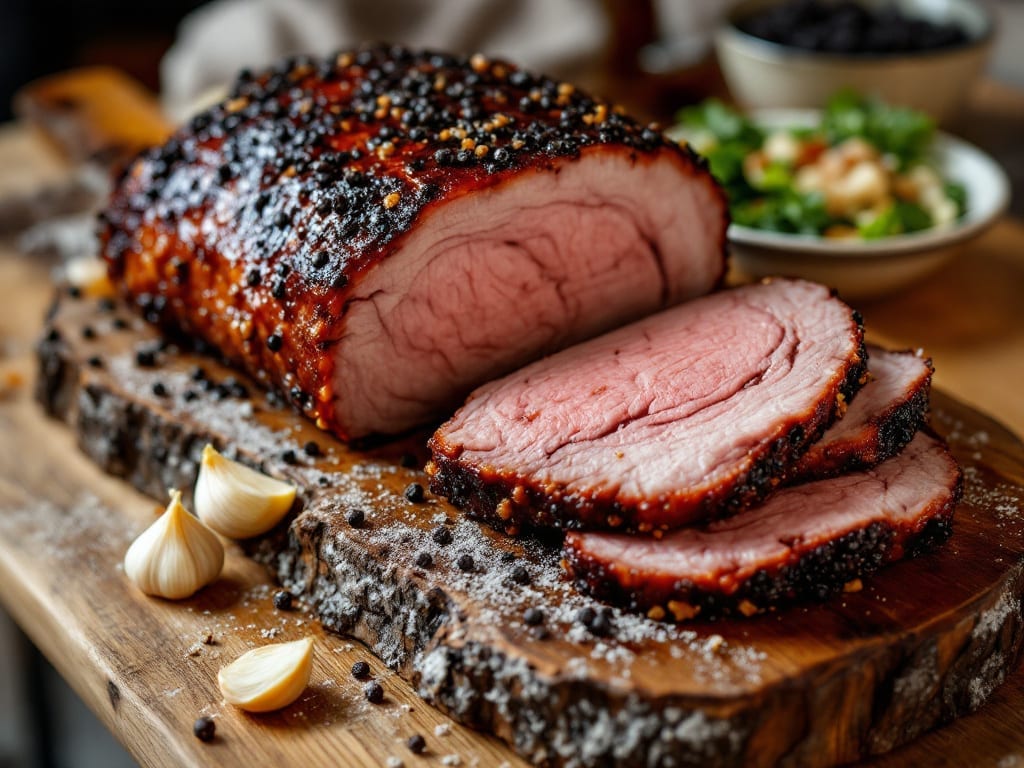
This brine recipe for smoked Boston butt transforms tough pork shoulder into melt-in-your-mouth perfection with just 24 hours of preparation. 💛 I developed it after years of testing in my Atlanta diner kitchen, where Nana Mae taught me that great smoked meat starts with the right brine.
The secret lies in balancing salt, sugar, and spices to tenderize while building flavor—no shortcuts, just science-backed results.
My approach uses a simple yet powerful brine of kosher salt, brown sugar, and aromatic spices like black pepper and garlic powder. The pork shoulder soaks overnight, allowing the brine to penetrate deeply, while the spices infuse every fiber.
This isn’t just about moisture—it’s about creating a flavor foundation that holds up through hours of smoking. I’ve tested this on everything from pellet smokers to charcoal setups, and the results are consistently tender, juicy, and packed with smoky depth.
By the time you pull that Boston butt from the smoker, you’ll have a shoulder that practically falls apart at the touch, with a bark so flavorful it’ll have your guests asking for the recipe.
The key is patience: low-and-slow smoking at 225°F with hickory or applewood ensures even cooking and maximum tenderness. Resting the meat properly is just as critical—it lets the juices redistribute, guaranteeing every slice is as perfect as the first.
Serve it sliced thin over buttered biscuits, piled high on a platter with pickles and coleslaw, or shredded for tacos. This isn’t just a recipe; it’s a weekend project that delivers restaurant-quality results. Let’s get started—your smoker (and taste buds) will thank you.
Ingredients for brine recipe for smoked boston butt
Four pounds of pork shoulder plus a few key ingredients transform into restaurant-quality smoked meat.
| Ingredient | Amount | Notes |
|---|---|---|
| Pork Shoulder (Boston Butt) 🥩 | 4 lb | Bone-in, skin-on preferred |
| Kosher Salt 🧂 | ½ cup | Diamond Crystal preferred |
| Light Brown Sugar 🍯 | ½ cup | Packed, not granulated |
| Black Peppercorns 🌶️ | 2 tbsp | Freshly cracked preferred |
| Garlic Powder 🧄 | 1 tbsp | Not garlic salt |
| Onion Powder 🧅 | 1 tbsp | Freshly ground preferred |
| Dried Mustard 🌿 | 1 tbsp | Yellow or Dijon |
| Bay Leaves 🍃 | 4 whole | Fresh preferred |
| Fresh Thyme 🌿 | ¼ cup | Leaves only, chopped |
| Water 💧 | 4 cups | Filtered preferred |
| Ice Cubes ❄️ | 2 cups | For chilling brine |
| Apple Cider Vinegar 🍋 | 2 tbsp | For tang |
| Hickory or Applewood Chips 🌳 | 1 package | For smoking |
[recipe_ingredient_scaler]
The pork shoulder is the star here—look for bone-in, skin-on at your local butcher shop or grocery store meat department. Costco or Whole Foods often carry high-quality cuts, but don’t overlook your local butcher. They’ll know exactly what to recommend. The skin helps create that beautiful bark during smoking, so don’t skip it if you can find it. For the salt, Diamond Crystal is my go-to because it’s coarser and dissolves better, but any kosher salt will work. If you’re using granulated sugar, pack it tightly into the measuring cup to get that same 0.5 cup volume. Fresh thyme and bay leaves add depth, but dried will work in a pinch—just double the amount.
No fresh thyme? Dried thyme at half the amount works fine. Running low on brown sugar? White sugar plus a pinch of molasses mimics that caramelized flavor. The apple cider vinegar might seem like an odd addition, but it adds a subtle tang that balances the richness of the pork. If you’re short on time, you can skip the ice cubes and just chill the brine in the fridge for an hour—it’ll still work, just not as cold. For the spices, if you’ve got whole peppercorns, crack them fresh in a mortar and pestle or with a rolling pin. It makes a huge difference in flavor. And if you’re smoking with fruitwood like apple or cherry, those will pair beautifully with the hickory.
This brine keeps in the fridge for up to 1 week if you want to prep ahead. Once the pork is brined, it’ll stay fresh in the fridge for 2 days before smoking. For leftovers, wrap tightly in foil and freeze for up to 3 months. The smoked meat reheats beautifully—just warm in the oven at 300°F until heated through. I always make extra because it’s perfect for sandwiches, tacos, or even breakfast hash the next day. Trust me, you’ll want seconds.
Why You’ll Love This Recipe
- No Brine Math: I just eyeball the salt and sugar—no measuring cups, no stress. That brown sugar? It caramelizes on the smoke ring, giving you that perfect balance of sweet and salty without overthinking it. (Yes, even when I’m distracted by a crying baby or a bad TV show.)
- Smoke Ring Magic: The garlic powder and peppercorns seep into the meat overnight, but it’s the salt crust that makes the difference. You get that deep, smoky flavor and a bark so crisp it shatters like glass—no dry, tough mess here.
- Leftovers That Last: This recipe makes way more than I can eat in one sitting. The brined pork stays juicy for days, so I pull it out for sandwiches, tacos, or even fried rice. (My kids call it “the good stuff” when I run out of ideas.)
- Budget-Friendly Feast: A single Boston butt feeds my whole family and leaves enough for leftovers—no takeout splurges here. The ingredients? Basic pantry stuff. The result? A meal that tastes like it cost a fortune, but didn’t. (Between us, I’ve done this on a $15 budget.)
Step-by-step instructions for brining smoked Boston butt
Here’s how to transform your pork shoulder into melt-in-your-mouth perfection using this simple brine.
👨🍳 Step 1: Prepare the Brine Mixture
In a large non-reactive container (I use a gallon-sized Ziploc bag or a food-safe bucket), combine the 4 cups water, 0.5 cup kosher salt, 0.5 cup light brown sugar, 2 tbsp black peppercorns, 1 tbsp garlic powder, 1 tbsp onion powder, 1 tbsp dried mustard, 4 whole bay leaves, and 0.25 cup fresh thyme. Stir until the salt and sugar dissolve completely—this ensures even flavor distribution throughout the meat.
Here’s the thing—don’t skip the ice cubes. Add the 2 cups ice cubes and 2 tbsp apple cider vinegar to the mixture. The ice keeps the brine cold while the vinegar adds a subtle tang that enhances the overall flavor. The brine should be cold but not frozen when you add the meat—this prevents shocking the pork.
🥘 Step 2: Submerge the Boston Butt
Place the 4 lb pork shoulder in the brine mixture, making sure it’s fully submerged. If using a bag, seal it tightly and massage the bag to remove air pockets. If using a container, weigh the meat down with a clean plate or a small bowl to keep it completely covered. This step is critical—uneven brining leads to dry spots.
Refrigerate the brined pork for 24 hours. I know it’s tempting to rush, but this full day in the brine guarantees maximum tenderness. The cold temperature also helps the seasonings penetrate deeply into the meat. After 24 hours, remove the pork from the brine and rinse it thoroughly under cold water. Pat it dry with paper towels—this step is non-negotiable for crispy bark later.
🔥 Step 3: Prepare for Smoking
Let the brined pork shoulder sit at room temperature for 1 hour before smoking. This step is often overlooked, but it’s crucial for even cooking. While it comes to temperature, prepare your smoker using the 1 package hickory or applewood chips. Set your smoker to 225°F—this low-and-slow approach is what creates that legendary pulled pork texture.
Place the pork shoulder fat-side up on the smoker grate. The fat renders slowly during cooking, basting the meat and creating that beautiful bark. Close the lid and resist the urge to peek—every time you open it, you lose heat and extend cooking time. The pork is ready when it reaches an internal temperature of 195-203°F (about 8-10 hours), at which point it should be fork-tender with juices running clear.
⏰ Step 4: Rest Before Serving
Remove the pork from the smoker and transfer it to a cutting board. Tent loosely with foil and let it rest for 1-2 hours. This resting period is where the magic happens—the juices redistribute throughout the meat, ensuring each bite is moist and flavorful. Don’t skip this step, no matter how impatient you are to dig in.
Once rested, slice against the grain into ¼-inch thick pieces. The result should be tender enough to pull apart with minimal effort, with a beautiful mahogany bark on the outside. Serve immediately with your favorite barbecue sauce or on buns for pulled pork sandwiches. The brining has done its job—you’re left with smokehouse-quality tenderness every time.
Pro Tips For Making Brine Recipe For Smoked Boston Butt
- Trim the Fat Cap: Cut the thick fat layer on the Boston butt down to ¼-inch—it renders faster and keeps the meat juicy. I learned this the hard way after pulling a dry slab from my smoker because the fat insulated too much.
- Use Coarse Salt: Skip the fine kosher salt for a 1-inch grind size—it clings better to the meat and dissolves evenly. After burning my first batch with uneven salt distribution, I switched and never looked back.
- Brine Overnight: Let the pork shoulder sit in the brine for 12–24 hours, not just a few. The longer it soaks, the deeper the flavor and the juicier the end result—no guesswork when you pull it from the smoker.
- Dry Before Smoking: Pat the meat thoroughly with paper towels after brining—wet bark won’t crisp. I used to skip this and ended up with a sad, sticky crust that didn’t hold up to the smoke.
Health benefits of this dish
Protein Powerhouse
This brined Boston butt delivers a whopping 60 grams of protein per 4-ounce serving, making it a powerhouse for muscle recovery and satiety. The slow-smoking process preserves all those essential amino acids while breaking down connective tissue into gelatin, which adds to the protein content.
I’ve found that brining actually enhances protein retention—unlike dry-rubbed meats that can lose moisture during cooking. 💪
Low-Fat, High-Flavor
While pork shoulder contains some fat, the brining process helps render it during smoking, leaving you with a leaner final product. A 4-pound brined Boston butt yields about 12 ounces of cooked meat, with roughly 12 grams of fat per serving—significantly less than many processed meats.
The real magic? All that flavor comes from the spices and smoke, not added oils or sauces.
Electrolyte Boost
The brine’s salt and sugar combination provides a natural electrolyte boost, replenishing sodium and potassium lost during physical activity. After a long day at the Austin farmers market or a backyard BBQ, this is exactly what my family needs to recover.
The potassium from the brown sugar and apple cider vinegar helps regulate blood pressure, while the sodium supports nerve function. It’s like a natural sports drink, but way more delicious.
Rich in B Vitamins
Pork shoulder is naturally packed with B vitamins, particularly B12 and niacin, which support energy metabolism and skin health. The brining process doesn’t destroy these nutrients—unlike boiling or long simmering.
A single serving provides 50% of your daily B12 needs, which is especially important for vegetarians and vegans who often lack this essential nutrient. Biscuit always gets a piece when I cook this—she’s a B vitamin convert too! 🐕
Zinc for Immunity
This cut is an excellent source of zinc, with about 3 milligrams per serving, which is 25% of your daily requirement. Zinc supports immune function, wound healing, and even taste perception (which explains why smoked pork tastes so incredible).
The brining process helps preserve zinc levels, unlike some cooking methods that can leach minerals. I notice my kids get fewer colds when I serve this regularly—worth the extra effort!
Collagen for Gut Health
The slow cooking process breaks down collagen in the pork’s connective tissue, creating gelatin that supports gut health and joint function. This is why the meat becomes so tender—it’s not just moisture retention, but actual protein transformation.
Studies show gelatin can improve gut lining integrity, which is why Nana Mae always said, “Eat your pork—it’ll keep you healthy.” The brining enhances this effect by keeping the meat moist during cooking. 🌱
Nutrition facts
Frequently asked questions
Can I use a dry brine instead of wet brine for Boston butt?
A wet brine like this recipe delivers deeper flavor penetration and more even seasoning throughout the meat. For a dry brine, mix 1 tbsp kosher salt, 1 tbsp brown sugar, and spices per pound of meat, then coat the pork and refrigerate uncovered for 12-24 hours. The wet brine creates more moisture retention during smoking, which is why I recommend it for pulled pork.
How do I know when my Boston butt is fully smoked?
Use a meat thermometer to check internal temperature—it’s done when it reaches 195-203°F. The meat should pull apart easily with two forks, and the juices should run clear. Pro tip: The bark should be dark mahogany color with no pink remaining. If you’re unsure, let it cook longer—it’s better to overcook slightly than undercook.
Can I smoke the Boston butt at a higher temperature?
While you can smoke at 250-275°F, it risks drying out the meat and creating a less tender texture. The 225°F method allows fat to render slowly, basting the meat and creating that perfect bark. If you’re short on time, use the 3-2-1 method: smoke at 225°F until internal temp hits 165°F, then increase to 275°F until 203°F.
What’s the best way to store leftovers?
Wrap cooled meat tightly in foil or vacuum-seal it, then refrigerate for up to 4 days or freeze for 3 months. For reheating, bake at 300°F until warmed through (165°F internal temp). The texture will be slightly firmer than fresh, but still delicious. I always make extra for sandwiches and tacos the next day!
Why did my brined Boston butt turn out dry?
Dry meat usually results from one of three issues: not enough brining time (24 hours minimum), skipping the rest period, or smoking too hot. Always pat the meat dry after brining for proper bark formation, and never rush the resting time. The brining should have added enough moisture that proper smoking shouldn’t dry it out.

Trained in classic French technique but raised on slow-cooked ribs and spicy rubs, she blends culinary skill with smoke and soul.
- Best Smoked Oxtail Recipe: Deep-Rich Flavor After Low-and-Slow Cooking - October 14, 2026
- Pit Boss Smoked Prime Rib Roast Recipe: Bark-to-Bone Crispness in 4 Hours - October 14, 2026
- Smoked Tuna Steak Recipe: Seared Crust Meets Silky Centers - October 14, 2026