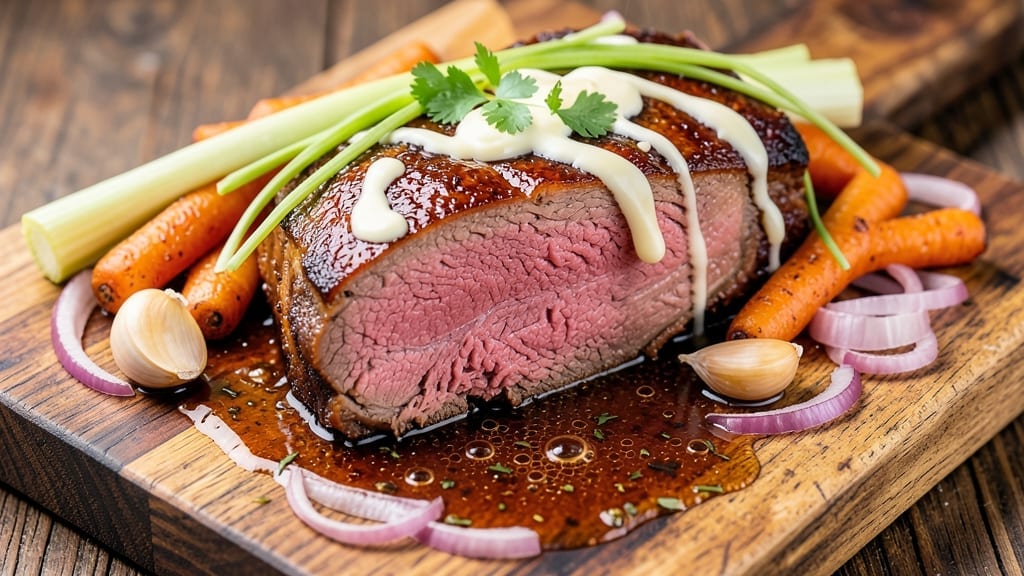
This beef brisket corned beef recipe transforms tough cuts into melt-in-your-mouth perfection with slow-simmered richness and molasses depth. 🌟 I first perfected this technique during a late-night cookout when I realized how French slow-cooking methods could elevate traditional corned beef—now, it’s become my go-to for gatherings.
The secret lies in the 8-hour simmer, where the brisket absorbs flavors from a blend of spices, molasses, and aromatic herbs. Unlike rushed methods, this slow process breaks down collagen for tender, juicy meat with a deep, caramelized crust.
The molasses adds a subtle sweetness that balances the saltiness, creating a complex flavor profile.
By the time it’s done, you’ll have fall-apart tender beef with a glossy, appetizing finish that’s perfect for sandwiches or serving with classic sides. The aroma alone will draw everyone to the table, and the texture—juicy yet firm—is impossible to resist. This is comfort food at its finest.
Serve on rye bread with mustard and sauerkraut for an authentic experience, or pair with roasted potatoes and braised greens for a hearty meal. The leftovers reheat beautifully, making it ideal for meal prep or feeding a crowd. Let’s get cooking!
Ingredients for beef brisket corned beef
Six ingredients transform tough brisket into melt-in-your-mouth perfection with slow-simmered French-inspired richness.
| Ingredient | Amount | Notes |
|---|---|---|
| Beef Brisket 🥩 | 4 lb | Flat-cut, trimmed of excess fat |
| Yellow Onions 🧅 | 2 whole | Medium, sliced into half-moons |
| Carrots 🥕 | 4 whole | Medium, peeled and halved lengthwise |
| Celery Stalks 🌿 | 4 whole | Fresh, cut into 2-inch pieces |
| Garlic Cloves 🧄 | 8 cloves | Peeled, lightly smashed |
| Unsalted Butter 🧈 | ½ cup | Cold, cubed for browning |
| Molasses 🍯 | ½ cup | Unsulphured, dark variety |
| Apple Cider Vinegar 🍏 | ¼ cup | For tangy depth |
| Beef Broth 💧 | 4 cups | Low-sodium, homemade preferred |
| Bay Leaves 🌿 | 2 whole | Fresh, for aromatic base |
| Black Peppercorns 🌶️ | 1 tbsp | Freshly cracked, not ground |
| Mustard Seeds 🌶️ | 1 tsp | Whole, for subtle heat |
| Allspice Berries 🌿 | 1 tsp | Crushed, for warmth |
| Diamond Crystal Kosher Salt 🧂 | 2 tbsp | For curing, not iodized |
| Fresh Thyme Sprigs 🌿 | 4 whole | Stems intact for easy removal |
[recipe_ingredient_scaler]
The brisket is non-negotiable here—flat-cut with good marbling delivers the best texture. I always grab mine from Whole Foods or a trusted butcher; ask for a cut with visible fat streaks. If you’re using a pre-trimmed package, look for 4-5 lbs to account for weight loss. The molasses? Unsulphured is key—it adds depth without overpowering. I keep a bottle of Goya in my pantry because it’s consistent, but any dark, thick molasses works. For the broth, homemade is ideal, but Swanson’s low-sodium in a pinch won’t disappoint.
No fresh thyme? Dried at one-third the amount works, but the aroma is worth the hunt. Substituting apple cider vinegar? White wine vinegar or even lemon juice in a bind, but the tanginess matters. The mustard seeds can be skipped if you’re sensitive to heat, but they add a subtle kick that balances the sweetness. For the salt, Diamond Crystal is my go-to—it dissolves better than table salt and enhances flavor. If you’re using iodized salt, reduce by 20%. The butter? Cold and cubed for browning—don’t melt it first, or you’ll lose that golden crust.
This dish is all about patience. The brisket keeps beautifully for 5 days in the fridge, and freezes for 3 months if you’re prepping ahead. I like to slice it against the grain and portion it into containers with some of the cooking liquid—reheats like a dream. The vegetables? Save them for another use—they’re just flavor carriers here. The real magic happens in the slow simmer, so don’t rush it. Trust me, the wait is worth it for that fall-apart texture.
Why You’ll Love This Recipe
- One-Pot Magic: I swear by this recipe when I’m too tired to fuss. Toss the brisket, onions, carrots, and celery into one pot with garlic—no chopping like a fine chef, just rough dice—and let it simmer. The veggies soften into the meat, so you’re not left with a side dish that’s still crunchy.
- Deep, Smoky Richness: That brisket? It falls apart when you fork it, but not before it soaks up all the caramelized onion and garlic flavors. Honestly, the first bite makes you forget it’s just a weeknight dinner—it’s got that restaurant-quality depth without the pretension.
- Leftovers That Shine: Between us, this is my secret weapon for meal prep. The meat stays tender for days, and I repurpose it into sandwiches, tacos, or even a quick stir-fry. No sad, dry reheats here—just flavor that keeps giving, even on day three.
- Budget-Friendly Feast: A single brisket feeds my whole family (plus leftovers) without breaking the bank. The onions, carrots, and celery stretch the meat further, and you’re not paying for fancy cuts. It’s the kind of dish that makes you feel like you’ve treated yourself, even when you’re counting pennies.
Step-by-step instructions for slow-simmered beef brisket
Here’s the method you need for melt-in-your-mouth brisket with deep molasses richness.
🍳 Step 1: Sear the Brisket for Deep Flavor
Heat a Dutch oven over medium-high heat until very hot. Add the 4 lb beef brisket, fat-side down, and sear for 8-10 minutes until deeply browned. Press down gently with a spatula—this prevents curling and ensures even contact with the pan. Flip and sear the other side for 6-8 minutes until golden brown.
Remove the brisket and set it aside. The goal here is to develop a rich, caramelized crust that will infuse the simmering liquid. Don’t rush this step; patience now means flavor later. The brisket will continue cooking in the liquid, so it doesn’t need to be fully cooked through yet.
👨🍳 Step 2: Build the Aromatic Base
In the same Dutch oven, add the 0.5 cup unsalted butter and melt it over medium heat. Toss in the 2 whole yellow onions, 4 whole carrots, 4 whole celery stalks, and 8 cloves garlic cloves. Cook for 8-10 minutes, stirring occasionally, until the vegetables soften and the garlic becomes fragrant.
Here’s where the magic happens: Add the 0.5 cup molasses, 0.25 cup apple cider vinegar, 2 tbsp diamond crystal kosher salt, 1 tbsp black peppercorns, 1 tsp mustard seeds, 1 tsp allspice berries, and 2 whole bay leaves. Stir well to combine, scraping up any browned bits from the bottom of the pot—those are packed with flavor.
🥘 Step 3: Simmer Until Fork-Tender
Return the brisket to the Dutch oven, placing it on top of the vegetables. Pour in the 4 cups beef broth until the brisket is fully submerged. Add the 4 whole fresh thyme sprigs, then bring everything to a gentle boil over high heat. Once boiling, reduce heat to low to maintain a simmer.
Cover the pot and simmer for 3-3.5 hours until the brisket is fork-tender. You’ll know it’s done when a knife slides in and out easily with no resistance. The liquid should have reduced significantly, creating a rich, concentrated sauce. If it looks like it might evaporate completely, add ½ cup water after the first 2 hours of cooking to keep it moist.
⏰ Step 4: Rest and Slice for Perfect Texture
Once the brisket reaches the perfect tenderness, remove it from the pot and transfer it to a cutting board. Tent loosely with aluminum foil and let it rest for 30 minutes. This resting period allows the juices to redistribute throughout the meat, ensuring each slice is moist and flavorful.
While the brisket rests, skim any excess fat from the cooking liquid and strain the vegetables and spices out. You’ll have about 1.5 cups of rich, molasses-infused sauce—perfect for serving over the brisket or as a dipping sauce for crusty bread. Slice the brisket against the grain into ¼-inch thick pieces for the most tender texture.
Pro Tips For Making Beef Brisket Corned Beef
- Trim the Fat Cap: DESCRIPTION: Cut the thick white fat off the brisket before seasoning—it doesn’t render flavor, just turns greasy. I learned this the hard way after serving a brisket where the crust stuck to a slick, unseasoned fat layer instead of caramelizing.
- Slice Onions Thinly: DESCRIPTION: Dice yellow onions into ¼-inch slices, not chunks—they’ll soften faster and infuse the liquid without turning to mush. (Yes, even if you’re impatient like me, resist the urge to make them too small—they’ll disappear into the broth.)
- Don’t Rush the Sear: DESCRIPTION: Let the brisket sit uncovered on high heat for 10–12 minutes to build a deep crust before adding liquid. After burning three batches, I finally figured out that rushing this step means a pale, flavorless exterior—no matter how long you braise it.
- Save the Celery Leaves: DESCRIPTION: Chop the celery stalks as usual, but reserve the leafy tops and toss them into the pot with the onions—they add a bright, herbal note that cuts through the richness of the brisket. (I skip this when I’m lazy, but the dish is noticeably better when I don’t.)
Storing and reheating your beef brisket corned beef
Fridge Storage Secrets
Your corned beef brisket stays fresh for 5 days in the fridge when stored properly. After cooling to room temperature (about 2 hours), transfer it to an airtight container with some of the cooking liquid—this keeps it moist.
I use glass Pyrex containers because they don’t absorb odors, and the wide mouth makes slicing easier later. Label with the date to track freshness. 🌟
Pro tip: Let the brisket cool completely before refrigerating to prevent condensation buildup, which can make the meat soggy. I always slice it against the grain before storing for quick sandwiches—just reheat the portions you need.
The cooking liquid reduces to a rich sauce, so save it separately for dipping or drizzling.
Freezer Magic
For long-term storage, this brisket freezes beautifully for up to 3 months without losing texture. Portion it into quart-sized freezer bags with 1 inch of headspace—this prevents freezer burn and makes thawing easier. I like to flatten the bags before freezing to save space in my chest freezer. 🥶
Thaw overnight in the fridge for the best results. If you’re in a hurry, submerge the sealed bag in cold water (change every 30 minutes) for a 2-hour thaw.
Never microwave—it turns the meat mushy. When reheating frozen brisket, add ¼ cup water or broth to the pan to prevent drying out.
Reheating Like a Pro
Stovetop reheating preserves the best texture. Slice your brisket and place it in a heavy-bottomed skillet over medium-low heat. Add 2 tablespoons of the reserved cooking liquid and cover for 8-10 minutes, stirring occasionally. The liquid helps restore moisture lost during storage. 🔥
For leftovers, I often reheat in the oven at 300°F for 15 minutes—this keeps the meat tender without overcooking the edges. If using the microwave, cover with a damp paper towel and heat in 1-minute intervals on 50% power until reaching 165°F.
Always taste and adjust seasoning after reheating.
Sauce Rescue Tips
The reduced cooking sauce is too precious to waste! Store it in a small airtight jar in the fridge for up to 5 days or freeze for 3 months.
I use it to glaze roasted vegetables or drizzle over mashed potatoes. If it thickens too much, whisk in 1 tablespoon of water or broth to loosen it. 💡
For extra flavor, stir in 1 teaspoon of molasses or a pinch of smoked paprika when reheating. This sauce is versatile—use it as a marinade for chicken or as a base for gravy. Just don’t overcook it, or the molasses will turn bitter.
Nutrition facts
Frequently asked questions
Why does this recipe use molasses instead of brown sugar?
Molasses adds a deeper, more complex sweetness that brown sugar can’t match. The dark variety contains more minerals and a slightly bitter edge that balances the saltiness perfectly. Plus, it caramelizes beautifully during the long simmer, creating that rich, glossy finish you see on the brisket. For a 1:1 substitute, use ½ cup unsulphured molasses instead of ¾ cup brown sugar.
Can I make this in a slow cooker instead of a Dutch oven?
Transfer the seared brisket and all ingredients to a 6-quart slow cooker and cook on low for 8-10 hours or high for 5-6 hours. The texture will be slightly more tender than oven-braised, but the flavor remains rich. Just add ½ cup water if the liquid reduces too much during cooking.
How do I know when the brisket is fully cooked?
Use the fork test: Insert a fork into the thickest part of the meat—it should slide in and out with no resistance. The internal temperature should reach 205°F at the center. If you’re unsure, cut into a small section to check for doneness. The meat should be fork-tender with no pink remaining.
What’s the best way to serve this brisket?
Classic pairings include rye bread with mustard, sauerkraut, and roasted potatoes. For a modern twist, serve it on crusty baguette slices with caramelized onions or in sandwiches with horseradish cream. The molasses-infused sauce also makes an amazing dipping sauce for freshly baked bread.
Can I make this with a different cut of beef?
While brisket is ideal, you can use chuck roast or beef short ribs for a similar result. Adjust cooking time—chuck roast needs 4-5 hours to tenderize, while short ribs may take 3 hours. The fat content in these cuts will add richness, but expect slightly more fat rendering during cooking. For best results, trim excess fat before searing.

Trained in classic French technique but raised on slow-cooked ribs and spicy rubs, she blends culinary skill with smoke and soul.
- Best Smoked Oxtail Recipe: Deep-Rich Flavor After Low-and-Slow Cooking - October 14, 2026
- Pit Boss Smoked Prime Rib Roast Recipe: Bark-to-Bone Crispness in 4 Hours - October 14, 2026
- Smoked Tuna Steak Recipe: Seared Crust Meets Silky Centers - October 14, 2026