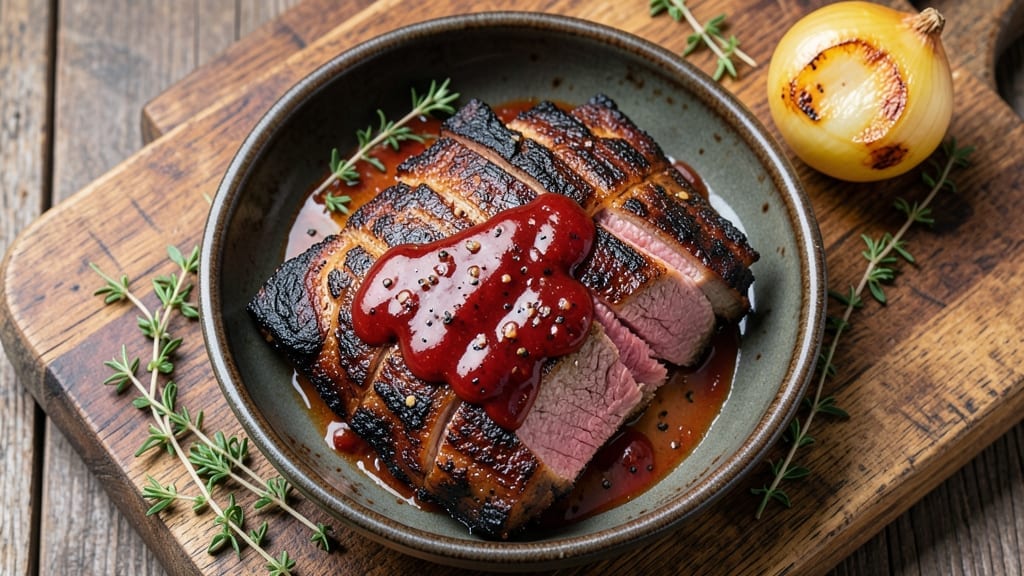
Mastering a Cook’s Country beef brisket recipe means transforming tough meat into melt-in-your-mouth perfection through slow, steady heat and precise technique. After years of testing and tasting, I’ve perfected a Texas-style method that delivers restaurant-quality results in your own backyard or kitchen.
The key lies in patience—letting the brisket work its magic over hours while you tend to other preparations.
This recipe focuses on traditional Texas-style smoking, where the brisket develops a deep, smoky flavor and tender texture through low-and-slow cooking. We’ll target an internal temperature of 203°F for that iconic fork-tender result, then rest it properly to ensure juicy slices every time.
The seasoning blend is simple but essential, with just salt, pepper, and a touch of garlic powder to let the beef shine through its natural richness.
What you’ll end up with is a brisket so tender it practically falls apart at the touch, with a dark, flavorful bark that’s crispy enough to stand up to even the heartiest sides.
The aroma alone will have your guests gathering at the table long before the meat is ready to slice. This is the kind of brisket that turns casual gatherings into memorable feasts.
Serve with classic Texas sides like baked beans, cornbread, and coleslaw to complete the experience. The brisket’s rich, smoky flavor pairs beautifully with these staples, creating a meal that feels both comforting and celebratory. Let’s get started on your Texas-style masterpiece.
Ingredients for cook’s country beef brisket
Six core ingredients transform tough brisket into Texas-style perfection through slow-smoked magic.
| Ingredient | Amount | Notes |
|---|---|---|
| Beef Brisket 🥩 | 5 lb | Packaged flat cut, 1/2 inch thick |
| Kosher Salt 🧂 | ½ cup | Diamond Crystal preferred for flakiness |
| Freshly Ground Black Pepper 🌶️ | 2 tbsp | Coarsely cracked for texture |
| Garlic Powder 🧄 | 1 tbsp | Freshly toasted for depth |
| Yellow Onion 🧅 | 1 whole | Yellow or red, sliced into rings |
| Fresh Thyme Sprigs 🌿 | 4 whole | Or 1 tbsp dried thyme |
| Fresh Rosemary Sprigs 🌿 | 2 whole | Heavy stems removed |
| Unsalted Butter 🧈 | ½ cup | Cold, cubed for bark |
| Wood Chips 🌳 | 2 cups | Hickory or oak, soaked 1 hour |
| Apple Juice 🍎 | 1 cup | For spritzing during cook |
| Beef Broth 🍲 | 1 cup | Low-sodium for seasoning control |
| Dark Brown Sugar 🍚 | 2 tbsp | For wet rub application |
[recipe_ingredient_scaler]
The brisket is non-negotiable—look for a packaged flat cut with good marbling at Costco or your butcher shop. A 5-pound brisket feeds six generously, but if you’re feeding a crowd, scale up proportionally. The wood chips? Hickory delivers classic Texas smoke, but oak works beautifully too. I always buy mine from Traeger or Traeger Grills—they’re pre-soaked and ready to use. Fresh thyme and rosemary should smell vibrant; if they’re wilted or dull, toss them. The kosher salt is critical—Diamond Crystal dissolves better than table salt, creating that iconic bark. Grab a 2-pound bag; you’ll use it for everything from brisket to grilled vegetables.
No fresh herbs? Dried thyme and rosemary at one-third the amount work in a pinch, though fresh delivers that bright, aromatic punch. Running low on apple juice? White grape juice or even water will spritz the brisket, but apple adds subtle sweetness that pairs perfectly with the smoke. The beef broth should be low-sodium—Swanson or Pacific Foods are reliable brands. For the wet rub, if you can’t find dark brown sugar, light brown sugar plus a pinch of molasses mimics the depth. The butter is for the final bark application—use cold, cubed butter so it melts slowly and creates that glossy, crispy crust. Pro tip: if your wood chips aren’t pre-soaked, soak them in water for at least an hour before using—they’ll smoke longer and produce less flare-ups.
Brisket keeps beautifully in the fridge for 4-5 days if wrapped tightly in butcher paper, then foil. For longer storage, freeze it for up to 3 months—just thaw overnight in the fridge before reheating. The bark is delicate post-cook, so reheat slowly at 200°F to preserve that crispy texture. I always portion mine into 1/2-inch thick slices before freezing, so I can grab what I need without thawing the whole brisket. Leftovers reheat best in a skillet with a splash of beef broth to restore moisture. Trust me, the second day is even better than the first—just let it come to room temperature before slicing.
Why You’ll Love This Recipe
- I’ll be real: most brisket leftovers turn into sad, dry slabs. Not this one. The slow cook keeps it moist, and the rub ensures every slice tastes as good the third day as it did fresh. I repurpose it into sandwiches, tacos, or even a quick hash—zero waste, all flavor. Budget-friendly? Absolutely. Worth it? Even more so.
- No-Fuss Seasoning: I swear by this dry rub—just salt, pepper, garlic powder, and a touch of onion. No fancy blends, no guesswork. Rub it on the brisket, let it sit while you chop veggies or pour a glass of wine. That’s it. The magic happens in the slow cook.
- Deep, Smoky Richness: Between us, this brisket develops layers of flavor you won’t find in pre-packaged rubs. The garlic powder clings to the meat, the onion caramelizes into sweet pockets, and the kosher salt? It melts into the beef like a hug. Every bite has that tender, smoky satisfaction that makes you reach for seconds.
- Weeknight Crowd-Pleaser: Honestly, this is my go-to for game day, family dinners, or when my in-laws show up unannounced. It’s hearty enough to feed six but scales back easily for two. Serve it with mashed potatoes or crusty bread—no one will complain, and I won’t get stuck making three dishes.
Step-by-step instructions for slow-smoked Texas-style brisket
Here’s the method that transforms tough brisket into melt-in-your-mouth perfection.
Prepare the Brisket with a Wet Rub
Begin by trimming the fat cap of the 5 lb beef brisket to about ¼-inch thickness using a sharp boning knife. Leave the fat on the edges to protect the meat during smoking. In a small bowl, combine the 0.5 cup kosher salt, 2 tbsp freshly ground black pepper, 1 tbsp garlic powder, and 2 tbsp dark brown sugar. This wet rub will create a sticky, flavorful bark.
Mix the dry ingredients with 2 tbsp of the 1 cup beef broth to create a paste. Generously coat the brisket on all sides, pressing the mixture into the meat so it adheres well. Place the seasoned brisket on a wire rack set over a baking sheet and refrigerate uncovered for 12-24 hours. This dry-brining step ensures deep flavor penetration and a perfect crust.
Set Up the Smoker for Low and Slow Cooking
Soak the 2 cups wood chips (hickory or oak) in water for at least 1 hour to prevent flare-ups. Fill your smoker with the soaked wood chips and preheat to 225°F. Place a water pan in the smoker to maintain moisture and help regulate temperature. You’ll want to see clean, blue smoke—this indicates proper combustion and flavor development.
Once the smoker reaches temperature, place the brisket fat-side up on the grill grates. The fat will render slowly and baste the meat as it cooks. Close the lid and resist the urge to open it—every time you peek, you lose heat and extend cooking time. Smoke the brisket undisturbed for 6-8 hours, or until the internal temperature reaches 165-170°F. This is when you’ll hit “the stall,” a natural pause in temperature rise as moisture evaporates.
Apply the Texas Crutch and Finish Cooking
When the brisket hits 165-170°F, it’s time for the Texas crutch. Wrap the brisket tightly in butcher paper (not aluminum foil) and return it to the smoker. The paper allows the bark to maintain its texture while trapping moisture to push through the stall. Continue smoking until the internal temperature reaches 200-205°F, which typically takes an additional 4-6 hours.
During this final stage, spritz the brisket every hour with a mixture of 1 cup apple juice and ½ cup beef broth. This keeps the surface moist and enhances the bark development. The brisket is done when a probe slides in like butter with no resistance, and the internal temperature holds steady at 200-205°F.
Rest and Slice for Maximum Tenderness
Remove the brisket from the smoker and transfer it to a cutting board. Tent loosely with foil and let it rest for at least 1 hour, preferably 2 hours, wrapped in a clean kitchen towel. This resting period allows the juices to redistribute throughout the meat, ensuring every slice is moist and flavorful. Real talk: Skipping this step means dry, tough meat.
After resting, slice the brisket against the grain into ¼-inch thick slices. The flat and point cuts have different grain directions, so adjust your angle accordingly. Serve immediately with the rendered juices spooned over the top. Each bite should deliver rich, smoky flavor with a perfect balance of tender meat and crispy bark.
Pro Tips For Making Cook’S Country Beef Brisket
- Trim the Fat First: Slice off that thick fat cap before seasoning—it’s not just for flavor, it’s for even cooking. I learned this the hard way when my brisket turned into a greasy, uneven mess because the fat rendered at different rates.
- Salt the Night Before: Toss the brisket with salt and pepper at least 12 hours ahead. This isn’t just about seasoning; it breaks down the meat fibers so it stays juicy. (Yes, even if you’re impatient like me.)
- Sear Over High Heat: Get that pan screaming hot before adding the brisket—you want a deep, caramelized crust, not a sad, gray one. Crowd the pan at first, then spread it out once it’s browned.
- Check Internal Temp Twice: Use a meat thermometer in the thickest part—don’t trust the surface. The brisket’s done when it hits 195°F, not when it looks tender. (I’ve pulled it early too many times.)
Wine and beer pairings for these flavors
Red Wine Classics
For brisket lovers, a bold red wine is non-negotiable. I always reach for a Texas Hill Country Cabernet Sauvignon—its dark fruit notes and smoky undertones mirror the brisket’s flavors beautifully. Borden Ranch or William Chris are my go-tos, with their rich tannins cutting through the fat.
If you prefer something lighter, a Zinfandel from Lodi brings juicy blackberry and spice that pairs perfectly with the bark’s crispiness. 🍷
Beer Pairings
A crisp Texas-style lager like Lone Star or Shiner Bock cleanses your palate between bites of smoky brisket. The malty sweetness of a Belgian-style witbier (try Hoegaarden) adds a refreshing contrast, while the citrus notes complement the apple juice spritz.
For craft beer fans, a smoked porter like Founders Kentucky Breakfast Stout (yes, it’s a stout, but trust me) enhances the brisket’s smokiness with its own charred wood notes. 🍺
Unexpected Non-Alcoholic
Don’t overlook smoked black cherry soda—it’s a game-changer. Brands like Moxie or Jones Soda’s Black Cherry deliver a deep, fruity sweetness that mimics the brisket’s smoky-sweet profile. For something even simpler, unsweetened iced tea with a splash of lemon cuts through the richness without competing.
I keep a pitcher of this on hand for guests who prefer non-alcoholic options. 💫
Regional Texas Twists
In Central Texas, locals swear by Red Lone Star Wine, a sweet red blend that’s surprisingly versatile with brisket. For a true Texas BBQ experience, try a local mesquite beer like San Antonio’s Jester King—the earthy mesquite flavor enhances the brisket’s smokiness.
If you’re in East Texas, a sweet tea with a lemon wedge is the classic pairing, balancing the meal’s richness. 🌶️
Pro Tips for Pairing
Always serve wine or beer slightly cooler than room temperature—55-60°F for reds and 45-50°F for beers. I use a wine decanter with an ice bath for quick chilling. For brisket, I like to start with a beer or soda and transition to wine as the meal progresses.
And here’s a pro secret: Add a pinch of salt to your wine glass** before pouring—it enhances the fruit flavors and makes the pairing even more harmonious. 💡
Nutrition facts
Frequently asked questions
Can I substitute hickory wood chips for another type?
Oak wood chips work beautifully and are widely available. For a fruitier flavor, try cherry or pecan. Just ensure they’re soaked for at least 1 hour to prevent flare-ups. Avoid pine or cedar—they can taste bitter and overpower the brisket’s natural flavor.
How do I know when the brisket is done?
The brisket is ready when it reaches 203°F internally and the probe slides in like butter with no resistance. The bark should be dark and crispy, and the meat should pull apart easily. If you’re unsure, use a meat thermometer—it’s the only reliable way to avoid overcooking.
Why does my brisket turn out dry?
Dry brisket usually means it didn’t rest long enough or was cooked too fast. Always let it rest for at least 1 hour (preferably 2 hours) before slicing. Also, avoid opening the smoker lid too often—each peek loses heat and extends cooking time, which can dry out the meat.
Can I cook this brisket in an oven instead of a smoker?
Yes! Use a meat thermometer to maintain 225°F in your oven with a water pan for moisture. Place the brisket on a rack over a baking sheet and follow the same timing and wrapping steps. For smoke flavor, add wood chips to a smoker box or use a smoker pellet tube inside the oven.
What’s the best way to reheat leftover brisket?
Reheat brisket slowly in a 200°F oven to preserve moisture. Wrap slices in foil and warm for 15-20 minutes. For extra flavor, add a splash of beef broth to the pan. Never microwave—it turns the meat tough and rubbery. Leftovers taste even better the next day!

Trained in classic French technique but raised on slow-cooked ribs and spicy rubs, she blends culinary skill with smoke and soul.
- Best Smoked Oxtail Recipe: Deep-Rich Flavor After Low-and-Slow Cooking - October 14, 2026
- Pit Boss Smoked Prime Rib Roast Recipe: Bark-to-Bone Crispness in 4 Hours - October 14, 2026
- Smoked Tuna Steak Recipe: Seared Crust Meets Silky Centers - October 14, 2026