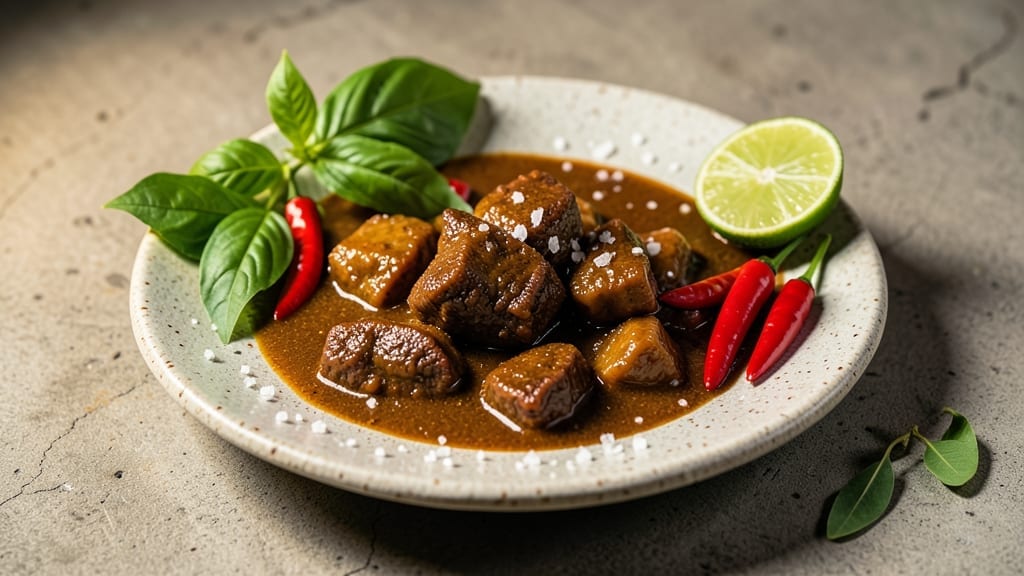
This beef brisket Malaysian curry transforms tough cuts into melt-in-your-mouth tenderness while delivering the bold, aromatic flavors of Southeast Asia—no takeout required. The secret lies in a slow-cooked approach that tenderizes the meat while building layers of spice through a carefully balanced paste of lemongrass, galangal, and chili.
I first discovered this technique while traveling through Malaysia, where brisket curry is a staple in roadside stalls and family kitchens alike.
The process begins with marinating the brisket overnight in a blend of coconut milk, turmeric, and tamarind, which jumpstarts the flavor infusion. Then, the magic happens in a slow cooker or Dutch oven, where the meat simmers for hours until fork-tender while absorbing the rich, spiced sauce.
What makes this recipe special is the balance—sweet from kecap manis, tangy from lime, and heat from fresh chili, all coming together in a sauce that clings to every bite.
By the time you serve it, you’ll have a dish that rivals any restaurant version: tender beef that practically falls apart, a sauce that’s creamy yet aromatic, and a depth of flavor that comes from slow-cooked patience.
The aroma alone will have everyone gathering around the table, and the first bite delivers that perfect harmony of richness and spice. Serve it with steamed jasmine rice or warm roti to soak up every last drop of that velvety sauce.
This recipe is designed for those who love bold flavors but want a methodical approach—no guesswork, just proven techniques that deliver restaurant-quality results at home. Whether you’re feeding a crowd or treating yourself to a special meal, this Malaysian beef brisket curry is worth the time and effort.
Let’s get cooking!
Ingredients for beef brisket curry recipe malaysian
Aromatic paste meets tender beef. Pantry staples and specialty finds combine for restaurant-quality Malaysian curry.
| Ingredient | Amount | Notes |
|---|---|---|
| Beef Brisket 🥩 | 3 lb | Flat cut preferred for tenderness |
| Coconut Milk 🥥 | 2 cans | Full-fat, 13.5 oz each |
| Lemongrass 🌿 | 1 whole | Stalks, bruised and cut |
| Galangal 🍃 | 1 piece | Substitute ginger if unavailable |
| Fresh Turmeric 🌶️ | 1 tbsp | Freshly grated preferred |
| Kecap Manis 🍶 | ½ cup | Indonesian sweet soy sauce |
| Tamarind Paste 🍋 | ¼ cup | Substitute lime juice if needed |
| Fresh Red Chili 🌶️ | 3 whole | Bird's eye or Thai chili |
| Garlic Cloves 🧄 | 8 cloves | Peeled and smashed |
| Shallots 🧅 | ½ cup | Finely chopped or minced |
| Ginger Root 🌿 | ½ cup | Freshly grated |
| Coconut Oil 🫒 | 2 tbsp | For frying paste |
| Sea Salt 🧂 | 1 ½ tsp | Diamond Crystal preferred |
| Black Peppercorns 🌶️ | ½ tsp | Freshly cracked |
| Lime Juice 🍋 | ¼ cup | Freshly squeezed |
| Fresh Cilantro 🌿 | ¼ cup | Chopped for garnish |
[recipe_ingredient_scaler]
The brisket is the star—look for flat cut at your butcher or grocery store’s meat counter. Costco or Whole Foods usually carry it pre-cut, but if you’re buying a whole brisket, ask for the flat section. Galangal can be tricky to find (most Asian markets carry it), but substitute ginger at half the amount if needed. Lemongrass stalks should be fresh, not dried, and bruising them releases more flavor. For the tamarind paste, Trader Joe’s or Asian markets have good options—avoid the block if you’re not experienced with it. The kecap manis is non-negotiable for that signature sweetness; Lee Kum Kee is the brand I always reach for.
No galangal? Ginger works in a pinch, though it won’t be identical. Fresh turmeric is ideal, but ground turmeric at half the amount will work. Short on fresh chili? Cayenne pepper at one-third the amount adds heat without the texture. For the shallots, red onion in a bind, but shallots bring that subtle sweetness. The coconut milk cans should be full-fat—light versions won’t give the same richness. If you can’t find kecap manis, mix 3 tbsp soy sauce with 1 tbsp brown sugar as a rough substitute. The lime juice should be freshly squeezed; bottled won’t have the same brightness.
This curry tastes even better the next day as flavors meld. Store in an airtight container in the fridge for up to 5 days, or freeze portions for 3 months. I always make a double batch—leftovers reheat beautifully for lunches. The sauce thickens as it cools, so add a splash of water or coconut milk when reheating. For serving, jasmine rice or warm roti soak up every last drop of that velvety sauce. Garnish with fresh cilantro right before serving—it wilts fast, so don’t prep it too early.
Why You’ll Love This Recipe
- Tender Without the Hassle: I promise you won’t miss the fancy slow-cooker—this brisket turns buttery in just 2-2.5 hours on low, thanks to the coconut milk and galangal working their magic. No constant stirring, no high heat to watch—just set it and forget it while the lemongrass and turmeric do all the aromatic heavy lifting.
- Sweet, Spicy, Umami Bomb: The kecap manis and tamarind paste give this curry that perfect balance—sweetness cuts through the richness of the coconut milk, while the galangal (or ginger) adds a ginger-like kick that’s just spicy enough to make your taste buds dance. That first bite? The crispy sear on the brisket meets the velvety sauce, and honestly, it’s the kind of dish you’ll crave for days.
- Budget’s Your Friend: Brisket’s affordable, and with 2 cans of coconut milk and a few pantry staples like shallots and garlic, this isn’t one of those recipes that breaks the bank. The galangal and lemongrass? You can find them frozen if fresh is out of reach, and the turmeric adds that golden color without costing a fortune. Plus, it’s the kind of dish that makes leftovers feel like a treat, not a chore.
Step-by-step instructions for slow-cooked Malaysian beef brisket curry
This rich, aromatic curry delivers restaurant-quality depth with tender brisket and balanced spices.
Prepare the Spice Paste and Sear the Brisket
In a food processor, combine the ½ cup shallots, ½ cup ginger root, 8 garlic cloves, 3 fresh red chili, 1 lemongrass (bruised and cut), 1 galangal (peeled and sliced), and 1 tbsp fresh turmeric. Pulse until you achieve a coarse paste—this should take about 30 seconds of processing. With the processor running, slowly add 2 tbsp coconut oil until fully incorporated. The paste should be thick but spreadable, with visible texture.
Heat a heavy Dutch oven over medium-high heat and add the spice paste. Cook for 5-7 minutes, stirring constantly, until the paste darkens slightly and releases deep, fragrant aromas. This is your flavor foundation—don’t rush it. Add the 3 lb beef brisket (cut into 2-inch chunks) and sear on all sides until deeply browned, about 8-10 minutes total. You’re building that essential Maillard crust that carries the curry’s complexity.
Build the Curry Base with Coconut Milk and Aromatics
Pour in ½ cup kecap manis and ¼ cup tamarind paste, scraping up any browned bits from the bottom of the pot. These ingredients will dissolve into a glossy, slightly sweet glaze that balances the acidity. Add 1½ tsp sea salt and ½ tsp black peppercorns, then stir to combine. Pour in 1 can coconut milk (reserve the second can for later) and bring the mixture to a gentle simmer over medium heat. The curry should bubble softly—this prevents the coconut milk from curdling.
Simmer uncovered for 20-25 minutes, stirring occasionally, until the liquid reduces by about one-third and the brisket begins to soften slightly. You’ll notice the aroma intensify—this is when the spices truly meld. Add the second can of coconut milk and stir gently to combine. The curry should now have a velvety consistency with visible brisket pieces suspended in the sauce. Here’s where the magic happens: the coconut milk’s richness balances the tamarind’s tang while the kecap manis adds depth.
Slow Cook Until Fork-Tender
Reduce heat to low and cover the Dutch oven with a tight-fitting lid. Let the curry simmer gently for 2-2.5 hours, stirring occasionally to prevent sticking. The brisket is now doing most of the work—its collagen is breaking down into gelatin, creating that signature Malaysian curry texture. Check for doneness by inserting a fork into the thickest piece of brisket: it should slide in easily with just slight resistance, and the meat should pull apart cleanly. If it’s not quite there, continue cooking for another 20-30 minutes.
Real talk: don’t rush this step. The slow cook transforms tough brisket into melt-in-your-mouth perfection. If the sauce becomes too thick, add ¼ cup lime juice to maintain the proper consistency. The curry should coat the back of a spoon but still be spoonable—not glued to the pot. Once tender, stir in the ¼ cup lime juice and let it simmer for an additional 5 minutes to brighten all the flavors.
Finish and Garnish
Remove the Dutch oven from heat and let the curry rest for 10 minutes. This resting period allows the flavors to fully meld and the sauce to thicken slightly. Taste and adjust seasoning—you might need a pinch more sea salt or a splash more lime juice to balance the flavors. The curry should be rich but not overpowering, with bright citrus notes cutting through the coconut’s creaminess.
Garnish generously with ¼ cup fresh cilantro, chopped finely. The cilantro adds a fresh contrast to the deep, complex flavors of the curry. Serve immediately with steamed jasmine rice or crusty naan bread. Each bite should deliver tender brisket in a sauce that’s perfectly balanced—sweet, tangy, spicy, and rich all at once. The brisket should pull apart easily, releasing its juices into the sauce with every forkful.
Pro Tips For Making Beef Brisket Curry Recipe Malaysian
- Bruise That Lemongrass: Don’t just slice it—give that lemongrass a good whack with the flat side of your knife first. The bruising releases oils that make the difference between a curry that smells amazing and one that just smells like lemongrass. I used to skip this, and the flavor was always half as bright.
- Sear Until It’s Dark: Those 8-10 minutes searing the brisket aren’t optional. The meat should be deep brown, almost black in spots, before you even think about adding the coconut milk. That crust locks in flavor—rushed searing means a curry that tastes like it’s missing something.
- Stir the Tamarind Early: Add the tamarind paste right when you pour in the kecap manis, not later. Stirring it in early dissolves it completely into the sauce, so you don’t end up with clumpy bits that ruin the texture. Trust me, you’ll taste the difference.
- Rest Before Serving: That 10-minute rest at the end isn’t just a suggestion—it’s when the sauce thickens properly and the flavors marry. Skipping it means a curry that’s either too thin or too sharp. Cover it loosely and let it sit; your future self will thank you.
Regional styles of this beef brisket curry recipe malaysian
Penang-Inspired Spice Blend
This version adds the signature Penang-style complexity with extra lemongrass and kaffir lime leaves (substitute 1 tbsp lime zest if unavailable). I bruise an extra 2 stalks lemongrass and add 4 kaffir lime leaves when building the spice paste—those citrusy notes cut through the richness beautifully.
The result? A curry that’s brighter and more aromatic, just like the ones I remember from my coastal rides through Malaysia. 🌿
Javanese Sweet Heat
For a sweeter, spicier kick, I swap kecap manis for kecap asam (tangy sweet soy sauce) and add 1 tbsp palm sugar to the spice paste. This Javanese-inspired variation keeps the depth but adds a tangy-sweet contrast that’s perfect for those who love bold flavors.
I also increase the fresh red chili to 5 whole for extra heat—just remember, the heat builds over time, so adjust gradually. 🔥
Singaporean Chili Paste
Singapore’s love affair with chili shines in this version where I replace the fresh chili with 2 tbsp sambal oelek (or 1 tbsp cayenne for a milder option). The sambal adds that signature Singaporean funk while maintaining the creamy coconut base.
I also add 1 tsp shrimp paste (belacan) to the spice paste—it’s salty, umami-rich, and transforms the curry into something truly special. This version is perfect if you want that extra depth of flavor. 🌶️
Minangkabau Coconut Cream
From Sumatra, this version uses 1 can coconut cream (instead of regular coconut milk) for extra richness, along with 1 tsp pandan extract to infuse that signature green rice aroma. I also add 1 tbsp toasted coconut flakes to the spice paste for nutty depth.
The result is a curry with a velvety texture and a hint of pandan sweetness that’s uniquely Minangkabau. It’s like a tropical hug in every bite! ✨
Malaysian Roadside Stall
This is my go-to version for authenticity—what I’d find at a roadside stall in Malaysia. I use 1 tbsp fish sauce in the spice paste to add umami, and I let the brisket simmer uncovered for the last 30 minutes to intensify the flavors.
I also add 1 sliced red onion and 1 sliced tomato in the final 10 minutes of cooking for freshness. This version is all about that bold, no-frills taste that makes Malaysian curry so addictive. 🚗💨
Nutrition facts
Frequently asked questions
Why does this Malaysian beef brisket curry need so much slow cooking?
The 2-2.5 hours of slow cooking is essential to transform tough brisket into melt-in-your-mouth tenderness. The low-and-slow method breaks down collagen into gelatin, creating that signature Malaysian curry texture. Without this step, the meat stays chewy—trust the process for restaurant-quality results!
Can I substitute any ingredients if I can’t find galangal or tamarind?
Skip the galangal and use double the ginger for a similar flavor. For tamarind, ½ cup lime juice works in a pinch—just adjust sweetness with 1 tbsp brown sugar. The curry will still be delicious, though the tangy depth may vary slightly.
What’s the best way to reheat leftovers without drying out the sauce?
Gently warm the curry on low heat in a pot, adding 2-3 tablespoons water to restore moisture. Cover with a lid to trap steam and stir occasionally. Never reheat in the microwave—it disrupts the sauce texture and flavor balance.
How do I know when the brisket is perfectly tender?
Insert a fork into the thickest piece—it should slide in with minimal resistance and the meat should pull apart cleanly. If it resists, cook another 20-30 minutes. Overcooking makes it mushy, so check often in the final hour!
Can I make this curry spicier or sweeter to my taste?
For more heat, add 1-2 extra fresh chilies when building the paste or stir in 1 teaspoon sambal oelek at the end. To sweeten, increase the kecap manis by 1 tablespoon or add 1 teaspoon palm sugar during simmering. Taste as you go!

Trained in classic French technique but raised on slow-cooked ribs and spicy rubs, she blends culinary skill with smoke and soul.
- Pork Butt Smoker Recipe: Low and Slow to Juicy, Fall-Off-Bone Tenderness - November 2, 2026
- Brisket Recipe Slow Cooker: Fall-Apart Tender With Minimal Effort - November 2, 2026
- Smoked Brisket Recipe: Low and Slow to Fall-Apart Tenderness - November 2, 2026