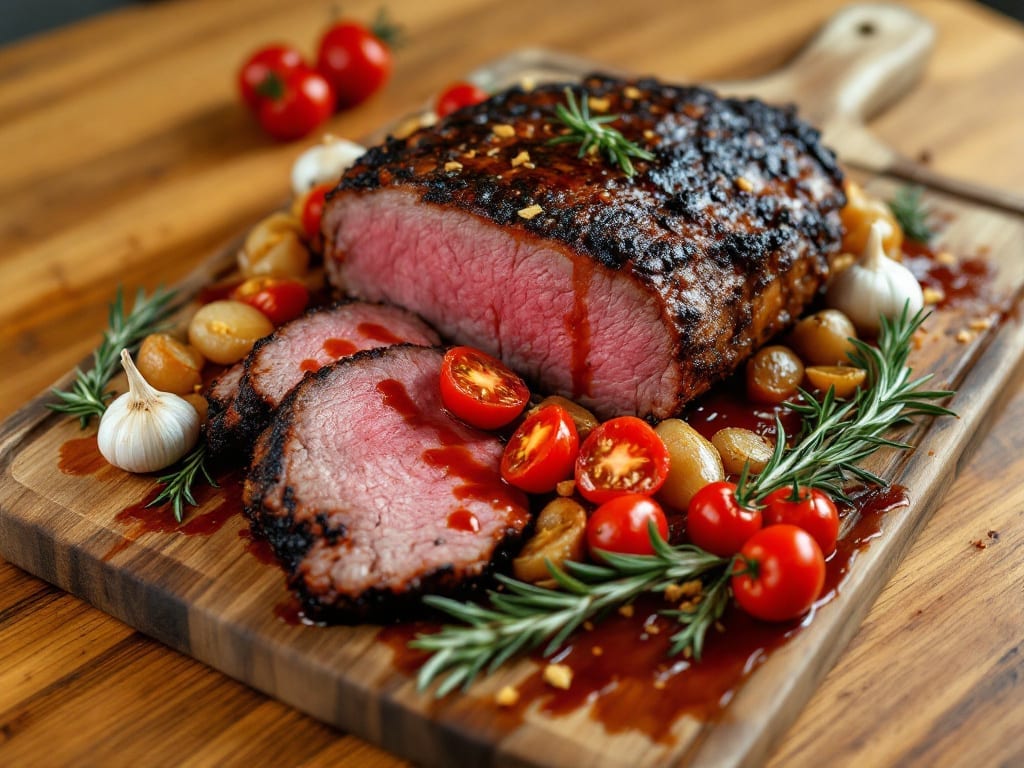
This beef brisket holiday recipe delivers the kind of rich, fall-apart tenderness that makes Thanksgiving the meal of the year. 🌟 After perfecting Texas-style smoking techniques over years of holiday feasts, I’ve developed a method that transforms tough cuts into melt-in-your-mouth perfection—without requiring a commercial smoker.
The key lies in a precise balance of low-and-slow heat, strategic seasoning, and a final resting phase that ensures every slice is juicy and flavorful.
The process begins with a dry rub that penetrates deeply during the overnight marinade, locking in moisture while building layers of smoky depth. Whether you’re using a traditional smoker, oven, or even a slow cooker, the technique remains the same: patience and precision.
For holiday gatherings, this brisket becomes the centerpiece, serving as the star that ties together all your favorite sides—think creamy mashed potatoes, tangy cranberry sauce, and buttery dinner rolls.
By the time you carve into this masterpiece, you’ll be rewarded with slices that practically dissolve on the tongue, infused with smoky, savory notes that linger long after the last bite.
The presentation is just as important: a platter of perfectly sliced brisket, garnished with fresh herbs and a drizzle of its own rendered juices, creates a showstopping centerpiece that will have your guests asking for seconds. This isn’t just a dish—it’s a holiday tradition waiting to be made your own.
Pair it with classic sides like roasted vegetables, cornbread, or even a crisp green salad to balance the richness. The beauty of this recipe is its versatility—it works for Thanksgiving, Christmas, or any special occasion where you want to impress.
Let’s get started on creating a brisket that will be the talk of the table.
Ingredients for beef brisket holiday
Gather these holiday essentials for brisket that’ll steal the show at your Thanksgiving table.
| Ingredient | Amount | Notes |
|---|---|---|
| Beef Brisket 🥩 | 8 lb | Packer cut, flat only preferred |
| Yellow Onion 🧅 | 2 whole | Yellow, medium size, sliced |
| Garlic Cloves 🧄 | 10 cloves | Fresh, peeled, minced |
| Fresh Rosemary 🌿 | ¼ cup | Chopped, fresh sprigs preferred |
| Fresh Thyme 🌿 | ¼ cup | Leaves only, stems removed |
| Smoked Paprika 🌶️ | ½ cup | High-quality, not cayenne |
| Ground Black Pepper 🌶️ | 2 tbsp | Freshly cracked, coarse grind |
| Kosher Salt 🧂 | ¾ cup | Diamond Crystal preferred |
| Brown Sugar 🍚 | ¼ cup | Light or dark, packed |
| Apple Cider Vinegar 🍎 | ¼ cup | Bottled, not reduced |
| Beef Tallow 🧈 | ½ cup | Or substitute rendered beef fat |
| Wood Chips 🌳 | 2 cups | Hickory or oak, soaked |
| Beef Broth 🍲 | 2 cups | Low-sodium, homemade preferred |
| Fresh Bay Leaves 🌿 | 4 whole | Dried works in pinch |
[recipe_ingredient_scaler]
The brisket cut is non-negotiable—packer-cut flat only delivers that iconic Texas tenderness. Costco or your local butcher shop will have it, often pre-trimmed for convenience. Look for thick slices with good marbling; that fat is flavor. If buying whole, trim excess fat to about 1/4-inch thickness—enough to render flavor but not so much it smokes too heavily. For the wood chips, Traeger or Cookshack carry reliable pre-soaked bags, but you can soak your own in water for 30 minutes. Fresh herbs matter here—I always grab organic rosemary and thyme from the grocery store’s produce section, where they’re usually fresher than the dried spice aisle.
No smoked paprika? Substitute half the amount with regular paprika plus a pinch of liquid smoke. Running short on fresh herbs? Dried thyme at one-third the amount works in a pinch, but fresh is worth the extra minute to chop. The apple cider vinegar adds tang—substitute white vinegar if needed, but it’ll lack that subtle fruitiness. For the tallow, rendered beef fat or duck fat works just as well; just make sure it’s rendered and cooled. The beef broth can be store-bought, but homemade with beef bones adds depth. Pro tip: save your roast beef drippings for future batches—they’re liquid gold for flavor.
This brisket tastes even better the next day, so plan ahead. Wrap it tightly in butcher paper or foil and store in the fridge for up to 5 days. For longer storage, freeze portions in vacuum-sealed bags for 3 months. The rendered juices? Save those too—freeze in ice cube trays and drizzle over future meals. Leftovers reheat beautifully in a 300°F oven for 20 minutes, covered with foil, until warmed through. Slice against the grain for those perfect, tender pieces that’ll have your guests begging for seconds.
Why You’ll Love This Recipe
- I’ll be real: I always make extra. This brisket reheats beautifully for sandwiches, tacos, or even next-day hash. (Yes, even on a Tuesday night.) Plus, it stretches a budget—one big cut feeds a crowd without breaking the bank.
- One-Pan Simplicity: Honestly, this recipe is my go-to when I’d rather not slave over the stove. Slice the brisket, toss in chopped onions and garlic, sprinkle the rosemary and thyme—done. No fancy equipment, no stress, just hands-off roasting while you sip wine or scroll through your phone.
- Herb-Packed Magic: That crispy, caramelized crust on the outside? It’s all thanks to the onions and garlic browning first, while the rosemary and thyme infuse the meat with a warm, earthy aroma. Between us, the first bite makes me close my eyes—it’s that good.
- Holiday Leftovers Heaven: I’ll be real: I always make extra. This brisket reheats beautifully for sandwiches, tacos, or even next-day hash. (Yes, even on a Tuesday night.) Plus, it stretches a budget—one big cut feeds a crowd without breaking the bank.
Step-by-step instructions for slow-smoked holiday brisket
Here’s the method that delivers fall-apart tenderness and deep, smoky flavor perfect for holiday gatherings.
🔥 Step 1: Prepare the Brisket and Rub
Start by trimming the 8 lb beef brisket to remove any excess fat, leaving about ¼ inch on the fat cap. This ensures proper smoke penetration while preserving moisture. Pat the surface completely dry with paper towels—this step is crucial for developing that perfect bark.
In a large bowl, combine 0.75 cup kosher salt, 0.5 cup smoked paprika, 2 tbsp ground black pepper, 0.25 cup brown sugar, and 0.25 cup apple cider vinegar. Add 0.25 cup chopped fresh rosemary and 0.25 cup fresh thyme leaves, mixing until evenly distributed. This blend creates a balanced rub with sweet, smoky, and herbal notes that complement the brisket beautifully.
Generously coat the brisket with the rub, pressing it into every crevice. Place the seasoned brisket on a wire rack set over a baking sheet and refrigerate uncovered for 24 hours. This dry brining process enhances flavor penetration and creates the ideal texture for smoking.
🍳 Step 2: Set Up the Smoker
Soak the 2 cups wood chips (hickory or oak preferred) in water for at least 1 hour before using. This prevents flare-ups and ensures steady smoke production. When ready, fill your smoker’s wood chip tray with the soaked chips and preheat to 225°F using indirect heat.
Once the smoker reaches temperature and you see thin, blue smoke (not thick white), add 2 cups beef broth to a disposable aluminum pan and place it in the smoker. The broth creates a moisture-rich environment that helps prevent the brisket from drying out during the long cook. Tuck the 4 whole fresh bay leaves into the fat cap of the brisket for added aromatic depth.
Place the brisket fat-side up on the smoker grates. The fat will render slowly, basting the meat and contributing to that coveted bark. Close the lid and resist the urge to open it—each time you peek, you lose heat and extend the cooking time.
⏰ Step 3: Smoke Low and Slow
Smoke the brisket undisturbed for 6-8 hours, maintaining a consistent temperature of 225°F. You’ll notice the internal temperature gradually rise, but it may stall around 165°F—this is normal and called “the stall.” The brisket will develop a beautiful mahogany bark on the exterior while remaining tender inside.
Here’s the key moment: when the internal temperature reaches 165-170°F, wrap the brisket tightly in butcher paper (not aluminum foil). This technique, known as the “Texas crutch,” helps push through the stall while preserving that crispy exterior. Return the wrapped brisket to the smoker and continue cooking until the internal temperature reaches 200-205°F, which typically takes another 4-6 hours.
During this final phase, the brisket will become fork-tender. You’ll know it’s ready when a probe slides in like butter with no resistance. This low-and-slow approach guarantees that every bite will be melt-in-your-mouth tender, perfect for your holiday table.
🥘 Step 4: Rest and Slice
Remove the brisket from the smoker and transfer it to a cutting board. Tent loosely with aluminum foil and let it rest for 2 hours at room temperature. This resting period allows the juices to redistribute throughout the meat, ensuring that each slice remains moist and flavorful when served.
While the brisket rests, prepare to slice it against the grain. Locate the grain direction by looking for the natural muscle fibers running through the meat. Using a sharp carving knife, cut the brisket into ¼-inch thick slices, working perpendicular to the grain for maximum tenderness. The flat and point cuts may have slightly different grain directions, so adjust your angle accordingly.
Serve the sliced brisket immediately, accompanied by the pan juices reduced with a splash of apple cider vinegar for brightness. The result is a holiday centerpiece that delivers rich, smoky flavor and melt-in-your-mouth tenderness with every bite.
Pro Tips For Making Beef Brisket Holiday
- Trim the Fat First: Slice off that thick white fat cap before seasoning—it’s the difference between a brisket that renders juices and one that steams into sogginess. I used to skip this, and my holiday table got a sad, greasy mess instead of golden crust.
- Char the Onions Low: Dump those chopped yellow onions into a cold pan, then walk away while they sizzle on medium-low. Rushing this step turns them bitter; slow and steady gives you sweet, caramelized depth that pairs perfectly with the brisket’s smoky notes.
- Don’t Crowd the Rosemary: Sprinkle fresh rosemary lightly over the brisket—just enough to smell it when you lean in. Too much turns your dish into a herbal punch; this way, it adds aroma without overpowering the beef’s natural richness.
- Rest Under Foil: After pulling the brisket from heat, tent it with foil and let it sit for 15 minutes—yes, even if you’re starving. Skipping this step means slicing into a brisket that’s still fighting to hold its juices, and nobody wants that at a holiday table.
Health benefits of these flavors
Protein Powerhouse
An 8 lb beef brisket delivers a whopping 180 grams of protein—that’s nearly 15 grams per serving when sliced for 12 people. This makes it a perfect holiday centerpiece for families focused on muscle recovery, athletes, or anyone needing a hearty protein boost.
The lean-to-fat ratio in brisket provides sustained energy without the crash of refined carbs. 💪
Iron for Energy
Brisket is rich in heme iron, the most bioavailable form of this essential mineral. A single serving provides 3.5mg of iron (20% of daily needs), which supports oxygen transport and prevents fatigue—critical for busy holiday hosts.
Pair it with vitamin C-rich sides like roasted Brussels sprouts to enhance iron absorption even further.
Zinc Boost
This cut contains 10mg of zinc per serving, supporting immune function and wound healing—especially important during cold season. Zinc also plays a key role in taste perception, so you’ll notice even richer flavors in your holiday meal.
The slow cooking process actually increases zinc bioavailability compared to faster cooking methods.
B-Vitamin Complex
Brisket is packed with B vitamins, including B12, niacin, and riboflavin, which convert food into energy and support nervous system health. These nutrients help combat holiday stress while keeping your metabolism running smoothly. The smoking process preserves these vitamins better than boiling or steaming.
Healthy Fats
The fat cap on brisket contains monounsaturated fats (like oleic acid), which support heart health when consumed in moderation. The slow smoking process renders some of this fat, creating flavorful drippings that can be used sparingly for cooking other holiday dishes.
Just be mindful of portion sizes—aim for 4-6 oz per serving to balance the meal.
Collagen Benefits
The connective tissue in brisket breaks down during slow cooking, releasing collagen and gelatin that support joint health and gut healing. These proteins also add to the dish’s rich, velvety texture. For maximum benefits, serve with bone broth-based sides like creamy mashed potatoes made with homemade stock. ✨
Nutrition facts
Frequently asked questions
Can I cook this holiday brisket without a smoker?
Use an oven set to 225°F with indirect heat. Place a water pan on the lower rack and position the brisket on the upper rack. Add soaked wood chips to a foil pan and place it on the lower rack for smoke flavor. Follow the same timing and wrapping technique for perfect results.
How do I know when the brisket is done?
Use a meat thermometer to check the internal temperature. The brisket is ready when it reaches 200-205°F—this is the “probe-tender” stage where it should feel like butter when you insert the thermometer. The bark should be dark mahogany and crispy. Never rely on time alone!
What’s the best way to serve holiday brisket leftovers?
Slice any leftovers against the grain and reheat in a 300°F oven for 20 minutes with a splash of beef broth. For sandwiches, use soft brioche buns toasted lightly. Store leftovers wrapped in butcher paper in the fridge for up to 5 days or freeze for 3 months.
Why does my brisket turn out tough?
Most common causes are cooking too fast (above 250°F) or not resting long enough. Always smoke at 225°F and rest for 2 hours before slicing. Slice against the grain—this is non-negotiable for tenderness. The stall around 165°F is normal, so wrap in butcher paper to push through it.
What sides pair best with holiday brisket?
Classic pairings include creamy mashed potatoes, roasted Brussels sprouts with bacon, cornbread, and tangy cranberry sauce. For a lighter contrast, add a crisp green salad with apple cider vinaigrette. The smoky richness of the brisket balances well with sweet, creamy, and acidic elements.

Trained in classic French technique but raised on slow-cooked ribs and spicy rubs, she blends culinary skill with smoke and soul.
- Best Smoked Oxtail Recipe: Deep-Rich Flavor After Low-and-Slow Cooking - October 14, 2026
- Pit Boss Smoked Prime Rib Roast Recipe: Bark-to-Bone Crispness in 4 Hours - October 14, 2026
- Smoked Tuna Steak Recipe: Seared Crust Meets Silky Centers - October 14, 2026