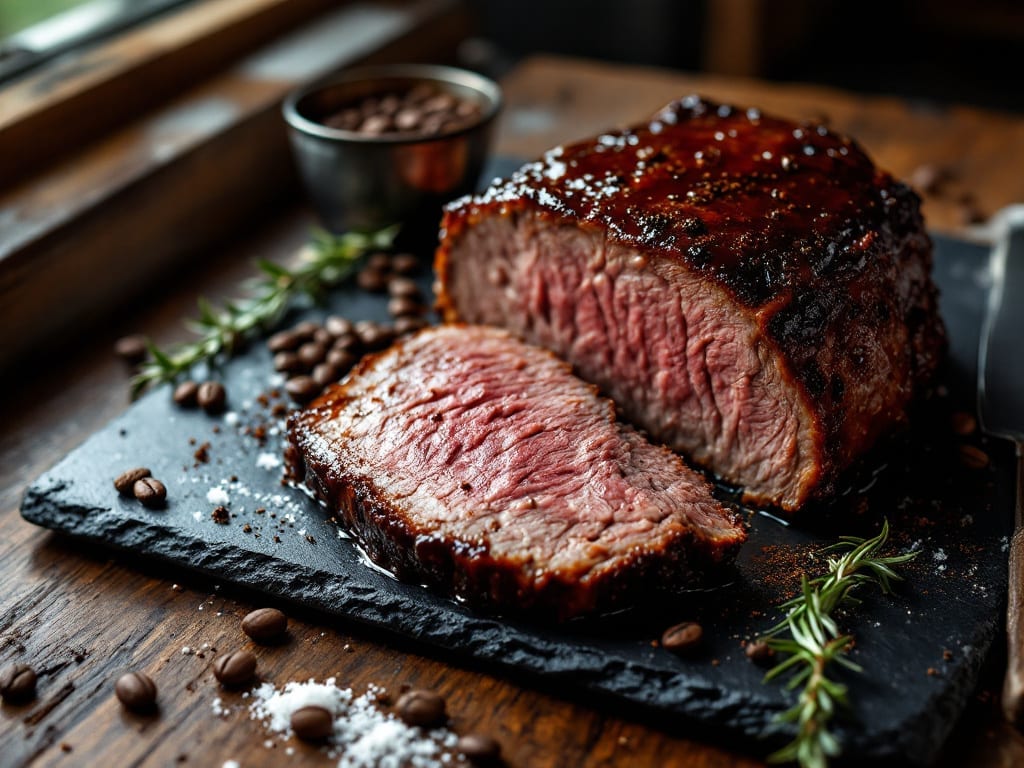
Mastering a baked brisket recipe that delivers smoky, fall-apart tenderness without a smoker is the game-changer I perfected after years of backyard cookouts and French technique experiments.
The key lies in balancing molasses for depth, slow heat for texture, and precise timing to transform tough meat into something restaurant-worthy—something that makes your kitchen smell like a Texas BBQ joint at 2 AM.
This method starts with a dry rub of coffee, smoked paprika, and brown sugar, then lets the brisket bake low and slow for 6 hours at 275°F, basted every 45 minutes with apple cider and molasses.
The result? A crust so rich it cracks when you slice, and meat so tender it practically melts on the bone. No smoker needed—just patience and a well-seasoned Dutch oven.
By the final hour, your kitchen will be filled with an aroma so intoxicating it’ll have neighbors knocking on your door. The brisket emerges with a deep mahogany crust, juices flowing like rivers, and a flavor profile that marries smoky heat with sweet molasses notes.
Serve it sliced against the grain on crusty bread with pickled onions and a side of buttery mashed potatoes—this is the kind of meal that turns weeknights into celebrations.
Whether you’re feeding a crowd or treating yourself to a Sunday feast, this recipe scales beautifully. The leftovers? Even better the next day, reheated gently with a splash of beef broth to restore that perfect juiciness. Here’s how to make it happen—no shortcuts, just foolproof technique and professional results.
Ingredients for baked brisket
Six hours of patience, twelve ingredients for a brisket that rivals Texas BBQ.
| Ingredient | Amount | Notes |
|---|---|---|
| Beef Brisket 🥩 | 4 lb | Whole packer cut, fat cap intact |
| Dark Brown Sugar 🍬 | ½ cup | Packed, not light brown |
| Smoked Paprika 🌶️ | 3 tbsp | High-quality for smoky depth |
| Finely Ground Coffee ☕ | 2 tbsp | Freshly ground preferred |
| Kosher Salt 🧂 | 2 tbsp | Diamond Crystal preferred |
| Freshly Ground Black Pepper 🌶️ | 1 tbsp | Coarse grind for texture |
| Unsalted Butter 🧈 | ¼ cup | Cold, cubed for basting |
| Molasses 🍯 | ¼ cup | Unsulphured for authentic flavor |
| Apple Cider 🍎 | 1 cup | Unfiltered for richness |
| Garlic Cloves 🧄 | 4 cloves | Smashed for infusion |
| Fresh Rosemary 🌿 | ¼ cup | Chopped, stems removed |
| Beef Broth 🥫 | 1 cup | Low-sodium for reheating |
[recipe_ingredient_scaler]
The brisket is non-negotiable—4 pounds of whole packer cut with the fat cap on. This is what gives you that crackling crust and melt-in-your-mouth texture. Skip the pre-cut pieces from the grocery store; Costco or local butchers are your best bets. Look for good marbling—those little white streaks of fat are your friend. If you can’t find a whole brisket, a flat cut works in a pinch, but it won’t be quite the same. The fat cap? Never trim it. That’s where all the flavor hides. I’ve made this with chuck roast when I couldn’t find brisket, but it’s a different beast entirely.
No smoked paprika? Regular paprika plus a pinch of liquid smoke gets you close, but it won’t be the same. The coffee is key—freshly ground makes all the difference. No grinder? Instant espresso powder at half the amount works in a bind. Molasses is a game-changer—unsulphured is what you want, but if you only have sulphured, it’ll still taste great. The apple cider can be swapped for unsweetened apple juice, though it won’t have quite the same depth. And if you’re out of rosemary, thyme or sage will do, but it’ll change the flavor profile slightly.
This brisket reheats like a dream—just slice it and warm with a splash of beef broth in a skillet. Keeps for 5 days in the fridge, or freeze for up to 3 months. I like to portion it into 1-inch slices and freeze them individually so I can grab what I need. The leftovers? Even better the next day. That’s when all the flavors really meld together. And save the fat—it’s liquid gold for future dishes.
Why You’ll Love This Recipe
- No-Fuss Oven Magic: I swear by this—just rub the brisket with salt, coffee, and paprika, then let the oven do the work. No smoker, no babysitting, no stress. That dark brown sugar caramelizes into a sticky, savory crust without me having to monitor it for hours.
- Deep, Unexpected Layers: Between the coffee’s bitterness cutting through the richness and the smoked paprika adding warmth, this isn’t your grandma’s brisket. It’s got this je ne sais quoi—like a slow-cooked pot roast met a bold cup of coffee, but in one dish.
- Leftovers That Beg for More: Honestly, I make this on Sundays just so I can reheat slices all week. The meat stays tender, the sugar keeps it moist, and my kids actually ask for it—even over pizza. (Yes, even on a Tuesday night.)
- Budget-Friendly Crowd-Pleaser: A whole brisket feeds my family for days, and the ingredients? Basic. The coffee and sugar aren’t fancy, but they transform this into something special without breaking the bank. Plus, it’s cheaper than takeout and way better.
Step-by-step instructions for smoky, slow-roasted brisket
Here’s how to transform that tough brisket into melt-in-your-mouth tenderness with deep molasses flavor.
Prepare the Brisket and Rub
Start by trimming the fat cap of the 4 lb beef brisket to about ¼-inch thickness—leave enough to protect the meat but not so much it prevents even cooking. Pat the entire surface dry with paper towels, getting into all the crevices. This drying step is crucial because moisture on the surface prevents that perfect bark from forming later.
In a small bowl, combine the 0.5 cup dark brown sugar, 3 tbsp smoked paprika, 2 tbsp finely ground coffee, 2 tbsp kosher salt, and 1 tbsp freshly ground black pepper. Mix thoroughly until the sugar is completely dissolved and the spices are evenly distributed. Here’s the thing—don’t skip the coffee. It adds a subtle depth that complements the molasses beautifully. Rub this mixture all over the brisket, pressing it into the meat so it sticks. Let it sit at room temperature while you preheat the oven.
Sear and Deglaze for Maximum Flavor
Preheat your oven to 300°F. Heat a Dutch oven over medium-high heat and add the 0.25 cup unsalted butter. Once the butter is foaming, place the brisket fat-side down in the pan. Let it sear undisturbed for 5 minutes until the fat is golden brown and crispy. Flip the brisket and sear the other side for another 5 minutes. This step builds that rich, caramelized crust that holds all the flavors together.
Remove the brisket and set it aside. In the same Dutch oven, pour in the 1 cup apple cider and scrape up all those delicious browned bits from the bottom of the pan. Let it simmer for 3 minutes until reduced by about half. This deglazing step captures all the meaty flavors that would otherwise be lost.
Slow Roast with Molasses and Rosemary
Return the brisket to the Dutch oven, fat-side up. Add the 0.25 cup molasses and the 4 smashed garlic cloves, spreading them around the brisket. Pour in the reduced apple cider mixture and the 1 cup beef broth. The liquid should come about halfway up the sides of the brisket. Sprinkle the 0.25 cup chopped fresh rosemary over the top.
Cover the Dutch oven with a tight-fitting lid and transfer it to the preheated oven. Roast for 3 hours. Here’s where the magic happens—low and slow breaks down the tough collagen in the meat, transforming it into silky tenderness. After 3 hours, check the internal temperature with a meat thermometer. It should read around 195°F, and the meat should be fork-tender. If it’s not quite there yet, continue roasting for another 30- to 60-minute increments until it reaches this point.
Rest and Slice for Perfect Texture
Once the brisket reaches 195°F, remove it from the oven and transfer it to a cutting board. Tent it loosely with aluminum foil and let it rest for at least 30 minutes. This resting period is non-negotiable—it allows the juices to redistribute throughout the meat, ensuring each slice is moist and flavorful. Real talk: Skipping this step means dry, tough meat. Don’t skip it.
After resting, slice the brisket against the grain into ¼-inch thick slices. The grain direction will be visible as lines running through the meat. Serve immediately with the pan juices spooned over the top. Each slice should be tender enough to pull apart with a gentle tug, with a dark, glossy crust that’s packed with smoky, molasses-infused flavor. This is the moment that matters—where all your effort pays off in perfect tenderness.
Pro Tips For Making Baked Brisket
- Trim the Fat First: The grain of the brisket runs along the fat cap—don’t cut it off. Instead, score it in a crosshatch pattern every ½ inch. This lets the dark brown sugar and paprika melt into the meat instead of pooling on top like sad, unabsorbed glaze.
- Salt Before Roasting: I used to salt the brisket right before baking, but the crust never formed right. Now I salt it 12 hours ahead—let it sit uncovered in the fridge. The salt breaks down the proteins, and the surface dries out just enough for that perfect crust when you bake it.
- Skip the Coffee Sprinkle: That finely ground coffee in the rub? It’s not just for flavor—it’s for moisture control. If your brisket is on the lean side, sprinkle 1 tablespoon directly over the meat after searing but before adding the sugar-paprika mix. It’ll keep the surface from drying out too fast.
- Bake at 300°F, Not Higher: I learned this the hard way—brisket needs low-and-slow patience. If you crank the oven to 350°F or higher, the exterior will burn before the center hits 195°F. Set it to 300°F and let it work its magic; the sugar will caramelize slowly, not scorch.
Flavor customization for these flavors
Sweet Heat Balance
For a brisket with a perfect sweet-spicy balance, I like adding 1 tbsp cayenne pepper to the dry rub alongside the smoked paprika. The cayenne brings heat that cuts through the molasses richness beautifully.
If you want to dial it back, use ½ tsp instead—just enough to wake up your taste buds. 🌶️
Another trick I picked up from a Texas pitmaster is adding 1 tbsp chipotle powder to the rub. This gives you that smoky, slightly sweet heat without overwhelming the molasses. It’s the kind of depth you’d expect from a competition-winning brisket.
Herb Variations
Fresh rosemary is my go-to, but if you’re foraging along the coast like I do, swap it for wild thyme or sage for a completely different profile.
The thyme adds a subtle earthiness that pairs perfectly with the molasses. For a brighter note, try fresh oregano—it’s bold but not overpowering. 🌿
If you’re feeling adventurous, add 1 tbsp fresh cilantro during the final hour of cooking. The bright, citrusy notes cut through the richness and add a fresh twist that’s especially great if you’re serving it with a tangy slaw.
Umami Boosters
For an extra layer of depth, stir 1 tbsp soy sauce or 1 tsp fish sauce into the apple cider before deglazing. The umami punch elevates the brisket to restaurant-quality levels. I’ve also used 1 tbsp Worcestershire sauce in the basting liquid—it’s a game-changer for adding complexity. 💡
If you’re a fan of bold flavors, add 2 tbsp tomato paste to the Dutch oven along with the molasses. It deepens the color and adds a subtle tang that complements the sweetness. Just make sure to stir it in well so it doesn’t clump.
Spiced Wine Twist
Swap the apple cider for ½ cup red wine (like a bold Cabernet Sauvignon) mixed with ½ cup beef broth. The wine adds a sophisticated depth that’s perfect for a dinner party. Deglaze with the wine first, then reduce it by half before adding the brisket back in. 🍷
For a spiced wine variation, add 1 cinnamon stick and 3 whole cloves to the Dutch oven while it roasts. These spices infuse the liquid with warmth and complexity, making the brisket taste like it’s been simmering for hours. Remove the spices before serving, though!
Nutrition facts
Frequently asked questions
Why does my brisket turn out tough even after slow cooking?
Toughness usually means you didn’t cook it long enough at the right temperature or didn’t rest it properly. Aim for an internal temp of 195°F—this breaks down collagen for tenderness. Also, always rest for 30 minutes before slicing. If you sliced too soon, the juices escape, leaving dry meat.
Can I use a different cut of beef instead of brisket?
While brisket is ideal, you can try chuck roast or beef short ribs with adjustments. Chuck needs 10-15 minutes longer at 275°F to tenderize. Short ribs will have more fat, so reduce cooking time by 1 hour and watch for doneness at 190°F.
How do I know when the brisket is done without a meat thermometer?
Press the meat with your finger—if it feels like butter or tofu, it’s ready. The probe should slide in easily, and the juices should run clear. If you’re unsure, cook it 15 minutes longer—brisket is hard to overcook when done this way.
What’s the best way to reheat leftover brisket?
Slice it and warm gently in a skillet with 2 tbsp beef broth over low heat for 3-5 minutes. Never microwave—it makes the meat dry. For whole leftovers, wrap tightly in foil and bake at 300°F for 20 minutes before slicing.
Can I make this brisket in an Instant Pot?
Yes, but with modifications! Sear first, then cook on low pressure for 90 minutes with 1 cup liquid**. Release pressure naturally, then shred or slice. The texture won’t be identical, but it’s a great shortcut. For best results, finish with 10 minutes in a 400°F oven to crisp the bark.

Trained in classic French technique but raised on slow-cooked ribs and spicy rubs, she blends culinary skill with smoke and soul.
- Best Smoked Oxtail Recipe: Deep-Rich Flavor After Low-and-Slow Cooking - October 14, 2026
- Pit Boss Smoked Prime Rib Roast Recipe: Bark-to-Bone Crispness in 4 Hours - October 14, 2026
- Smoked Tuna Steak Recipe: Seared Crust Meets Silky Centers - October 14, 2026