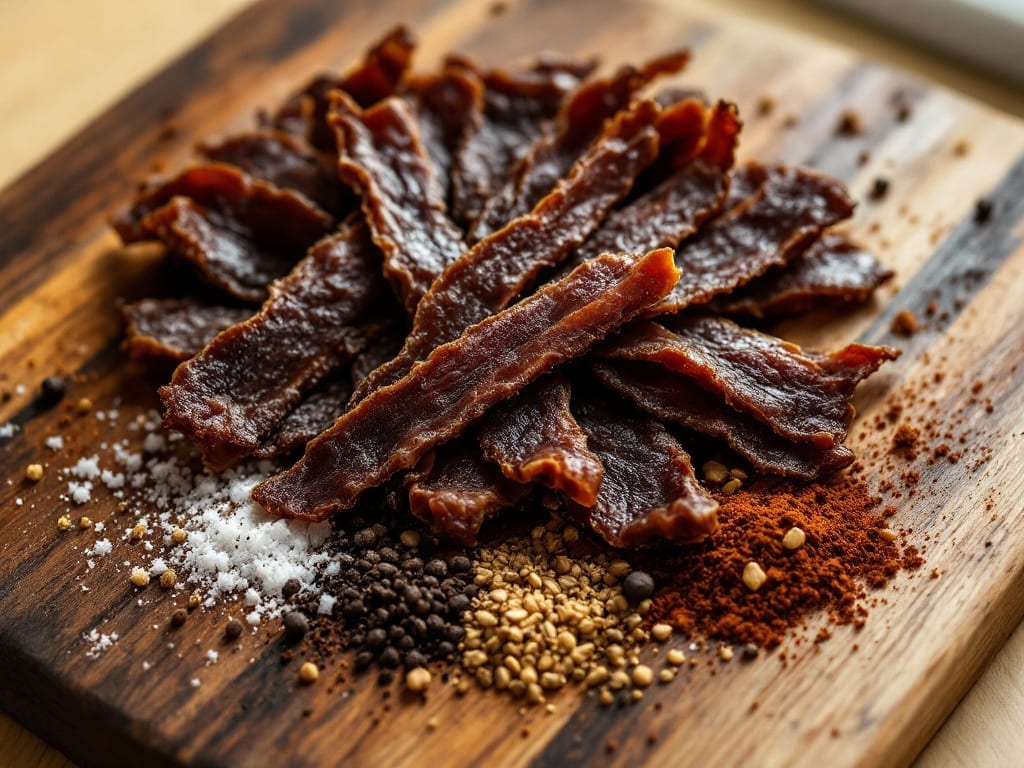
Mastering this beef brisket jerky recipe transforms tough brisket into smoky-spiced jerky without a smoker—where French precision meets pitmaster passion. I developed this method after years of perfecting the balance between tender texture and bold flavor—no fancy equipment required.
The key lies in proper curing, precise slicing, and controlled drying, all of which we’ll tackle step by step.
What sets this recipe apart is the deep, complex flavor achieved through a blend of coffee, smoked paprika, and black pepper—all while maintaining that perfect chewy texture.
Unlike store-bought jerky, this version delivers restaurant-quality results in just 12 hours of active prep and drying time, making it ideal for meal prep or trail snacks. The process is straightforward but demands attention to detail for safety and quality.
By the time you’re done, you’ll have tender, flavor-packed jerky with a satisfying snap and layers of smoky heat. The curing solution ensures food safety while preserving moisture, and the drying method guarantees that perfect texture without overcooking.
This is jerky that stands up to any BBQ competition—just without the hours spent over a smoker.
Perfect for stocking your pantry, packing for hikes, or serving as an appetizer with bold flavors. Let’s get started on creating jerky that’ll impress even the most seasoned pitmasters.
Ingredients for beef brisket jerky
Fourteen ingredients. Twelve hours. Restaurant-quality brisket jerky without the smoker—game-changer for pitmasters and pantry stockers alike.
| Ingredient | Amount | Notes |
|---|---|---|
| Beef Brisket 🥩 | 2 lb | Flat cut, trimmed of fat |
| Instant Coffee Granules ☕ | 2 tbsp | Finely ground for deep flavor |
| Smoked Paprika 🌶️ | 2 tbsp | High quality for smoky depth |
| Black Peppercorns 🌶️ | 1 tbsp | Freshly cracked for intensity |
| Kosher Salt 🧂 | 1 tbsp | Diamond Crystal preferred |
| Granulated Garlic 🧄 | 1 tbsp | For consistent flavor distribution |
| Onion Powder 🧅 | 1 tbsp | Freshly ground preferred |
| Brown Sugar 🍚 | ½ cup | Lightly packed for moisture |
| White Vinegar 🍶 | ½ cup | Distilled preferred for clarity |
| Water 💧 | 1 cup | Filtered for best results |
| Soy Sauce 🍜 | 2 tbsp | Low-sodium preferred |
| Worcestershire Sauce 🍶 | 1 tbsp | Lea & Perrins for authenticity |
| Corn Syrup 🍯 | 2 tbsp | Light corn syrup preferred |
| Vegetable Oil 🫒 | 1 tbsp | For slicing ease |
[recipe_ingredient_scaler]
The beef brisket is non-negotiable here—flat cut delivers the perfect balance of tenderness and chew. Grab it from Costco or your butcher counter, but trim that fat like your dinner depends on it (because it does). For the spices, Penzeys or the bulk bins at Whole Foods are your best bets—freshly ground spices make all the difference. The instant coffee granules? Don’t use regular coffee—it clumps and ruins the texture. And trust me, Lea & Perrins Worcestershire is worth the splurge for that umami punch that separates homemade from store-bought.
No smoked paprika? Substitute with 1 tbsp regular paprika plus 1/2 tsp liquid smoke—it’s a cheat, but it works in a pinch. Running low on brown sugar? Honey or maple syrup at half the amount keeps things moist. The curing solution needs to be precise—measure every ingredient carefully. If you’re worried about the vinegar’s sharpness, add an extra 1/2 tsp of brown sugar to balance it. And for the love of all things jerky, don’t skip the corn syrup—it’s the secret to that perfect chewy texture without drying out your meat.
This curing solution keeps in the fridge for up to 1 week—make a double batch if you’re prepping for a week of hikes. The brisket will stay safe in the cure for 24 hours max before slicing and drying. For drying, a dehydrator is ideal, but a well-ventilated oven at 165°F works too. Store the finished jerky in airtight containers or vacuum-sealed bags for up to 3 months—it’ll stay fresher than anything you’ve ever bought at the gas station.
Why You’ll Love This Recipe
- No-Fuss Prep: The brisket slices thin and the marinade—just coffee, smoked paprika, and salt—goes on in minutes. I swear, I’ve made this while scrolling through my phone.
- Deep, Smoky Kick: That instant coffee isn’t just for drinks—it adds a rich, almost campfire-like depth. The smoked paprika? It’s what turns this from jerky to your jerky.
- Snack Anywhere: Toss a handful in your gym bag, pack it for road trips, or keep it on your desk. It’s the one snack that doesn’t need a plate or a napkin.
- Budget Stretch: A single brisket feeds me for days—no waste, no fuss. And honestly? It’s cheaper than takeout, but way more satisfying. (Yes, even on a Tuesday night.)
Step-by-step instructions for beef brisket jerky
Here’s how to transform tough brisket into irresistibly chewy, smoky jerky without a smoker.
Prepare the Brisket for Perfect Slicing
First, chill the 2 lb beef brisket in the freezer for 30 minutes to firm up the fat. This makes slicing much easier and ensures even thickness. Use a sharp boning knife to slice against the grain into ⅛-inch thick strips—about ¼-inch wide and 2-3 inches long. You should end up with roughly 200-250 slices for proper drying.
Here’s the thing—if your slices vary in thickness, some pieces will dry too quickly while others remain chewy. I like to weigh my slices to ensure consistency: each should be between 0.75 and 1 ounce. Place the slices in a single layer on a baking sheet lined with parchment paper and refrigerate while you prepare the marinade.
Create the Flavor-Packed Marinade
In a large mixing bowl, combine the 1 cup water, 0.5 cup white vinegar, 2 tbsp soy sauce, 1 tbsp Worcestershire sauce, 2 tbsp corn syrup, 0.5 cup brown sugar, 2 tbsp smoked paprika, 1 tbsp granulated garlic, 1 tbsp onion powder, 1 tbsp kosher salt, and 1 tbsp black peppercorns. Whisk vigorously until the brown sugar and corn syrup fully dissolve—this creates a syrupy base that clings to the meat.
Real talk: the instant coffee granules are the secret weapon here. Add them now and whisk until completely dissolved. The coffee enhances the meaty depth and balances the sweetness. Pour the marinade over the brisket slices, ensuring every piece is thoroughly coated. Transfer to a resealable plastic bag and marinate in the refrigerator for at least 12 hours, though 24 hours yields maximum flavor penetration.
Coat and Cure the Jerky
After marinating, remove the brisket slices and pat them dry with paper towels—this prevents a watery jerky. Return them to the mixing bowl and drizzle with the 1 tbsp vegetable oil. Toss gently to distribute evenly, then transfer to a clean baking sheet lined with fresh parchment paper. Arrange the slices in a single layer, ensuring they don’t overlap.
This is the moment that matters: place the baking sheet in a 350°F oven for 30 minutes. The heat helps the marinade set and begins the curing process. After 30 minutes, remove the jerky and let it cool completely to room temperature before proceeding. This step prevents uneven drying during the dehydration phase.
Dehydrate for Perfect Texture
Preheat your dehydrator to 160°F—this low temperature ensures the jerky dries slowly and retains maximum chewiness. Arrange the cooled brisket slices on dehydrator trays, leaving ½-inch between each piece for proper air circulation. Dehydrate for 6-8 hours, checking periodically to ensure even drying.
You’ll know it’s done when the jerky is leather-like but still pliable—it should bend slightly without breaking. If any pieces feel moist after 6 hours, continue dehydrating for another hour. The white vinegar in the marinade helps preserve the jerky, but proper drying is critical to prevent spoilage.
Test and Store for Maximum Freshness
Let the jerky cool completely before packaging. To test for doneness, pierce a slice with a toothpick—it should come out clean with no moisture. If any slices feel slightly damp, return them to the dehydrator for 15-30 minutes until fully dry.
Store the jerky in an airtight container in the refrigerator for up to 2 weeks or freeze for 3 months. The smoked paprika and instant coffee granules will give it an incredible depth of flavor, while the corn syrup and brown sugar create that perfect balance of sweet and savory. Cut into serving-sized pieces and enjoy the ultimate handheld protein!
Pro Tips For Making Beef Brisket Jerky
- Trim Against the Grain: Slice the brisket perpendicular to the muscle fibers—you’ll get chewier jerky if you fight the grain. I used to skip this, and the result was rubbery. A sharp knife and patience make all the difference.
- Marinate Overnight (Not 4 Hours): The coffee and paprika need time to penetrate that tough brisket—at least 12 hours, ideally 24. I learned this after a rushed batch tasted flat. Cold overnight works best; skip the fridge shortcut.
- Freeze Before Slicing: Harden the brisket for 30 minutes before cutting into strips—it keeps the jerky from shrinking into sad, uneven pieces. I used to slice straight from the fridge, and the thickness varied wildly.
- Use Coarse Salt: Kosher salt clumps dissolve unevenly; crush the peppercorns to avoid gritty bites. I was skeptical until I tried it—now my jerky has a smoother texture and deeper flavor. No excuses.
Best sauces and condiments for this beef brisket jerky
Sweet Heat Balance
The brown sugar and corn syrup in this marinade create that signature sweet-savory balance, but you can adjust the ratio based on your taste. For extra heat, add ½ tsp cayenne pepper or a dash of hot sauce like Tabasco to the marinade.
I like to keep a small bowl of chipotle powder nearby for sprinkling on finished jerky—just ¼ tsp adds smoky depth without overpowering. 🌶️
Umami Boosters
Worcestershire sauce and soy sauce are the unsung heroes here, delivering deep umami flavor. For an extra punch, add 1 tsp fish sauce or 1 tbsp miso paste to the marinade. I once used Red Boat fish sauce and was blown away by how it elevated the entire dish.
If you’re feeling adventurous, try a splash of liquid smoke (about ½ tsp) for that authentic smoky flavor without a smoker. 💫
Acidic Brightness
The white vinegar in the marinade isn’t just for preservation—it brightens the flavors and cuts through the richness. For a tangier kick, swap in apple cider vinegar or rice vinegar at the same ratio.
If you dislike vinegar’s sharpness, balance it with an extra ½ tsp of brown sugar or a pinch of baking soda (just ¼ tsp) to mellow the acidity. 🍶
Herbaceous Twists
Fresh herbs can take this jerky to the next level. Toss the dehydrated jerky with 1 tbsp finely chopped fresh rosemary or thyme before storing. I also love adding ½ tsp of dried oregano to the marinade for a Mediterranean twist.
For a coastal-inspired variation, mix in 1 tsp lemon zest with the herbs—it pairs beautifully with the smoky-sweet flavors. 🌿
Spicy Glazes
Once your jerky is fully dried, you can glaze it for extra flavor. Brush the slices with a mix of 2 tbsp melted butter, 1 tbsp honey, and ½ tsp smoked paprika, then dehydrate for another 1-2 hours at 160°F.
For a spicy kick, add ¼ tsp cayenne to the glaze. This step is optional but adds a restaurant-quality finish. 🔥
Storage Enhancers
To keep your jerky fresh longer, store it in vacuum-sealed bags or airtight glass containers with a silica gel packet to absorb moisture. If you’re prepping for a long trip, add a small bay leaf to the container for subtle aromatic depth.
For a quick flavor boost, store some jerky with crushed red pepper flakes** in a separate container—just sprinkle it on before eating. 💪
Nutrition facts
Frequently asked questions
Why is slicing against the grain so important for jerky?
Slicing against the grain breaks up tough muscle fibers, creating a tender, chewy texture instead of a rubbery bite. The ⅛-inch thickness ensures even drying while maintaining that satisfying snap. Skipping this step means you’ll end up with jerky that’s either too tough or falls apart—neither is ideal!
Can I use a regular oven instead of a dehydrator?
Preheat your oven to 160°F (the lowest setting) with the door slightly ajar for ventilation. Place a wire rack over a baking sheet, arrange slices ½-inch apart, and bake for 6-8 hours. Check frequently to prevent over-drying. Pro tip: Use an oven thermometer to ensure accurate temperature control.
How do I know when the jerky is fully dried?
The jerky is done when it’s leather-like but still pliable—it should bend slightly without breaking. Test by piercing with a toothpick: if it comes out clean with no moisture, it’s ready. Over-drying makes jerky brittle, while under-drying risks spoilage. For extra safety, store in a vacuum-sealed bag to extend freshness.
What’s the best way to store homemade jerky?
Store in an airtight container in the fridge for 2 weeks or freeze for 3 months to preserve flavor and texture. For longer shelf life, vacuum-seal with a silica gel packet to absorb moisture. Avoid plastic bags—they trap humidity and spoil jerky faster. Pro move: Add a bay leaf to the container for subtle aroma!
Can I make jerky without vinegar?
Technically yes, but vinegar is essential for both preservation and flavor balance. If you dislike the taste, try lemon juice or apple cider vinegar instead—they add brightness without overpowering. For a vinegar-free option, boost the salt to 1.5 tbsp and increase drying time by 1-2 hours for safety.

Trained in classic French technique but raised on slow-cooked ribs and spicy rubs, she blends culinary skill with smoke and soul.
- Best Smoked Oxtail Recipe: Deep-Rich Flavor After Low-and-Slow Cooking - October 14, 2026
- Pit Boss Smoked Prime Rib Roast Recipe: Bark-to-Bone Crispness in 4 Hours - October 14, 2026
- Smoked Tuna Steak Recipe: Seared Crust Meets Silky Centers - October 14, 2026