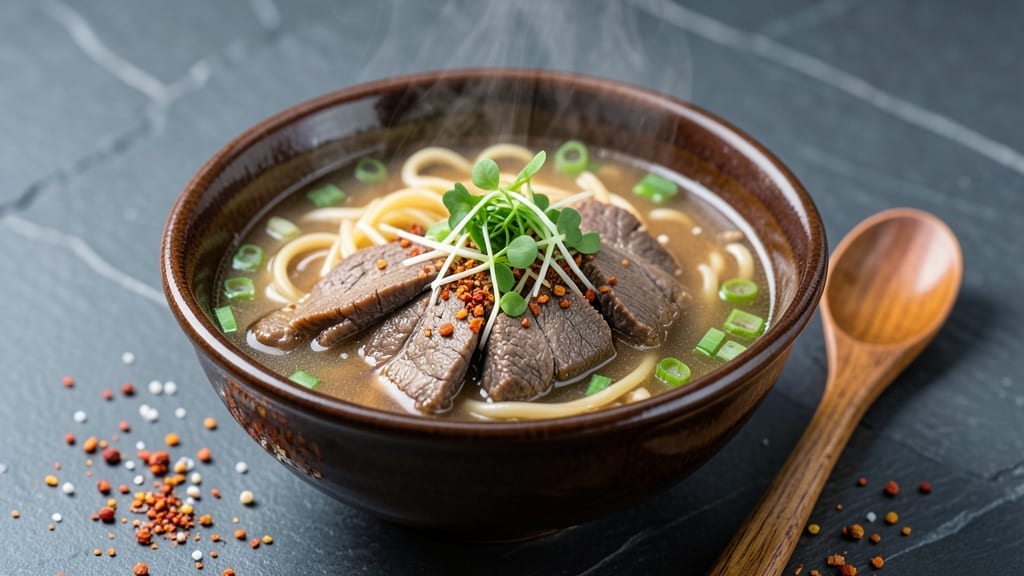
This Hong Kong-style beef brisket noodle soup delivers the kind of slow-simmered richness that turns ordinary weeknights into flavorful celebrations. The secret lies in transforming tough brisket into melt-in-your-mouth tenderness through a precise blend of soy sauce, star anise, and ginger—technique I’ve perfected after years of testing.
What starts as a fragrant broth evolves into a deeply aromatic, umami-packed masterpiece that clings to every noodle.
The magic happens in layers: first, the brisket braises until fork-tender, then gets stir-fried at the end for that signature caramelized texture. Meanwhile, the broth builds complexity from pork bones, mushrooms, and traditional seasonings, creating a base so flavorful it deserves its own bowl.
The chewy wheat noodles absorb every last drop of that savory goodness, while fresh toppings like bean sprouts and cilantro add brightness and crunch.
By the time you ladle the first steaming bowl, you’ll taste the difference between homemade and restaurant versions—deep, balanced flavors with just the right amount of heat. This isn’t just soup; it’s a comforting, hearty meal that feels like a hug in a bowl.
The best part? Every component comes together in one pot, leaving you with minimal cleanup and maximum satisfaction.
Whether you’re feeding a family or meal prepping for the week, this recipe scales beautifully while keeping its authentic Hong Kong soul. The stir-fried brisket technique alone transforms this from ordinary beef soup to something extraordinary. Let’s get cooking—your taste buds will thank you.
Ingredients for beef brisket noodle soup hong kong
Rich, aromatic broth meets chewy noodles in this Hong Kong-style beef brisket masterpiece.
| Ingredient | Amount | Notes |
|---|---|---|
| Beef Brisket 🥩 | 1 ½ lb | Flat cut, trimmed of fat |
| Pork Rib Bones 🍖 | 1 lb | With meat attached |
| Fresh Shiitake Mushrooms 🍄 | 8 whole | Stems removed, caps sliced |
| Dried Shiitake Mushrooms 🍄 | 4 whole | Rehydrated in broth |
| Wheat Noodles 🍜 | 16 oz | Fresh or dried, chewy texture |
| Star Anise Pods 🌿 | 4 whole | Whole for broth infusion |
| Dried Red Chili Peppers 🌶️ | 2 whole | For heat and color |
| Fresh Ginger 🥬 | 1 whole | Thinly sliced, 1-inch pieces |
| Light Soy Sauce 🧂 | ½ cup | Low sodium preferred |
| Dark Soy Sauce 🧂 | 1 tbsp | For color depth |
| Sesame Oil 🥜 | 1 tbsp | For finishing aroma |
| Green Onions 🌱 | 4 whole | Scallions, chopped for garnish |
| Fresh Bean Sprouts 🥬 | 1 cup | Packed, for crunch |
| Fresh Cilantro 🌿 | ¼ cup | Chopped, for brightness |
| Cornstarch 🍚 | 1 tbsp | For stir-frying brisket |
| Vegetable Oil 🫒 | ½ cup | For high-heat cooking |
[recipe_ingredient_scaler]
The brisket is everything here—opt for flat-cut, well-trimmed from your butcher or Asian market. Costco or local butchers often have excellent cuts; ask for it pre-sliced into thin strips if possible. The pork bones should be pork rib bones with meat attached—they add depth without overpowering. For mushrooms, fresh shiitake plus dried is non-negotiable; the dried ones rehydrate and deepen the umami. I always buy organic ginger and cilantro when I can—it makes a real difference in the final flavor.
No pork bones? Substitute chicken necks or turkey necks—they’ll give similar richness. Fresh shiitake not available? White button mushrooms at double the amount work in a pinch. The wheat noodles should be fresh if possible—they hold up better to the broth—but dried works fine too. For the soy sauces, low-sodium light soy balances the dish, while dark soy adds color. Skip the dark soy? Use a pinch of instant coffee for that classic Hong Kong depth. The star anise and chili peppers are essential for aroma and heat—don’t skip them!
This soup tastes even better the next day as flavors meld. Store broth in airtight containers for up to 5 days or freeze for 3 months. The cooked noodles keep 2 days in the fridge if stored separately. For meal prep, portion the soup into containers and freeze with the noodles on top—just reheat and serve. The brisket can be stir-fried ahead and reheated in a dry pan, keeping it crispy. Never skip the cornstarch wash before stir-frying—the magic happens there!
Why You’ll Love This Recipe
- Soup That Feeds Souls: That deep, smoky broth from simmering beef brisket and pork rib bones for hours? It’s the kind of flavor that makes you forget you’re actually cooking. The star anise and dried red chili peppers infuse the liquid with warmth and complexity, while the shiitake mushrooms—both fresh and rehydrated—add that meaty, umami punch that makes you lean in for another spoonful.
- One-Pot Wonder: No fancy equipment, no complicated steps. You toss in the pork rib bones and brisket, let them simmer while you prep the mushrooms and sauces, then stir-fry the brisket for that perfect sear. The noodles cook separately, but honestly? The assembly is just as satisfying as the cooking. It’s the kind of dish where you can walk away for a bit and come back to a fragrant, ready-to-eat meal.
- Budget-Friendly Luxury: Beef brisket might sound fancy, but it’s one of the most affordable cuts out there, especially when you’re using it for broth and stir-fry. The pork rib bones add richness without breaking the bank, and the dried shiitake mushrooms stretch your ingredients further. It’s the kind of meal that feels indulgent but won’t drain your wallet—perfect for when you want to treat yourself without the guilt.
Step-by-step instructions for beef brisket noodle soup
Here’s how to build a Hong Kong-style brisket noodle soup with deep umami broth and perfectly chewy noodles.
Prepare the Broth Base with Pork Rib Bones and Brisket
First, rinse the 1 lb pork rib bones and 1½ lb beef brisket under cold water to remove any impurities. Place them in a large stockpot and cover with 8 cups cold water (add more if needed to submerge completely). Bring to a boil over high heat, then immediately reduce to a gentle simmer and skim off any foam that rises to the surface for the first 10 minutes. This ensures a clean, clear broth.
Add the 4 star anise pods, 2 dried red chili peppers, and 1-inch slices of fresh ginger. Let the broth simmer uncovered for 2 hours, stirring occasionally. The pork bones will release rich marrow, and the brisket will begin to break down. You’ll know it’s developing depth when you smell the aromatic spices and see the liquid turn a deep amber color. Keep the heat low enough to maintain a barely simmering state—boiling too vigorously will make the broth cloudy.
Build Flavor with Shiitake Mushrooms and Soy Sauces
While the broth simmers, prepare the 8 fresh shiitake mushrooms by removing stems and slicing the caps. Soak the 4 dried shiitake mushrooms in 1 cup hot water for 20 minutes to rehydrate, then drain, reserving the soaking liquid. Add both the fresh and rehydrated mushrooms to the broth and simmer for another 30 minutes. The mushrooms will release their earthy sweetness, deepening the umami profile.
After 30 minutes, stir in the ½ cup light soy sauce and 1 tbsp dark soy sauce. The dark soy sauce will add a beautiful mahogany hue and concentrated savory notes. Let the broth continue simmering for 1 more hour, skimming any additional foam that rises. The aroma should now be complex—smoky, slightly sweet, and deeply savory. Taste the broth and adjust seasoning if needed; you want it to be rich but not salty, with a balanced depth of flavor.
Stir-Fry the Brisket for Tender Bites
Remove the beef brisket from the broth and pat it dry with paper towels. In a separate skillet, heat ½ cup vegetable oil over medium-high heat until shimmering. Add the brisket and sear for 2-3 minutes per side until deeply browned. This step creates a crispy exterior that contrasts with the tender interior.
Transfer the seared brisket to a plate and let it rest for 5 minutes. While it rests, mix 1 tbsp cornstarch with 2 tbsp cold water to form a slurry. Return the brisket to the skillet and pour the slurry over it. Stir-fry for 1-2 minutes until the brisket is coated in a glossy, slightly thickened glaze. This technique ensures the meat stays moist while adding a subtle sheen. Slice the brisket into ¼-inch thick pieces and set aside.
Cook the Noodles and Assemble the Soup
Bring a separate pot of salted water to a rolling boil and cook the 16 oz wheat noodles for 2 minutes less than the package instructions (they’ll finish cooking in the hot broth). Drain the noodles, reserving ½ cup pasta water, and rinse briefly under cold water to stop the cooking process. This ensures they hold their chewy texture when added to the soup.
To assemble, ladle 2 cups of the hot broth into each serving bowl. Add 4 oz of the cooked noodles, ¼ cup fresh bean sprouts, and 1 tbsp sliced green onions to each bowl. Top with the sliced brisket and any remaining pork rib meat that has fallen off the bones. Drizzle with 1 tbsp sesame oil and garnish with ¼ cup chopped fresh cilantro. The contrast of textures—chewy noodles, tender brisket, and crisp bean sprouts—makes every bite satisfying.
Pro Tips For Making Beef Brisket Noodle Soup Hong Kong
- Skim Like a Pro: That first 10 minutes of skimming foam isn’t just busywork—it’s the difference between a cloudy broth and one that’s crystal-clear and rich. Use a fine-mesh skimmer and work fast; the foam disappears quickly, and I’ve learned the hard way that lazy skimming means scraping grease off later.
- Slice Shiitake Stems: You could toss the fresh shiitake stems, but sliced and added to the broth, they dissolve into pure umami gold. Chop them thin and let them simmer—they’ll melt into the liquid without you even noticing, but your soup will taste like it’s been simmering all day.
- Don’t Rush the Cornstarch: That 5-minute rest for the brisket after searing isn’t optional—it’s what lets the cornstarch slurry cling like a second skin. Cold water in the slurry is non-negotiable; hot water turns it into glue. Trust me, your brisket will stay juicier than if you dive straight into stir-frying.
- Soak Dried Shiitake Right: Hot water for 20 minutes, not cold—this isn’t tea. The mushrooms rehydrate faster and absorb more flavor from the broth, which means your soup gets that deep, earthy punch without you having to strain them later. And save that soaking water; it’s liquid umami.
Troubleshooting great beef brisket noodle soup hong kong
Broth Cloudiness Issue
If your broth turns cloudy during simmering, it’s usually from over-boiling or impurities. The first 10 minutes of skimming foam is critical—don’t skip it! After that, maintain a gentle simmer (barely bubbles) and skim any new foam that rises.
If the broth is already cloudy, strain it through a fine-mesh sieve or cheesecloth before using. 🌡️
Brisket Too Tough
Undercooked brisket happens when the internal temperature doesn’t reach 195-203°F. Use a meat thermometer to check—it should feel tender when poked. If it’s still tough after 3 hours of simmering, return it to the broth with 1 cup extra water and cook another 1-2 hours until fork-tender.
Noodles Too Soft
Adding noodles directly to hot broth will overcook them. Cook them 2 minutes less than package instructions, then rinse briefly with cold water to stop cooking. If they’re still mushy, drain them thoroughly and toss with 1 tsp cornstarch before adding to the soup.
Broth Tastes Bland
A bland broth often means insufficient seasoning. Taste before adding soy sauces—if it’s weak, increase the ½ cup light soy to ¾ cup and add ½ tsp MSG (optional) for depth. Simmer longer with the pork bones and mushrooms to extract more flavor. 💡
Brisket Too Greasy
Excess fat can make the soup greasy. After removing the brisket, blot it with paper towels and skim fat from the broth surface. For extra control, freeze the broth overnight—fat rises to the top and can be easily scooped off. Alternatively, use leaner brisket cuts if available.
Nutrition facts
Frequently asked questions
Why does this recipe use both fresh and dried shiitake mushrooms?
The combination of 8 fresh shiitake mushrooms and 4 dried shiitake mushrooms creates the perfect umami balance. The fresh mushrooms add earthy flavor and texture, while the dried ones—rehydrated in broth—intensify the depth and richness, giving that signature Hong Kong-style complexity. This duo ensures layers of flavor that can’t be achieved with just one type!
Can I substitute pork rib bones for chicken or turkey?
If you can’t find pork rib bones, use chicken necks or turkey necks instead—they’ll still provide that rich, flavorful base. The cooking time remains the same, and the broth will develop a similar depth, just with a slightly different animal profile. The dish will still be packed with umami goodness!
How do I prevent the noodles from getting mushy when adding them to the soup?
Cook the 16 oz wheat noodles 2 minutes less than the package instructions, then rinse them briefly with cold water to stop the cooking process. This ensures they stay chewy when added to the hot broth. If they still seem soft, drain them thoroughly and toss with 1 tsp cornstarch before mixing into the soup.
What’s the best way to store the soup for meal prep?
Store the broth in airtight containers for up to 5 days or freeze it for 3 months. The cooked noodles keep 2 days in the fridge if stored separately. For meal prep, assemble the soup in containers with the noodles on top—just reheat and serve! The brisket can be stir-fried ahead and reheated in a dry pan to keep it crispy.
Why is the cornstarch slurry step important for the brisket?
The 1 tbsp cornstarch mixed with water creates a glossy glaze that locks in moisture and adds a subtle sheen to the brisket. This step ensures the meat stays tender and flavorful during stir-frying, preventing it from drying out while giving it that perfect caramelized finish. It’s a game-changer for texture!

Trained in classic French technique but raised on slow-cooked ribs and spicy rubs, she blends culinary skill with smoke and soul.
- Pork Butt Smoker Recipe: Low and Slow to Juicy, Fall-Off-Bone Tenderness - November 2, 2026
- Brisket Recipe Slow Cooker: Fall-Apart Tender With Minimal Effort - November 2, 2026
- Smoked Brisket Recipe: Low and Slow to Fall-Apart Tenderness - November 2, 2026