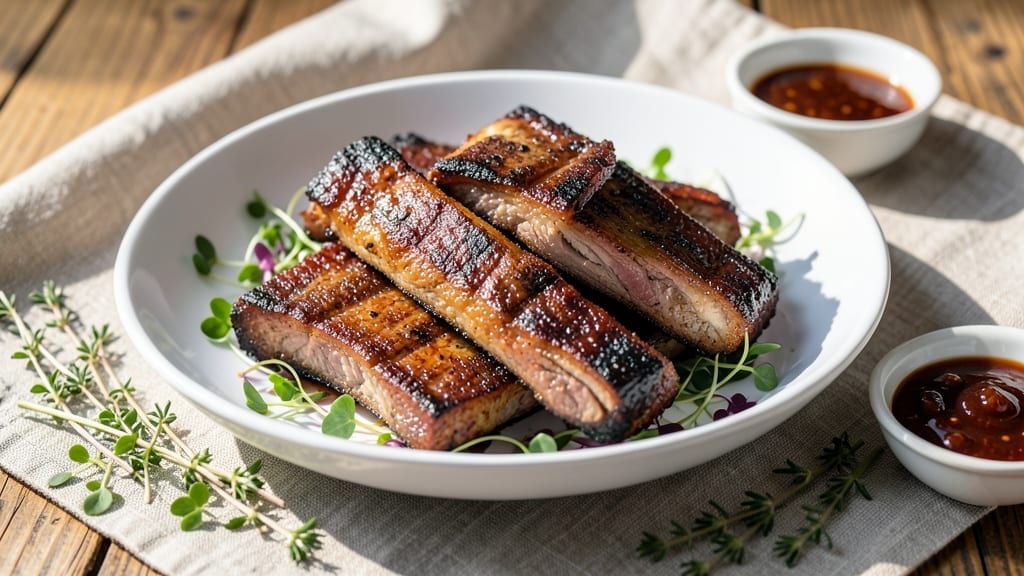
Mastering country pork ribs on the smoker transforms tough cuts into melt-in-your-mouth perfection with a crackling bark that’s impossible to resist. Growing up in small-town Georgia, I learned that patience and precision—starting with a proper dry rub and low-and-slow smoke—are the secrets to ribs that fall apart at the touch.
This isn’t just a recipe; it’s a technique honed over years of competing in the Southeast BBQ circuit, where every detail matters.
The key lies in the smoke ring—that telltale purple hue indicating perfect doneness—paired with a 3-2-1 method that ensures tender meat without drying it out.
We’ll use a simple yet bold dry rub of brown sugar, paprika, and salt, then let hickory or cherry wood infuse the ribs with deep, aromatic smoke over 6-8 hours at 225°F. The result?
A crust so crisp it shatters like glass, revealing meat so tender it pulls apart with just a fork.
What you’ll achieve is ribs that command the table—juicy, smoky, and sweet with a bark that cracks under pressure, releasing all that flavor. Serve them with baked beans and creamy coleslaw for the full Southern experience, or let them shine alone as the star of your meal.
This is the kind of dish that turns weeknights into celebrations, and every bite will taste like it came straight from a pitmaster’s smoker.
Here’s where precision meets tradition—no shortcuts, just restaurant-quality results you can replicate at home. Let’s get started with the steps that have earned me championships and countless compliments at the table.
Ingredients for country pork ribs smoker
Pantry staples meet smoker magic. Just these ingredients transform tough ribs into showstopping perfection.
| Ingredient | Amount | Notes |
|---|---|---|
| Country-Style Pork Ribs 🍖 | 4 lb | Bones in, meaty cuts preferred |
| Yellow Onion 🧅 | 1 whole | Large, sliced into rings |
| Fresh Garlic 🧄 | 8 cloves | Minced, for rub and marinade |
| Light Brown Sugar 🍚 | ¾ cup | Packed, for dry rub |
| Smoked Paprika 🌶️ | 2 tbsp | For deep smoky flavor |
| Kosher Salt 🧂 | 2 tbsp | Diamond Crystal preferred |
| Black Pepper 🌶️ | 1 ½ tsp | Freshly ground for heat |
| Ground Cumin 🌿 | 1 tsp | Toasted for earthy depth |
| Apple Cider Vinegar 🍎 | ½ cup | For tenderizing marinade |
| Hickory Wood Chips 🌳 | 2 cups | Or cherry for fruitier smoke |
| Yellow Mustard 🥬 | 2 tbsp | For bark adhesion |
| Unsalted Butter 🧈 | ¼ cup | Melted, for finishing |
| Beer 🍺 | 1 cup | Light lager or pale ale |
[recipe_ingredient_scaler]
The ribs are non-negotiable—country-style cuts with meaty bones are key. Costco or local butchers often carry the best cuts, but any grocery store with a meat counter will have them. Look for ribs with good marbling and avoid those that look too lean. The wood chips? Traeger or Cookshack brands are reliable, but any food-grade chips work. I always soak mine for 30 minutes before using to prevent flare-ups. For the brown sugar, muscovado adds extra depth if you want to splurge, but light brown works perfectly fine.
No smoked paprika? Regular paprika plus a pinch of liquid smoke gets you close. Out of apple cider vinegar? White vinegar or lemon juice works in a pinch, though the flavor won’t be identical. The beer is optional but recommended—it keeps the ribs moist during that long smoke. No beer? Chicken broth is a solid swap. For the mustard, Dijon mustard adds more complexity if you’ve got it. And if you’re using cherry wood chips, add an extra cup to really amp up that fruity smoke flavor. The butter at the end? Trust me on the full-fat version—it makes all the difference for that glossy finish.
Ribs keep best in the fridge for 3-4 days if you’ve got leftovers, but honestly, they’re best eaten fresh off the smoker. Wrap them tightly in foil with a paper towel to trap moisture. For longer storage, freeze them for up to 3 months. I like to portion them into individual servings right after cooking so they’re ready to reheat. To reheat, wrap in foil and hit 300°F for 10-15 minutes—just enough to warm through without drying out that perfect bark.
Why You’ll Love This Recipe
- Smoker-Friendly Simplicity: I love that this isn’t one of those recipes that demands hours of prep—just a 30-minute marinade and 3 hours of hands-off smoking at 225°F. The mustard glaze sticks perfectly to the ribs, so you don’t even need fancy tools, just a smoker and a thermometer. Honestly, the hardest part is resisting the urge to open the lid too soon.
- Smoky-Sweet Perfection: That blend of smoked paprika, garlic, and light brown sugar? It’s like a flavor explosion in every bite. The hickory smoke caramelizes into that deep mahogany bark, while the beer and vinegar marinade keep the meat tender and juicy. Trust me, the crispy edge with the creamy center is chef’s kiss.
- Budget-Friendly BBQ: Country-style ribs are often cheaper than prime cuts, and with pantry staples like beer, brown sugar, and smoked paprika, this isn’t one of those recipes that breaks the bank. Plus, if you’ve got leftovers, they keep for 3-4 days in the fridge—or freeze for up to 3 months. No waste, just deliciousness.
Step-by-step instructions for country pork ribs smoker recipe
Here’s how to transform tough country-style pork ribs into fall-off-the-bone tender ribs with a crackling bark.
Prepare the Dry Rub and Marinade
In a medium bowl, combine the ¾ cup light brown sugar, 2 tbsp smoked paprika, 2 tbsp kosher salt, 1½ tsp black pepper, 1 tsp ground cumin, and 8 cloves minced fresh garlic. Mix thoroughly with your hands or a fork until the sugar and spices form a coarse, even paste. This dry rub will create the signature smoky-sweet bark.
In a separate bowl, whisk together the ½ cup apple cider vinegar and 1 cup beer. The acidity in the vinegar helps tenderize the meat while the beer adds depth of flavor. Let this marinade sit while you prepare the ribs.
Coat and Rest the Ribs
Pat the 4 lb country-style pork ribs dry with paper towels, removing any excess moisture from the surface. This step is crucial for bark formation. Generously coat each rib with the dry rub, pressing it into the meat so it adheres well. Then, brush the ribs with the yellow mustard – this helps the rub stick and creates that prized crackling bark.
Place the rubbed ribs in a resealable plastic bag and pour the marinade over them. Seal the bag and massage the ribs gently to ensure even coating. Let them rest at room temperature for 30 minutes before smoking. This brief resting period allows the flavors to penetrate the meat.
Set Up the Smoker
Fill your smoker box with the 2 cups hickory wood chips and soak them in water for 30 minutes before use. This prevents them from burning too quickly. Set your smoker to 225°F and allow it to preheat for at least 20 minutes until you see steady, blue smoke with minimal white puffs.
Once the smoker reaches temperature, place the ribs meat-side down on the smoker grates. The mustard coating will help them stay in place while allowing smoke to circulate around all sides. Close the lid and resist the urge to peek – every time you open it, you lose heat and potentially disrupt the bark formation.
Smoke to Tender Perfection
Smoke the ribs for 3 hours at 225°F, maintaining a consistent temperature throughout. You’ll notice the bark developing a deep amber color and forming that coveted crackling crust. After 3 hours, check the internal temperature using a meat thermometer – it should read around 160°F.
When the ribs reach this temperature, they’ll hit “the stall” – a period where the internal temperature stops rising despite continued cooking. This is normal and happens because moisture is evaporating from the meat. At this point, wrap the ribs tightly in heavy-duty aluminum foil and return them to the smoker for another 1-2 hours.
Finish with Butter and Rest
Once the ribs reach an internal temperature of 203°F (they should be fork-tender), remove them from the smoker and let them rest for 15 minutes. While they rest, melt the ¼ cup unsalted butter in a small saucepan over low heat. Pour this melted butter over the ribs and let it baste them for 2-3 minutes before serving.
The ribs should have a deep mahogany bark that cracks when pressed, revealing tender meat underneath. Serve with the onion rings you sliced earlier and enjoy the perfect balance of smoky, sweet, and tangy flavors that make these ribs unforgettable.
Pro Tips For Making Country Pork Ribs Smoker
- Soak Those Wood Chips: I learned this the hard way—dry wood chips burn fast and choke your smoker with white smoke. Soak the 2 cups hickory (or cherry) chips in water for 30 minutes before loading them. This keeps them smoldering steadily at 225°F, giving you that clean, blue smoke instead of a smoky fireworks show.
- Press the Rub Hard: Don’t just sprinkle the dry rub—really dig into those ribs with your fingers. The ¾ cup light brown sugar and 2 tbsp smoked paprika need to stick like glue, especially on the meaty cuts. After coating, hit them with the yellow mustard; it’s the glue that makes that crackling bark happen.
- Stall? Wrap Tight: When the ribs hit 160°F and stall, don’t panic. That’s your cue to wrap them in heavy-duty foil—tightly. I used to wrap loosely, and the steam couldn’t build pressure, leaving the meat dry. Crimp the edges like you’re sealing a gift, then let them finish at 203°F.
- Toast the Cumin First: Skip toasting the ground cumin, and you’ll miss that earthy depth the recipe promises. Dry-toast 1 tsp in a pan over medium heat for 30 seconds until fragrant—just until you smell it, not until it burns. The rub will taste richer, and the ribs won’t overpower the other flavors.
Regional styles of this dish
Charleston South Carolina
In Charleston, we take our ribs with a touch of Southern elegance—think low-and-slow smoke over cherry wood chips for that fruity, aromatic twist. The local pitmasters there swear by a slightly sweeter rub, often adding a pinch of crushed red pepper to the dry rub for a subtle kick.
I remember my first time competing in the Charleston BBQ circuit—my ribs won second place until I swapped hickory for cherry wood. The judges noticed the fruity depth right away, and that’s when I knew this was the way to go. 🍂
Texas-Style Dry Rub
Down in Texas, they keep it bold and spice-forward with a coarser grind of salt and extra cayenne in the dry rub. The Texas method often includes 1 tsp of chili powder and ½ tsp of onion powder for that signature Texas heat.
I’ve seen ribs cooked in offset smokers with mesquite wood, which adds a woody, almost campfire-like flavor that’s unmistakable. The key there is patience—they’ll smoke for 8-10 hours at 225°F until the bark is almost black but still tender.
It’s a whole different vibe than the sweet-and-smoky Georgia style! 🌵
North Carolina’s Vinegar-Braised Approach
Over in North Carolina, you’ll find a vinegar-braised twist that’s all about tangy balance. After smoking, they often braise the ribs in a mix of apple cider vinegar and brown sugar for 1-2 hours at 300°F before finishing with butter.
This step caramelizes the sugars and adds a sticky, glossy glaze that’s addictive. I’ve adapted this method myself—it’s a great way to cut through the richness of the bark while keeping the meat ultra-tender. The result? Ribs that are sweet, tangy, and smoky all at once. 🍯
Appalachian Wood-Fired Tradition
In the Appalachian mountains, ribs are often cooked over open wood fires with oak or pecan wood for a cleaner, less sweet smoke. The dry rub here is simpler—just salt, pepper, and a touch of garlic powder—letting the natural flavors of the pork shine.
The cooking time is longer, sometimes 10-12 hours, but the result is deep, smoky, and unpretentious. I’ve tried this method on my own farm with my Gloucestershire Old Spots pigs, and the earthy oak smoke pairs perfectly with the pork’s natural richness.
It’s rustic, no-frills, and pure comfort food. 🔥
Modern Pitmaster Fusion
Contemporary pitmasters like myself blend techniques—smoking for 3 hours, then reverse-searing the ribs in a 400°F oven for 15 minutes to crisp the bark. Some even inject the ribs with a beer-and-vinegar brine before smoking for extra moisture.
I’ve experimented with this fusion style and love how it amplifies the bark while keeping the meat juicy. It’s the best of both worlds: tradition meets innovation. The key is precision timing—too much heat, and you’ll dry out the meat; too little, and the bark won’t crack. 💡
Nutrition facts
Frequently asked questions
Why does the recipe use mustard for the ribs?
The yellow mustard acts as a natural adhesive for the dry rub, ensuring it sticks perfectly to the ribs and creates that prized crackling bark. It also helps the ribs stay in place on the smoker grates while allowing smoke to penetrate evenly. This step is essential for achieving that restaurant-quality crust!
What if I don’t have a smoker? Can I grill these ribs instead?
You can adapt this method to a grill using indirect heat! Place the ribs over indirect heat with the lid closed, adding wood chips to a smoker box or foil pouch on the coals for smoke. Just monitor the temperature closely to maintain 225°F and extend the cook time to 5-6 hours for tender results. The bark may not be as crisp, but the meat will still be delicious!
How do I know when the ribs are done?
Use a meat thermometer to check the internal temperature—aim for 203°F for fork-tender perfection. You’ll also notice a deep mahogany bark that cracks slightly when pressed. If the ribs hit “the stall” (temperature stops rising), wrap them in foil and return to the smoker for 1-2 hours until they reach 203°F. Patience pays off here!
Can I make these ribs ahead of time?
Yes! Cooked ribs keep well in the fridge for 3-4 days if wrapped tightly in foil with a paper towel to retain moisture. For longer storage, freeze them for up to 3 months. To reheat, wrap in foil and heat at 300°F for 10-15 minutes—just enough to warm without drying out the bark.

Trained in classic French technique but raised on slow-cooked ribs and spicy rubs, she blends culinary skill with smoke and soul.
- Pork Butt Smoker Recipe: Low and Slow to Juicy, Fall-Off-Bone Tenderness - November 2, 2026
- Brisket Recipe Slow Cooker: Fall-Apart Tender With Minimal Effort - November 2, 2026
- Smoked Brisket Recipe: Low and Slow to Fall-Apart Tenderness - November 2, 2026