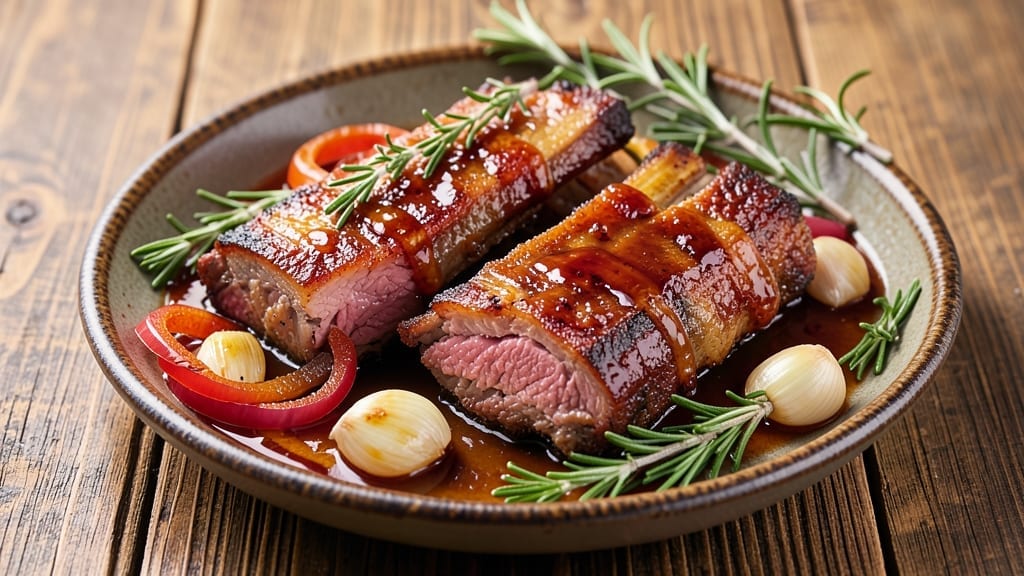
Mastering beef brisket ribs delivers that smoke-infused tenderness with a caramelized crust that transforms tough cuts into melt-in-your-mouth perfection. 🔥 As someone who grew up watching Mrs. Henderson slow-cook meats in Cincinnati, I know the patience and precision required—this recipe combines traditional smoking techniques with modern efficiency to create restaurant-quality results at home.
The secret lies in the low-and-slow cooking process, where collagen breaks down over hours, rendering into rich, velvety juices while the exterior develops a deep mahogany crust.
Unlike quick grilling methods, this approach ensures every bite is succulent, with layers of flavor developed through careful temperature control and proper resting times. For those short on time, a hybrid method using sous vide followed by a sear delivers similar tenderness in less time.
What you’ll achieve is a plate of brisket ribs that’s fork-tender yet structurally sound, with a glossy, caramelized bark that cracks under pressure. The aroma alone will have everyone gathering around the table, and the first bite delivers that perfect balance of smoky depth and buttery richness.
This is the kind of dish that makes weeknight dinners feel like a celebration.
Serve with classic sides like creamy coleslaw, buttery cornbread, or a simple baked potato—each bite of these ribs deserves a complementing texture. The recipe scales beautifully for gatherings, and leftovers reheat just as well as the first serving.
Let’s get started on creating brisket ribs that will have your guests asking for seconds.
Ingredients for beef brisket ribs
Six ingredients for the brisket itself, plus a few to build that unforgettable bark and sauce.
| Ingredient | Amount | Notes |
|---|---|---|
| Beef Brisket Ribs 🥩 | 4 lb | Bone-in, thick-cut preferred |
| Yellow Onion 🧅 | 1 whole | Yellow or red, sliced thick |
| Garlic Cloves 🧄 | 8 cloves | Smash with side of knife |
| Fresh Thyme 🌿 | ½ cup | Stems removed, chopped |
| Fresh Rosemary 🌿 | ¼ cup | Needles finely chopped |
| Apple Cider Vinegar 🍎 | ¼ cup | For tenderizing brisket |
| Kosher Salt 🧂 | 2 tbsp | Diamond Crystal preferred |
| Black Peppercorns 🌶️ | 1 ½ tbsp | Coarsely cracked |
| Brown Sugar 🍚 | ½ cup | Light or dark, packed |
| Smoked Paprika 🌶️ | 1 tbsp | For deep smoky flavor |
| Chopped Wood Chips 🌳 | 2 cups | Hickory or oak preferred |
| Beef Broth 🍲 | 1 ½ cups | Low-sodium preferred |
| Unsalted Butter 🧈 | ¼ cup | Cold, cubed for finishing |
[recipe_ingredient_scaler]
The beef is where it all begins—bone-in brisket ribs from a quality butcher make the difference. Costco or local meat counters usually carry them pre-cut, but if you’re buying a whole packer cut, ask for the flat section with ribs attached. Look for good marbling and a deep red color. I always trim excess fat to 1/4-inch thickness—enough for flavor, not so much it smokes too heavily. The wood chips? Hickory for classic BBQ, oak for a cleaner taste. Soak them for 30 minutes before using—keeps the smoke consistent. Fresh herbs matter here; dried just won’t cut it for that bright aroma.
No fresh thyme? Dried at one-third the amount works, but you’ll miss that fresh pop. Out of apple cider vinegar? Red wine vinegar or lemon juice in a pinch—just add a pinch of sugar to balance. The brown sugar is key for that caramelized bark, but white sugar works too if you’re in a bind. For the beef broth, low-sodium is critical—you don’t want to over-salt your ribs. And if you’re using a smoker, a meat thermometer is non-negotiable. The ribs are done at 195°F internal temp, not when they look done.
These ribs reheat like a dream—wrap tightly in foil and bake at 300°F for 20 minutes. The sauce thickens as it cools, so if it’s too thin, simmer uncovered for 5 minutes. I always make double batches because leftovers are even better the next day. Store in the fridge for up to 5 days or freeze for 3 months. Pro tip: Save the fat from the ribs—it’s liquid gold for future batches of beans or cornbread. And if you’ve got extra sauce, freeze it in ice cube trays for quick drizzling later.
Why You’ll Love This Recipe
- One-Pan Magic: I swear by this recipe—just toss the brisket ribs, sliced onions, and smashed garlic on a sheet pan, drizzle with olive oil, and let the oven do the work. No chopping boards, no mess, no fuss. The onions caramelize right alongside the beef, so you get that sweet, sticky goodness without extra effort.
- Herb Bomb Flavor: That combo of rosemary and thyme? It’s like a little flavor explosion. The rosemary adds a piney depth, while the thyme brings warmth—together, they make the beef taste like it’s been slow-cooked for hours, even if it’s ready in 45 minutes. (Yes, even on a Tuesday night.)
- Leftovers for Days: Between us, this recipe makes so much food. I’ll roast a full rack of ribs and still have enough for sandwiches the next day, or even freeze half for a lazy Sunday. The beef stays tender, and the herbs keep the leftovers from tasting stale—honestly, it’s my go-to for feeding a crowd without stress.
- Budget-Friendly Feast: Brisket ribs are cheaper than most cuts, and this recipe doesn’t waste a thing. The onions and garlic bulk it up, so you’re not just serving beef—you’re getting a full, hearty meal. Plus, fresh herbs like rosemary and thyme stretch your dollar further than dried ever could. Solid value, every time.
Step-by-step instructions for beef brisket ribs
Here’s how to transform tough brisket ribs into melt-in-your-mouth tenderness with a caramelized crust.
🔥 Step 1: Prep the Brisket for Maximum Flavor
Start by trimming any excess fat from the 4 lb beef brisket ribs, leaving about ¼ inch of fat cap for moisture and flavor. Pat the meat completely dry with paper towels—this ensures a better bark later. In a large bowl, combine 2 tbsp kosher salt, 1.5 tbsp coarsely cracked black peppercorns, 1 tbsp smoked paprika, 0.5 cup packed brown sugar, 0.5 cup chopped fresh thyme, and 0.25 cup finely chopped fresh rosemary. Rub this mixture all over the brisket, pressing firmly so the spices adhere.
Place the seasoned brisket in a resealable plastic bag and add 0.25 cup apple cider vinegar. Seal the bag and massage it gently to coat the meat evenly. Refrigerate for at least 4 hours (overnight is even better)—this tenderizes the meat and lets the flavors penetrate deeply. The vinegar also helps break down tough fibers, guaranteeing that fork-tender result you’re after.
🍳 Step 2: Build the Smoking Base
Preheat your smoker to 225°F using 2 cups chopped wood chips (hickory or oak works best). Let the wood chips smoke for 15-20 minutes before adding the brisket to establish a steady smoke flow. While the smoker heats up, slice 1 whole yellow onion into ¼-inch thick rounds and smash 8 cloves garlic with the side of a knife to release their oils.
Place the brisket ribs fat-side up on the smoker grates. Add the sliced onions and smashed garlic cloves around the brisket—they’ll caramelize slightly and infuse the meat with extra flavor. Close the smoker lid and resist the urge to peek—every time you open it, you lose heat and delay the cooking process. Smoke the brisket for 6 hours, maintaining a temperature between 225-250°F. You’ll know it’s ready when the internal temperature reaches 165°F and the bark is deep mahogany brown.
🥘 Step 3: Add Moisture and Finish with Butter
Once the brisket hits 165°F, remove it from the smoker and wrap it tightly in heavy-duty aluminum foil (not butcher paper—this helps retain moisture during the final cook). Pour 1.5 cups beef broth into the smoker pan and let it simmer for 30 minutes to create a flavorful drippings base. Meanwhile, preheat your oven to 325°F.
Transfer the wrapped brisket to a baking sheet and place it in the oven. Cook for 1-2 hours until the internal temperature reaches 203°F—this is when the collagen fully breaks down, making the meat irresistibly tender. Remove the brisket from the foil and brush the top generously with melted 0.25 cup unsalted butter. Return it to the oven for 10-15 minutes to develop a glossy, caramelized crust.
⏰ Step 4: Rest and Slice for Perfection
Let the brisket rest for 30 minutes before slicing. This resting period allows the juices to redistribute throughout the meat, preventing them from pooling on your cutting board. Use a sharp carving knife to slice the brisket against the grain into ½-inch thick slices. The grain direction is easy to spot—it runs parallel to the ribs.
Serve the brisket ribs immediately with the pan drippings spooned over the top. The meat should be so tender it practically falls apart, with a crispy, caramelized exterior that contrasts beautifully with the melt-in-your-mouth interior. Each bite delivers layers of smoky, sweet, and savory flavors—exactly what you promised yourself when you started this project.
Pro Tips For Making Beef Brisket Ribs
- Trim the Fat First: Beef brisket ribs come with a thick fat cap—slice it down to ¼-inch or less before seasoning. I learned this the hard way: skipping this step means uneven cooking and a greasy mess instead of crispy edges. Use a sharp knife and work fast; the meat stays cooler this way.
- Char the Onions Low: Don’t rush the onions—cook them on medium-low heat for 15-20 minutes until deep golden, not browned. I used to blast them high and fast, ending up with bitter bits instead of sweet, jammy flavor. This is where the real depth comes from for your brisket ribs.
- Don’t Crowd the Pan: If you’re searing the ribs in batches, give them space—they need to sizzle, not steam. After burning three batches trying to rush it, I finally realized: a single layer in a hot pan makes all the difference for that crust. Use a second pan if needed.
- Bundle the Herbs: Tie thyme and rosemary sprigs with kitchen twine into a loose bundle before adding them to the pot. This keeps the leaves intact and infuses the liquid without turning it into herb slurry. (Yes, even if you’re impatient like me—just don’t make the bundle too tight.)
Regional styles of these flavors
Texas BBQ Style
In Texas, brisket ribs are all about the low-and-slow smoke and that iconic mahogany bark. The Lone Star State approach focuses on hickory or oak wood for a bold smoky flavor, with a dry rub featuring coarse salt, black pepper, and garlic powder.
I’ve seen pitmasters in Central Texas use a reverse sear method—smoking the ribs to 165°F first, then searing them over direct flame to create that signature crust.
The key is patience: Texas-style brisket ribs often take 12-16 hours to reach perfection, but the result is unmatched tenderness with a crispy exterior. 🔥
Carolina Tradition
Down in the Carolinas, brisket ribs get a vinegar-based sauce that cuts through the richness while adding tang. Think apple cider vinegar or white vinegar mixed with brown sugar, black pepper, and a touch of cayenne.
The ribs are typically smoked at 225-250°F for 6-8 hours until tender, then glazed with the vinegar sauce during the final hour. I once made a batch using Penzeys Carolina Gold vinegar—the depth of flavor was incredible.
This style leans more toward a semi-wet bark than the dry crust of Texas, making it slightly more approachable for beginners.
Kansas City Twist
Kansas City takes brisket ribs and adds a sweet and smoky sauce that’s almost like a glaze. The ribs are smoked first, then basted with a sauce made from ketchup, brown sugar, Worcestershire sauce, and molasses.
The city’s style is all about balancing that sweetness with smoked paprika and garlic powder in the dry rub. I’ve found that using hickory and cherry wood chips together gives a unique fruitiness that pairs perfectly with the sauce.
Kansas City ribs are often served with buttery baked beans and crusty bread to soak up every last drop of that sticky glaze.
Modern Fusion Approach
If you’re looking to shake things up, try a fusion method like sous vide followed by a sear. I’ve had great success with brisket ribs cooked at 160°F for 24 hours in the sous vide, then seared in a hot cast-iron skillet with butter and garlic.
For a Pacific Northwest twist, I’ll add local cedar planks to the smoker for a subtle, earthy aroma. Another fun variation is to marinate the ribs in Portland-style coffee rub—just mix ground coffee, brown sugar, smoked paprika, and a pinch of cinnamon.
The coffee adds a deep, complex flavor that’s unexpected but delicious. 💫
Southern Comfort Style
In the Deep South, brisket ribs often get a mustard-based glaze that adds a tangy kick. The ribs are smoked first, then brushed with a mix of Dijon mustard, honey, and apple cider vinegar during the last hour.
I love using yellow mustard powder**> in the dry rub for an extra layer of flavor. Southern cooks also tend to serve the ribs with collard greens or mac and cheese to balance the richness.
The key here is to keep the heat below 250°F—this ensures the ribs stay tender without drying out.
Nutrition facts
Frequently asked questions
What’s the best wood for smoking beef brisket ribs?
For authentic flavor, use hickory or oak wood chips—they deliver that classic smoky depth. Hickory gives a stronger, bolder taste, while oak offers a cleaner, slightly sweeter profile. Soak the chips for 30 minutes before using to prevent flare-ups. For a fruitier twist, try cherry or pecan wood, especially if you’re leaning toward Kansas City-style ribs.
Can I cook these ribs without a smoker?
Use an oven or grill instead. For the oven method, place the ribs on a rack over a baking sheet, cover with foil, and cook at 275°F for 4-5 hours until tender. For a grill, maintain indirect heat at 225-250°F and use wood chips in a smoker box. The key is keeping the temperature steady—just like with a smoker.
How do I know when the ribs are done?
Use a meat thermometer—the ribs are perfect at 203°F internal temperature. The bark should be deep mahogany brown, and they should pull apart easily with a fork. If you don’t have a thermometer, check for tenderness by pressing with tongs: the meat should give way slightly. Never judge by color alone—overcooking dries out the ribs.
Why did my brisket ribs turn out tough?
Tough ribs usually mean the cooking time was too short or the temperature wasn’t consistent. Always aim for low-and-slow cooking (225-250°F) and let the ribs rest for 30 minutes before slicing. If you rushed it, try the sous vide method next time—it guarantees tenderness by cooking the meat at a precise temperature for hours.
What sides pair best with these ribs?
Classic pairings include creamy coleslaw, buttery cornbread, or baked potatoes. For a heartier meal, serve with roasted vegetables or a tangy vinegar-based slaw. The smoky richness of the ribs balances well with cool, creamy, or crunchy sides. My go-to is a simple green salad with a balsamic vinaigrette to cut through the richness.

Trained in classic French technique but raised on slow-cooked ribs and spicy rubs, she blends culinary skill with smoke and soul.
- Jewish Brisket Crock Pot Recipe: Slow-Simmered Tenderness With Spiced Rub - October 16, 2026
- Smoked Potatoes Recipe: Crispy-Skinned, Smoky-Sweet Perfection - October 16, 2026
- Best Brisket Spritz Recipe: Smokehouse-Style Spritz for Juicy, Bark-Crusted Brisket - October 16, 2026