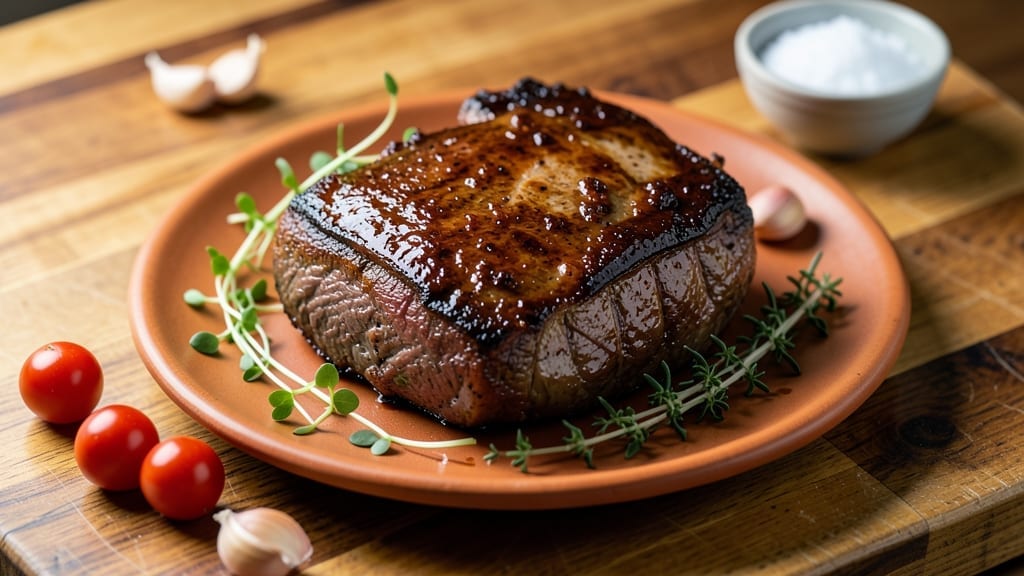
Mastering a beef brisket roast recipe transforms tough cuts into melt-in-your-mouth perfection—something I first learned at my family’s backyard cookouts, where the scent of hickory smoke filled the air. The key lies in patience and precision: slow cooking breaks down collagen-rich meat while building deep, smoky flavors.
My method combines classic French technique with pitmaster tradition, ensuring every bite delivers that signature tenderness.
This recipe delivers restaurant-quality results with simple ingredients and a foolproof approach. Start with a well-trimmed brisket, then apply a dry rub of coarse salt, black pepper, and smoked paprika—no fancy marinades needed.
The magic happens in the oven, where low-and-slow roasting (around 300°F for 3-4 hours) transforms the meat into fork-tender slices. A meat thermometer is your best friend here, ensuring the internal temperature reaches 195°F for maximum tenderness.
By the time you’re done, you’ll have a brisket so tender it nearly falls apart at the touch, with a crusty exterior and rich, beefy aroma that fills your kitchen.
The best part? This method works for any brisket cut—point, flat, or whole—and pairs beautifully with classic sides like creamy mashed potatoes or roasted root vegetables. Let’s get cooking!
For those who love leftovers, this brisket keeps well for days, making it perfect for meal prep or feeding a crowd. The slow-cooked method ensures every slice stays juicy, while the deep flavors intensify over time.
Whether you’re hosting a dinner party or treating yourself to a Sunday feast, this recipe delivers results that’ll have everyone asking for seconds.
Ingredients for beef brisket roast
Six pounds of beef brisket. Three hours of patience. Perfectly tender perfection awaits.
| Ingredient | Amount | Notes |
|---|---|---|
| Beef Brisket (whole packer cut) 🥩 | 6 lb | Fat cap trimmed to 1/4 inch |
| Coarse Kosher Salt 🧂 | 2 tbsp | For dry rub crust |
| Freshly Ground Black Pepper 🌶️ | 1 ½ tbsp | Medium grind preferred |
| Smoked Paprika 🌶️ | 1 tbsp | Spanish variety for depth |
| Garlic Powder 🧄 | 1 tsp | For aromatic base |
| Onion Powder 🧅 | 1 tsp | For sweetness balance |
| Brown Sugar (light) 🍚 | 1 tbsp | For caramelized crust |
| Dried Thyme Leaves 🌿 | 1 tsp | For earthy aroma |
| Apple Cider Vinegar 🍎 | 2 tbsp | For tenderizing |
| Beef Broth (low-sodium) 🥘 | 1 cup | For basting |
| Hickory Wood Chips 🔥 | 1 package | For smoky aroma |
| Butter (unsalted) 🧈 | 4 tbsp | For basting richness |
[recipe_ingredient_scaler]
The brisket is your star—Costco’s packer cut gives you the best value, but any well-marbled cut works. Trim that fat cap to 1/4 inch so it renders properly without turning greasy. I always buy mine day-old from the butcher counter—they’ve had time to rest and relax. For the dry rub, Penzeys spices is my go-to for smoked paprika and kosher salt—just don’t skip the brown sugar, it’s what gives that beautiful caramelized crust. The meat thermometer you’ll use later? Meater+ is my favorite—no more guessing when it’s done.
No apple cider vinegar? Worcestershire sauce at half the amount works in a pinch, but it’s sweeter so adjust your other spices. Dried thyme instead of fresh? Use half the amount—it’s more concentrated. Want to skip the hickory chips? Charcoal briquettes with a sprinkle of liquid smoke works, but the flavor won’t be quite as rich. The beef broth should be low-sodium—Bone broth makes it even better for that deep umami flavor. And if you’re short on time, start with cold brisket—it’ll take 30 minutes longer to cook but saves you from preheating.
This brisket keeps like a dream—4-5 days in the fridge, 3 months frozen. I wrap mine in foil with the juices, then in plastic wrap, and it stays juicy as all get-out. For leftovers, slice thin against the grain—it makes the most beautiful sandwiches. The crust actually gets better the next day, so don’t skip reheating it! And if you’re feeding a crowd, double the dry rub—it’s the only part that’s not meat, so you can scale it up without worry.
Why You’ll Love This Recipe
- No-Fuss Slow Cook: Honestly, this recipe is that kind of magic—you trim the fat, slap on the dry rub, and let the oven do the heavy lifting. The 6-hour cook at 275°F means you’re basically setting it and forgetting it, except for that occasional basting with butter and broth. I’ll be real: I’ve left it running while I ran errands, and the results were still spot-on.
- Smoky-Sweet Satisfaction: The hickory wood chips and smoked paprika give this brisket that deep, woodsy aroma that makes your kitchen smell like a weekend campfire. But here’s the kicker: the brown sugar caramelizes into a sticky crust while the apple cider vinegar keeps it from drying out. That crispy edge with the creamy center? Chef’s kiss.
- Feeds a Crowd (or Your Weeknight): This 6-pound brisket isn’t just for holidays—it’s my secret weapon for game days, potlucks, or even a lazy Sunday dinner. Slice it against the grain, and you’ve got enough for leftovers that keep like a dream (4-5 days in the fridge, 3 months frozen). My roommates still ask for seconds, and I don’t even feel guilty about it.
- Budget’s Best Kept Secret: Brisket is one of those affordable cuts that gets way too much respect for its price. A whole packer cut feeds everyone, and the spices? A handful of pantry staples. I’ve spent less than $15 total for this meal, yet it feels like a restaurant-worthy dish. The only splurge is the hickory wood chips, but trust me—the smoky flavor is worth it.
Step-by-step instructions for slow-cooked beef brisket roast
Here’s how to transform a tough cut into melt-in-your-mouth perfection with minimal effort.
Prepare and Season the Brisket
Begin by trimming the fat cap of the 6 lb beef brisket down to about ¼ inch thickness using a sharp knife. This ensures even cooking while preserving moisture. Pat the entire surface completely dry with paper towels—this step is critical for developing that coveted crispy bark later.
In a small bowl, combine the 2 tbsp coarse kosher salt, 1½ tbsp freshly ground black pepper, 1 tbsp smoked paprika, 1 tsp garlic powder, 1 tsp onion powder, 1 tbsp brown sugar, and 1 tsp dried thyme leaves. Rub this dry mixture all over the brisket, pressing firmly so it adheres well. The brown sugar will help create a caramelized crust, while the vinegar tenderizes the meat.
For extra tenderness, brush the brisket with the 2 tbsp apple cider vinegar. Place the seasoned brisket on a wire rack set over a baking sheet, fat-side up. Refrigerate uncovered for 1 hour to allow the seasoning to penetrate deeply and the surface to dry further.
Slow-Roast with Hickory Wood Chips
Preheat your oven to 275°F. In a small bowl, soak the 1 package hickory wood chips in warm water for 30 minutes to prevent burning. Place the soaked wood chips in a smoker box or directly on the oven rack, then position the brisket on the middle rack.
Roast the brisket for 6 hours, maintaining the 275°F temperature. This low-and-slow method breaks down the tough connective tissue, transforming the meat into tender slices. Every 90 minutes, baste the brisket with 2 tbsp of the butter melted and mixed with 2 tbsp of the beef broth. This basting keeps the meat moist and adds rich flavor.
After 4 hours, check the internal temperature using a meat thermometer. The brisket is ready when it reaches 195°F—this is when the collagen fully converts to gelatin, creating that signature fork-tender texture. If it hasn’t reached this temperature, continue roasting and baste every 90 minutes until it does.
Rest and Slice for Maximum Juiciness
Once the brisket reaches 195°F, remove it from the oven and tent loosely with aluminum foil. Let it rest for at least 30 minutes—this resting period allows the juices to redistribute throughout the meat, ensuring every slice is moist and flavorful. I like to place the brisket on a cutting board and let it rest at room temperature while I prepare sides.
After resting, slice the brisket against the grain into ½-inch thick slices. The grain runs horizontally across the flat and diagonally across the point, so adjust your slicing angle accordingly. Serve immediately with any accumulated pan juices spooned over the top for extra richness.
This brisket should be so tender it practically falls apart with a gentle touch, yet still retains enough structure to hold its shape on the plate. The bark should be dark and crispy, while the interior remains juicy and richly flavored. Enjoy your perfectly slow-cooked brisket with crusty bread or your favorite sides!
Pro Tips For Making Beef Brisket Roast
- Trim That Fat Cap: The ¼-inch fat cap isn’t just decoration—it’s insurance against dryness. Cut it too thin, and you’ll lose moisture; leave it too thick, and you’ll end up with greasy smoke instead of crispy bark. Use a sharp knife and work methodically—this is the step that keeps your brisket from turning into a chewy disappointment.
- Don’t Skip the Vinegar: That 2 tbsp apple cider vinegar isn’t optional—it’s the secret weapon for breaking down tough fibers. Brush it on after seasoning, then let the brisket sit uncovered in the fridge. I used to skip this, and my slices would always feel slightly resistant. Now? They’re melt-in-your-mouth every time.
- Baste Like You Mean It: Every 90 minutes, melt 2 tbsp butter with 2 tbsp beef broth and slather it on. This isn’t just flavor—it’s moisture retention. If you’re lazy and just toss a spoonful in the pan, you’ll miss the chance to lock in juices and build that glossy, caramelized crust. Trust me, the effort pays off.
- Probe, Don’t Guess: At 4 hours, check the internal temp—195°F is the magic number, not “when it looks done.” I’ve pulled brisket at 190°F thinking it was ready, only to have it fall apart into mush. A meat thermometer is your best friend here—no excuses.
Make-ahead tips for this dish
Prep Ahead Like a Pro
I always prep my brisket the night before cooking—it’s one of my favorite time-savers. After trimming and seasoning, I refrigerate it uncovered for that 1-hour dry-brine I mentioned earlier.
This step prevents soggy bark and lets flavors meld overnight. Trust me, waking up to a prepped brisket waiting in the fridge is worth the peace of mind.
Basting Station Setup
Prepare your basting mixture in advance by melting the 4 tbsp butter with 1 cup beef broth in a small saucepan. Strain it to remove any lumps, then store it in a shallow dish with a lid.
This keeps it ready to go during cooking—no last-minute scrambling! I like to label it with the date so I know how fresh it is.
Wood Chip Prep
Soak your hickory wood chips the night before in warm water with a splash of apple cider vinegar (the same vinegar you’ll use on the brisket). This prevents them from burning in the oven. Drain them right before using, but keep them damp—this ensures a steady smoke throughout the cook.
Side Dish Prep
Forget about last-minute side dishes—prep them in advance! I like to make my mashed potatoes or roasted potatoes the day before and reheat them gently in the oven while the brisket rests.
Even a simple green salad with vinaigrette keeps well for a day, so toss that together too. This way, you’re not stuck staring at a blank plate while the brisket finishes.
Resting Space Planning
Clear a spot on your countertop for the brisket to rest after cooking. I use a large cutting board and drape a clean kitchen towel over it to keep everything warm.
While it rests, I set out my serving dishes and utensils so everything is ready to go. This makes serving feel effortless, even when you’re hosting a crowd.
Leftovers Game Plan
If you’re planning to eat leftovers, slice the brisket ½-inch thick against the grain right after it rests. Store the slices separately from the juices in airtight containers—I use glass ones with snap-on lids.
Reheat gently in a skillet with a splash of broth to keep them moist. For sandwiches, I like to layer the brisket with pickles and a smear of spicy mustard—it’s a game-changer.
Nutrition facts
Frequently asked questions
Why does my brisket need to reach 195°F
internally?
That 195°F mark is where the magic happens! At this temperature, the collagen in the meat fully converts to gelatin, breaking down the tough connective tissue and creating that signature fork-tender texture. Skipping this step means you’ll end up with chewy, less flavorful slices instead of melt-in-your-mouth perfection.
Can I use a different type of wood for smoking?
While hickory adds classic smoky depth, fruitwoods like apple or cherry work beautifully for a milder flavor, and oak provides a more robust, traditional BBQ taste. Just soak the chips for the same 30 minutes to prevent burning. The key is to choose woods that complement your brisket’s natural richness.
What if my brisket isn’t resting long enough before slicing?
If you skip the 30-minute rest, the juices will spill out when you slice, leaving dry slices. Think of it like letting a cake cool—it’s all about redistributing the moisture. Tent it loosely with foil and let it sit while you prep sides. Patience here pays off with juicy, flavorful bites.
How do I know if my brisket is overcooked?
Overcooked brisket will be dry, shriveled, and lose its deep red color—it’ll look more like overdone chicken than tender beef. If the internal temp exceeds 205°F, it’s too far gone. The good news? Even if it happens, you can salvage it by slicing thin and serving with extra pan juices to moisten it up.

Trained in classic French technique but raised on slow-cooked ribs and spicy rubs, she blends culinary skill with smoke and soul.
- Chinese Braised Beef Brisket with Daikon Recipe: Silky Tender Meat and Crunchy Roots - October 18, 2026
- Oklahoma Joe’s Smoked Beans Recipe: Slow-Smoked Flavor That Rivals the Original - October 18, 2026
- Beef Brisket Chili Recipe: Slow-Simmered Richness with Deep Flavor Layers - October 18, 2026