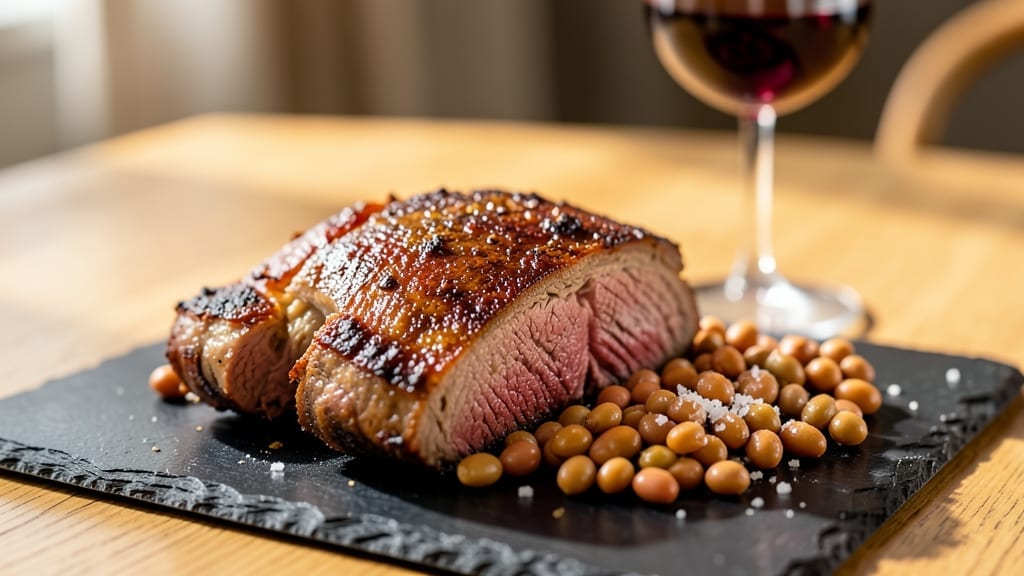
This beef brisket and beans recipe delivers the kind of tender, fall-apart meat and hearty beans that make Sunday dinners legendary.
After years of perfecting slow-cooked techniques, I’ve created a method that transforms tough brisket into smoky, juicy perfection while keeping the beans rich and flavorful—no shortcuts, just deep, developed taste. The key lies in patience and precise seasoning, ensuring every bite is packed with texture and depth.
What sets this recipe apart is the balance between the brisket’s caramelized crust and its tender interior, achieved through low-and-slow cooking. The beans—whether baked, refried, or stewed—absorb the brisket’s smoky flavors, creating a cohesive dish that’s both comforting and impressive.
This isn’t just a meal; it’s a centerpiece for gatherings, with sides like cornbread or coleslaw enhancing its rustic appeal.
The result is a dish that tastes like it’s been simmering all day, with brisket so tender it nearly melts in your mouth and beans that hold their shape while soaking up every bit of savory juice.
The aroma alone will have your kitchen smelling like a classic Southern kitchen, and the first bite will confirm why this recipe has become a staple for family dinners and holiday feasts alike.
Whether you’re serving a crowd or meal prepping for the week, this brisket and beans recipe delivers restaurant-quality results with minimal effort. Let’s get started on creating a dish that’s as rewarding to make as it is to eat.
Ingredients for beef brisket and beans
The foundation of legendary brisket and beans: bold flavors and precise ingredients.
| Ingredient | Amount | Notes |
|---|---|---|
| Beef Brisket 🥩 | 4 lb | Whole packer cut, 1 inch fat cap |
| Dried Navy Beans 🌾 | 2 cups | Unsoaked, rinsed well |
| Yellow Onion 🧅 | 1 whole | Medium, chopped |
| Garlic Cloves 🧄 | 6 cloves | Peeled, smashed |
| Smoked Paprika 🌶️ | 2 tbsp | High-quality for smoky depth |
| Ground Black Pepper 🌶️ | 1 ½ tsp | Freshly cracked |
| Kosher Salt 🧂 | 1 ½ tbsp | Coarse grain preferred |
| Apple Cider Vinegar 🍎 | ½ cup | For tenderizing |
| Beef Broth 🥛 | 4 cups | Low-sodium preferred |
| Dark Brown Sugar 🍬 | ¼ cup | Packed, for caramelization |
| Bay Leaves 🌿 | 2 whole | Fresh if possible |
| Mustard Seeds 🌶️ | 1 tsp | Whole, toasted |
| Unsalted Butter 🧈 | ½ cup | Cold, cubed |
| Fresh Thyme 🌿 | ¼ cup | Leaves only, chopped |
| Chicken Fat 🍗 | ¼ cup | Rendered, for crispy crust |
[recipe_ingredient_scaler]
The brisket is non-negotiable here—Whole Foods or a trusted butcher for the best quality. Look for a well-marbled cut with at least 1 inch of fat on one side; this fat renders during cooking and keeps the meat moist. If you can’t find a whole brisket, most grocery stores carry pre-cut brisket flats or points. For the beans, dried navy beans are ideal, but Great Northern or pinto beans also work. Soak overnight if short on time, but the unsoaked method yields creamier beans. The smoked paprika should be high-quality—Penzeys or McCormick are reliable brands for that authentic smoky depth.
No smoked paprika? Substitute with 1 tbsp regular paprika plus 1 tsp liquid smoke, though the flavor won’t be identical. Short on time? Canned beans can be used, but drain and rinse them well to avoid excess sodium. For the vinegar, apple cider vinegar is best, but white vinegar works in a pinch. The beef broth should be low-sodium—Swanson or Pacific Foods are good options. Fresh thyme is ideal, but if you only have dried, use one-third the amount. The butter and chicken fat are critical for that crispy crust—don’t skip them, even if it seems like extra effort.
This dish tastes even better the next day, so double the recipe if you’re serving a crowd. Store leftovers in an airtight container in the fridge for up to 5 days, or freeze for up to 3 months. To reheat, cover with a damp paper towel and warm in a 350°F oven for 20-30 minutes. The beans will thicken as they cool, so add a splash of broth if they seem too stiff. For meal prep, portion the brisket and beans separately—this keeps the brisket tender and the beans from getting soggy.
Why You’ll Love This Recipe
- One-Pot Magic: That Dutch oven does all the work—searing the brisket, cooking the beans, and even braising it all together. No scrubbing a dozen pans, just one sheet of cleanup. I swear, the only thing harder than making this is deciding who gets the last bite.
- Smoky, Sweet, Umami Bomb: The smoked paprika and garlic don’t just flavor the brisket—they infuse the beans, turning them into a caramelized, herby, slightly tangy dream. That final swirl of butter and thyme? Chef’s kiss. It’s like the brisket’s juices and the beans had a love child.
- Budget-Friendly Powerhouse: A 4-pound brisket isn’t cheap, but it stretches forever with these beans. Dried navy beans are dirt-cheap, and the spices add depth without costing an arm and a leg. I’ve made this on a $15 grocery haul and still felt like I was eating at a steakhouse.
Step-by-step instructions for beef brisket and beans
Here’s the method for achieving melt-in-your-mouth brisket with perfectly tender beans.
Sear and Prepare the Brisket
Heat a Dutch oven over medium-high heat. Add the ¼ cup chicken fat and let it get hot but not smoking. Place the 4 lb beef brisket fat-side down in the pot and sear for 8-10 minutes until the fat cap is deeply browned and crispy in spots. Flip the brisket and sear the other side for another 5-7 minutes.
Remove the brisket and set it aside. In the same pot, add the 1 chopped yellow onion and cook for 3-4 minutes until softened. Add the 6 smashed garlic cloves and cook for 30 seconds until fragrant. Sprinkle in the 2 tbsp smoked paprika and stir for 10 seconds to toast the spices.
Here’s the thing—this searing step creates the foundational flavor. The crispy crust on the brisket will melt into the beans later, adding depth. Don’t skip this crucial step, even if you’re eager to move on.
Cook the Beans and Build the Flavor Base
Add the 2 cups dried navy beans to the Dutch oven with the onions and garlic. Pour in the ½ cup apple cider vinegar and 4 cups beef broth, scraping up any browned bits from the bottom. Stir in the ¼ cup dark brown sugar, 1½ tbsp kosher salt, 1½ tsp ground black pepper, 2 bay leaves, and 1 tsp mustard seeds.
The vinegar helps tenderize the beans while adding brightness to the dish. The brown sugar will caramelize slightly during cooking, adding complexity. Bring everything to a boil, then reduce heat to low and cover partially. Let it simmer for 1 hour, stirring occasionally to prevent sticking.
After 1 hour, check the beans. They should be mostly tender but still slightly firm. If they’re not yet tender, add ½ cup more beef broth and continue cooking for another 30-45 minutes. The beans need to be fully tender but not mushy—they’ll continue cooking with the brisket.
Braise the Brisket to Perfection
Return the seared brisket to the Dutch oven, placing it on top of the beans. Add enough beef broth to come about halfway up the sides of the brisket—approximately 2 cups if needed. The liquid should cover about 75% of the brisket’s surface.
Cover the pot and transfer to a preheated 300°F oven. Braise for 3 hours, then check the internal temperature of the brisket. It should be between 195-200°F and fork-tender. If it’s not yet tender, continue cooking for another 30-60 minutes, adding more broth if needed to keep it moist.
This low-and-slow cooking breaks down the tough connective tissue, transforming the brisket into tender, pull-apart perfection. The beans will absorb all the rich flavors from the brisket and cooking liquid, creating a hearty, flavorful dish.
Finish with Butter and Thyme
Once the brisket reaches the proper temperature, remove it from the pot and let it rest on a cutting board for 15-20 minutes. This resting period allows the juices to redistribute throughout the meat.
Return the beans to the Dutch oven and stir in the ½ cup cold unsalted butter and ¼ cup chopped fresh thyme. Simmer uncovered for 5-7 minutes until the butter melts and the mixture thickens slightly. Taste and adjust seasoning with additional salt if needed.
The butter adds richness and helps create a silky texture in the beans. The thyme brings a fresh, aromatic note that complements the smoky flavors. This finishing step transforms the beans from good to extraordinary—don’t skip it.
Slice and Serve
Slice the rested brisket against the grain into ¼-inch thick slices. Return the sliced brisket to the Dutch oven with the beans and toss gently to combine. Serve immediately, allowing each person to create their own hearty portions.
Each bite should deliver tender brisket with rich, smoky flavors and perfectly cooked beans that have absorbed all the delicious cooking liquids. The contrast between the tender brisket and the hearty beans makes this dish truly satisfying.
Pro Tips For Making Beef Brisket And Beans
- Toast the Mustard Seeds: I used to skip this step because it seemed unnecessary, but those mustard seeds actually develop a nutty depth when toasted for 30 seconds in the chicken fat before adding everything else. It’s subtle but makes the whole dish taste more complex—worth the extra 30 seconds.
- Check Bean Tenderness Early: After the initial 1-hour simmer, the beans should be mostly tender but still hold shape. If they’re mushy, you’ve overcooked them, and they’ll turn to paste in the braise. Test one—if it’s still slightly firm, keep going. This isn’t the time to rush.
- Use Cold Butter for Shine: Stirring in the ½ cup cold unsalted butter at the end isn’t just about flavor—it creates a glossy finish on the beans. If you melt it first, you’ll end up with a greasy mess instead of that silky, restaurant-quality texture. Trust the cold butter.
- Sear Until Fat Crisp: The brisket’s fat cap should be deeply browned and crispy in spots before flipping. I’ve learned the hard way that skipping this means the crust won’t melt into the beans later, leaving them flavorless. High heat, patience, and a little less flipping—let it develop that crust.
Common mistakes when making this dish
Skipping the Sear
This is the biggest mistake I see beginners make—and it’s a game-changer. Skipping the sear step means losing the crispy, flavorful crust that develops when the fat cap browns. That crust melts into the beans, adding depth you can’t replicate any other way.
I’ve tried both methods, and the seared brisket always wins. Trust me, take the 8-10 minutes to sear that fat cap properly. 🔥
Underseasoning the Beans
The beans are the heart of this dish, and underseasoning is a silent killer. Many recipes call for 1½ tbsp kosher salt, but I’ve found that’s often not enough for the final flavor.
Taste the beans before adding the brisket, and adjust with an extra ½ tbsp salt if needed. The beans should taste bright and savory—they’re absorbing all that brisket flavor later, so don’t hold back now.
Not Checking Internal Temp
Brisket is forgiving, but it’s not magic. Relying on time alone can leave you with either dry meat or overcooked beans. Use a meat thermometer to check the brisket’s internal temperature—195-200°F is perfect.
I’ve learned this the hard way by cutting into a brisket that looked done but was still tough. A good thermometer costs $20 and saves you from disappointment. 🌡️
Rushing the Resting Time
After braising, many people grab the brisket and start slicing immediately. That’s a mistake! Let the brisket rest for 15-20 minutes so the juices redistribute. Slicing too soon means dry, stringy meat instead of tender, juicy perfection.
I’ve sliced brisket right after cooking, and it’s always a letdown. Patience here pays off big time.
Using the Wrong Broth
Low-sodium beef broth is a must for this recipe—nothing else works. Store-bought broth with added salt can make the beans taste bland or even salty. I always use Swanson or Pacific Foods low-sodium broth because it lets the flavors shine.
If you’re in a pinch, dilute high-sodium broth with water, but it’s not the same. Flavor matters, and broth is where it starts.
Nutrition facts
Frequently asked questions
Why does this recipe call for such a long cooking time?
The 3-hour braising at 300°F is key to breaking down the tough collagen in the brisket, transforming it into tender, melt-in-your-mouth meat. The slow cooking also allows the beans to absorb all the rich, smoky flavors from the brisket. Patience here ensures a dish that’s worth every minute!
Can I use canned beans instead of dried?
Yes, but rinse them thoroughly to remove excess sodium. Canned beans cook much faster, but dried beans develop a creamier texture and richer flavor over time. If using canned, add them after the brisket has been braised for 1 hour to let them absorb the brisket’s juices.
What if my brisket isn’t tender after 3 hours?
Check the internal temperature—it should reach 195-200°F. If not, return it to the oven for another 30-60 minutes, adding more beef broth if the liquid evaporates. Overcrowding the pot can also slow cooking; ensure there’s enough space for the brisket to cook evenly.
How do I prevent the beans from becoming mushy?
Stirring occasionally prevents sticking, and adding broth gradually keeps them tender. Avoid overcooking—beans should be soft but still hold their shape. If they’re too soft, they’ll turn mushy when reheated. The key is patience and monitoring!
Can I make this recipe ahead of time?
This dish tastes even better the next day. Store leftovers in an airtight container in the fridge for up to 5 days, or freeze for up to 3 months. Reheat covered with a damp paper towel in a 350°F oven for 20-30 minutes to restore moisture.

Trained in classic French technique but raised on slow-cooked ribs and spicy rubs, she blends culinary skill with smoke and soul.
- Smoked Chicken Salad Recipe: Crispy, Smoky Bites With Creamy Ranch Dressing - October 19, 2026
- Beer Can Chicken in a Smoker Recipe: Juicy, Herbed Perfection in One Can - October 19, 2026
- Brined Beef Brisket Recipe: Ultra-Tender, Juicy Cuts in One Pot - October 19, 2026