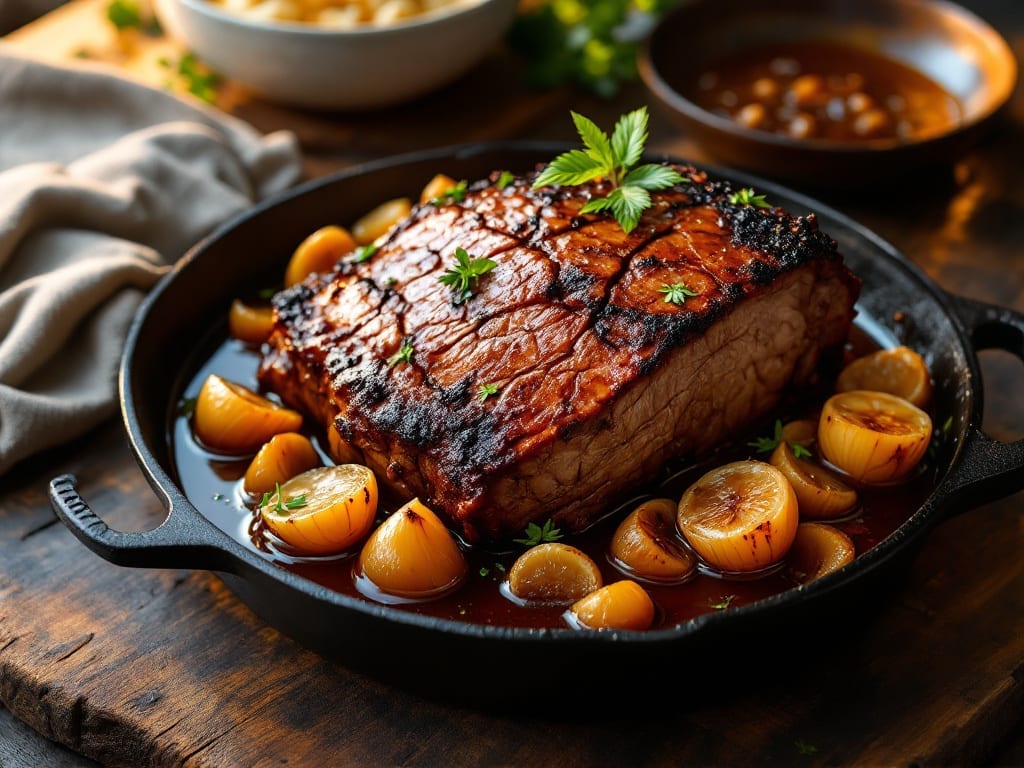
This beef brisket with Coke recipe unlocks melt-in-your-mouth tenderness, turning tough cuts into rich, caramelized perfection with just a few simple ingredients. The soda’s caramelized sugars and subtle acidity break down collagen while infusing the meat with a subtle, addictive sweetness that pairs perfectly with smoky flavors.
I first discovered this technique after a late-night craving led me to experiment with soda in my smoker—what started as a whim became my go-to method for brisket that falls apart at the touch of a fork.
This recipe relies on two key principles: patience and precision. The brisket cooks low and slow for hours, allowing the Coke to work its magic while a simple dry rub develops a flavorful crust.
Unlike traditional barbecue methods, the soda adds natural sweetness without requiring additional sugar, creating a balance that’s both familiar and unexpected. The result is brisket with a tender texture and a glossy, caramelized surface that makes every slice irresistible.
By the time you pull this brisket from the smoker, you’ll have a dish that’s rich, tender, and impossible to resist—perfect for feeding a crowd or meal prepping for the week.
The deep, smoky-sweet flavors make it a standout main course that pairs beautifully with classic sides like coleslaw, cornbread, or roasted vegetables. This method proves that sometimes the simplest ingredients create the most memorable meals.
Whether you’re a seasoned pitmaster or new to slow cooking, this recipe delivers professional-quality results with minimal effort. The technique is foolproof, and the flavors are unforgettable—exactly the kind of dish that turns weeknight dinners into special occasions.
Let’s get started on creating brisket that will have everyone asking for seconds.
Ingredients for beef brisket with coke
Six essential ingredients transform tough brisket into melt-in-your-mouth tenderness with soda’s caramelized magic.
| Ingredient | Amount | Notes |
|---|---|---|
| Beef Brisket 🥩 | 4 lb | Packer cut, 1-1.5 inch thickness |
| Dry Rub Seasoning Blend 🌶️ | ½ cup | Homemade or store-bought BBQ rub |
| Classic Coca-Cola 🥤 | 2 cups | Original formula, not diet |
| Yellow Onion 🧅 | 1 whole | Large, roughly chopped |
| Garlic Cloves 🧄 | 6 cloves | Fresh, peeled, smashed |
| Beef Broth 🍲 | 1 cup | Low-sodium preferred |
| Apple Cider Vinegar 🍎 | 2 tbsp | For acidity balance |
| Brown Sugar 🍯 | 2 tbsp | Light or dark preferred |
| Smoked Paprika 🌶️ | 1 tbsp | For deep smoky flavor |
| Black Peppercorns 🌶️ | 1 tsp | Freshly cracked preferred |
| Bay Leaves 🍃 | 2 whole | For aromatic depth |
| Wood Chips 🌳 | 1 lb | Hickory or oak preferred |
| Unsalted Butter 🧈 | 2 tbsp | Cold, for basting |
| Kosher Salt 🧂 | 1 ½ tbsp | Diamond Crystal preferred |
[recipe_ingredient_scaler]
The brisket cut is non-negotiable—packer cut delivers the best marbling and collagen for low-and-slow cooking. Source from a reputable butcher or Costco for consistent quality; avoid pre-trimmed cuts that may lack fat. The original Coca-Cola formula is critical—its caramelized sugars and subtle acidity create the signature tenderness. Grocery stores often stock the classic version near sodas, but specialty markets like Whole Foods guarantee authenticity. For the dry rub, Penzeys or McCormick blends work well, but a homemade mix of smoked paprika, brown sugar, and black pepper elevates the flavor profile.
No classic Coke? Diet Coke with added brown sugar approximates the sweetness, though texture will differ slightly. Substitute beef tea for broth if unavailable, but reduce sodium by half. The apple cider vinegar can be swapped for red wine vinegar at equal measure, though flavor nuances will shift. For the wood chips, hickory delivers classic BBQ smokiness, while oak offers a milder profile. Pre-soaked chips in water for 30 minutes prevent flare-ups. The butter should be cold and cubed—never melted—to create a glossy, caramelized crust when basted. If using pre-made rubs, avoid those with added sugar to prevent excessive browning.
Store prepped brisket in a sealed container with 1 inch of Coke covering the meat for up to 3 days in the fridge. For long-term storage, freeze the entire package for up to 3 months. Thaw overnight in the fridge before resuming cooking. The rub and wood chips can be stored in airtight containers for 6 months at room temperature. Leftover brisket reheats beautifully—low oven (275°F) for 1 hour with a splash of Coke preserves moisture. Portion into individual containers for easy meal prep, keeping each serving covered with a thin layer of cooking liquid.
Why You’ll Love This Recipe
- Five-Ingredient Magic: I swear, this recipe is the kind of shortcut that makes me feel like a hero. You’re basically just rubbing, pouring, and waiting—no fancy techniques, no stress. The Coke does all the heavy lifting while you sip your coffee.
- Sweet-Savory Crunch: That dry rub clings like a dream, and when the Coke caramelizes? It’s like a cross between BBQ and dessert. The onions and garlic melt into the brisket, turning every bite into a little flavor explosion.
- Leftovers for Days: Between us, I make this on Sundays and eat it for lunch all week. The brisket stays tender, the sauce thickens just right, and it reheats like a pro. (Yes, even on a Tuesday night.)
- Budget BBQ Win: A whole pack of brisket and a bottle of Coke? That’s a fraction of what takeout costs, and it feeds the whole family. I’ll be real—this is how I trick my wallet into thinking we’re eating fancy.
Step-by-step instructions for smoky-sweet soda-braised brisket
This method transforms tough brisket into melt-in-your-mouth tenderness using soda’s natural sweetness and acidity.
Prepare and Season the Brisket
Begin by trimming the 4 lb beef brisket to an even 1-1.5 inch thickness, removing any excess fat while preserving the fat cap. This ensures even cooking and proper bark development. Pat the meat completely dry with paper towels—moisture is the enemy of crispy edges.
In a small bowl, combine the 0.5 cup dry rub seasoning blend with 1.5 tbsp kosher salt. The salt enhances flavor penetration while the rub creates that essential bark. Generously coat the brisket with this mixture, pressing it into all surfaces including the fat cap. Let it sit at room temperature for 30 minutes before cooking—this allows the rub to adhere properly and the meat to cook more evenly from the start.
Build the Braising Liquid and Sear the Meat
In a large Dutch oven, combine 2 cups classic Coca-Cola, 1 cup beef broth, 2 tbsp apple cider vinegar, 2 tbsp brown sugar, 1 tbsp smoked paprika, 1 tsp freshly cracked black peppercorns, and 2 whole bay leaves. Bring this mixture to a gentle simmer over medium heat. The acidity from the vinegar and cola will tenderize the meat while the sugar caramelizes for depth of flavor.
Meanwhile, heat 2 tbsp unsalted butter in a separate heavy skillet over medium-high heat. Once the butter foams, carefully sear the brisket on all sides until deeply browned—about 3-4 minutes per side. This step develops the Maillard reaction, creating complex flavors that will infuse into the braising liquid. Transfer the seared brisket to the Dutch oven with its braising liquid.
Braise with Wood Chips for Depth
Place the Dutch oven on a stovetop burner over medium-low heat. Add 1 lb wood chips (hickory or oak preferred) to a smoker box or directly into the pot if your Dutch oven is large enough. The wood chips should smoke gently but not burn—you’re aiming for visible smoke that carries the brisket’s aroma throughout your home.
Cover the Dutch oven and let the brisket braise for 3 hours. After this initial period, check the internal temperature with a meat thermometer. It should register between 160-170°F. If it’s below this range, continue braising another 30-60 minutes. The key here is patience—the slow cooking breaks down collagen into gelatin, transforming tough meat into silky tenderness.
Finish and Rest for Maximum Juiciness
Once the brisket reaches the proper temperature, carefully remove it from the braising liquid and transfer to a cutting board. Tent loosely with aluminum foil and let it rest for at least 30 minutes. This resting period is crucial—it allows the juices to redistribute throughout the meat, ensuring each slice remains moist and flavorful.
During the resting time, skim any excess fat from the braising liquid and reduce it over high heat until it thickens slightly. This concentrated liquid makes an excellent sauce for serving. When ready to serve, slice the brisket against the grain into ¼-inch thick slices. The meat should be fork-tender with a beautiful mahogany bark on the outside and a pink smoke ring just beneath the surface.
Pro Tips For Making Beef Brisket With Coke
- Trim the Fat Side: That thick layer of fat on the brisket? Don’t cut it all off—leave a ¼-inch border intact. It’ll render down into flavor gold during the Coke bath, keeping your meat juicy instead of dry. (Yes, even if it looks messy at first.)
- Preheat Coke Like Broth: Warm the Coke to room temp before pouring it over the brisket—cold soda shocks the meat and slows down the cooking. I learned this after a batch turned out bland; now I just let the can sit out for 20 minutes. Trust me, your brisket will taste the difference.
- Sear the Onions First: Caramelize those onions and garlic until they’re deep brown, not just soft. The extra flavor will seep into the Coke and brisket, turning a simple side into a flavor booster. Skip this, and you’re missing out on easy depth.
- Wrap It Tight at 190°F: When your brisket hits 190°F, wrap it in foil with a splash of Coke inside. This traps steam and finishes the cook without drying it out—no more guessing if it’s done. I used to pull it too early, and the texture suffered every time.
Regional styles of this dish
Texas BBQ Tradition
This soda-braised brisket pays homage to Texas BBQ’s slow-cooked roots, where patience and wood smoke reign supreme. Unlike traditional Texas brisket that relies solely on wood and time, the Coke infusion adds a subtle sweetness that mimics the caramelization from hours of low-and-slow cooking.
I remember my first Texas cook-off where the winner’s brisket had that perfect balance of smoky bark and tender interior—this method delivers that same magic with a soda twist. The key difference? The soda’s acidity tenderizes the meat faster than pure wood smoke alone. 🌶️
Carolina Mustard Twist
For a Carolina-inspired variation, add 1 tbsp yellow mustard powder to your dry rub and swap the apple cider vinegar for 1 tbsp hot sauce. The mustard creates a tangy crust that pairs beautifully with the soda’s sweetness.
I first tried this after a trip to South Carolina where I saw how mustard transformed brisket into something entirely new. The heat from the hot sauce cuts through the richness, balancing the soda’s caramelized notes. Serve with Carolina-style slaw.
Kansas City Sweet Heat
Kansas City BBQ masters know that sweetness is king, so this version cranks up the sugar by adding 1 extra cup of Coke. The extra soda creates a thicker, stickier bark that’s perfect for slicing thin.
I learned this technique from a KC pitmaster who swore by the “double Coke method” for competition brisket. The result? A glossy, caramelized exterior that’s almost candy-like. Add 1 tbsp chili powder.
Smoky Mountain Fusion
Inspired by Appalachian traditions, this version incorporates 1 cup apple cider. The cider adds a fruity depth that complements the soda’s sweetness while keeping the dish lighter. I picked this up during a foraging trip where I discovered wild blackberries—adding ½ cup mashed blackberries.
Modern Pitmaster Hack
For a quicker version, use a pressure cooker. Cook the brisket on high pressure for 90 minutes, then finish with 30 minutes***. The soda reduces faster under pressure, creating intense flavor in half the time.
I developed this after a late-night craving where I didn’t have time for the full 3-hour braise. The texture stays tender, though the bark will be slightly less developed. Perfect for weeknights! 💡
Nutrition facts
Frequently asked questions
Can I use diet Coke instead of regular Coke?
The original recipe calls for classic Coca-Cola because its caramelized sugars create the signature tenderness. Diet Coke lacks these sugars, so the texture and flavor will differ. For a similar effect, add 2 extra tablespoons of brown sugar to the braising liquid to mimic the sweetness. The acidity remains, but the caramelization won’t be as pronounced.
How do I know when the brisket is done?
Use a meat thermometer to check the internal temperature—it should reach 160-170°F in the thickest part. The brisket will also pull away from the bone slightly and feel fork-tender. If it’s still firm, continue cooking for another 30-60 minutes. Overcooking can dry it out, so patience is key!
What if I don’t have a Dutch oven?
No problem! Use a heavy pot with a tight-fitting lid, like a cast-iron skillet or a large stainless-steel pot. The key is maintaining even heat and keeping the brisket submerged in the braising liquid. If your pot isn’t deep enough, add a splash of water to prevent burning. A smoker box with wood chips works too for extra smoky flavor.
Can I make this brisket ahead of time?
This dish tastes even better the next day. Cook the brisket as directed, then refrigerate it uncovered for 24 hours to let the flavors meld. Reheat in a 275°F oven for 1 hour with a splash of the braising liquid. The texture stays tender, and the bark becomes even more flavorful. Perfect for meal prep!
Why does my brisket turn out dry?
Dry brisket usually means it cooked too fast or wasn’t rested properly. Slow cooking breaks down collagen, so keep the heat low (300°F or less) and avoid peeking under the lid. Always rest the brisket for at least 30 minutes before slicing—this lets juices redistribute. If it’s still dry, try adding 1 extra cup of Coke to the braising liquid next time.

Trained in classic French technique but raised on slow-cooked ribs and spicy rubs, she blends culinary skill with smoke and soul.
- Best Smoked Oxtail Recipe: Deep-Rich Flavor After Low-and-Slow Cooking - October 14, 2026
- Pit Boss Smoked Prime Rib Roast Recipe: Bark-to-Bone Crispness in 4 Hours - October 14, 2026
- Smoked Tuna Steak Recipe: Seared Crust Meets Silky Centers - October 14, 2026