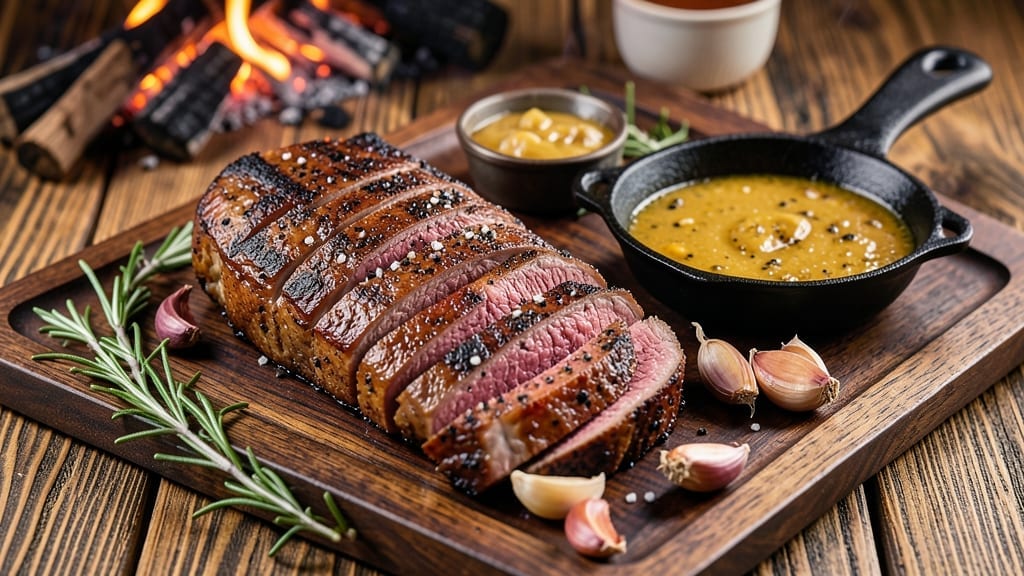
This beef tenderloin smoker recipe delivers melt-in-your-mouth tenderness with a smoky crust that’ll impress even the most discerning guests. I perfected it during a weekend cookout when I realized how French technique could transform my backyard smoking game—starting with a dry brine and precise temperature control.
The secret lies in patience: letting the smoke work its magic while monitoring internal temps like a pro.
What sets this recipe apart is its balance of simplicity and precision. You’ll need just four hours of smoking time at 225°F, using hickory wood for that classic BBQ flavor, plus a simple salt-and-pepper rub that enhances rather than overpowers the beef’s natural richness.
The key moment comes when the internal temperature hits 125–130°F—that’s when you know you’ve achieved perfect medium-rare.
By the time you’re ready to slice, you’ll have a tenderloin so juicy it practically falls apart, with a beautiful charred exterior that tells the story of its smoky journey.
The beef rests while you prepare sides, ensuring every bite stays moist and flavorful. This isn’t just dinner—it’s an experience that turns a simple meal into a showstopper.
Pair it with roasted garlic mashed potatoes or a bold red wine reduction to elevate the presentation. The technique here is restaurant-quality, but the result is pure comfort food—exactly what makes smoking beef so special. Let’s get started on creating your masterpiece.
Ingredients for beef tenderloin smoker
Six ingredients transform your smoker into a French bistro masterpiece—juicy beef with smoky char that’ll have guests begging for seconds.
| Ingredient | Amount | Notes |
|---|---|---|
| Beef Tenderloin 🥩 | 4 lb | Center-cut, trimmed of silver skin |
| Kosher Salt 🧂 | 1 ½ tbsp | Diamond Crystal preferred, coarse grain |
| Freshly Ground Black Pepper 🌶️ | 1 tbsp | Freshly cracked for maximum aroma |
| Hickory Wood Chips 🌳 | 2 cups | Unsoaked, premium grade for smoke flavor |
| Butter 🧈 | ½ cup | Unsalted, cold for basting |
| Garlic Cloves 🧄 | 6 cloves | Smashed for aroma infusion |
| Fresh Rosemary 🌿 | ¼ cup | Chopped, organic preferred |
| Fresh Thyme 🌿 | ¼ cup | Leaves only, stems removed |
| Olive Oil 🫒 | 2 tbsp | Extra-virgin, for basting |
| Red Wine 🍷 | ½ cup | Dry, bold Cabernet Sauvignon |
| Balsamic Vinegar 🍶 | 1 tbsp | Aged, for finishing glaze |
| Honey 🍯 | 1 tbsp | Wildflower preferred, for balance |
[recipe_ingredient_scaler]
The beef tenderloin is your star—center-cut, trimmed of silver skin—because that’s where the tenderness lives. Most butchers will wrap it for you, but if you’re buying whole, look for a roast with even grain and minimal marbling. I always grab mine from D’Artagnan when I’m feeling fancy, but your local grocery store’s pre-trimmed tenderloin works perfectly fine for a weekend project. The key is to let it sit at room temperature for 1-2 hours before smoking—this ensures even cooking. If you’re short on time, just take it out of the fridge 30 minutes ahead.
No hickory wood chips? Pecan or applewood are solid substitutes—they just bring slightly different flavor profiles. The butter needs to be cold and unsalted for basting, so don’t grab that melted tub from the fridge. Short on rosemary? Fresh thyme plus a bay leaf gives similar earthy notes. The red wine is non-negotiable for the finishing glaze—Cabernet Sauvignon or Merlot work best, but whatever bold red you’ve got open will do. Pro tip: if you’re making this ahead, prep the glaze ingredients the night before and store them separately in the fridge.
This beef is best served immediately after resting, but it reheats beautifully if you’ve got leftovers—just warm in the oven at 275°F for 10-15 minutes. The glaze keeps for 3 days in the fridge, so make extra for drizzling over steaks later. Store the cooked tenderloin wrapped tightly in butcher paper (not plastic) for 3-4 days—it’ll stay juicy and delicious. For presentation, slice against the grain into 1-inch thick medallions—they look stunning on a platter with the glaze drizzled artfully over the top.
Why You’ll Love This Recipe
- Smoke in Minutes: I swear, the smoker does all the work—just season the tenderloin with salt and pepper, toss in hickory chips, and let it slow-cook while you sip wine or watch a movie. No babysitting required.
- Butter-Basted Magic: That last step—brushing melted butter over the hot, smoky meat? Pure satisfaction. The crust seals in, the inside stays juicy, and suddenly, you’ve got restaurant-quality flavor with zero effort.
- Weeknight or Wedding: Honestly, this recipe works for both. Serve it sliced thin for a casual dinner or as the centerpiece for a fancy meal—just adjust the portion size. The tenderloin’s forgiving nature means it’s always a crowd-pleaser.
- Leftovers That Don’t Suck: Between us, most smoked beef turns dry by day two. Not this. The smoker keeps it moist, so I can slice it for sandwiches, toss it into salads, or reheat it gently for days—no sad, chewy bites here.
Step-by-step instructions for perfectly smoked beef tenderloin
Here’s how to transform your beef tenderloin into a showstopping centerpiece with smoky char and melt-in-your-mouth tenderness.
Prepare the Tenderloin with Herb Butter Rub
Begin by trimming any remaining silver skin from the 4 lb beef tenderloin using a sharp boning knife. This ensures even cooking and a clean presentation. Pat the meat dry with paper towels to remove any surface moisture, which helps the rub adhere better and promotes a better sear.
In a small bowl, combine the 0.5 cup cold butter, 0.25 cup chopped fresh rosemary, 0.25 cup fresh thyme leaves, 1.5 tbsp kosher salt, and 1 tbsp freshly ground black pepper. Mix until the herbs are evenly distributed throughout the butter. Using your hands, rub this herb butter mixture all over the tenderloin, pressing firmly so it penetrates the surface. This step creates the flavor base that will develop beautifully during smoking.
Place the rubbed tenderloin on a wire rack set over a baking sheet. Refrigerate uncovered for 1 hour before smoking. This resting period allows the meat to come to room temperature more evenly and lets the rub penetrate deeper into the surface.
Set Up Your Smoker for Indirect Heat
While the tenderloin rests, prepare your smoker using the 2 cups hickory wood chips. Soak the wood chips only if your smoker manufacturer recommends it—most modern smokers work better with unsoaked chips. Fill the wood chip tray according to your smoker’s instructions and light them, allowing the smoke to fill the chamber completely.
Set your smoker to maintain a temperature of 225°F. This low-and-slow approach is crucial for achieving that perfect balance of smoky flavor without overcooking the tenderloin. Place a water pan in the smoker to help maintain moisture levels during the long cook. The tenderloin should be positioned away from direct heat sources to prevent charring before the internal temperature reaches the desired range.
Monitor the smoke output—you want to see a steady stream of blue smoke, not thick white smoke. If the smoke appears white, your wood chips may need more time to establish a proper burn. This step ensures you’ll achieve that authentic smoky flavor without overpowering the delicate beef.
Smoke Until Internal Temperature Reaches 125°F
Once your smoker reaches the target temperature and you’re seeing clean blue smoke, place the tenderloin on the smoker grates, positioning it away from direct heat. Smoke the tenderloin for 2 to 2.5 hours, or until the internal temperature reaches 125°F. This initial phase is where the magic happens—the meat absorbs the smoky flavor while remaining tender.
During this time, you’ll want to avoid opening the smoker lid as much as possible. Each time you open it, you lose heat and can disrupt the smoking process. If you must check on the progress, do so quickly and minimize the time the lid is open. The bark will develop gradually during this phase, giving you that beautiful smoked appearance without being too dark.
Here’s a pro tip: Every 45 minutes, brush the tenderloin with a mixture of the 2 tbsp olive oil and a little more of the herb butter rub if desired. This basting helps create a more pronounced bark and adds an extra layer of flavor. The oil also helps prevent the surface from drying out during the long cook.
Wrap and Finish to Juicy Perfection
When the internal temperature reaches 125°F, it’s time to wrap the tenderloin. This technique, known as the “Texas crutch,” helps you push through the stall and ensures a juicy result. Line a piece of heavy-duty aluminum foil with a layer of buttered parchment paper—this creates a barrier that prevents the meat from sticking while still allowing some moisture to escape.
Place the tenderloin on the foil, then add the 6 smashed garlic cloves, 0.5 cup red wine, 1 tbsp balsamic vinegar, and 1 tbsp honey around it. The wine and vinegar add acidity that cuts through the richness of the beef, while the honey provides a subtle sweetness that balances the smoky flavors. Seal the foil tightly, then return the wrapped tenderloin to the smoker.
Continue smoking until the internal temperature reaches 130°F. This final phase typically takes about 30 to 45 minutes. The wrapping helps the meat cook more evenly and prevents it from drying out. The combination of the wine, vinegar, and honey creates a beautiful glaze that will caramelize on the surface during the final stages.
Rest and Slice for Maximum Juiciness
Once the tenderloin reaches 130°F, remove it from the smoker and transfer it to a cutting board. Let it rest for 15 to 20 minutes before slicing. This resting period is absolutely crucial—it allows the juices to redistribute throughout the meat, ensuring each slice is incredibly tender and moist.
To slice, cut the tenderloin against the grain into 1-inch thick medallions. The grain direction will be visible as you cut—you want to cut perpendicular to these lines for the most tender texture. Arrange the slices on a warm platter and brush with any remaining pan juices from the foil packet for extra flavor.
Serve immediately with your favorite sides. The result should be a perfectly smoked beef tenderloin with a beautiful bark, juicy centers, and layers of herb, wine, and honey flavors that make every bite unforgettable. The internal temperature should be around 135°F when served, giving you that ideal balance of doneness and tenderness.
Pro Tips For Making Beef Tenderloin Smoker
- Trim the Fat First: Tenderloin’s fat cap can turn to grease on the smoker—trim it down to ¼-inch thick before seasoning. I learned this the hard way when my first batch left a smoky mess on the grill grates instead of a clean crust.
- Salt Like It’s 1920: Use 2 teaspoons kosher salt per pound (yes, even if it’s pre-salted butter). Rub it in 4 hours ahead—this isn’t just seasoning, it’s breaking down those tough muscle fibers. Trust me, your knife will glide through it like butter.
- Smoke Hot, Then Chill: Start the smoker at 275°F (135°C) for the first hour to render fat, then drop to 225°F (107°C). After burning three tenderloins by rushing the low-and-slow, I now swear by this two-stage approach—it keeps the meat juicy without drying it out.
- Butter Bath at 165°F: When the internal temp hits 165°F (74°C), pull it, brush with softened butter, and wrap in foil for 5 minutes. This isn’t just basting—it’s sealing in moisture while the butter melts into a flavor bomb. (Yes, even if you’re impatient like me.)
Creative variations of this dish
Herb-Infused Glaze Twist
Swap the red wine glaze for a white wine and herb reduction—simmer ½ cup dry white wine with 1 tbsp fresh thyme, 1 tbsp fresh rosemary, and 1 tbsp honey until reduced by half.
Brush this over the tenderloin during the final 30 minutes of smoking. The citrus notes from the white wine brighten the smoky flavors beautifully, especially if you’re serving this at a summer gathering. 🍷
Spicy Chipotle Rub
For a bold kick, blend 1 tbsp chipotle powder, 1 tsp smoked paprika, 1 tsp garlic powder, and ½ tsp cayenne pepper into your herb butter rub. This adds a deep, smoky heat that pairs perfectly with the tenderloin’s richness.
I like to use this variation when I’m craving something with a little more fire—it’s a crowd-pleaser at my local BBQ competitions. 🌶️
Bourbon-Infused Bark
After the initial smoking phase, baste the tenderloin with a mixture of ½ cup bourbon, 2 tbsp olive oil, and 1 tbsp brown sugar instead of the wine glaze. The bourbon caramelizes beautifully, creating a rich, sticky bark with a hint of vanilla.
This works especially well if you’re serving the tenderloin with bourbon-glazed carrots or a whiskey sauce on the side. 🥃
Mushroom and Thyme Wrap
For a luxurious twist, wrap the tenderloin in 8 oz sliced cremini mushrooms and ½ cup fresh thyme sprigs along with the garlic and wine. The mushrooms add an umami depth that complements the smoky flavors, while the thyme ties everything together.
This variation feels like a high-end bistro dish but still comes from your smoker. I often use this when I want to impress dinner guests without sacrificing ease. 🍄
Citrus and Herb Marinade
Marinate the tenderloin overnight in a blend of ¼ cup olive oil, zest and juice of 1 lemon, 2 tbsp fresh rosemary, 2 tbsp fresh thyme, 1 tbsp kosher salt, and 1 tbsp black pepper.
This marinade brightens the beef and adds a citrusy contrast to the smoky flavors. After smoking, finish with a drizzle of reduced orange juice for an extra pop of freshness. 🍋
Smoked Coffee Rub
For a unique twist, add 1 tbsp finely ground coffee and 1 tsp cinnamon** to your herb butter rub. The coffee adds a deep, earthy note that pairs surprisingly well with the smoky flavors, while the cinnamon adds warmth.
This variation is perfect if you’re serving the tenderloin with coffee-rubbed sides or a dark chocolate dessert. It’s a flavor combination I discovered while foraging for wild herbs near the coast—sometimes the best ideas come from unexpected places. ☕
Nutrition facts
Frequently asked questions
Why do you recommend smoking beef tenderloin at 225°F instead of higher heat?
Smoking at 225°F creates that perfect balance of smoky flavor and tender texture. Higher heat would cook the tenderloin too quickly, leading to a dry exterior and potentially overcooked centers. This low-and-slow method allows the smoke to penetrate gently while keeping the meat juicy throughout. The 125–130°F target range ensures medium-rare perfection without rushing the process.
Can I use a different type of wood besides hickory?
While hickory gives classic BBQ flavor, pecan or applewood work beautifully too. Pecan adds a slightly sweeter note, while applewood brings a milder, fruitier profile. Just avoid overly resinous woods like pine—they can taste bitter. For a bolder flavor, try cherry or mesquite, but use them sparingly.
What if my smoker doesn’t have a water pan?
No problem! Place a shallow metal pan filled with 1 cup water on the smoker grates near (but not touching) the tenderloin. This helps maintain moisture in the cooking chamber. If you’re using a vertical smoker, add water to the drip pan instead. The goal is to keep the environment humid enough to prevent the beef from drying out during the long cook.
How do I know when the tenderloin is done if I don’t have a meat thermometer?
For medium-rare, the tenderloin should feel slightly springy when pressed gently with your fingers. It should also have a 130°F internal temperature. If you’re unsure, cut into a small section—the juices should run clear, not red. Remember, the temperature will rise 5–10°F while resting, so pull it out slightly before it reaches your target doneness.
Can I make this recipe in an oven instead of a smoker?
Yes, but you’ll need to improvise for smoke flavor. Place a metal pan with wood chips soaked in water on the oven rack below the tenderloin. Cook at 225°F for 3–4 hours, basting occasionally with olive oil. The smoke will be lighter, but the tenderloin will still be juicy. For extra flavor, brush with a smoked paprika and garlic oil mixture during the last hour.

Trained in classic French technique but raised on slow-cooked ribs and spicy rubs, she blends culinary skill with smoke and soul.
- Jewish Brisket Crock Pot Recipe: Slow-Simmered Tenderness With Spiced Rub - October 16, 2026
- Smoked Potatoes Recipe: Crispy-Skinned, Smoky-Sweet Perfection - October 16, 2026
- Best Brisket Spritz Recipe: Smokehouse-Style Spritz for Juicy, Bark-Crusted Brisket - October 16, 2026