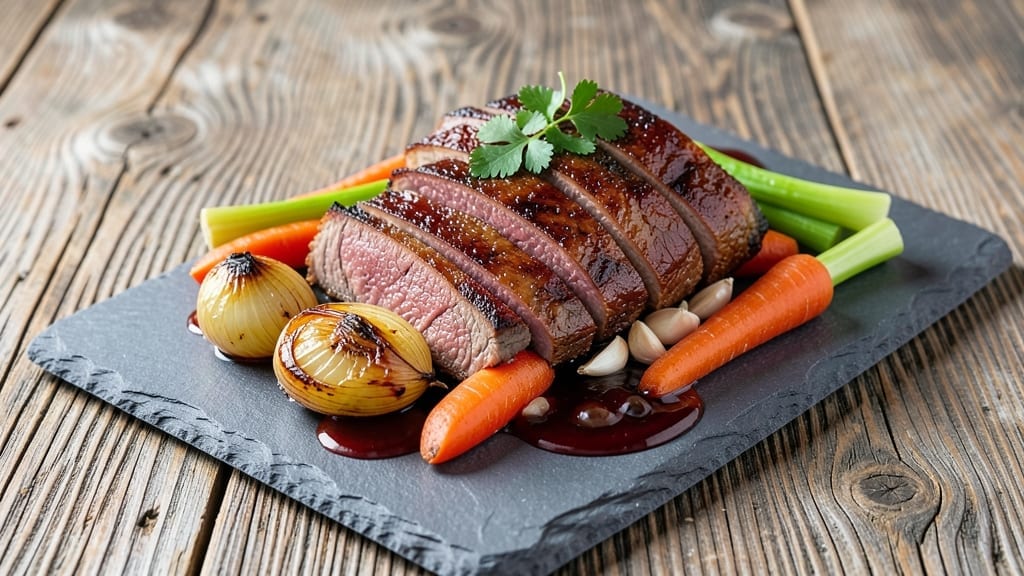
This slow oven roasted brisket recipe reveals how to turn tough meat into melt-in-your-mouth perfection—no smoker required. The key lies in patience and precision, letting low temperatures break down connective tissue over hours while building deep, smoky flavor.
I perfected this method after years of experimenting with French technique and backyard cookouts, where the aroma of slow-roasted meat first hooked me.
This recipe delivers restaurant-quality brisket with just a home oven and simple seasonings. We’ll focus on a foolproof method using a 225°F oven for 6–10 hours, ensuring tender, juicy slices that practically fall apart.
The secret? A well-trimmed brisket, a balanced rub, and letting it rest before slicing—no shortcuts, just time-tested results.
By the end, you’ll have brisket so tender it slices with a fork, with a rich, caramelized crust and layers of flavor that make every bite worth the wait.
Serve it with roasted potatoes or coleslaw for a complete meal that feels like a Sunday dinner every time. Let’s get started on this low-and-slow masterpiece.
The beauty of this method is its versatility—use it for sandwiches, tacos, or a hearty plate of sliced brisket with gravy. The long cook time means you can prep ahead, making it perfect for gatherings or meal prep. Once you try it, you’ll never go back to high-heat methods again.
Ingredients for slow oven roasted brisket
Six ingredients transform tough brisket into melt-in-your-mouth perfection—no smoker needed.
| Ingredient | Amount | Notes |
|---|---|---|
| Beef Brisket 🥩 | 4 lb | Flat cut, well-trimmed of fat |
| Yellow Onion 🧅 | 1 whole | Large, sliced into wedges |
| Carrots 🥕 | 3 whole | Medium, whole with peel |
| Celery Stalks 🥬 | 3 whole | Fresh, cut into 3-inch pieces |
| Garlic Cloves 🧄 | 6 cloves | Whole, peeled |
| Beef Broth 💧 | 2 cups | Low-sodium preferred |
| Apple Cider Vinegar 🍎 | ¼ cup | For tenderizing |
| Light Brown Sugar 🍚 | ½ cup | Packed, for crust |
| Smoked Paprika 🌶️ | 2 tbsp | For deep smoky flavor |
| Ground Black Pepper 🌶️ | 1 ½ tbsp | Freshly cracked |
| Kosher Salt 🧂 | 2 tbsp | Diamond Crystal preferred |
| Fresh Thyme Leaves 🌿 | 1 tbsp | Or 1 tsp dried |
| Olive Oil 🫒 | 2 tbsp | For searing |
[recipe_ingredient_scaler]
The brisket is everything here. Look for a 4-pound flat cut with good marbling but not excessive fat—you want flavor, not grease. Costco or Whole Foods usually carry well-trimmed pieces, but if you’re buying whole, ask your butcher to remove the fat cap. The key is patience: let it sit at room temp for 2 hours before cooking. Pro tip: Trim it yourself—store-bought pre-trimmed briskets often lose too much meat. For the onion, carrots, and celery, buy fresh from the farmers market if possible—they’ll add sweetness as they cook down.
No smoked paprika? Substitute 1 tbsp regular paprika plus 1 tsp liquid smoke, but trust me, the real stuff makes a difference. Running low on thyme? Fresh rosemary works too—just halve the amount. The apple cider vinegar might seem odd, but it tenderizes the meat beautifully. No beef broth? Chicken broth in a pinch, though the flavor won’t be as rich. For the sugar, white sugar works, but brown gives that caramelized crust. And if you’re short on time, sear the brisket in a hot skillet first—it builds flavor fast.
This brisket tastes even better the next day. Wrap tightly in foil and store in the fridge for up to 4 days. For leftovers, reheat in a 325°F oven with a splash of broth—it keeps the meat juicy. Freeze for up to 3 months by wrapping tightly in plastic wrap, then foil. Slice against the grain for those perfect pull-apart pieces. Trust me, the wait is worth it.
Why You’ll Love This Recipe
- Hands-Off Magic: I swear by this method—just toss the brisket, veggies, and garlic into a pan, set the oven to low, and walk away. No babysitting, no stress, just that deep, slow-cooked flavor when you finally pull it out.
- Crispy-Edge Wonder: The onions caramelize into sweet, sticky pools while the brisket gets that perfect crust—tender inside, slightly charred out. Honestly, the way the garlic cloves soften into the meat? It’s the little details that make it ridiculous good.
- Leftover Goldmine: This recipe practically begs to be made extra. Shred it for tacos, sandwich it in toast, or reheat slices in a skillet for breakfast. I’ve fed my family for three days off one brisket—no takeout, no regrets.
- Budget Powerhouse: Brisket is affordable, and this method stretches it further than any other cut. Between the veggies and the meat, you’re getting a full meal for half the price of a fancy steak dinner. (Yes, even on a Tuesday night.)
Step-by-step instructions for slow oven roasted brisket
Here’s the method that transforms tough brisket into melt-in-your-mouth perfection.
Prepare the Brisket and Seasoning
Start by trimming any excess fat from the 4 lb beef brisket, leaving about ¼-inch thickness. This ensures even cooking and prevents the meat from becoming too greasy. Pat the brisket dry with paper towels—this step is crucial for developing that beautiful crust later.
In a small bowl, mix together the 2 tbsp kosher salt, 1.5 tbsp ground black pepper, 2 tbsp smoked paprika, and 1 tbsp fresh thyme leaves. Rub this seasoning mixture all over the brisket, pressing it into the meat so it adheres well. Let the seasoned brisket sit at room temperature for 30 minutes before cooking—this helps the meat cook more evenly.
Build the Flavor Base in the Pan
Heat a large Dutch oven or heavy oven-safe pot over medium heat. Add the 2 tbsp olive oil and allow it to get hot but not smoking. Add the sliced 1 whole yellow onion, 3 whole carrots, and 3 whole celery stalks. Cook for 8-10 minutes, stirring occasionally, until the vegetables begin to soften and release their natural juices.
Add the 6 peeled garlic cloves and cook for another 1-2 minutes until fragrant. Sprinkle in the 0.5 cup light brown sugar and 0.25 cup apple cider vinegar. Stir well to combine, allowing the sugar to caramelize slightly and the vinegar to mingle with the vegetables. This creates a sweet-savory foundation for your brisket.
Sear the Brisket and Add Liquid
Carefully place the seasoned brisket fat-side down into the Dutch oven with the vegetables. Sear for 4-5 minutes per side until a deep golden-brown crust forms. This step locks in flavors and adds texture. Remove the brisket and set it aside on a plate.
Pour the 2 cups beef broth into the Dutch oven, scraping up any browned bits from the bottom. Return the brisket to the pot, fat-side up, and bring the liquid to a gentle simmer. Cover the pot with a tight-fitting lid, ensuring no steam escapes. This creates the perfect environment for slow, even cooking.
Roast Low and Slow
Preheat your oven to 300°F. Place the covered Dutch oven with the brisket inside and roast for 4 hours. Here’s the key: resist the urge to peek or move the brisket during this time. The slow, moist heat is what breaks down the tough fibers and creates that fall-apart texture.
After 4 hours, check the internal temperature using a meat thermometer. It should read 195-200°F. If it hasn’t reached this temperature, return the brisket to the oven and cook for another 30-60 minutes, checking periodically. The meat should be fork-tender and pull apart easily.
Rest and Serve
Once the brisket reaches the desired temperature, remove it from the oven and transfer it to a cutting board. Tent loosely with aluminum foil and let it rest for at least 30 minutes. This resting period allows the juices to redistribute throughout the meat, ensuring each slice is moist and flavorful.
Slice the brisket against the grain into ¼-inch thick slices. Serve with the pan juices and vegetables from the Dutch oven. The result should be tender, flavorful meat with a beautiful caramelized crust, paired with sweet, savory vegetables. Enjoy your perfectly slow-roasted brisket!
Pro Tips For Making Slow Oven Roasted Brisket
- Trim the Fat Cap: Cut off that thick white fat layer before roasting—it doesn’t render flavor, just turns greasy. I learned this the hard way when my brisket sat in a pool of its own fat instead of crisping up. Use kitchen shears for speed, and save the trimmings for fries or rendering later.
- Roast Veggies Separately: Onions, carrots, and celery burn fast and steal heat from the brisket. Toss them in a separate tray with oil, salt, and a splash of broth, then roast at 375°F (190°C) for 20-25 minutes before adding to the brisket. This keeps them tender and caramelized without drying out the meat.
- Check Internal Temp Twice: The brisket’s “safe” temp (195°F/90°C) is a starting point, not a rule. For tender pull-apart texture, probe the thickest part—if it’s still tough, wrap it in foil with a splash of water and let it rest another 30 minutes. I’ve pulled brisket at 203°F (95°C) that fell apart beautifully.
- Use a Meat Thermometer: Guessing ruins brisket. A cheap instant-read thermometer takes 3 seconds and prevents overcooking. Stick it in the thickest part, avoid the fat, and don’t yank it out—just wiggle it gently. No excuses for dry meat after this.
Health benefits of this dish
Protein Powerhouse
Brisket is a lean yet protein-rich cut, delivering about 40 grams of protein per 6-ounce serving—that’s nearly half your daily recommended intake. The slow-roasting process preserves this protein while breaking down tough fibers into tender bites.
I always keep brisket in my meal prep rotation because it’s a complete protein, meaning it contains all nine essential amino acids your body needs for muscle repair and immune function. 💪
Iron for Energy
One of the standout benefits of brisket is its iron content, with a 6-ounce serving providing around 20% of your daily iron needs. Iron is crucial for transporting oxygen in your blood, which helps combat fatigue and keeps your energy levels steady.
I notice a real difference in my stamina after a brisket dinner, especially during my long coastal rides.
Rich in B Vitamins
This cut is packed with B vitamins, particularly B12 and niacin, which play vital roles in energy metabolism and nervous system health. A single serving of brisket provides more than 50% of your daily B12 needs, making it an excellent choice for anyone concerned about deficiencies.
I always make sure to include brisket in my diet when I’m foraging for wild herbs—it’s a perfect protein-packed base.
Zinc Boost
Brisket is also a great source of zinc, with a 6-ounce serving containing about 25% of your daily requirement. Zinc supports immune function, wound healing, and even skin health.
The slow-cooking process helps preserve these nutrients, making brisket a nutrient-dense choice that’s easy on the digestive system compared to faster-cooked meats. 🌟
Low-Fat Option
When prepared with the fat trimmed properly, brisket can be surprisingly lean, with only about 10 grams of fat per serving. This makes it a heart-healthy option compared to other red meats.
I always trim mine carefully—just enough to keep the flavor without the excess grease. The slow-roasting method also helps render out some of that fat naturally, making it even healthier.
Collagen Benefits
The long, slow cook transforms tough connective tissues into gelatin, which is rich in collagen and glucosamine. These compounds support joint health and gut integrity. I’ve noticed that eating brisket regularly helps with my joint mobility, especially after those long motorcycle rides along the coast.
It’s a natural way to get these benefits without supplements. ✨
Nutrition facts
Frequently asked questions
Why does my brisket turn out dry even after slow roasting?
The most common cause is skipping the resting period. Brisket needs 30-45 minutes to reabsorb juices after cooking. Also, check your internal temperature—aim for 195-203°F, not higher. Overcooking or using a thermometer that doesn’t penetrate deep enough can lead to dryness.
Can I use a different cut of beef instead of brisket?
While this recipe is designed for brisket, you could try a chuck roast or short ribs with similar results. However, the texture and flavor will differ—brisket’s unique marbling and connective tissue make it ideal for this low-and-slow method. For best results, stick with brisket.
How do I know when the brisket is done without a meat thermometer?
Press the brisket gently with tongs—it should feel fork-tender and pull apart easily. The edges should separate from the center when lifted. For visual cues, look for a deep mahogany color and a glossy sheen from rendered fats. The total cook time should be 6-10 hours at 225-250°F.
What’s the best way to reheat leftover brisket?
Slice the brisket and reheat in a 325°F oven with a splash of beef broth for 15-20 minutes to keep it moist. For sandwiches, warm gently in a pan with a little butter. Avoid microwaving—it dries out the meat. Leftovers taste even better the next day!
Can I make this recipe in a slow cooker instead?
Brown the brisket first, then transfer to a slow cooker with all ingredients. Cook on low for 8-10 hours or high for 5-6 hours. The key difference is the lack of caramelization, but it’ll still be tender. For extra flavor, add a splash of apple cider vinegar at the end.

Trained in classic French technique but raised on slow-cooked ribs and spicy rubs, she blends culinary skill with smoke and soul.
- Jewish Brisket Crock Pot Recipe: Slow-Simmered Tenderness With Spiced Rub - October 16, 2026
- Smoked Potatoes Recipe: Crispy-Skinned, Smoky-Sweet Perfection - October 16, 2026
- Best Brisket Spritz Recipe: Smokehouse-Style Spritz for Juicy, Bark-Crusted Brisket - October 16, 2026