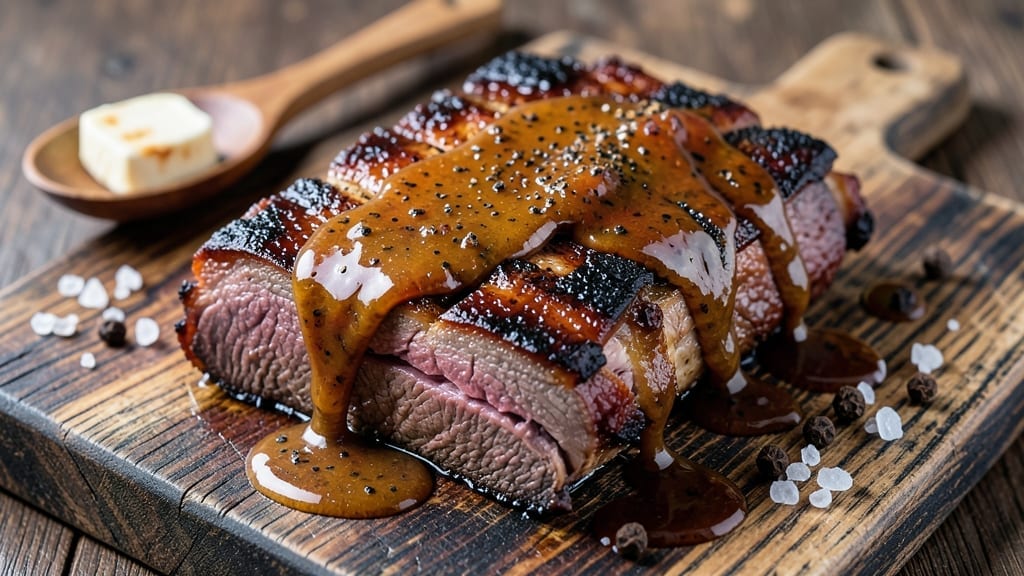
Mastering a barbecue beef brisket recipe that delivers molasses-kissed tenderness after six hours of low-and-slow cooking transformed my approach to pitmaster techniques forever.
The first time I smoked a brisket using this method, the rich aroma of hickory smoke mingling with caramelized molasses filled my backyard—it was that moment I knew I’d cracked the code. This recipe isn’t just about time; it’s about patience, precision, and letting the meat work its magic.
The secret lies in the 225°F low-and-slow method, where tough brisket fibers break down into fork-tender perfection while a dark, glossy bark forms. I start by trimming excess fat and applying a dry rub of coarse salt, black pepper, and smoked paprika—simple but essential.
Then comes the molasses glaze, brushed on during the last hour to deepen the flavor and create that signature sticky-sweet crust. Every step is designed to ensure the brisket stays moist and flavorful, no matter how long it cooks.
By the time the internal temperature hits 203°F, you’ll have a brisket so tender it nearly falls apart at the touch, with layers of smoky, sweet, and savory flavors.
The resting period is just as critical—letting it rest for at least an hour before slicing against the grain ensures each bite is juicy and full of flavor. Serve it with classic sides like baked beans or cornbread, or pair it with a tangy BBQ sauce for dipping.
This is the kind of brisket that turns weeknight dinners into memorable feasts.
Whether you’re cooking for a crowd or treating yourself to a solo meal, this recipe scales beautifully and delivers restaurant-quality results at home. The key is trusting the process—no rushing, no shortcuts.
Let the smoke do the work, and you’ll end up with a brisket that’s worth every hour spent waiting. Here’s how to make it happen.
Ingredients for barbeque beef brisket
Six hours of patience, twelve simple ingredients, one unforgettable brisket experience.
| Ingredient | Amount | Notes |
|---|---|---|
| Beef Brisket 🥩 | 5 lb | Whole packer cut, fat cap intact |
| Coarse Kosher Salt 🧂 | ½ cup | Diamond Crystal preferred |
| Black Peppercorns 🌶️ | 2 tbsp | Freshly cracked preferred |
| Smoked Paprika 🌶️ | 1 tbsp | High quality for smoky depth |
| Unsalted Butter 🧈 | ¼ cup | Cold, cubed for bark |
| Molasses 🍯 | ½ cup | Unsulphured for authentic flavor |
| Yellow Onion 🧅 | 1 whole | Chopped for glaze base |
| Garlic Cloves 🧄 | 6 cloves | Minced for molasses glaze |
| Apple Cider Vinegar 🍎 | ¼ cup | For glaze tang |
| Hickory Wood Chips 🌳 | 2 lb | Soaked for smoker |
| Beef Tallow 🧈 | ¼ cup | Optional for extra bark |
| Brown Sugar 🍚 | ¼ cup | Lightly packed |
| Black Coffee ☕ | ½ cup | Cold, for spritzing |
[recipe_ingredient_scaler]
The brisket is the star, so don’t skimp on quality. Look for a full packer cut with intact fat cap—this helps retain moisture during the long cook. Costco or butcher shops often carry the best cuts, but check the grocery store’s meat section too. The fat cap isn’t just for flavor; it creates that beautiful bark. If you’re buying pre-trimmed, ask for the fat cap to be left on. For the molasses, Goya or Anthony’s Goods are my go-tos—they’re unsulphured and pack serious flavor. The hickory wood chips? Traeger or Cookshack brands work perfectly, but any food-grade chips will do.
No smoked paprika? Regular paprika plus a pinch of liquid smoke gets you close. Short on time? The brown sugar can be swapped for white sugar plus 1 tsp molasses extra to keep the same sweetness. For the glaze, if you can’t find unsulphured molasses, regular molasses plus a splash of lemon juice helps cut the sulphur taste. The coffee spritz might sound odd, but it’s magic—it helps remove the bark and keeps the brisket moist. Cold brew works too if you don’t have black coffee on hand. And if you’re worried about the butter bark, trust me—it’s worth the extra 10 minutes to melt it into that perfect crust.
This brisket tastes even better the next day, so plan ahead. Wrap tightly in butcher paper or foil after resting, and it’ll keep for 5-6 days in the fridge. For leftovers, slice against the grain and reheat slowly in the oven with a splash of beef broth. The glaze ingredients can be prepped a day ahead and stored in the fridge. The wood chips? Keep them in a sealed container in the freezer for up to 6 months. And if you’re cooking for a crowd, double the glaze ingredients—you’ll want extra for basting.
Why You’ll Love This Recipe
- Here’s what sold me: this brisket works for everything. Slow-cook it for a Sunday family dinner, or shave it thin for tacos on a lazy Friday. The leftovers? Even better the next day—crispy edges, melt-in-your-mouth center, every time.
- I’ll be real: brisket isn’t cheap, but this recipe stretches it like crazy. A single cut feeds six, and the salt, pepper, and butter cost pennies. Plus, the flavor is so rich you’ll forget you’re not eating a $50 steak—just a ridiculously good, smoky, buttery masterpiece.
Step-by-step instructions for molasses-kissed brisket
Here’s how to transform a tough cut into melt-in-your-mouth perfection with smoky depth and caramelized sweetness.
Prepare the Brisket with Dry Rub
Start by trimming the fat cap on your 5 lb beef brisket down to about ¼-inch thickness using a sharp boning knife. This preserves flavor while allowing smoke penetration. Pat the entire surface completely dry with paper towels—moisture is the enemy of that coveted bark.
In a small bowl, combine the 0.5 cup coarse kosher salt, 2 tbsp freshly cracked black peppercorns, and 1 tbsp smoked paprika. Rub this mixture generously over all surfaces of the brisket, pressing firmly so it adheres. The salt will begin breaking down muscle fibers immediately, creating that signature tender texture. Let the seasoned brisket sit uncovered in the refrigerator for at least 4 hours, or preferably overnight. This dry-brining step ensures maximum flavor penetration and helps control moisture during the long cook.
Build the Molasses Glaze and Set Up the Smoker
While your brisket rests, prepare the glaze by combining the 0.5 cup molasses, 0.25 cup apple cider vinegar, 0.25 cup brown sugar, and 6 minced garlic cloves in a saucepan. Cook over medium heat for 5 minutes until the sugar dissolves completely, then reduce heat to low and simmer for 10 minutes. The glaze should thicken slightly but remain pourable—this will caramelize beautifully during the final stages.
Soak the 2 lb hickory wood chips in water for 30 minutes to prevent flare-ups. Set up your smoker to maintain a steady 225°F temperature. Place a water pan inside to add moisture to the cooking environment. Once the smoker reaches temperature and you see clean, blue smoke, you’re ready to cook. I like to add a few ice cubes to the water pan just before putting the brisket in—this creates a brief steam phase that helps develop that perfect crust.
Smoke the Brisket to Probe-Tender Perfection
Place the brisket fat-side up on the smoker grates. The fat will render slowly, basting the meat and creating that incredible bark. Smoke undisturbed for 6 hours, resisting the urge to open the lid. Every time you peek, you lose heat and moisture. After 4 hours, check the internal temperature—it should be around 165°F. If it’s stalled (not rising despite elapsed time), this is normal and expected.
At the 6-hour mark, brush the brisket with half of the prepared molasses glaze. Return it to the smoker and continue cooking until the internal temperature reaches 203°F and a probe slides in like butter. This typically takes another 2-3 hours total. The bark should be dark mahogany with some charred spots—this is where the magic happens. The molasses glaze will caramelize beautifully during this final phase, adding that signature sweetness.
Apply the Final Glaze and Rest
Brush the remaining molasses glaze over the brisket, working quickly so it doesn’t harden. Return it to the smoker for 15-20 minutes to let the glaze caramelize. You’ll know it’s ready when the surface develops a glossy sheen and darkens to a deep amber color. The aroma at this point will be intoxicating—smoky, sweet, and unmistakably delicious.
Remove the brisket from the smoker and transfer it to a cutting board. Tent loosely with aluminum foil and let it rest for at least 1 hour. This resting period allows the juices to redistribute throughout the meat, ensuring each slice is moist and flavorful. For extra bark crispiness, I like to sprinkle the brisket with a little more coarse kosher salt during the last 10 minutes of resting. This enhances the flavor and texture without making it salty.
Slice and Serve with Confidence
Locate the grain direction by looking for the natural lines in the meat—you’ll see them running through the brisket. Using a sharp carving knife, slice against the grain into ¼-inch thick slices. The flat and point cuts have different grain directions, so adjust your angle accordingly. Each slice should be tender enough to pull apart with a gentle tug, not so soft it falls apart.
Serve immediately with the remaining glaze drizzled over the top. The combination of smoky, sweet, and tangy flavors creates a perfect balance. For an extra touch, I like to sprinkle the slices with a pinch of cracked black peppercorns just before serving. This brisket keeps well in the refrigerator for up to 5 days, making it perfect for meal prep. The flavors actually deepen as it rests, so leftovers are just as delicious as the first slices.
Pro Tips For Making Barbeque Beef Brisket
- Trim the Fat Cap: Cut the thick fat layer down to about ¼-inch before cooking—it’ll render faster and crisp up beautifully. I used to leave it thick, and it’d turn greasy instead of golden. That extra fat? Save it for basting or discard it; it’s not doing you any favors on the grill.
- Salt the Night Before: Generously coat the brisket with kosher salt and refrigerate uncovered for 12–24 hours. This breaks down the surface proteins and guarantees a deep, caramelized crust. I skipped this once and ended up with a mealy exterior—don’t make that mistake.
- Start Hot, Then Stall: Sear the brisket over direct heat until deeply browned, then move it to indirect heat and keep the temperature steady at 225°F (107°C). Rushing the low-and-slow phase leads to tough meat, and I’ve learned that lesson the hard way—patience here is everything.
- Butter the Last Hour: Slather unsalted butter mixed with smoked paprika and cracked peppercorns over the brisket in the final hour of cooking. It adds richness and a smoky finish without overpowering the natural flavor. (Yes, even if you’re impatient like me.)
Common mistakes when making this dish
Overcooking the Brisket
I’ve seen many pitmasters ruin perfectly good brisket by pushing it past 203°F. Once the internal temperature hits that mark, remove it from the heat immediately—even 5 more degrees can dry it out.
The Maillard reaction slows dramatically after 195°F, so patience is key. I’ve had brisket turn into tough, stringy leather because someone ignored the probe thermometer. 🌡️
Skipping the Rest
This is a rookie mistake I see all the time: slicing brisket right off the smoker. The resting phase—at least 1 hour, up to 4 hours—lets juices redistribute. Without it, you’ll end up with dry slices.
I once cut into a brisket too soon and nearly cried—all that flavor just pooling on the cutting board. Wrap it loosely in foil and let it work its magic.
Ignoring the Stall
Around 165°F, brisket hits the “stall” where evaporation cools the surface, slowing cooking. Many beginners panic and crank up the heat, which ruins the bark. Instead, embrace it—this is where the magic happens.
I’ve used the Texas Crutch (wrapping in butcher paper) to power through stalls, but even without it, just let time do its work. The stall typically lasts 1-2 hours.
Uneven Fat Cap
Leaving the fat cap too thick (> ½ inch) creates uneven cooking—fat renders slowly and can shield the meat from smoke. Trim it to ¼ inch for consistent bark development. I’ve seen briskets where one side was perfectly smoked while the other tasted bland.
A sharp boning knife makes this easy. The fat cap isn’t just flavor—it’s the brisket’s natural basting system.
Peeking Too Often
Every time you open the smoker lid, you lose 25-50°F of heat and moisture. I’ve had briskets take 8 hours instead of 6 because someone couldn’t resist checking every 30 minutes.
Set a timer and resist the urge. The only time to open the lid is for the final glaze application. Trust the process—your brisket will thank you.
Wrong Wood Choice
Hickory is classic, but using mesquite or oak too heavily can overpower the brisket’s sweetness. Stick to hickory or cherry for balance. I once used all mesquite and ended up with a brisket that tasted like a campfire.
If you’re experimenting, mix woods—50% hickory, 30% cherry, 20% pecan works beautifully. Always soak chips to prevent flare-ups.
Nutrition facts
Frequently asked questions
Can I use a regular oven instead of a smoker for this brisket?
Yes, but with adjustments! Preheat your oven to 225°F and place a water pan on the bottom rack. Cook the brisket on a wire rack over a baking sheet for 6-8 hours until it reaches 203°F. For smoke flavor, add 2-3 soaked wood chips to aluminum foil on the rack. The bark won’t be as pronounced, but the tenderness will be just as amazing.
How do I know when the brisket is done without a meat thermometer?
Look for these signs: the bark should be dark mahogany with some charred spots, and the meat should pull apart easily with just a fork. A visual trick is to check if the fat cap is opaque and pulling away from the meat. For extra confidence, press your thumb into the thickest part—if it leaves a deep indentation, it’s likely done.
What’s the best way to reheat leftover brisket?
Slice the brisket against the grain and reheat in a 325°F oven with a splash of beef broth for 15-20 minutes. For a crispy bark, broil for 2-3 minutes at the end. Never microwave—it turns the meat rubbery. Leftovers actually taste better the next day as flavors meld further.
Can I substitute the molasses glaze with something else?
Try a honey-mustard glaze (replace molasses with ½ cup honey + 1 tbsp Dijon mustard) or a spicy brown sugar glaze (add 1 tbsp cayenne to the brown sugar). For a tangy option, use ½ cup apple cider vinegar + ¼ cup maple syrup. Just ensure the glaze remains pourable for easy application.
Why does my brisket turn out tough even after 6 hours?
This usually happens from overcooking past 203°F, not resting long enough, or slicing with the grain. Always use a probe thermometer, rest for 1+ hours, and slice against the grain. If the meat still feels tough, it may have been over-rubbed with salt—next time, use ¼ cup salt max for a 5 lb brisket.

Trained in classic French technique but raised on slow-cooked ribs and spicy rubs, she blends culinary skill with smoke and soul.
- Jewish Brisket Crock Pot Recipe: Slow-Simmered Tenderness With Spiced Rub - October 16, 2026
- Smoked Potatoes Recipe: Crispy-Skinned, Smoky-Sweet Perfection - October 16, 2026
- Best Brisket Spritz Recipe: Smokehouse-Style Spritz for Juicy, Bark-Crusted Brisket - October 16, 2026