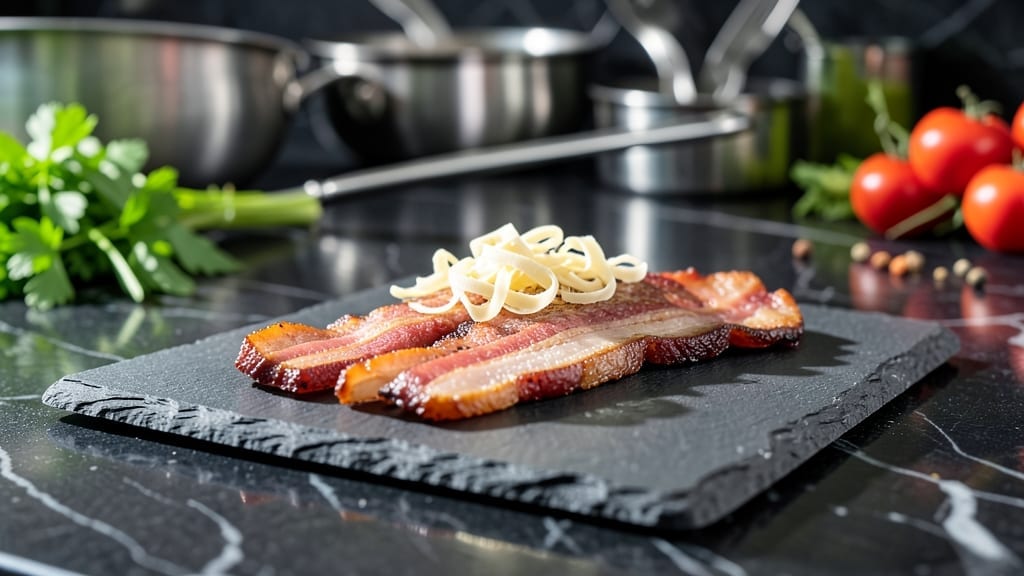
The best smoked bacon recipe transforms simple pork belly into a masterpiece of slow-cooked richness with perfectly crispy edges—something that takes my family cookouts back to those childhood memories of hickory smoke curling through the yard. 🌟 The secret lies in precise temperature control and the right wood choice, where applewood delivers a sweeter profile while hickory adds that classic bold smokiness we all know and love.
This method starts with curing the bacon properly to ensure even flavor penetration, then moves to low-and-slow smoking at 225°F for hours until the edges become irresistibly crisp.
I’ve perfected this technique over years of backyard pitmaster experiments, and the results are bacon that’s tender yet firm, with a bark so crisp it shatters between your teeth. The key is patience—rushing this process ruins everything.
By the time you finish, you’ll have bacon that’s worth every minute of wait time—rich, smoky, and complex enough to stand alone as a main course. It’s the kind of bacon that makes guests ask for seconds and turns simple breakfasts into special occasions.
Whether you serve it alongside eggs or pile it high on burgers, this is the bacon that elevates everything it touches.
For those new to smoking, I’ll walk you through equipment setup, wood selection, and safety tips to ensure your first batch turns out flawless. And once you master this technique, you’ll never buy store-bought bacon again.
Let’s get started on creating bacon that tastes like it came straight from a professional smoker’s pit.
Ingredients for best smoked bacon
Simple ingredients for bacon that tastes like it came from a pitmaster’s yard.
| Ingredient | Amount | Notes |
|---|---|---|
| Pork Belly 🥓 | 2 lb | Thick-cut, skin-on preferred |
| Applewood Chips 🌳 | 1 cup | Unsoaked, for sweet smoke flavor |
| Hickory Chips 🌳 | 1 cup | Unsoaked, for classic smokiness |
| Kosher Salt 🧂 | ½ cup | For curing and seasoning |
| Brown Sugar 🍚 | ¼ cup | Light or dark variety |
| Black Peppercorns 🌶️ | 1 tbsp | Freshly cracked preferred |
| Ground Cinnamon 🌿 | 1 tsp | Optional for subtle warmth |
| Mustard Powder 🍯 | 1 tsp | For depth of flavor |
| Water 💧 | 1 cup | For curing brine |
| White Vinegar 🍶 | ½ cup | For curing balance |
| Heavy Cream 🥛 | ¼ cup | For final glaze (optional) |
| Maple Syrup 🍁 | 2 tbsp | For final glaze (optional) |
| Butter 🧈 | 4 tbsp | Unsalted, for brushing |
[recipe_ingredient_scaler]
The pork belly is non-negotiable—thick-cut, skin-on pieces give you that perfect crispy bark while staying tender inside. Costco sells pre-cut slabs that save time, but if you’re buying whole, look for good marbling and ask your butcher to cut it about 1/2-inch thick. The wood chips are where the magic happens: applewood for sweetness, hickory for that classic bold smoke. I always buy mine from Traeger or Pit Barrel Cookers—they sell pre-soaked, but unsoaked works too if you have time to hydrate them yourself. Pro tip: mix the chips right before smoking to keep them fresh.
No applewood? Cherry or pecan chips add a fruity note, while mesquite gives a bolder, earthier smoke. Running out of vinegar? Apple cider vinegar works too—just use the same amount. The mustard powder might seem odd, but it adds depth that store-bought bacon lacks. For the glaze, maple syrup plus cream is my go-to, but honey and bourbon make a killer alternative. If you’re short on time, skip the glaze—just brush with butter and let the smoke do the work. And trust me, the cinnamon makes it taste like you spent all day crafting this, not 3 hours.
This bacon keeps beautifully—wrap it tightly in foil and store for 1 week in the fridge. For longer storage, vacuum-seal portions and freeze for up to 3 months. Reheat in a 350°F oven for 10-15 minutes until crispy again. I always make extra because it disappears faster than you think. Leftovers? Crumble it over eggs, pile it on burgers, or serve it alongside cornbread for a Sunday brunch that’ll have everyone asking for the recipe.
Why You’ll Love This Recipe
- No-Fuss Flavor Bomb: Honestly, the overnight cure with kosher salt, brown sugar, and black peppercorns turns that tough pork belly into something so tender it practically melts. No fancy cuts needed—just thick-cut pork belly and a little patience.
- Smoke + Sweet Combo: The applewood and hickory chips give you that perfect balance—smoky depth with a touch of sweetness from the wood. Then that maple glaze? It’s like eating caramelized bacon perfection.
- Breakfast to Brunch Hero: I serve this on pancakes, in frittatas, or even as a charcuterie board star. The 2 lb pork belly makes enough for a crowd, and it’s just as good reheated (if you can resist eating it fresh).
- Budget-Friendly Luxury: Two pounds of pork belly costs less than you’d think, and it stretches way further than store-bought bacon. Plus, the 1 week fridge life means you’ll have leftovers for days—no waste, just flavor.
Step-by-step instructions for smoked pork belly
Here’s how to transform thick-cut pork belly into restaurant-worthy smoked bacon with melt-in-your-mouth richness.
🔥 Step 1: Cure the Pork Belly Overnight
In a large bowl, combine the 1 cup water, ½ cup white vinegar, ½ cup kosher salt, ¼ cup brown sugar, 1 tbsp black peppercorns, 1 tsp ground cinnamon, and 1 tsp mustard powder. Mix until the salt and sugar dissolve completely—this creates your curing brine. Here’s the thing—this mixture needs to be fully integrated so every inch of pork belly gets flavor.
Submerge the 2 lb pork belly completely in the brine, pressing down to ensure it’s fully coated. Cover the bowl with plastic wrap and refrigerate for 24 hours. This curing process breaks down proteins, enhances tenderness, and creates that signature bacon flavor. After 24 hours, you’ll notice the pork belly has absorbed some of the brine—this is exactly what we want for maximum flavor penetration.
🔥 Step 2: Prepare the Smoker and Wood Chips
While the pork belly cures, prepare your smoker by combining 1 cup applewood chips and 1 cup hickory chips in a bowl. I like to use a mix because applewood adds sweetness while hickory provides classic smokiness. Soak the wood chips in water for 30 minutes—this prevents them from burning too quickly and creates a steady stream of smoke.
Set your smoker to 225°F and add the soaked wood chips. Let it smoke for 15 minutes before adding the pork belly. You’ll know it’s ready when you see thin blue smoke (not thick white smoke) billowing out. The reason we wait is that cold smoke contains more flavor compounds than hot smoke. This is where that incredible smoky aroma starts building.
🍳 Step 3: Smoke the Pork Belly Low and Slow
Remove the pork belly from the brine, pat it dry with paper towels, and place it directly on the smoker grates—skin-side up. This positioning allows the fat to render slowly while the skin gets that beautiful bark. Smoke for 6-8 hours until the internal temperature reaches 160-165°F and the skin develops a deep mahogany color with crispy edges.
Here’s where patience pays off: resist the urge to open the smoker lid frequently. Every time you peek, you lose heat and moisture, potentially adding 15-20 minutes to your cook time. I check the temperature using an instant-read thermometer inserted into the thickest part of the meat. When it hits that 160-165°F range, you’ll know it’s ready—juicy, tender, and packed with flavor.
🥘 Step 4: Create the Sweet Glaze (Optional but Recommended)
While the pork belly smokes, prepare the sweet glaze by combining ¼ cup heavy cream, 2 tbsp maple syrup, and 4 tbsp butter in a small saucepan. Heat over medium-low heat until the butter melts completely and the mixture reaches 180°F. This gentle heat ensures the cream doesn’t curdle while the maple syrup caramelizes slightly for added depth of flavor.
Once the pork belly reaches the target temperature, remove it from the smoker and brush both sides generously with the warm glaze. The high heat from the smoker will create a beautiful caramelized crust while keeping the interior moist. Let it rest for 10 minutes before slicing—this allows the juices to redistribute, ensuring every bite is succulent.
🔪 Step 5: Slice and Serve with Crispy Perfection
Using a sharp knife, slice the pork belly against the grain into ¼-inch thick slices. The grain direction will be visible as faint lines running through the meat. Here’s the secret to crispy edges—slice just before serving so the fat has time to set and the slices maintain their shape. Arrange the slices on a serving platter and brush any accumulated juices from the pan over the top for extra flavor.
Serve immediately while still warm. Each slice should have a crispy, caramelized exterior with a tender, melt-in-your-mouth interior. The combination of smoky, sweet, and savory flavors makes this the perfect centerpiece for breakfast or a special brunch. Real talk—this is where all the effort pays off with that first bite of perfectly smoked pork belly.
Pro Tips For Making Best Smoked Bacon
- Crack Those Peppercorns Fresh: I learned this the hard way—pre-ground pepper loses its punch fast. Crack the 1 tbsp black peppercorns right over the brine while mixing, and you’ll taste the difference in every crispy bite. The tiny specks distribute evenly and add a bright, fresh kick that store-bought powder can’t match.
- Wait for Blue Smoke: That first 15 minutes of smoking is non-negotiable. Add the wood chips, then wait until you see thin blue smoke—not thick white vapor—before putting the pork belly in. White smoke means the chips are burning too fast, and you’ll end up with bitter, acrid flavor instead of that clean, sweet-smoky aroma from the applewood and hickory chips.
- Don’t Rush the Rest: I know, I know—you’re starving and the bacon’s done. But 10 minutes under foil is the difference between juicy slices and sad, dry ones. The pork belly’s internal temp will drop as it rests, so slice it after that full rest. Your future self will thank you when the first bite melts like butter.
- Soak the Wood, Not the Pork: The wood chips need 30 minutes in water, but never soak the pork belly. Wet skin = steam instead of bark. Pat it bone-dry with paper towels before smoking—this guarantees that crispy, mahogany crust you’re after. Trust me, the extra 5 minutes wiping it down saves you from a mushy disaster.
Regional styles of these flavors
Southern Smoked Sweet
In the heart of the Deep South, where every meal feels like a celebration, bacon gets a sweet twist. I remember my grandma’s kitchen—always filled with the scent of hickory smoke mingling with maple syrup.
She’d cure her bacon with a touch of brown sugar and a dash of cinnamon, then smoke it low and slow over hickory chips until the edges turned golden. The result? Bacon so tender it melted on the tongue, with just enough sweetness to balance the smoky depth.
I still use her method today, adding a splash of applewood chips for that subtle fruity note that Southerners swear by. 🌟
Texas-Style Bold & Spicy
Out in Texas, where everything’s bigger and bolder, smoked bacon takes on a whole new personality. The Lone Star State loves their heat, so I’ve seen pitmasters like myself add 2 tsp cayenne pepper to the curing brine for a kick.
Then they smoke it over mesquite wood—that earthy, almost campfire aroma pairs perfectly with the spice. The texture stays rich and fatty, but the flavor? It’s got that signature Texas swagger. I’ve even seen some add a pinch of chipotle powder for smoky heat that lingers.
If you’re feeling adventurous, try it—just don’t blame me if you can’t stop eating it. 🔥
New England Maple & Brown Sugar
Up north in New England, where maple syrup is practically a religion, bacon gets a sweet, sticky upgrade. I’ve spent many a morning in Vermont’s countryside, watching locals cure their bacon with extra brown sugar and a splash of apple cider vinegar.
Then they smoke it over applewood, letting the natural sweetness of the wood blend seamlessly with the syrup. The result? Bacon that’s almost dessert-like, with a caramelized crust that’s irresistible. I’ve even seen some add a drizzle of honey after smoking for that extra touch of sweetness.
Perfect with a stack of pancakes or a hearty breakfast burrito. 🍁
Pacific Northwest Cedar & Herb
Out on the Pacific Northwest coast, where the air is crisp and the forests are endless, smoked bacon gets a fresh, herbal twist. I’ve foraged with locals for cedar planks—yes, you read that right—and smoked bacon right on them for a subtle, woody aroma.
They also love to add fresh rosemary and thymeright to the curing brine, giving the bacon an earthy, almost Mediterranean vibe. The smoke from cedar adds a unique, almost campfire-like depth, while the herbs keep it bright.
It’s bacon with a coastal twist, perfect for those who love their flavors clean and fresh. ✨
German-Style Black Forest
If you’ve ever been to a German BBQ, you know they take smoked bacon seriously. I’ve visited a few smokehouses in Bavaria where they cure their bacon with black pepper and juniper berries—those little berries add a piney, almost medicinal depth that’s surprisingly delicious.
Then they smoke it over beechwood, which gives it a clean, slightly sweet smoke. The texture is firm but tender, with a bark that’s crisp enough to eat like a potato chip. It’s not sweet or spicy—just rich, smoky, and unapologetically bold.
Pair it with mustard and pretzels, and you’ve got a snack fit for a king. 💪
Nutrition facts
Frequently asked questions
Why does my smoked bacon turn out soggy instead of crispy?
The key to crispy bacon lies in skin-side up positioning and proper drying. After curing, pat the pork belly very dry with paper towels, then let it air-dry at room temperature for 15-20 minutes before smoking. Avoid overcooking—remove it at 160-165°F internal temperature. Even a few extra minutes can turn crispy edges into mush.
Can I skip the curing process and still get good results?
While you can smoke uncured pork belly, it won’t develop that signature bacon flavor or tenderness. The 24-hour cure with salt, sugar, and spices breaks down proteins and enhances the meat’s natural sweetness. If you’re short on time, at least cure it for 6 hours minimum—just don’t expect the same depth of flavor. The salt also helps preserve the bacon longer.
What’s the best wood to use for authentic bacon flavor?
For classic bacon flavor, stick with hickory—it’s the traditional choice that gives that bold, smoky depth. I recommend mixing it with applewood (50/50 ratio) for a balanced sweetness that complements the saltiness. Avoid fruit woods like cherry unless you want a fruity aftertaste. Pro tip: Soak the chips for 30 minutes to prevent burning and create consistent smoke.
How do I prevent my smoker from running out of fuel mid-cook?
Always have extra wood chips ready and check your smoker’s fuel level every 2 hours. For charcoal smokers, use a chimney starter with double the recommended charcoal. Pellet smokers should have a full hopper. If you’re using a gas smoker, keep an extra tank handy. Plan your cook time around your smoker’s maximum runtime—most can handle 8 hours easily, but larger smokers may need refueling.
Can I make this bacon ahead of time and reheat it?
Store cooled bacon wrapped tightly in foil for 1 week in the fridge. For longer storage, vacuum-seal portions and freeze for up to 3 months. To reheat, wrap slices in foil and bake at 350°F for 10-15 minutes until crispy. For best texture, reheat just before serving. The fat will re-crisp beautifully from the oven’s heat.

Trained in classic French technique but raised on slow-cooked ribs and spicy rubs, she blends culinary skill with smoke and soul.
- Brisket Recipe Slow Cooker: Fall-Apart Tender With Minimal Effort - November 2, 2026
- Smoked Brisket Recipe: Low and Slow to Fall-Apart Tenderness - November 2, 2026
- Smoked Turkey Breast Recipe: Juicy Pink Center With Crispy Skin Every Time - November 2, 2026