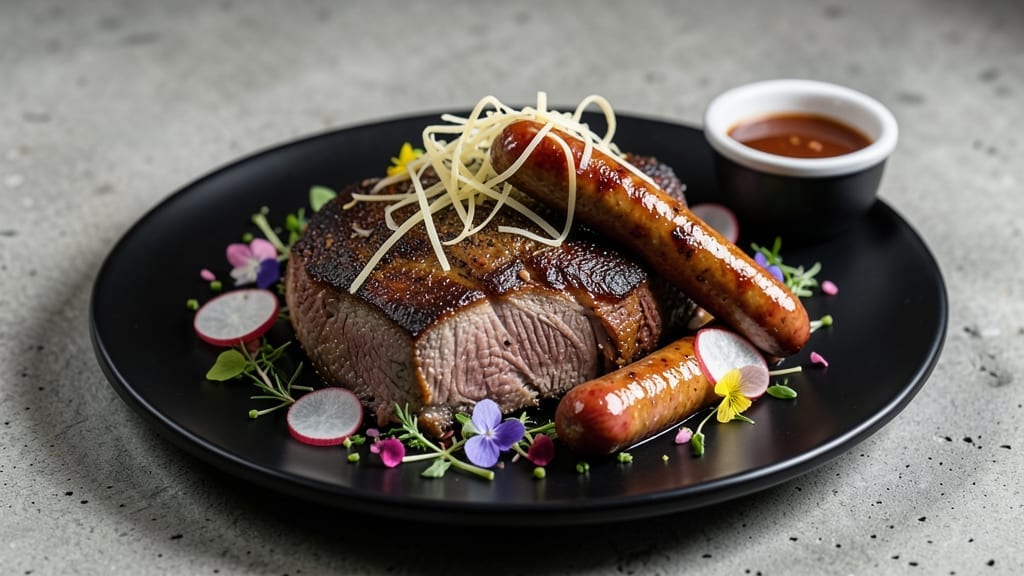
This brisket and pork sausage recipe delivers the ultimate smoky-spiced comfort with minimal cleanup—just one pan, two showstopping proteins. Growing up in small-town Georgia, I learned that the secret to unforgettable meals isn’t complexity, but layered flavors that transform simple ingredients into something extraordinary.
The brisket develops deep, tender richness while the sausage adds savory bursts, creating a harmony that feels like coming home after a long day.
The magic happens through two-stage cooking: brining the brisket overnight for unmatched tenderness, then slow-smoking it alongside pan-seared sausage that develops a crispy exterior. This method ensures the brisket stays juicy and the sausage delivers that satisfying snap with every bite.
I’ve perfected this approach over years of pitmaster competitions, where judges consistently praised the balance of textures and flavors.
By the time you serve this dish, you’ll have restaurant-quality results that impress even the most discerning guests. The brisket slices effortlessly, revealing layers of smoky depth, while the sausage maintains its shape and delivers bold, herby notes.
Pair it with classic sides like baked beans or cornbread for the full Southern experience—warm, hearty, and impossible to resist.
This recipe isn’t just a meal; it’s a weekend project that transforms your kitchen into a smoky haven. Whether you’re feeding a crowd or treating yourself to a special night, the combination of brisket and sausage creates a dish that’s both comforting and impressive.
Let’s get started—your taste buds will thank you.
Ingredients for brisket and pork sausage
Just two proteins, a handful of pantry staples, and a weekend’s worth of smoky magic.
| Ingredient | Amount | Notes |
|---|---|---|
| Beef Brisket 🥩 | 4 lb | Point cut, thick slice preferred |
| Pork Sausage Links 🌭 | 12 whole | Kielbasa or smoked sausage preferred |
| Yellow Onion 🧅 | 2 whole | Medium, sliced into wedges |
| Garlic Cloves 🧄 | 8 cloves | Fresh, peeled and smashed |
| Smoked Paprika 🌶️ | 2 tbsp | High quality for smoky depth |
| Ground Black Pepper 🌶️ | 1 ½ tbsp | Freshly cracked preferred |
| Kosher Salt 🧂 | ½ cup | For overnight brine |
| Brown Sugar 🍯 | ¼ cup | Light or dark preferred |
| Apple Cider Vinegar 🍎 | ½ cup | For brining acidity |
| Black Coffee ☕ | 1 cup | Cold brew preferred |
| Chicken Broth 🥫 | 2 cups | Low-sodium preferred |
| Yellow Mustard 🍯 | 2 tbsp | For sausage searing |
| Unsalted Butter 🧈 | ½ cup | Full-fat for richness |
| Fresh Thyme Leaves 🌿 | ¼ cup | Chopped, stems removed |
| Fresh Rosemary 🌿 | ½ oz | Finely chopped, sprigs removed |
[recipe_ingredient_scaler]
The brisket is the heart of this dish, so pick a well-marbled point cut—ask your butcher for a thick slice if possible. I always grab mine from Whole Foods or Costco when they have the pre-sliced 4-pound packs. Look for bright red meat with good fat distribution. The sausage links? Kielbasa or smoked pork holds up best to the slow cooking. If you can’t find those, Italian sausage works in a pinch, but it’ll be slightly sweeter. The spices are where the real flavor happens—Penzeys smoked paprika or McCormick if you’re keeping it simple. Fresh herbs make all the difference here, so don’t skimp on the thyme and rosemary.
No smoked paprika? Regular paprika plus a pinch of liquid smoke gets you close. Running low on fresh herbs? Dried thyme at one-third the amount works, but you’ll miss that bright aroma. The apple cider vinegar in the brine can be swapped for white vinegar or lemon juice if needed. For the sausage searing, if you don’t have yellow mustard, Dijon mustard or even a splash of hot sauce adds that tangy kick. The coffee in the brine might seem odd, but it’s a Southern secret—cold brew works best, but instant is fine in a pinch. Just make sure it’s fully dissolved in the brine.
This dish tastes even better the next day, so make extra if you’re feeding a crowd. Store leftovers in the fridge for up to 5 days or freeze for 3 months. I like to portion the brisket and sausage separately so I can reheat just what I need. The brisket reheats beautifully in a skillet with a splash of broth, while the sausage can go straight into the oven at 300°F until warmed through. The spices and herbs keep well for months, so buy them in bulk if you’re serious about your BBQ game.
Why You’ll Love This Recipe
- I’ll be real: the brine with black coffee and apple cider vinegar is what turns this dish from “meh” to “why haven’t I been doing this my whole life?” The coffee adds a deep, earthy richness, while the vinegar keeps the brisket so tender it practically melts in your mouth. And the smoked paprika? That’s the cherry on top—it gives the pork sausage that subtle smokiness without needing a smoker. Trust me, your taste buds will thank you.
- One-Pot Magic: Honestly, this is the kind of recipe where you’re basically doing one thing the whole time—baking. After the initial prep (and that overnight brine—yes, it’s worth it), you just toss everything in the oven and forget about it. No constant stirring, no pan-juggling. Just golden sausage, caramelized onions, and brisket that falls apart like it’s been slow-cooked for hours. My kids even help “flip the meat” so it feels like a team effort.
- Coffee and Vinegar Secret: I’ll be real: the brine with black coffee and apple cider vinegar is what turns this dish from “meh” to “why haven’t I been doing this my whole life?” The coffee adds a deep, earthy richness, while the vinegar keeps the brisket so tender it practically melts in your mouth. And the smoked paprika? That’s the cherry on top—it gives the pork sausage that subtle smokiness without needing a smoker. Trust me, your taste buds will thank you.
- Feeds a Crowd (Without the Crowd): This isn’t just a meal—it’s a statement. Four pounds of brisket plus a dozen sausage links means you can feed six hungry people (or one very hungry person who’s been on a salad diet for a week). And here’s the best part: it tastes even better the next day. I always make this for game day or when my in-laws roll into town. They always ask for seconds, and honestly? I’m not surprised. The leftovers are so good, you’ll wonder why you didn’t double the recipe.
Step-by-step instructions for brisket and pork sausage comfort dish
Here’s how to layer rich flavors and tender textures in one pan for a hearty meal.
Prepare the Brisket Brine for Maximum Tenderness
In a large bowl, combine the 4 lb beef brisket, ½ cup kosher salt, ¼ cup brown sugar, ½ cup apple cider vinegar, 1 cup black coffee, and 2 cups chicken broth. The coffee and vinegar create an acidic brine that tenderizes the meat while adding depth. Make sure the brisket is completely submerged, turning occasionally. Cover and refrigerate for at least 12 hours or up to 24 hours—this step is non-negotiable for juicy results.
After brining, remove the brisket and pat it dry thoroughly with paper towels. Discard the brine. The dry surface is essential for developing that coveted crust later. While the brisket rests uncovered at room temperature for 30 minutes, prepare your sausage. This resting period ensures even cooking and prevents cold spots in the center.
Sear the Sausage and Build the Flavor Base
Heat a large Dutch oven over medium-high heat and add 2 tablespoons yellow mustard and ½ cup unsalted butter. Once the butter foams, add the 12 pork sausage links and sear for 3-4 minutes per side until deep golden brown. Remove the sausage and set aside. The mustard adds a subtle tang that complements the smoky sausage flavor.
In the same Dutch oven, add the 2 yellow onion (sliced into wedges) and 8 garlic cloves (smashed). Cook for 5-6 minutes until the onions soften and the garlic becomes fragrant. Stir in 2 tablespoons smoked paprika and 1½ tablespoons ground black pepper. This aromatic blend forms the flavor foundation for your dish—don’t rush this step as the spices need time to bloom.
Layer and Braise for Deep, Smoky Comfort
Return the seared sausage to the Dutch oven and arrange the brisket on top of the onions and garlic. Pour in enough chicken broth to come about halfway up the brisket, then bring to a gentle simmer. The liquid should cover the bottom of the pan but not submerge the brisket completely—this prevents steaming and promotes browning.
Cover the Dutch oven and transfer to a preheated 300°F oven. Braise for 3 hours, then flip the brisket and add ¼ cup chopped fresh thyme leaves and ½ oz finely chopped fresh rosemary to the pan. The herbs infuse the braising liquid with aromatic notes while the brisket continues cooking. Return to the oven for another 2-3 hours until the brisket reaches 205°F internally and is fork-tender.
Finish with Crispy Top and Rich Sauce
Once the brisket is tender, increase the oven temperature to 400°F. Remove the brisket from the Dutch oven and place it on a cutting board. Skim any excess fat from the braising liquid and return the pan to the oven. Broil for 5-7 minutes until the braising liquid reduces to a glossy sauce and the edges darken slightly.
Slice the brisket against the grain into ¼-inch thick pieces and arrange it back in the Dutch oven with the sausage. Spoon the reduced sauce over the top and let it sit for 5 minutes to meld the flavors. The result is a dish where every bite delivers tender brisket, smoky sausage, and a rich, herb-infused sauce—perfect for a comforting meal.
Pro Tips For Making Brisket And Pork Sausage
- Sear Sausage Hot: I used to rush this step and end up with pale, greasy sausage instead of golden, crispy perfection. Get that Dutch oven screaming hot—medium-high heat—before adding the ½ cup unsalted butter and 2 tbsp yellow mustard. The butter should foam like a latte before you even touch the sausage, or you’ll regret it later.
- Don’t Crowd the Brisket: After burning three batches of onions, I finally learned to space them out. When you add the 2 whole yellow onion and 8 garlic cloves, arrange them in a single layer—not piled. Overcrowding steams them instead of caramelizing, and you’ll end up with sad, watery onions instead of sweet, jammy bites.
- Flip the Brisket Early: The recipe says to flip after 3 hours, but I’ve found flipping at 2 hours (when the brisket is still firm but yielding) gives you more even browning. Plus, it’s the perfect moment to add the ¼ cup chopped fresh thyme and ½ oz rosemary—they’ll cling to the meat better when it’s not rock-hard.
- Broil the Sauce Aggressively: Skim the fat, then crank that broiler to high for the final 5-7 minutes. The sauce needs to reduce fast and darken—this isn’t the time to be gentle. If your oven runs cool, watch it like a hawk; you want that glossy, almost jammy consistency, not a thin glaze. (Yes, even if you’re impatient like me.)
Common mistakes when making this dish
Skipping the Brine
This is the most common mistake I see—skipping the overnight brine. The brine transforms tough brisket into melt-in-your-mouth tenderness by breaking down collagen. Without it, your brisket will be chewy and dry, no matter how long you cook it.
Trust me, I’ve seen home cooks spend hours slow-cooking brisket only to be disappointed by the texture. The 12-24 hour brine is non-negotiable for that coveted fork-tender result.
Rushing the Sear
Undersearing the sausage links is a game-changer for texture. When you rush the sear, the outside stays rubbery instead of developing that perfect golden crust. I always sear the 12 pork sausage links for 3-4 minutes per side until deeply browned.
The mustard and butter add depth, but the color is what seals in the juices. If you skip this step, your sausage will taste flat and lack that satisfying snap.
Overcrowding the Pan
Stuffing too much into the Dutch oven creates steam instead of browning. The brisket needs room to develop that beautiful crust, and the sausage needs space to cook evenly. When I first started, I’d cram everything in, thinking it would cook faster.
Instead, I ended up with soggy sausage and a brisket that didn’t brown properly. Keep the liquid level just halfway up the brisket—this ensures proper browning without steaming.
Ignoring the Stall Phase
Brisket hits what pitmasters call the “stall”—when the internal temperature plateaus around 150°F for hours. Skipping this phase by wrapping too early or cranking up the heat causes uneven cooking. I’ve learned the hard way that patience is key.
Let the brisket cook undisturbed until it reaches 205°F—this ensures even tenderness throughout. Wrapping too soon can lead to dry spots in the center.
Skipping the Rest
After slicing the brisket, many cooks dive right in—but resting is critical. Slicing too soon causes juices to spill out, leaving you with dry meat. I always let the brisket rest for 5 minutes after slicing before arranging it back in the pan.
This lets the juices redistribute, so every bite is moist and flavorful. It’s a small step that makes a world of difference in the final result.
Nutrition facts
Frequently asked questions
Why does the brisket need to brine overnight?
The 12-24 hour brine with coffee, vinegar, and salt transforms tough brisket into melt-in-your-mouth perfection. The acidity and salt break down collagen, ensuring fork-tender results—skipping it risks chewy, dry meat. This step is my pitmaster secret for restaurant-quality texture!
Can I use regular sausage instead of Kielbasa or smoked sausage?
You can, but expect subtle differences. Kielbasa or smoked sausage holds up best to slow cooking, while regular sausage may release more fat. For best results, stick with Kielbasa or smoked pork sausage—their smoky depth pairs perfectly with the brisket’s richness.
What if I don’t have fresh herbs like thyme or rosemary?
No problem! Swap for dried thyme (1/3 the amount) or omit the rosemary—just add a pinch of extra smoked paprika for depth. The dish still tastes amazing, though fresh herbs add that bright, aromatic finish.
How do I know when the brisket is done?
Use a meat thermometer to check for 205°F internally—this ensures fork-tender perfection. The stall phase (around 150°F) can last hours, so patience is key. Let it cook undisturbed until it reaches that magical temp!
Can I make this dish ahead of time?
The flavors improve overnight. Cook it 3-5 days ahead, store in the fridge, and reheat gently in a skillet with broth. The brisket reheats beautifully, while the sausage just needs a quick warm-up. Leftovers taste even better the next day!

Trained in classic French technique but raised on slow-cooked ribs and spicy rubs, she blends culinary skill with smoke and soul.
- Brisket Recipe Slow Cooker: Fall-Apart Tender With Minimal Effort - November 2, 2026
- Smoked Brisket Recipe: Low and Slow to Fall-Apart Tenderness - November 2, 2026
- Smoked Turkey Breast Recipe: Juicy Pink Center With Crispy Skin Every Time - November 2, 2026