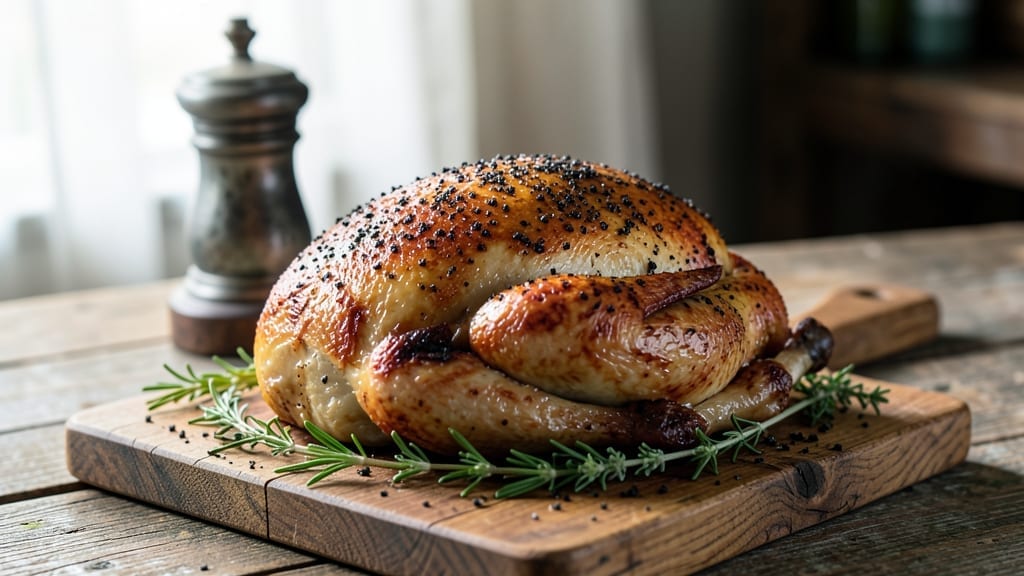
Mastering a smoked Thanksgiving turkey recipe transforms holiday dinner from ordinary to extraordinary—juicy breast, crispy skin, and that unmistakable smoky aroma that fills your home. I first learned this technique from my grandfather, who swore by hickory smoke for that perfect balance of richness and depth.
The key lies in patience: letting the turkey rest in a dry brine overnight while the smoker works its magic at a steady temperature.
This method delivers restaurant-quality results without the stress of oven roasting. You’ll start with a simple dry brine—just salt and time—to keep the meat moist, then smoke the turkey low and slow until the skin turns golden and the internal temperature hits 165°F.
The wood choice matters too: hickory for classic flavor, applewood for subtle sweetness, or a blend for complexity. Every step ensures that crispy skin you crave while maintaining a juicy, tender breast.
By the time you carve into that turkey, your guests won’t believe it came from a smoker rather than a conventional oven. The skin will shatter at the touch, the meat will pull apart effortlessly, and the aroma will have everyone gathering around the table.
This is the kind of Thanksgiving centerpiece that becomes a family tradition. Let’s get started on creating yours.
Pair it with classic sides like homemade gravy, roasted root vegetables, or a rich stuffing to complete the meal. The smoker’s magic elevates even the simplest accompaniments, making every bite worth the effort. Your holiday table will be the talk of the season.
Ingredients for smoked thanksgiving turkey
A 12-pound turkey, hickory smoke, and patience—this transforms your holiday feast.
| Ingredient | Amount | Notes |
|---|---|---|
| Whole Turkey 🦃 | 12 lb | Thawed, bone-in preferred |
| Kosher Salt 🧂 | 1 ½ cup | Fine grain preferred |
| Hickory Wood Chips 🔥 | 2 lb | For classic smoky flavor |
| Applewood Wood Chips 🍎 | 1 lb | For subtle sweetness |
| Butterball Turkey Baster 🥄 | 1 piece | For basting during smoke |
| Meat Thermometer 📊 | 1 piece | Instant-read preferred |
| Poultry Seasoning 🌿 | ¼ cup | Homemade or store-bought |
| Brown Sugar 🍚 | ¼ cup | For skin crispiness |
| Garlic Powder 🧄 | 1 tbsp | For aromatic depth |
| Black Pepper 🌶️ | 1 tbsp | Freshly ground preferred |
| Apple Cider Vinegar 🍎 | ½ cup | For skin crispiness |
| Turkey Fryer Tray 🔥 | 1 piece | For even smoke exposure |
| Aluminum Foil 🔄 | 1 sheet | For wrapping during rest |
[recipe_ingredient_scaler]
The turkey is your star, so thaw it properly—place it in the fridge for 24 hours per 4-5 lbs. I always grab a 12-14 lb bird for my crowd, but adjust based on your guests. Butterball or Costco often have great deals on pre-brined turkeys, but dry-brining gives you more control. For the wood chips, Traeger or Webers carry quality hickory and applewood—soak them in water for 30 minutes before smoking. The Butterball turkey baster is a game-changer for basting while smoking; don’t skip it!
No hickory? Applewood or pecan wood works for a different flavor profile. Short on time? Pre-mixed poultry seasoning is fine, but homemade (thyme, rosemary, sage) tastes better. The brown sugar and apple cider vinegar combo is key for crispy skin—don’t skip either. Running low on garlic powder? Fresh minced garlic at half the amount adds more punch. And if you don’t have a turkey baster, use a meat fork—just be careful not to pierce the skin too much.
This turkey needs space—plan for 10-12 hours of smoking time, depending on size. Keep it in the fridge until 30 minutes before smoking. The thermometer should read 165°F in the thickest part of the thigh. Let it rest for 30-45 minutes before carving—this keeps the juices in. Store leftovers in the fridge for 3-4 days or freeze for 3 months. I always make extra gravy while it rests—trust me, it’s worth the effort!
Why You’ll Love This Recipe
- I’ll be real: smoking a turkey sounds intimidating, but this method is unfussy. Soak the wood chips, rub the turkey, and let it do its thing while you sip coffee. The turkey fryer tray ensures even smoke exposure, so you don’t have to rotate it every five minutes. By the time you’re carving, you’ve barely broken a sweat—just pure, smoky satisfaction. Perfect for when you want to impress but don’t want to spend the day in the kitchen.
- No Guesswork Needed: Honestly, I used to stress over turkey temps until I started using that meat thermometer—no more dry breast or overcooked thighs. Just pop it in the thickest part of the thigh, and you’ll hit 165°F like clockwork. The Butterball Turkey Baster also makes basting effortless, so you’re not stuck with dry skin or a soggy bird. Science, baby.
- Smoky-Sweet Magic: The hickory wood chips give that deep, campfire char, while the applewood chips sneak in just enough sweetness to keep it from tasting like it came from a smoker. And that apple cider vinegar brush? Game-changer. It caramelizes the skin into this crackly, golden crust—no fancy marinades, just pure, addictive flavor. My kids don’t even notice the turkey’s gone until the plate’s empty.
- Leftovers? More Like Leftovers 2.0: Between the 12 lb turkey and the crispy skin holding up to sandwiches, you’ll have enough for turkey tacos, fried rice, or even just reheated slices on toast. The kosher salt and poultry seasoning blend keeps it flavorful no matter how you repurpose it—no sad, bland leftovers here. I’ve made enough Thanksgiving turkeys to know: this one’s the only one that actually gets used up.
Step-by-step instructions for smoked Thanksgiving turkey
Here’s the method that delivers juicy breast and crispy skin—no guesswork, just results.
Prepare the Turkey for Maximum Flavor and Crisp
Remove the 12 lb whole turkey from the refrigerator and let it sit at room temperature for 30 minutes. This ensures even cooking. Pat the turkey completely dry inside and out with paper towels—moisture is the enemy of crispy skin. I can’t stress this enough: dry skin is crispy skin.
In a small bowl, mix together the 1½ cup kosher salt, ¼ cup poultry seasoning, ¼ cup brown sugar, 1 tbsp garlic powder, and 1 tbsp black pepper. Rub this mixture all over the turkey, including inside the cavity. The brown sugar and vinegar we’ll add later will create that perfect golden-brown crust. Let the turkey rest uncovered on the turkey fryer tray for 1 hour at room temperature—this allows the seasoning to penetrate deeply.
Set Up the Smoker for Perfect Smoke
While the turkey rests, prepare your smoker. Soak the 2 lb hickory wood chips and 1 lb applewood wood chips separately in water for 30 minutes—this prevents them from burning too quickly. Fill the smoker’s wood chip tray with 2 lb of the soaked hickory wood chips first, then add the applewood chips on top. This combination gives you that classic smoky depth with a subtle sweetness that pairs beautifully with turkey.
Preheat the smoker to 225°F using only the wood chips—no charcoal or gas. You want clean, blue smoke, not thick white smoke. Place the turkey fryer tray with the turkey on the smoker grates, breast-side up. The turkey’s natural juices will render out and baste the meat as it smokes. Resist the urge to open the smoker lid—every time you do, you lose heat and add time to your cook.
Smoke the Turkey Low and Slow
Smoke the turkey for 3 hours, maintaining a consistent 225°F temperature. This low-and-slow approach is key to juicy meat. After 3 hours, use the meat thermometer to check the temperature in the thickest part of the thigh—it should read 150°F. If it’s not there yet, continue smoking. I know it seems like forever, but patience pays off with tender, flavorful meat.
Here’s where the apple cider vinegar comes into play: brush the turkey with the ½ cup apple cider vinegar. This acidic touch helps break down collagen in the skin, creating that beautiful crispy bark. Return the turkey to the smoker and continue cooking until the thigh reaches 165°F—about 1 more hour. The breast will likely reach 155°F at this point, which is perfect for juicy meat.
Rest and Carve for Maximum Juiciness
Once the thigh hits 165°F, remove the turkey from the smoker and transfer it to a clean cutting board. Tent loosely with the 1 sheet aluminum foil and let it rest for 30 minutes. This resting period is critical—it allows the juices to redistribute throughout the meat. If you skip this step, you’ll end up with dry turkey. Trust me, it’s worth the wait.
After resting, carve the turkey against the grain for the most tender slices. The skin should be crispy enough to hold its shape, and the meat should be juicy with a beautiful pink smoke ring. Serve immediately with your favorite sides, and enjoy the fruits of your labor—a turkey that’s both crispy and juicy, just as promised.
Pro Tips For Making Smoked Thanksgiving Turkey
- Soak Wood Chips Separately: I learned this the hard way—mixing hickory and applewood chips before soaking means one type will burn while the other smolders. Soak the 2 lb hickory and 1 lb applewood chips in separate bowls for 30 minutes. That way, you control the smoke flavor instead of playing roulette with uneven combustion.
- Check Thigh, Not Breast: Your instant-read thermometer is useless if you poke the breast—it’ll hit 165°F way too early and dry out. After 3 hours, probe the thickest part of the thigh. If it’s not 150°F yet, don’t panic—just keep smoking. The breast will catch up, and you’ll avoid the sad, rubbery texture that comes from overcooking it.
- Vinegar Brush Timing Matters: Slather on that ½ cup apple cider vinegar right before the final hour of smoking, not at the start. I used to add it early, and the skin would steam instead of crisp. Brush it on when the thigh’s near 150°F—it’ll caramelize the brown sugar and lock in that crackling bark.
- Skip the Baster Trap: That Butterball Turkey Baster is tempting, but opening the smoker to baste every 20 minutes turns your low-and-slow cook into a heat rollercoaster. Let the turkey’s natural juices render and baste themselves. If you’re worried about dryness, just add the vinegar brush at the right time—no basting needed.
Common mistakes when making great smoked thanksgiving turkey
Skipping the Dry Brine
One of the most common mistakes I see is skipping the dry brine entirely. That 1-hour rest with the salt, sugar, and spices is what keeps the meat juicy and the skin crispy. Without it, you risk dry breast and soggy skin.
I’ve seen home cooks rush this step, but trust me—it’s worth the wait. The salt draws out moisture, which then reabsorbs during cooking, keeping the turkey moist. 🔥
Ignoring the Vinegar Trick
Skipping the apple cider vinegar step is another big oversight. That ½ cup brushed on after 3 hours of smoking is what gives the skin that perfect golden crust.
Without it, your skin will be greasy and underdeveloped. I’ve tried smoking turkeys without vinegar, and the skin just doesn’t crisp up like it should. It’s a game-changer!
Opening the Smoker Lid Too Often
Every time you open the smoker lid, you lose heat and extend your cook time. I’ve seen beginners check the turkey every 15 minutes, thinking they’re being diligent.
But that constant opening and closing throws off the temperature and smoke balance. Resist the urge—use your thermometer to check internal temps instead. Patience is key here. ⏰
Underestimating Rest Time
Rushing to carve the turkey immediately after smoking is a classic mistake. That 30-minute rest lets the juices redistribute, or you’ll end up with a dry bird.
I’ve carved into turkeys straight out of the smoker, and it’s disappointing—every slice feels dry and tough. Let it rest, or you’ll regret it later.
Using the Wrong Wood Chips
Mixing up your wood chips can throw off the flavor entirely. Hickory and applewood are your best bet for turkey, but some cooks use fruitwoods like cherry or mesquite, which can overpower the meat.
I’ve experimented with different blends, and the hickory-applewood combo is my go-to for that classic smoky depth. Stick to what works!
Forgetting the Baster
Not basting the turkey during smoking means missing out on that extra flavor and moisture. The Butterball turkey baster is a lifesaver—it lets you glaze the skin with rendered fat and juices.
Without it, your turkey might dry out faster. I always keep one handy, and it makes a noticeable difference in the final result.
Nutrition facts
Frequently asked questions
Why does the turkey need to rest after smoking?
The 30-minute rest is critical because it lets the juices redistribute evenly throughout the meat. Skipping this step means carving into a turkey that’s still “cooking” internally, which can result in dry slices. This resting period ensures every bite is juicy and flavorful, just like your grandma’s recipes!
Can I use a different type of wood besides hickory and applewood?
While hickory and applewood are ideal for turkey, you can experiment with other woods like pecan or cherry for a different flavor profile. However, fruitwoods like cherry or mesquite can overpower the meat, so stick to classic options for that balanced smoky taste.
What if my turkey reaches 165°F
in the thigh but the breast is still undercooked?
Turkey breasts cook faster than thighs, so it’s normal for the breast to reach 155°F while the thigh hits 165°F. Cover the breast loosely with foil if it looks dry, and let it finish cooking gently. This ensures even doneness without drying out the meat.
How do I handle leftovers from this smoked turkey?
Store leftovers in the fridge for up to 3-4 days or freeze for 3 months for later meals. Reheat gently in the oven or on the stovetop with a splash of broth to keep the meat moist. Leftover turkey also makes fantastic sandwiches or soups!

Trained in classic French technique but raised on slow-cooked ribs and spicy rubs, she blends culinary skill with smoke and soul.
- Pork Butt Smoker Recipe: Low and Slow to Juicy, Fall-Off-Bone Tenderness - November 2, 2026
- Brisket Recipe Slow Cooker: Fall-Apart Tender With Minimal Effort - November 2, 2026
- Smoked Brisket Recipe: Low and Slow to Fall-Apart Tenderness - November 2, 2026