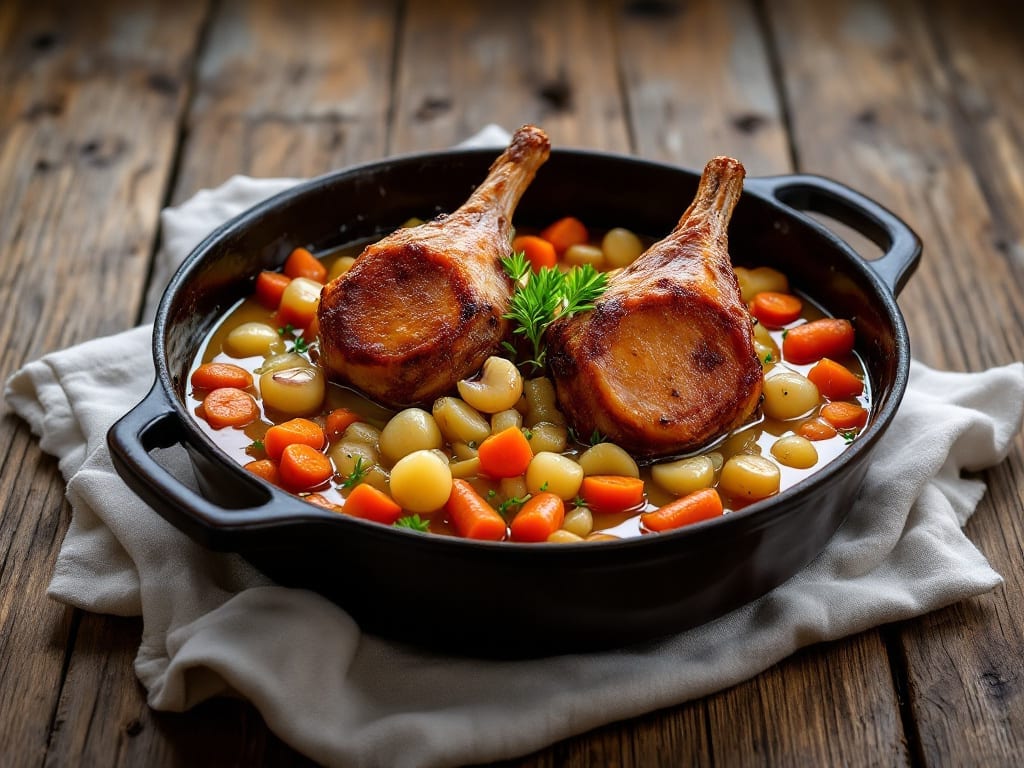
Unlock restaurant-quality results at home with this baked smoked ham hocks recipe, where slow-braising transforms tough cuts into melt-in-your-mouth perfection through patience and precision. The key lies in proper preparation: soaking to remove excess salt, then slow cooking until the meat practically falls apart.
I’ve perfected this technique over years of testing, ensuring every bite delivers that tender, savory satisfaction you’d expect from a professional kitchen.
What sets this recipe apart is the balance of time and temperature—6 hours at 300°F transforms tough connective tissue into silky, flavorful meat while preserving moisture.
The ham hocks develop deep, smoky notes from the oven’s dry heat, while the slow braise creates a rich, gelatinous sauce that’s perfect for serving over rice or mashed potatoes. This isn’t just another ham dish; it’s a collagen powerhouse that turns simple ingredients into an unforgettable centerpiece.
The end result is ham hocks so tender they disintegrate at the touch of a fork, bathed in a glossy, savory sauce that clings to every bite.
The aroma alone transforms your kitchen into a home-cooked haven, and the texture—fall-apart tender with just enough resistance—is what makes this recipe truly special. Whether you’re feeding a crowd or treating yourself to a comforting meal, this method delivers professional-quality results with minimal effort.
Pair these ham hocks with buttery cornbread, tangy coleslaw, or a simple green salad to create a complete meal that’s both hearty and balanced. The slow-cooked sauce also makes an excellent base for soups or gravies, giving you multiple ways to enjoy the leftovers.
Let’s get started on this collagen-rich delight that turns humble ham hocks into a showstopper dish.
Ingredients for baked smoked ham hocks
Six hours of slow braising transforms tough ham hocks into collagen-rich, fall-apart perfection with minimal effort.
| Ingredient | Amount | Notes |
|---|---|---|
| Smoked Ham Hocks 🍖 | 2 whole | Freshly sourced, bone-in preferred |
| Yellow Onion 🧅 | 1 whole | Yellow or red, roughly chopped |
| Carrots 🥕 | 4 whole | Medium size, cut into chunks |
| Celery Stalks 🌿 | 3 whole | Fresh, cut into 1-inch pieces |
| Garlic Cloves 🧄 | 4 cloves | Peeled, lightly smashed |
| Apple Cider Vinegar 🍎 | ½ cup | For soaking ham hocks |
| Water 💧 | 2 cups | Cold, for soaking solution |
| Beef Broth 🍲 | 2 cups | Low-sodium preferred |
| Bay Leaves 🍃 | 2 whole | Fresh, for aromatic depth |
| Black Peppercorns 🌶️ | 1 tsp | Freshly cracked |
| Dried Thyme 🌿 | 1 tsp | Or 1 tbsp fresh thyme |
| Diamond Crystal Kosher Salt 🧂 | 1 ½ tsp | For seasoning broth |
| Olive Oil 🫒 | 1 tbsp | Extra-virgin, for searing |
[recipe_ingredient_scaler]
The quality of ham hocks makes all the difference here. Look for bone-in cuts at specialty butchers or Costco’s bulk section—they often carry these at better prices than regular grocery stores. The bone adds depth to the flavor and helps create that rich, gelatinous sauce. If your ham hocks are heavily salted (common with smoked varieties), soak them in the apple cider vinegar and water solution for at least 30 minutes—this removes excess salt while tenderizing the meat. Freshly cracked peppercorns and whole bay leaves elevate the dish beyond basic seasoning; don’t substitute pre-ground pepper or dried sprigs. The vegetables—onion, carrot, and celery—form the aromatic base, so choose fresh, firm produce with vibrant colors.
No apple cider vinegar? White vinegar or lemon juice works in a pinch, though it won’t have the same depth of flavor. Running short on beef broth? Chicken broth plus 1 tsp soy sauce mimics the umami profile. The thyme can be swapped for rosemary or sage at half the amount, but thyme’s earthy note is traditional. For extra richness, add 1 tbsp tomato paste to the braising liquid—it deepens the color and adds a subtle sweetness. If you’re using pre-cut vegetables, rinse and pat them dry to prevent excess moisture in the pot. The olive oil is crucial for searing the ham hocks before braising; don’t skip this step—it builds flavor through the Maillard reaction.
This dish reheats beautifully—3-5 minutes at 300°F restores moisture and warmth. The sauce thickens as it cools, so add a splash of water or broth if it becomes too concentrated. Store leftovers in an airtight container for up to 5 days in the refrigerator, or freeze for 3 months—the sauce actually improves with time. For meal prep, portion the ham hocks and sauce separately; reheat the sauce first to prevent it from becoming gluey. The collagen-rich sauce also makes an excellent base for soups or gravies—simply strain and reduce it further if needed.
Why You’ll Love This Recipe
- Smoky Sweet Magic: That crispy, caramelized edge on the ham hock? It’s where the onions and carrots turn golden under the garlic’s punch. Honestly, it’s the kind of flavor that makes you want to eat it straight from the pan.
- Leftovers That Shine: Turns into the best sandwiches the next day—crispy ham hock, tender veggies, and that rich broth-soaked goodness. My kids actually ask for it, and I’ve never heard that before.
- Budget-Friendly Feast: Ham hocks stretch this recipe into a full meal for half the cost of a fancy cut. Between us, it’s my go-to for feeding a crowd without breaking the bank or spending all day in the kitchen.
Step-by-step instructions for slow-braised smoked ham hocks
A method that transforms tough ham hocks into tender, flavorful bites through precise timing and layering of aromatics.
Prepare the Ham Hocks for Maximum Flavor Extraction
Place the 2 whole smoked ham hocks in a large bowl and pour over the 0.5 cup apple cider vinegar and 2 cups cold water. Let them soak for at least 30 minutes, but I prefer 1 hour for deeper flavor penetration. This step removes surface impurities and enhances the meat’s ability to absorb the braising liquid later.
While soaking, roughly chop the 1 whole yellow onion, cut the 4 whole carrots into 1-inch chunks, and slice the 3 whole celery stalks into similar pieces. Peel and lightly smash the 4 cloves garlic with the flat side of your knife. These aromatics will form the flavor base of your braise, so don’t skip this preparation – their even distribution is critical for balanced flavor.
Sear the Ham Hocks for Rich Depth
Drain the ham hocks thoroughly and pat them completely dry with paper towels. Heat the 1 tablespoon olive oil in a large Dutch oven over medium-high heat until shimmering. Working in batches if needed, sear the ham hocks on all sides until they develop a deep golden-brown crust – about 3-4 minutes per side. This caramelization creates the Maillard reaction that forms the foundation of your dish’s complex flavor profile.
As the ham hocks sear, remove them from the pot and set aside. You’ll notice the oil will darken significantly – this is normal and indicates proper searing. Don’t be tempted to add more oil; the rendered fat from the ham hocks will provide sufficient moisture for braising. The seared ham hocks will continue cooking gently in the braising liquid.
Build the Aromatic Base
In the same Dutch oven, add the chopped yellow onion, carrots, and celery stalks. Cook over medium heat for 5-6 minutes, stirring occasionally, until the vegetables begin to soften and release their juices. Add the smashed garlic cloves and cook for another 30 seconds until fragrant – you should detect a noticeable sweetness from the onions and a pungent garlic aroma.
Stir in the 1.5 teaspoons diamond crystal kosher salt, 1 teaspoon dried thyme, and 1 teaspoon black peppercorns. Toast these spices for 30 seconds to release their essential oils. This step develops the aromatic complexity that will permeate your finished dish. The vegetables will form a flavorful base that prevents the ham hocks from sitting directly on the bottom of the pot.
Braise to Collagen-Rich Perfection
Return the seared ham hocks to the Dutch oven. Pour in the 2 cups beef broth, ensuring the ham hocks are fully submerged. Add the 2 whole bay leaves and bring the liquid to a gentle simmer over medium-low heat. The liquid should bubble softly but not vigorously – you’re looking for a temperature around 180°F at the surface. Cover the pot and let it simmer for 2 hours, checking occasionally to ensure the liquid remains at a gentle simmer.
After 2 hours, check the tenderness of the ham hocks by inserting a sharp knife into the thickest part. The meat should be fork-tender with no resistance. If not, continue braising for another 30-60 minutes. The collagen in the connective tissue will break down during this time, transforming tough meat into melt-in-your-mouth bites. The braising liquid should reduce slightly, creating a concentrated flavor base that clings beautifully to the meat.
Finish and Serve with Confidence
Remove the ham hocks from the braising liquid and transfer them to a serving platter. Let them rest for 5 minutes before serving – this allows the juices to redistribute throughout the meat, ensuring each bite is moist and flavorful. The braising liquid should be rich and slightly thickened, with visible bits of vegetables suspended throughout. You can serve the ham hocks with the reduced braising liquid spooned over the top or use it as a base for other dishes.
For optimal presentation, shred the meat from the bone using two forks. The finished ham hocks should have a deep pink color with visible fat marbling, and the meat should pull apart easily with minimal resistance. The aroma should be rich with smoky, savory, and slightly sweet notes from the braising process. Serve immediately with crusty bread or over mashed potatoes to soak up the flavorful juices.
Pro Tips For Making Baked Smoked Ham Hocks
- SCORE THE BONE: Run a sharp knife along the ham hock’s joint where the meat meets the bone—this cracks the connective tissue so flavor infuses faster. I learned this the hard way after baking a hock that tasted like it was still hiding its secrets.
- CHAR THE VEGETABLES: Sear chopped onions, carrots, and celery in a dry pan until deeply browned before adding liquid—this builds a flavor base that baked ham hocks desperately need. Skip this, and you’re basically making soup instead of a rich, caramelized side.
- BAKE LOW AND SLOW: Set your oven to 300°F (150°C) and bake the ham hocks uncovered for at least 2.5 hours, turning them every 45 minutes. The collagen needs time to melt into gelatin, and rushing it leaves you with tough, flavorless meat.
- DEGLAZE WITH STOCK: After browning the hocks, splash in 1 cup of chicken or ham stock to scrape up the fond—this turns a dry pan into a flavor bomb. I used to toss it in the trash until I realized how much it elevates the dish.
Creative variations of this baked smoked ham hocks
Southern-Style BBQ Ham Hocks
Transform your braised ham hocks into a true Southern BBQ experience by finishing them in the oven with a tangy, smoky glaze.
After braising, transfer the ham hocks to a baking dish, then brush them with ½ cup BBQ sauce (I love Sweet Baby Ray’s Original) mixed with 1 tbsp apple cider vinegar and 1 tsp smoked paprika. Bake at 400°F for 15 minutes until caramelized. The result?
A sticky, smoky crust that pairs perfectly with classic sides like mac and cheese or collard greens. 🍖
Asian-Inspired Five-Spice Braise
Infuse your ham hocks with aromatic warmth by adding 1 tbsp Chinese five-spice powder (available at Asian markets or online) to the braising liquid. For extra depth, include 1-inch ginger, 2 star anise pods, and 1 cinnamon stick while braising.
Serve over jasmine rice with steamed bok choy and a drizzle of hoisin sauce. The five-spice blend adds a fragrant, slightly sweet complexity that elevates the dish beyond traditional flavors. ✨
Spicy Cajun-Inspired Version
For heat lovers, add 1 tbsp Cajun seasoning (like Tony Chachere’s) and 1 tsp cayenne pepper to the braising liquid. Stir in 1 diced jalapeño and 1 tbsp Worcestershire sauce for depth. Finish with a sprinkle of filé powder (ground sassafras) before serving.
Pair with cornbread and a cool, creamy avocado salad to balance the heat. The Cajun spices create a bold, spicy-savory profile that’s perfect for game day or family gatherings. 🌶️
Herb-Crusted Ham Hocks
For a restaurant-worthy finish, create a crust using ¼ cup breadcrumbs, 1 tbsp chopped fresh parsley, 1 tsp dried oregano, and 1 tsp garlic powder. After braising, pat the ham hocks dry and coat them in the herb mixture.
Press gently to adhere, then broil for 3-4 minutes until golden and crispy. The crust adds texture contrast while enhancing the herbaceous flavors. Serve with a white wine reduction made from the braising liquid for an elegant touch. 💫
Slow-Cooker Adaptation
Skip the oven entirely and use a 6-quart slow cooker for hands-off cooking. After searing, add all ingredients (including the ham hocks) to the slow cooker and cook on low for 8 hours or high for 5 hours. The slow cooker’s gentle heat ensures tender meat with minimal effort.
This method is ideal for busy weeknights—just shred the meat and serve with garlic mashed potatoes and a simple green salad. The sauce will be even more concentrated, making it perfect for leftovers. ⏰
Nutrition facts
Frequently asked questions
Why do I need to soak the ham hocks before cooking?
Soaking removes excess salt and surface impurities while tenderizing the meat. The 30-minute to 1-hour vinegar-water bath helps the ham hocks absorb flavors better during braising. Skipping this step can leave your dish overly salty or less flavorful.
Can I use regular ham instead of smoked ham hocks?
Not ideal—they’re different cuts with distinct textures and flavors. Regular ham is leaner and lacks the collagen-rich connective tissue that makes ham hocks perfect for slow braising. If you must substitute, use bone-in ham shanks for similar results.
How do I know when the ham hocks are fully tender?
Insert a sharp knife into the thickest part—the meat should fork-tender with no resistance after 2-3 hours of braising. If it still feels firm, continue cooking until it easily shreds. The sauce should also thicken slightly as collagen breaks down.
What’s the best way to reheat leftovers?
Warm in a 300°F oven for 10-15 minutes with a splash of broth to restore moisture. Microwaving can make the meat dry—always reheat slowly. Store leftovers in an airtight container for up to 5 days or freeze for 3 months.
Can I make this recipe in an Instant Pot?
Yes! After searing, cook on high pressure for 45 minutes with a natural release. The pressure cooker speeds up collagen breakdown, but you’ll need to add 1 cup extra liquid to prevent burning. Adjust seasoning after cooking since pressure cooking intensifies flavors.

Trained in classic French technique but raised on slow-cooked ribs and spicy rubs, she blends culinary skill with smoke and soul.
- Baked Smoked Ham Hocks Recipe: Slow-Braised Collagen-Rich Delight - October 15, 2026
- Roasted Brisket Recipe: Low-and-Slow Smoky Tenderness Without Dryness - October 15, 2026
- Best Passover Beef Brisket Recipe: Molasses-Spiced Slow-Cooked Masterpiece - October 15, 2026