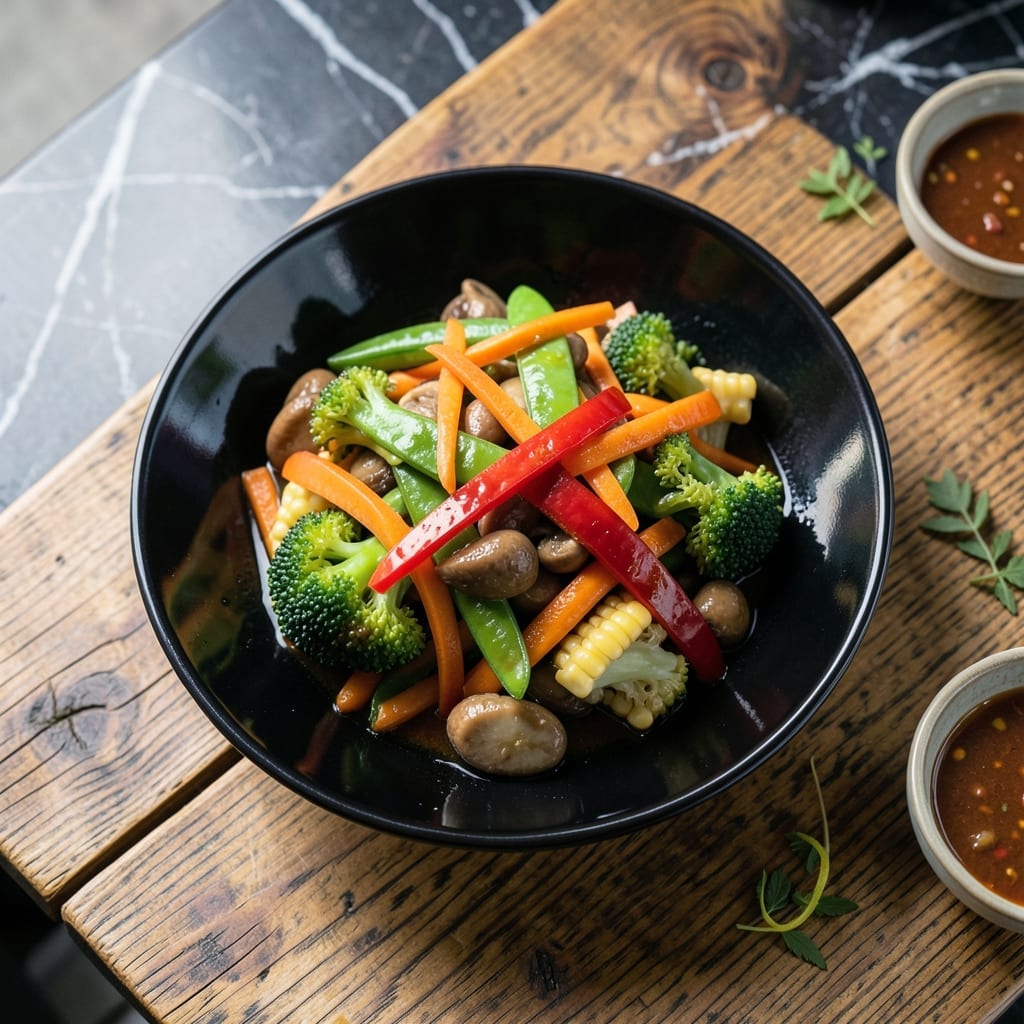
This stir fry delivers crisp-tender vegetables with restaurant-quality results at home. The high-heat wok method preserves texture while developing deep, savory flavors.
I’ve refined this technique through years of professional cooking, ensuring each bite offers the best balance of color, crunch, and taste. Simple ingredients shine when cooked properly.
Ingredients for Best Vegetable Stir Fry
Fresh, vibrant vegetables and a few pantry staples create this wok-tossed dish with perfect texture.
| Ingredient | Amount | Notes |
|---|---|---|
| Broccoli Florets 🥦 | 3 cups | Cut into even bite-sized pieces |
| Red Bell Pepper 🌶️ | 1 whole | Thinly sliced into strips |
| Carrots 🥕 | 2 whole | Julienned or thinly sliced |
| Snap Peas 🌱 | 1 ½ cups | Strings removed if needed |
| Mushrooms 🍄 | 8 oz | Shiitake or cremini, sliced |
| Baby Corn 🌽 | ½ cup | Canned, drained and halved |
| Garlic Cloves 🧄 | 4 cloves | Minced finely for even distribution |
| Fresh Ginger Root 🌿 | 1 tbsp | Peeled and grated |
| Soy Sauce 💧 | 3 tbsp | Low-sodium preferred for control |
| Sesame Oil 🫒 | 1 tbsp | Toasted for depth of flavor |
| Rice Vinegar 🍶 | 1 tbsp | Balances savory and sweet notes |
| Maple Syrup 🍁 | 1 tbsp | Natural sweetener for balance |
| Cornstarch 🌾 | 1 tbsp | Mixed with water for slurry |
| Neutral Cooking Oil 🛢️ | 2 tbsp | High smoke point for stir-frying |
| Sesame Seeds 🌰 | 1 tsp | Toasted for garnish |
[recipe_ingredient_scaler]
The vegetables are the foundation here. Sourcing from Asian markets often yields better-quality produce like baby corn and shiitake mushrooms, but Whole Foods or any well-stocked grocery store works well. Look for firm, crisp vegetables—avoid anything wilted or soft. Fresh ginger and garlic should be plump and aromatic. For the best results, prep all ingredients before heating the wok (mise en place is standard practice in professional kitchens).
Need to swap something? Zucchini or green beans can replace snap peas in equal amounts. No rice vinegar? Apple cider vinegar at the same quantity maintains the acidity. If avoiding gluten, tamari instead of soy sauce is a seamless substitution. For heat, add a diced jalapeño or a pinch of red pepper flakes. The maple syrup can be replaced with agave nectar without altering the flavor profile.
Store prepped vegetables in airtight containers in the fridge for up to 2 days. Once cooked, this keeps beautifully for 3-4 days in the refrigerator. For longer storage, freeze in portions for up to 3 months. Reheat gently to preserve the crisp-tender texture.
Why You’ll Love This Recipe
- One Pan Wonder: I toss the broccoli, bell pepper, and snap peas in with minimal prep—no fancy tools, just a hot pan and a spatula.
- Umami Bomb: The mushrooms soak up the sauce, and the carrots add this sweet crunch that makes every bite ridiculously good.
- Meal Prep Hero: I make a big batch on Sunday and it stays fresh for days—honestly, it tastes even better reheated.
- Budget Friendly: Between us, this feeds my family for pennies compared to takeout, and I always have these veggies on hand.
Step-by-Step Instructions for Vegetable Stir Fry
Master the wok technique for perfectly crisp-tender vegetables with this professional method.
Step 1: Prepare the Vegetables and Aromatics
Begin by prepping all vegetables as specified: cut the 3 cups broccoli florets into even bite-sized pieces, thinly slice the 1 whole red bell pepper into strips, and julienne the 2 whole carrots. Slice the 8 oz mushrooms and halve the 0.5 cup baby corn.
Mince the 4 cloves garlic cloves finely and grate the 1 tbsp fresh ginger root. This prep work ensures even cooking and consistent flavor distribution. I always keep a damp towel under my cutting board to prevent slipping during this process.
Step 2: Create the Stir Fry Sauce
In a small bowl, whisk together the 3 tbsp soy sauce, 1 tbsp sesame oil, 1 tbsp rice vinegar, and 1 tbsp maple syrup until fully combined. This balance of salty, tangy, and sweet creates the signature flavor profile.
In a separate small bowl, mix the 1 tbsp cornstarch with 2 tablespoons of cold water to create a smooth slurry. This will thicken the sauce at the end. Having these components ready before cooking begins is crucial for the fast-paced stir-fry process.
Step 3: Stir Fry the Vegetables in Batches
Heat 1 tbsp neutral cooking oil in a wok or large skillet over high heat until shimmering. Add the carrots and broccoli first, as they take longer to cook. Stir-fry for 2-3 minutes until the edges begin to soften but the vegetables retain their vibrant color.
Remove the first batch and add the remaining 1 tbsp neutral cooking oil. Stir-fry the red bell pepper, snap peas, mushrooms, and baby corn for 2-3 minutes until crisp-tender. The vegetables should be slightly blistered but still maintain their texture.
Step 4: Combine and Finish with Sauce
Return all vegetables to the wok. Add the minced garlic and grated ginger, stir-frying for 30 seconds until fragrant. Be careful not to burn the garlic—it should release its aroma without turning brown.
Pour the soy sauce mixture over the vegetables and stir to coat evenly. Create a well in the center of the wok, add the cornstarch slurry, and stir constantly for 1-2 minutes until the sauce thickens and becomes glossy, coating the vegetables beautifully.
Step 5: Garnish and Serve Immediately
Remove from heat and drizzle with additional 1 tbsp sesame oil if desired. Sprinkle with the 1 tsp sesame seeds and toss gently to distribute. The sesame seeds add a nutty crunch that contrasts perfectly with the tender vegetables.
Serve immediately while hot. The vegetables should be vibrant in color, with a slight crispness to each bite, and the sauce should cling lightly to each piece. This dish is best enjoyed fresh from the wok for optimal texture and flavor.
Pro Tips For Making Best Vegetable Stir Fry
- Crank the Heat: High heat is non-negotiable—your wok or pan should be smoking hot before adding oil. I learned this the hard way after too many sad, soggy stir-fries.
- Slice Evenly: Cut broccoli florets, carrots, and bell peppers into uniform, thin pieces so they cook at the same rate. Sounds tedious, but it actually changes the outcome.
- Skip the Crowding: Stir-fry in batches if needed—overloading the pan steams the veggies instead of searing them. After burning three batches, I finally figured out the hard way.
- Prep the Sauce: Mix your sauce ingredients in a small bowl before you start cooking. My grandmother swore by this, and she was right: no frantic measuring while the mushrooms burn.
Storing and Reheating This best vegetable stir fry
Refrigerator Storage
Let your stir fry cool completely before storing—I spread mine on a baking sheet for 15-20 minutes to speed this up. Transfer to airtight containers and refrigerate at 40°F or below for up to 3-4 days. The flavors actually deepen overnight. ❄️
Freezer Storage
For longer storage, freeze in single-layer portions first on a tray, then transfer to freezer-safe bags. This prevents clumping. It’ll keep for 3 months without losing texture. I always label with the date using masking tape.
Stovetop Reheating
My preferred method: heat a skillet over medium heat, add 1-2 tbsp water or broth, then cover. Steam for 3-4 minutes, stirring occasionally. This revives the crisp-tender texture beautifully. 🔥
Microwave Reheating
Place portions in a microwave-safe dish, sprinkle with 1 tbsp water, and cover loosely. Heat on 70% power for 1-2 minutes, stir, then repeat until reaching 165°F. Avoid full power to prevent sogginess.
Texture Revival Tip
If your veggies soften too much, finish reheating in a hot wok with 1 tsp oil for 1-2 minutes. This restores some crunch. I swear by my carbon steel wok for this.
Nutrition Facts
Frequently Asked Questions
Can I use frozen vegetables instead of fresh?
Yes, but thaw and drain them first to prevent excess moisture. Cook for 1-2 minutes longer since frozen veggies release water.
What’s the best oil for high-heat stir frying?
Use oils with a high smoke point like peanut, avocado, or vegetable oil. Avoid olive oil as it can burn at high heat.
How do I prevent my stir fry from becoming soggy?
Cook in small batches and keep the wok very hot. Overcrowding steams rather than sears, so maintain space between pieces.
Can I make this ahead of time?
Prep ingredients in advance but cook just before serving. If storing leftovers, reheat quickly in a hot pan with a splash of water.

Trained in classic French technique but raised on slow-cooked ribs and spicy rubs, she blends culinary skill with smoke and soul.
- Recipe for Boneless Pork Chops in Cast Iron Skillet: Sear and Baste to Juicy Perfection - October 3, 2026
- Recipe for Boneless Cross Rib Roast: Slow-Roasted Beef with Herb Crust - October 3, 2026
- Hamburgers in Sauce Recipe Crock Pot: Slow-Cooked Savory Delight - October 3, 2026