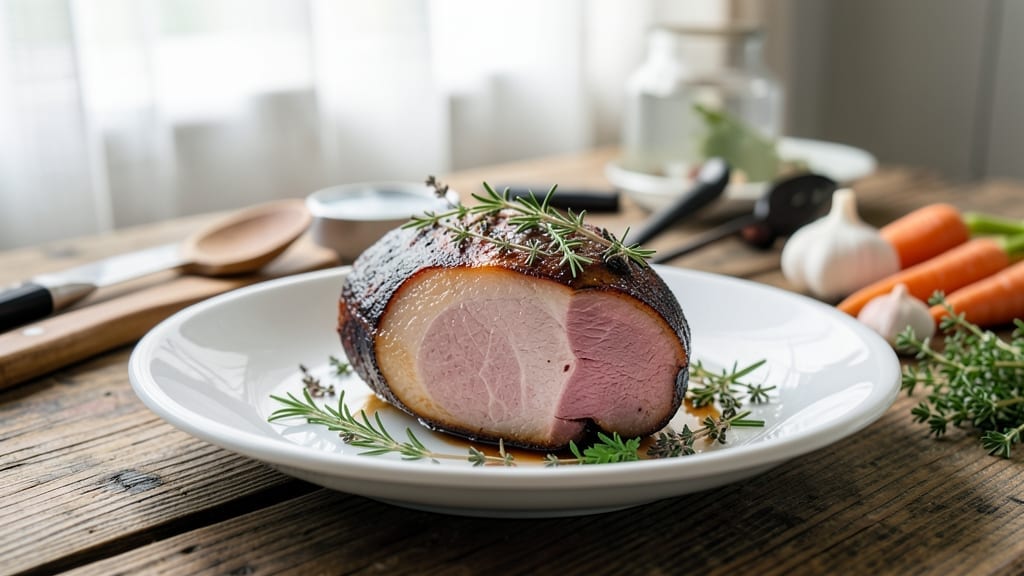
Smoking a perfect ham in your Big Green Egg transforms a simple cut into a showstopping centerpiece that carries the rich, smoky essence of backyard pit cooking. 🔥 The key lies in the low-and-slow process—where crispy bark meets tender, juicy meat—and the way hickory or cherry wood infuses every bite with deep, aromatic flavor.
I first mastered this technique during a family cookout when my uncle swore his smoked ham was the only way to serve it, and I’ve been perfecting it ever since.
The beauty of using a Big Green Egg is its ability to maintain consistent temperatures while creating that coveted smoky crust.
You’ll start with a dry-brined ham rubbed with a blend of brown sugar, mustard, and warm spices, then smoke it at 225°F for hours until the internal temperature reaches 145°F. The slow cook ensures the meat stays moist while the bark develops a deep mahogany color.
Basting with apple cider or glaze in the final hour adds a glossy finish that makes it impossible to resist.
What you’ll end up with is a ham that’s restaurant-quality—crispy on the outside, tender and juicy inside, with layers of smoky-sweet flavor that make it the star of any table.
The aroma alone will have guests gathering before the meal even begins, and every slice reveals that perfect balance of texture and taste. This is the kind of ham that turns a holiday meal into a memorable experience.
Serve it with roasted root vegetables, a tangy mustard glaze, or even as the centerpiece of a charcuterie board. The Big Green Egg’s versatility means you can adapt this method for other cuts too—once you try it, you’ll never go back to the oven alone.
Let’s get started on creating your own smoked masterpiece.
Ingredients for big green egg smoked ham
A few simple ingredients transform a basic ham into backyard BBQ perfection.
| Ingredient | Amount | Notes |
|---|---|---|
| Fully Cooked Bone-In Ham 🍖 | 8 lb | Unsliced, center-cut preferred |
| Kosher Salt 🧂 | ½ cup | For dry brine, coarse grain |
| Brown Sugar 🍚 | ½ cup | Light or dark, packed |
| Yellow Mustard 🥫 | ¼ cup | Dijon works too |
| Ground Black Pepper 🌶️ | 2 tsp | Freshly cracked preferred |
| Ground Cinnamon 🌿 | 1 tsp | Freshly ground for warmth |
| Ground Cloves 🌶️ | ½ tsp | Whole cloves crushed lightly |
| Ground Nutmeg 🌿 | ½ tsp | Freshly grated preferred |
| Ground Allspice 🌶️ | ½ tsp | For depth of flavor |
| Apple Cider Vinegar 🍎 | ¼ cup | For basting, organic preferred |
| Hickory Wood Chips 🌳 | 2 packages | Or cherry wood for sweeter smoke |
| Apple Cider 🍎 | 1 cup | For basting, unsweetened |
| Honey 🍯 | ¼ cup | For glaze, raw preferred |
| Water 💧 | 1 cup | For glaze, room temperature |
[recipe_ingredient_scaler]
The ham is your canvas here. Center-cut gives you the best balance of meat and fat, but don’t stress if you get a different cut. Costco or local butchers usually have bone-in hams that work perfectly. Look for one with a good layer of fat—it keeps the meat moist during that long smoke. I always check the label for ‘fully cooked’ to avoid any surprises. If you’re unsure, ask the butcher to confirm. The 8-pound size is ideal for feeding a crowd while still being manageable in your Big Green Egg.
No hickory chips? Cherry or pecan wood both work beautifully—they just give a slightly sweeter profile. Running out of apple cider? White grape juice or even strong black tea can stand in for basting. The spices are non-negotiable though—freshly ground cinnamon and nutmeg make all the difference. If you can’t find ground cloves, whole cloves crushed lightly work just as well. For the glaze, I like to make it ahead and reheat it gently before basting—it’s worth the extra minute to get that glossy finish.
This ham tastes even better the next day—trust me on that. Wrap it tightly in foil and let it rest for 15 minutes before slicing. Store leftovers in the fridge for up to 5 days, or freeze portions for 3 months. I always slice mine against the grain for those perfect, tender pieces. The glaze keeps well in the fridge too, so you can make extra for future projects.
Why You’ll Love This Recipe
- No-Fuss Flavor Bomb: I love that this ham takes zero prep stress—just pat it dry, slather on that brown sugar-spice rub, and let the Big Green Egg do the rest. No chopping, no marinating, just pure hands-off magic while the smoke works its charm.
- Smoky-Sweet Perfection: Between the hickory smoke, the cinnamon-clove rub, and that honey-mustard glaze, every bite is a balance of smoky warmth and tangy sweetness. Honestly, the first time I took a slice, my family didn’t even notice it was a pre-cooked ham—it tasted like it was smoked from scratch.
- Crowd-Pleaser Guaranteed: This ham shines at holidays, but it’s also my go-to for game days or lazy Sundays. Slice it thick for sandwiches, serve it with coleslaw, or even chop it into breakfast hash—it’s that versatile. And with leftovers lasting five whole days, you’ll have seconds without the stress.
- Budget’s Best Kept Secret: An 8-pound ham is a steal, and with just a few pantry staples (brown sugar, spices, honey), you’re looking at minimal cost for maximum impact. Plus, freezing portions means you can stretch it out for weeks—no waste, just deliciousness.
Step-by-step instructions for smoked ham on Big Green Egg
Here’s how to transform your fully cooked ham into showstopping smoked perfection.
🔥 Step 1: Prep the Ham and Create the Dry Rub
Start by removing the ham from its packaging and patting it completely dry with paper towels. I like to place it on a wire rack set over a baking sheet to ensure maximum airflow during the smoking process. This drying step is crucial—it helps the rub adhere properly and prevents a soggy exterior.
In a small bowl, combine the ½ cup brown sugar, 2 tsp ground black pepper, 1 tsp ground cinnamon, ½ tsp ground cloves, ½ tsp ground nutmeg, and ½ tsp ground allspice. Mix well until the spices are evenly distributed. This aromatic blend will give your ham that perfect balance of sweet and spicy notes.
Generously coat the entire surface of the ham with this dry rub mixture, pressing it into the meat so it sticks. Don’t forget to get into all the crevices—this ensures even flavor penetration. Once coated, place the ham back on the rack and let it sit at room temperature for 30 minutes before smoking. This resting period allows the rub to begin working its magic.
🔥 Step 2: Set Up the Big Green Egg for Smoking
While the ham rests, prepare your Big Green Egg by adding the 2 packages hickory wood chips to the smoker box. I like to soak the wood chips in water for 30 minutes beforehand—this helps them produce more smoke and burn more evenly. Place the smoker box in the egg and set your target temperature to 225°F.
Preheat the egg for 15 minutes to ensure it reaches the proper smoking temperature. You’ll know it’s ready when you see steady, thin blue smoke (not thick white steam) coming from the chimney. This indicates you’re producing the right amount of smoke for flavor without overpowering the ham.
Once the egg is ready, place the ham on the cooking grate, fat side up if possible. This positioning helps render the fat during the smoking process, which will baste the meat and contribute to that beautiful bark. Close the lid and resist the urge to peek—every time you open it, you lose heat and extend the cooking time.
🍳 Step 3: Smoke the Ham Low and Slow
Smoke the ham for 4-5 hours, maintaining a consistent temperature of 225°F. Here’s where the magic happens: the low temperature allows the smoke to penetrate deeply while the rub develops a perfect crust. Every 1 hour, I like to baste the ham with a mixture of ¼ cup apple cider vinegar and ¼ cup honey to keep it moist and add that sweet-tangy flavor.
After 3 hours of smoking, check the internal temperature using a meat thermometer. It should be around 140-145°F. If it’s not there yet, continue smoking. The reason we aim for this lower temperature is that the ham will continue cooking slightly during the resting period, and we want to avoid overcooking it.
Watch for the development of a beautiful dark bark on the ham’s surface. This is your visual cue that the smoking process is working perfectly. If you notice any areas that aren’t browning evenly, you can carefully rotate the ham or use a small piece of aluminum foil to shield particularly sensitive spots.
🥘 Step 4: Prepare the Basting Glaze and Finish
About 30 minutes before the ham is done smoking, prepare the finishing glaze. In a small saucepan, combine 1 cup apple cider and 1 cup water over medium heat. Bring to a gentle simmer and let it reduce by half, which should take about 10 minutes. This reduction creates a more concentrated, flavorful liquid.
Once reduced, stir in the remaining ¼ cup honey and ¼ cup yellow mustard from your ingredients. Simmer for another 2-3 minutes until the mixture thickens slightly but remains pourable. This glaze will give your ham that beautiful glossy finish and add a perfect balance of sweet and tangy flavors.
Remove the ham from the smoker when it reaches an internal temperature of 145°F. Brush the reduced glaze generously over the entire surface of the ham, making sure to get into all the crevices. Return the ham to the smoker for 15-20 minutes to allow the glaze to caramelize and form a beautiful crust.
⏰ Step 5: Rest and Serve
Once the glaze has caramelized to a deep amber color, remove the ham from the smoker and transfer it to a cutting board. Let it rest for at least 30 minutes before slicing. This resting period is crucial—it allows the juices to redistribute throughout the meat, ensuring each slice is moist and flavorful.
During this resting time, you can use the remaining glaze to create a beautiful presentation. Drizzle any leftover glaze over the sliced ham or use it as a dipping sauce. The ham should have a beautiful dark bark on the outside, a pink smoke ring just beneath the surface, and perfectly tender meat throughout.
Slice the ham against the grain for the most tender texture, and serve immediately. Each bite should deliver that perfect balance of sweet, spicy, and smoky flavors that make this Big Green Egg smoked ham truly unforgettable. Enjoy your creation—you’ve earned it!
Pro Tips For Making Big Green Egg Smoked Ham
- Soak Wood Chips Properly: I learned this the hard way—skipping the 30-minute water soak on the 2 packages of hickory wood chips leads to patchy smoke and uneven flavor. The soaked chips burn slower, giving you that steady blue smoke instead of acrid bursts. Trust me, your ham will taste better if you don’t rush this part.
- Check Internal Temp Early: After 3 hours, pull out that meat thermometer—don’t wait until the last hour. The ham should hit 140-145°F before you glaze it, not after. I’ve seen people overcook it by ignoring this, and you’ll end up with dry, sad slices. Better to know early and adjust.
- Press Rub Into Crevices: Don’t just sprinkle that ½ cup brown sugar and spice mix—dig your fingers into every groove of the ham. The rub needs to stick to the meat, not just the surface. I used to skip this, and half the flavor would end up in the pan instead of on the ham.
- Reduce Glaze Slowly: When making the finishing glaze, don’t crank the heat—simmer that 1 cup apple cider and 1 cup water gently until it’s just half the volume. Rushing it turns the glaze watery, and your ham won’t get that deep, caramelized shine. Patience here makes all the difference.
Dietary considerations for this recipe
Gluten-Free Adaptation
This recipe is already naturally gluten-free thanks to the fully cooked ham and simple ingredients like honey, spices, and wood smoke. The ½ cup brown sugar and ¼ cup yellow mustard are the only potential concerns—opt for certified gluten-free mustard like French’s or Goya to ensure safety.
The wood chips and apple cider are inherently gluten-free, so no substitutions are needed there. 💡
Low-Sugar Options
If you’re watching sugar intake, reduce the ½ cup brown sugar in the dry rub to ¼ cup and replace the remaining ¼ cup with an equal amount of monk fruit sweetener or erythritol.
For the glaze, cut the ¼ cup honey to 2 tbsp and use 2 tbsp apple cider vinegar to maintain tanginess. The flavor will still be rich but with significantly less sugar.
Dairy-Free Considerations
This recipe is dairy-free as written, but the yellow mustard sometimes contains dairy stabilizers. Always check the label on your mustard—brands like Annie’s or Bragg are reliable dairy-free options.
The honey and apple cider are also naturally dairy-free, so no other adjustments are needed unless you’re avoiding specific allergens in your wood chips or spices.
Low-Carb Variations
For a lower-carb approach, skip the ½ cup brown sugar entirely and use ½ tsp xanthan gum with ¼ cup unsweetened almond milk powder to mimic the moisture and slight sweetness.
The ¼ cup honey in the glaze can be replaced with 2 tbsp sugar-free maple syrup like Lakanto. This keeps the dish flavorful while reducing carb content significantly.
Allergen-Free Adjustments
If nut allergies are a concern, verify that your hickory wood chips are processed in a nut-free facility—some brands cross-contaminate. For the yellow mustard, choose a seed-based option like Dijon mustard made from mustard seeds only.
Double-check all spices for potential cross-contamination warnings, especially if you’re sensitive to allergens like soy or gluten in processing.
Keto-Friendly Tweaks
To make this recipe keto-friendly, omit the ½ cup brown sugar and replace it with ½ cup powdered erythritol. For the glaze, reduce the ¼ cup honey to 1 tbsp and add 1 tbsp lemon juice to enhance tanginess.
The apple cider vinegar in the basting mixture already aligns with keto principles, so no changes are needed there. This keeps the dish under 10g net carbs per serving.
Nutrition facts
Frequently asked questions
Why does the ham need to rest after smoking?
The 30-minute rest is essential to let juices redistribute evenly throughout the meat. Skipping this step can result in dry slices—trust me, the wait makes all the difference! This also gives the glaze time to fully set, creating that perfect glossy finish.
Can I use a different wood type for smoking?
While hickory is classic, cherry wood adds a sweeter profile, and pecan brings a nutty depth. Just soak the chips for 30 minutes to ensure steady smoke. The wood choice alters flavor subtly but keeps the smoky magic intact.
What if my ham isn’t browning evenly?
Rotate the ham occasionally or shield sensitive spots with foil. If bark isn’t forming after 4 hours, try increasing the temperature slightly to 250°F for the last hour. The key is patience—uneven browning often fixes itself with time!
Can I make the glaze ahead of time?
Yes! Prepare the glaze up to 2 days ahead and store it in an airtight container in the fridge. Reheat gently on the stove before basting—just bring it to a simmer for 2-3 minutes to restore its glossy texture.
How do I know when the ham is fully cooked?
Use a meat thermometer to check for 145°F internally. The ham will continue cooking slightly during rest, so pull it off the heat when it hits 140-145°F. The dark bark and pink smoke ring are your visual cues—combined with the thermometer, you’ll nail it every time!

Trained in classic French technique but raised on slow-cooked ribs and spicy rubs, she blends culinary skill with smoke and soul.
- Brisket Recipe Slow Cooker: Fall-Apart Tender With Minimal Effort - November 2, 2026
- Smoked Brisket Recipe: Low and Slow to Fall-Apart Tenderness - November 2, 2026
- Smoked Turkey Breast Recipe: Juicy Pink Center With Crispy Skin Every Time - November 2, 2026