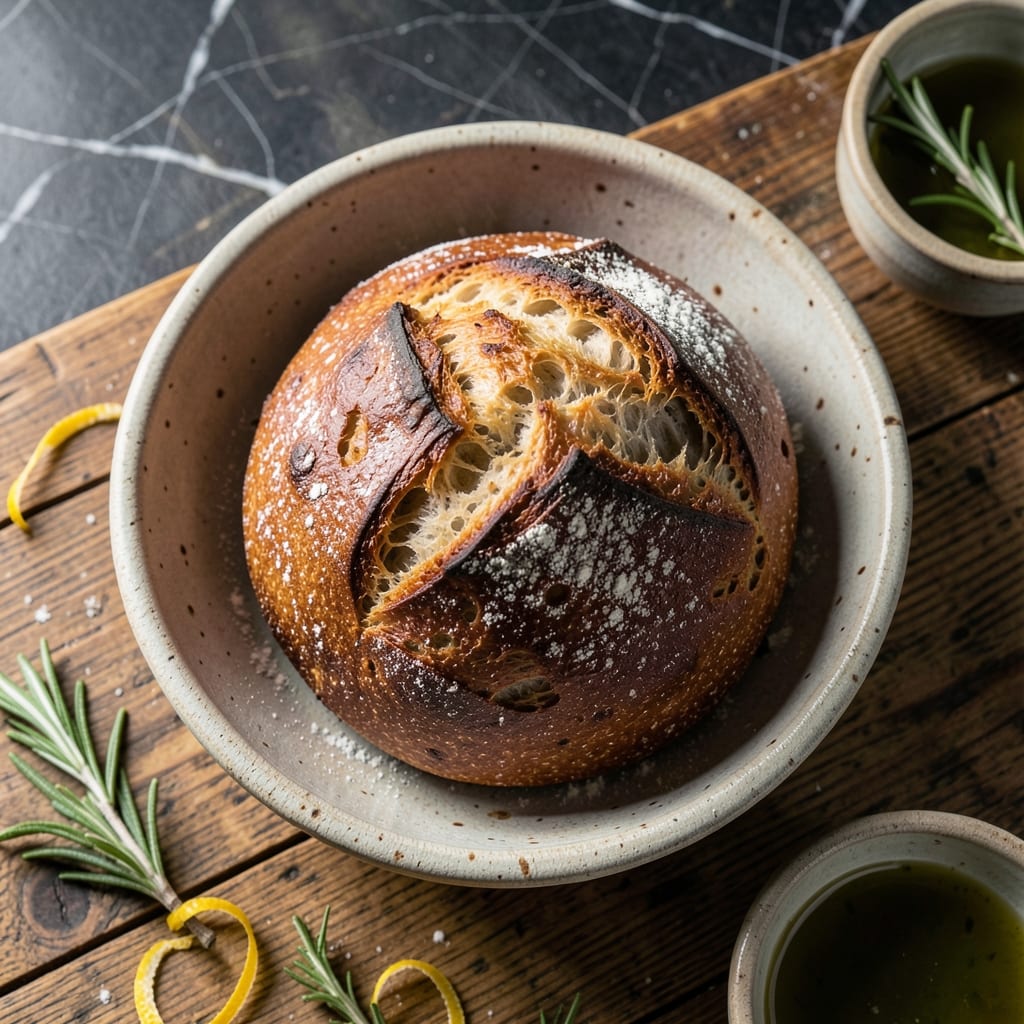
There’s nothing quite like the aroma of fresh-baked bread filling your kitchen. This rustic loaf delivers the hearty texture and rich flavor of bakery-style bread right at home.
The process is simpler than you might expect, requiring just a handful of ingredients and some patience. The dough develops complex flavors during its long, slow rise, resulting in a crusty exterior and soft, airy interior.
What emerges from your oven is a golden-brown loaf with a satisfying crust and perfectly chewy crumb. It’s the kind of bread that makes every meal feel special, whether served warm with butter or used for sandwiches.
The best part? This recipe produces consistent results, even for first-time bakers. The technique is straightforward, with clear steps that ensure success every time.
Ingredients for Black Angus Bread
Simple ingredients transform into a rustic bakery-style loaf with rich flavor and chewy texture.
| Ingredient | Amount | Notes |
|---|---|---|
| Bread Flour 🌾 | 4 cups | High protein content preferred |
| Active Dry Yeast 🍞 | 2 ¼ tsp | Or one packet, 7g |
| Warm Water 💧 | 1 ½ cups | 110-115°F for yeast activation |
| Salt 🧂 | 2 tsp | Fine sea salt preferred |
| Granulated Sugar 🍚 | 1 tbsp | Feeds the yeast |
| Olive Oil 🫒 | 2 tbsp | For dough and bowl |
| Cornmeal 🌽 | ¼ cup | For dusting baking surface |
| Molasses 🍯 | 1 tbsp | For color and richness |
| Vital Wheat Gluten 🌾 | 1 tbsp | Optional for chewier texture |
| Butter 🧈 | 1 tbsp | Melted, for brushing crust |
[recipe_ingredient_scaler]
The flour is critical here. King Arthur Bread Flour is my go-to—high protein content (12-14%) gives you that perfect chewy crumb. Yeast matters too: SAF Instant Yeast or Fleischmann’s Active Dry both work reliably. For the molasses, unsulphured is best—Brer Rabbit or Grandma’s are solid grocery store brands. Don’t skip the cornmeal; it adds that authentic bakery texture to the crust.
No molasses? Honey or dark brown sugar at the same amount will work, though the color won’t be as deep. Bread flour can be swapped for all-purpose in a pinch, but add an extra tablespoon of vital wheat gluten to compensate. The olive oil can be any neutral oil, but stick with extra-virgin for flavor. If you’re out of cornmeal, semolina or coarse polenta are great substitutes.
Store flour in an airtight container to keep it fresh for 6-8 months. Yeast lasts 2 years unopened but only 6 months once opened (keep it in the freezer). The dough can rise overnight in the fridge for even more flavor development—just let it come to room temperature before baking.
Why You’ll Love This Recipe
- Five Ingredients: I love that it only needs bread flour, yeast, warm water, salt, and a touch of sugar—no fancy add-ins.
- Soft and Pillowy: The yeast and sugar work magic, giving it that light, airy texture I crave in fresh bread.
- Sandwich Star: Honestly, it’s my go-to for burgers, toast, or even French toast the next morning.
- Budget Winner: A loaf costs pennies compared to store-bought, and it’s ready with ingredients I always have on hand.
Step-by-Step Instructions for Black Angus Bread
Here’s the method. Straightforward, tested, works every time.
Step 1: Activate the Yeast and Combine Wet Ingredients
In a large mixing bowl, combine the 1.5 cups Warm Water, 1 tbsp Granulated Sugar, and 2.25 tsp Active Dry Yeast. Stir gently and let sit for 5-10 minutes until the mixture becomes frothy and cloudy. This confirms the yeast is active and ready to work.
Add the 1 tbsp Molasses and 2 tbsp Olive Oil to the yeast mixture. The molasses adds depth of color and a subtle sweetness, while the olive oil ensures a tender crumb. Stir until these ingredients are fully incorporated into the liquid.
Step 2: Mix and Knead the Dough
In a separate large bowl, whisk together the 4 cups Bread Flour, 2 tsp Salt, and 1 tbsp Vital Wheat Gluten. The vital wheat gluten boosts the protein content, giving your bread that chewy, rustic texture characteristic of bakery-style loaves.
Create a well in the center of the dry ingredients and pour in the yeast mixture. Stir with a wooden spoon until a shaggy dough forms. Turn the dough out onto a lightly floured surface and knead for 8-10 minutes until smooth and elastic. You’ll know it’s ready when the dough springs back slowly when pressed with a finger.
Step 3: First Rise Until Doubled
Lightly grease a clean bowl with a bit of the Olive Oil and place the kneaded dough inside, turning once to coat. Cover with a damp kitchen towel and let rise in a warm, draft-free area for 1 to 1.5 hours, or until doubled in size.
This first rise allows the yeast to ferment the sugars in the flour, developing the bread’s flavor and structure. The dough should look puffy and jiggle slightly when gently shaken. Don’t rush this step—patience ensures a well-developed crumb.
Step 4: Shape, Second Rise, and Bake
Punch down the risen dough to release excess air, then shape it into a round loaf. Dust a baking sheet generously with the 0.25 cup Cornmeal to prevent sticking and add a rustic texture to the crust. Place the loaf on the prepared sheet, cover, and let rise again for 45-60 minutes until nearly doubled.
Preheat the oven to 375°F. Once the loaf has risen, use a sharp knife to score the top in a decorative pattern. Bake for 30-35 minutes until the crust is deep golden brown and the loaf sounds hollow when tapped on the bottom. For a glossy finish, brush the crust with 1 tbsp Butter melted during the last 5 minutes of baking.
Step 5: Cool and Serve
Transfer the baked loaf to a wire rack and let it cool completely for at least 1 hour. This cooling period allows the crumb to set properly and prevents a gummy texture. Resist the temptation to slice into it too soon—your patience will be rewarded with a perfectly textured loaf.
Once cooled, slice and serve. The bread should have a crisp, slightly sweet crust and a soft, chewy interior with a rich, malty flavor from the molasses. Store leftovers in an airtight container to maintain freshness.
Pro Tips For Making Black Angus Bread
- Test Your Yeast: I learned this the hard way—always proof your active dry yeast in warm water with a pinch of sugar for 5-10 minutes first. If it doesn’t foam, your bread won’t rise, no matter how long you wait.
- Weigh Your Flour: Sounds fussy, but bread flour compacts easily. A kitchen scale guarantees you’re using the right amount—about 12-13 oz per cup—so your dough isn’t too dense or sticky.
- Skip Cold Water: Warm water between 105-110°F wakes up the yeast without killing it. I used to eyeball it and ended up with either a brick or a sad, flat loaf.
- Add Sugar Last: Hold off on the granulated sugar until the yeast is foamy. Adding it too early can slow down activation, and your dough might take forever to double in size.
Serving Suggestions for This Recipe
Warm Serving Ideas
Nothing beats fresh bread straight from the oven. I love serving warm slices with salted butter that melts into the soft crumb. For a heartier option, pair with aged cheddar or brie that becomes gooey from the warmth. 💛
Soup Pairings
This bread makes the perfect companion for soups. The crust holds up beautifully when dipped in tomato bisque or creamy potato soup. For a rustic meal, try it with beef stew—the molasses notes complement the savory broth wonderfully.
Sandwich Creations
Use thick slices for incredible sandwiches. My favorite is a roast beef and horseradish combo with arugula. The bread’s chewy texture also works perfectly for grilled cheese or turkey clubs with bacon.
Breakfast Options
Toast leftover slices and top with avocado and poached eggs for a restaurant-worthy breakfast. The slightly sweet crust pairs beautifully with jam and cream cheese for a quick morning treat. I often make french toast with day-old loaves.
Special Occasions
For gatherings, serve the loaf on a wooden board with olive oil and balsamic for dipping. Add prosciutto and olives for an Italian-inspired spread. The golden crust looks stunning as a centerpiece.
Dessert Twist
Transform into bread pudding with vanilla custard and raisins. The molasses adds depth to the dessert. Or make cinnamon toast with brown sugar for a cozy treat. 🔥
Nutrition Facts
Frequently Asked Questions
Do I need a stand mixer for this bread?
No! While a stand mixer with a dough hook makes kneading easier, you can absolutely do it by hand. Just knead on a floured surface for 8-10 minutes until smooth and elastic.
Why does my bread have a dense texture?
Dense bread usually means the dough didn’t rise enough. Check your yeast’s expiration date, use 110-115°F water for activation, and give it the full 1-1.5 hours for the first rise in a warm spot.
Can I make this dough ahead of time?
Yes! Prepare the dough through the first rise, then refrigerate overnight. This slow fermentation actually enhances flavor. Let it warm to room temperature before shaping and the second rise.

Trained in classic French technique but raised on slow-cooked ribs and spicy rubs, she blends culinary skill with smoke and soul.
- Recipe for Boneless Pork Chops in Cast Iron Skillet: Sear and Baste to Juicy Perfection - October 3, 2026
- Recipe for Boneless Cross Rib Roast: Slow-Roasted Beef with Herb Crust - October 3, 2026
- Hamburgers in Sauce Recipe Crock Pot: Slow-Cooked Savory Delight - October 3, 2026