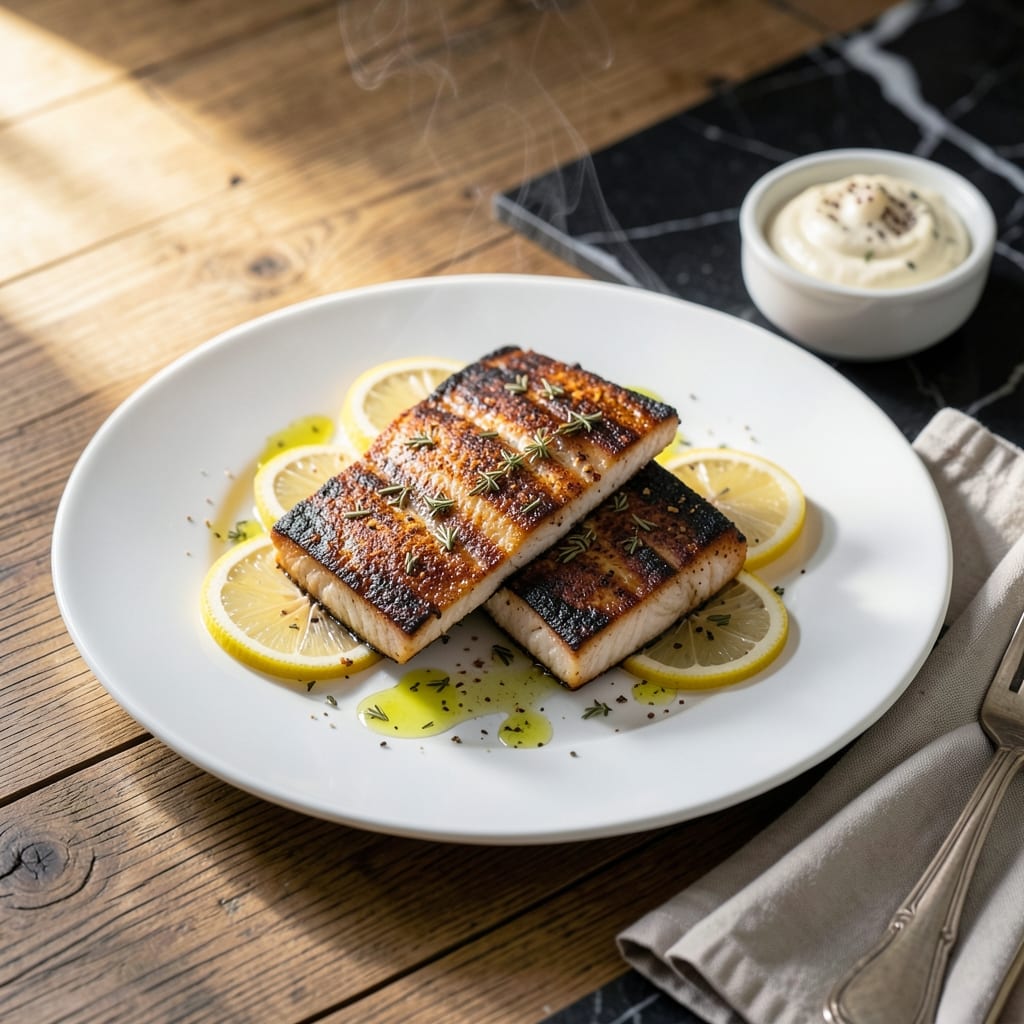
Black drum fish brings authentic Gulf Coast flavor to your kitchen with minimal effort. This recipe highlights the fish’s natural sweetness while delivering on the promise of crispy skin every time.
The secret lies in proper skin preparation and high heat cooking. Pat the fillets completely dry, score the skin lightly, and press them skin-side down in a hot pan for the first minute to prevent curling.
What emerges is tender, flaky white fish with shatteringly crispy skin that contrasts beautifully with the moist flesh. The simple seasoning lets the drum’s mild, slightly sweet flavor shine through.
Serve immediately with lemon wedges and your favorite sides to capture that fresh-caught taste. The technique works for whole fillets or portioned pieces.
Ingredients for Black Drum Fish
Fresh drum fillets and a handful of pantry staples create this Gulf Coast classic with signature crispy skin.
| Ingredient | Amount | Notes |
|---|---|---|
| Black Drum Fillets 🐟 | 1 ½ lb | Skin-on, boneless, patted dry |
| Kosher Salt 🧂 | 1 ½ tsp | Diamond Crystal preferred |
| Freshly Ground Black Pepper 🌶️ | ½ tsp | Coarse grind recommended |
| Garlic Powder 🧄 | 1 tsp | Not garlic salt |
| Smoked Paprika 🌶️ | ½ tsp | For subtle depth |
| Dried Thyme 🍃 | ½ tsp | Crushed between fingers |
| All-Purpose Flour 🌾 | ¼ cup | For dusting skin |
| Vegetable Oil 🫒 | 3 tbsp | High smoke point required |
| Unsalted Butter 🧈 | 2 tbsp | For basting fish |
| Fresh Lemon 🍋 | 1 whole | Cut into wedges for serving |
| Fresh Parsley 🌿 | 2 tbsp | Chopped, for garnish |
[recipe_ingredient_scaler]
The fish is everything here. Fresh black drum fillets with skin intact are non-negotiable—look for fillets with vibrant color and no fishy odor at seafood counters like Whole Foods or local fishmongers. Ask for skin-on fillets if they’re not already cut that way. The flour for dusting should be all-purpose; bread flour creates too thick a crust. Pat the fillets meticulously dry—moisture is the enemy of crispiness.
No black drum available? Redfish or snapper fillets work beautifully with the same technique. Smoked paprika can be swapped for regular paprika with a pinch of cayenne for heat. If avoiding dairy, substitute olive oil for the butter. The seasoning blend is flexible—Cajun seasoning at half the amount can replace the individual spices if you’re short on time.
Cook immediately after seasoning—don’t let the fillets sit. Leftovers? Rare with this dish, but they’ll keep for 1-2 days in the fridge. Reheat gently in a skillet to revive the skin’s crispness. The butter and oil mixture can be prepped ahead and stored at room temperature for 1 week.
Why You’ll Love This Recipe
- 5-Minute Seasoning: I just rub the fillets with salt, pepper, garlic powder, and smoked paprika—no marinade, no waiting.
- Smoky Depth: That smoked paprika gives the drum a rich, almost barbecue-like flavor without overpowering the fish.
- Weeknight Hero: It’s my go-to for quick dinners, but I’ve also served it at weekend gatherings with zero stress.
Step-by-Step Instructions for Black Drum Fish
Master the technique for perfectly crispy skin and moist, flaky fish with these precise steps.
Step 1: Season and Dredge the Fillets
Pat the 1.5 lb Black Drum Fillets completely dry with paper towels. This step is non-negotiable—any moisture will steam the skin instead of crisping it. Season both sides evenly with the 1.5 tsp Kosher Salt, 0.5 tsp Freshly Ground Black Pepper, 1 tsp Garlic Powder, 0.5 tsp Smoked Paprika, and 0.5 tsp Dried Thyme.
Crush the dried thyme between your fingers as you sprinkle it to release its aromatic oils. Then, lightly dust both sides of each fillet with the 0.25 cup All-Purpose Flour, shaking off any excess. The flour creates a thin, even coating that will transform into a golden crust in the pan.
Step 2: Sear the Fillets Skin-Side Down
Heat the 3 tbsp Vegetable Oil in a large, heavy skillet over medium-high heat until it shimmers but doesn’t smoke. Carefully place the fillets skin-side down in the pan, pressing gently with a fish spatula for the first 10 seconds to prevent curling.
Cook undisturbed for 4-5 minutes until the skin is deep golden brown and crisp. Resist the urge to peek or move the fillets—this uninterrupted contact ensures an even, crunchy crust. You’ll know it’s ready to flip when the edges appear opaque and the skin releases easily from the pan.
Step 3: Flip and Baste with Butter
Flip the fillets and immediately add the 2 tbsp Unsalted Butter to the skillet. Tilt the pan slightly and spoon the foaming butter over the fillets continuously for 2-3 minutes. This basting technique infuses the fish with rich flavor and helps cook the top side gently.
Watch for the butter to turn a light hazelnut brown and smell nutty—this indicates it’s developing maximum flavor. The fillets are done when they reach an internal temperature of 145°F and the flesh flakes easily with a fork. Remove them from the pan immediately to prevent overcooking.
Step 4: Rest and Garnish for Serving
Transfer the fillets to a paper towel-lined plate to drain any excess oil. Let them rest for 2-3 minutes—this brief pause allows the juices to redistribute, ensuring the fish stays moist when cut.
Arrange the fillets on a serving platter and garnish with the 2 tbsp Fresh Parsley and wedges from the 1 whole Fresh Lemon. The acidity from the lemon balances the richness of the fish, while the parsley adds a pop of color and freshness. Serve immediately while the skin is still crisp.
Pro Tips For Making Black Drum Fish
- Dry the Fillets: Pat the black drum fillets thoroughly dry with paper towels before seasoning—moisture is the enemy of that perfect crust.
- Season Generously: Don’t be shy with the kosher salt and smoked paprika; black drum can handle bold flavors, and the rub needs to stick.
- Skip the Overcooking: Black drum flakes easily when done, so pull it off the heat as soon as it turns opaque—about 4-5 minutes per side over medium-high.
- Rest Before Serving: Let the fillets rest for 3-4 minutes after cooking to keep the juices from running all over the plate.
Essential Equipment for This Recipe
Non-Negotiable Skillet
A heavy cast iron skillet or stainless steel pan is essential for even heat distribution and that perfect crust. I prefer my Lodge 12-inch cast iron—it retains heat like a champion and develops a natural non-stick surface over time. Avoid non-stick pans as they can’t reach the high heat needed. 🔥
Fish Spatula
Invest in a thin, flexible fish spatula—it’s designed to slide under delicate fillets without damaging them. I use the Mercer Culinary model, which has just the right amount of flex to lift the fish while keeping the crispy skin intact.
Instant-Read Thermometer
Precision matters with fish. A digital instant-read thermometer like the ThermoWorks Thermapen lets you check the 145°F internal temperature in 2-3 seconds. This prevents overcooking while ensuring food safety.
Paper Towels
Pat the fillets completely dry before seasoning—moisture is the enemy of crispy skin. I keep a roll of Bounty paper towels dedicated to this task. The texture is strong enough to handle the job without falling apart.
Tongs or Heatproof Brush
For basting with butter, use silicone-tipped tongs or a heatproof basting brush. I prefer tongs because they let me tilt the pan and spoon the butter more precisely. The OXO Good Grips basting brush is another excellent option.
Cooling Rack
After cooking, transfer fillets to a wire cooling rack set over a paper towel-lined plate. This keeps the skin crisp by allowing air circulation underneath. I use a stainless steel rack that fits perfectly over my dinner plates.
Nutrition Facts
Frequently Asked Questions
What’s the best oil for crispy skin?
Use a high smoke point oil like vegetable or canola. Avoid olive oil as it can burn at high temps. The 3 tbsp of oil creates the perfect crisp without overpowering the fish.
Can I use skinless fillets?
Yes, but the crispy texture will be lost. If using skinless, reduce cooking time by 1-2 minutes per side. The flour dredge still adds a light crust, but it won’t be as dramatic.
How do I know when it’s done?
Look for an internal temp of 145°F and opaque flesh that flakes easily. The skin should release cleanly from the pan when properly crisped.
Can I substitute the butter?
For dairy-free, use olive oil or ghee. The basting step adds moisture and flavor, so don’t skip it.

Trained in classic French technique but raised on slow-cooked ribs and spicy rubs, she blends culinary skill with smoke and soul.
- Recipe for Boneless Pork Chops in Cast Iron Skillet: Sear and Baste to Juicy Perfection - October 3, 2026
- Recipe for Boneless Cross Rib Roast: Slow-Roasted Beef with Herb Crust - October 3, 2026
- Hamburgers in Sauce Recipe Crock Pot: Slow-Cooked Savory Delight - October 3, 2026