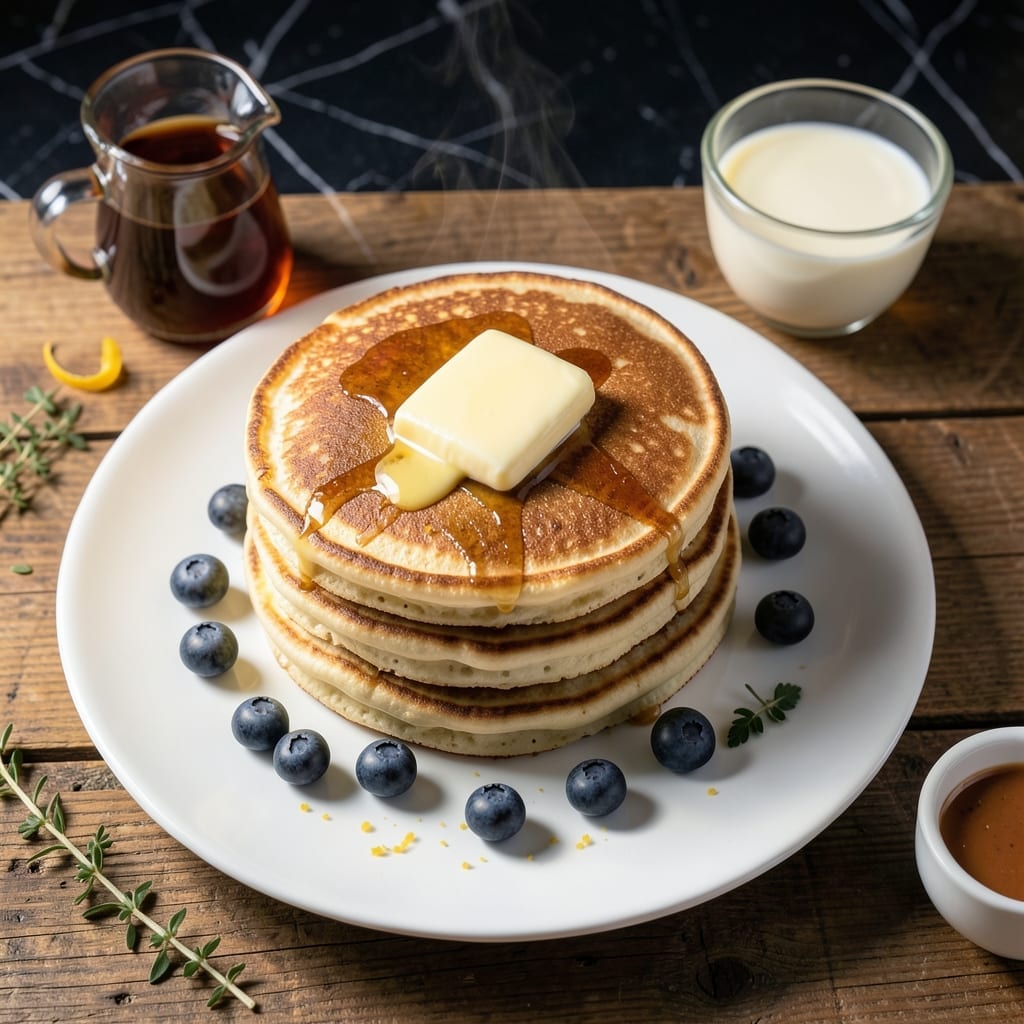
Nothing beats the satisfaction of making fluffy buttermilk pancakes from scratch with golden edges. This recipe delivers the perfect balance of tender interior and slightly crisp exterior every time.
The tangy buttermilk creates that signature flavor while reacting with baking soda for maximum lift. I prefer using fresh buttermilk for the best results, though a simple milk and vinegar substitute works in a pinch.
What you get is a stack of pancakes that rival any diner version—tall, airy, and just sweet enough. The edges turn perfectly golden brown while the centers stay soft and fluffy.
Serve warm with maple syrup and butter for the complete experience. Here’s how to make them.
Ingredients for Bob Evans Buttermilk Pancake
Pantry staples plus buttermilk and an egg—everything for those fluffy diner-style stacks.
| Ingredient | Amount | Notes |
|---|---|---|
| All-Purpose Flour 🌾 | 2 cups | Sifted for lighter texture |
| Granulated Sugar 🍚 | 2 tbsp | For subtle sweetness |
| Baking Powder 🧂 | 2 tsp | Double-acting for rise |
| Baking Soda 🧂 | ½ tsp | Reacts with buttermilk |
| Salt 🧂 | ½ tsp | Fine grain preferred |
| Fresh Buttermilk 🥛 | 1 ¾ cups | Full-fat for richness |
| Large Egg 🥚 | 1 whole | Room temperature preferred |
| Unsalted Butter 🧈 | 3 tbsp | Melted and cooled slightly |
| Vanilla Extract 🌿 | 1 tsp | Pure for best flavor |
| Vegetable Oil 🫒 | 1 tbsp | For greasing griddle |
[recipe_ingredient_scaler]
The buttermilk is non-negotiable here—fresh and full-fat gives that tangy depth and reacts with the baking soda for serious lift. Whole Foods and Trader Joe’s carry it, but most supermarkets do too. I always grab a quart when I’m making pancakes (and then use the rest for biscuits). If your baking powder is older than 6 months, replace it—stale leavening means flat pancakes.
No buttermilk? Whole milk plus 1 tbsp vinegar or lemon juice per cup does the trick—let it sit 5 minutes to curdle. Out of vanilla? Skip it, but add a pinch of cinnamon for warmth. The flour can be swapped for half whole wheat (add 1 extra tbsp buttermilk), but don’t overmix—lumps are fine (trust me on this).
Batter keeps in the fridge for 1 day—stir before using. Leftover pancakes freeze beautifully between parchment paper for up to 3 months. Reheat in toaster or oven (microwave makes them soggy).
Why You’ll Love This Recipe
- Mix & Pour: I can have the batter ready in 5 minutes—just whisk the dry stuff (flour, sugar, baking powder, soda, salt) and add wet ingredients.
- Fluffy Clouds: The buttermilk gives them that tangy richness with a melt-in-your-mouth texture.
- Breakfast or Dinner: Honestly, I serve these for Sunday brunch or a quick weeknight supper when we’re craving comfort.
- Budget Stretch: A pound of flour makes multiple batches, so it’s my go-to when feeding a crowd without breaking the bank.
Step-by-Step Instructions for Buttermilk Pancakes
Here’s the method I swear by for tall, fluffy stacks with golden edges.
Step 1: Combine Dry Ingredients for Maximum Rise
In a large mixing bowl, whisk together the 2 cups All-Purpose Flour, 2 tbsp Granulated Sugar, 2 tsp Baking Powder, 0.5 tsp Baking Soda, and 0.5 tsp Salt. I always sift my flour first for that professional bakery texture, but whisking well works too.
This combination of leavening agents creates layers of lift—the baking powder gives immediate rise while the baking soda reacts with the buttermilk for extra fluffiness. Make sure there are no lumps in your dry mixture; they’ll translate into dense spots in your pancakes.
Step 2: Whisk Wet Ingredients Until Smooth
In a separate bowl, beat the 1 whole Large Egg lightly, then whisk in the 1.75 cups Fresh Buttermilk, 3 tbsp Unsalted Butter (melted and cooled), and 1 tsp Vanilla Extract. The mixture should be pale and slightly frothy.
Real talk: the buttermilk is non-negotiable here. Its acidity is what activates the baking soda for that signature lift. If your buttermilk is cold, the melted butter might solidify—just let the mixture sit for a minute to come back to liquid.
Step 3: Create the Perfect Batter Consistency
Pour the wet ingredients into the dry ingredients and stir gently with a spatula until just combined. You’ll want to see some small lumps remaining—that’s the key to tender pancakes. Overmixing develops gluten, which makes for tough stacks.
The batter should be thick but pourable. If it seems too stiff, don’t add more liquid yet—let it rest for 5 minutes first. The flour will absorb the liquid and the batter will loosen slightly.
Step 4: Cook on a Properly Prepared Griddle
Heat a griddle or large skillet over medium heat and brush with 1 tbsp Vegetable Oil. The surface is ready when a drop of water dances across it. Pour ¼ cup portions of batter onto the hot surface, spacing them 2 inches apart.
Cook until bubbles form on the surface and the edges look set, about 2-3 minutes. Here’s the thing—don’t flip too early. You’ll know it’s ready when the bubbles pop and leave little holes that stay open. Flip once and cook for another 1-2 minutes until golden brown.
Step 5: Serve Immediately for Maximum Fluffiness
Transfer the pancakes to a warm plate as they’re done. I always keep my oven on 200°F to hold finished pancakes while I cook the rest of the batch. Stacking them directly on top of each other will make them steam and lose their fluffiness.
Serve with your favorite toppings while still hot. The contrast between the crisp golden edges and the light, airy interior is what makes these pancakes special. Each bite should be tender, not dense, with just a hint of sweetness from the vanilla.
Pro Tips For Making Bob Evans Buttermilk Pancake
- Let Batter Rest: After mixing, give the batter 5-10 minutes to sit—this lets the baking powder and baking soda fully activate so your pancakes rise evenly.
- Use Room Temp Buttermilk: I learned this the hard way—cold buttermilk can shock the batter and make your pancakes dense; pull it out 30 minutes before mixing.
- Skip Overmixing: Stir just until the flour disappears; lump-free batter sounds good, but overworking it makes tough pancakes.
- Medium-Low Heat Only: Cranking the heat too high burns the outside while leaving the inside raw; keep it at medium-low for that golden Bob Evans finish.
Regional Styles of This Recipe
Midwest Diner Style
Bob Evans perfected the fluffy buttermilk pancake in Ohio, where hearty breakfasts fuel long days. Their version uses a touch more baking powder for extra lift, creating stacks that are tall yet tender. I love how the edges get crisp while the center stays soft. 💛
Southern Buttermilk Twist
Down South, we often add 1 tbsp cornmeal to the batter for subtle texture. The buttermilk tang shines brighter with a pinch of cinnamon mixed into the dry ingredients. These pancakes pair perfectly with sorghum syrup instead of maple.
Pacific Northwest
In Seattle, I’ve seen local chefs fold 1/4 cup cooked quinoa into the batter for protein. They also swap half the flour for whole wheat without losing fluffiness. The buttermilk’s acidity balances the nuttiness beautifully.
New England Tradition
Maine diners often use sour cream in place of 1/4 cup buttermilk for richness. They serve with wild blueberry compote and a dollop of whipped cream. The batter rests 10 minutes for maximum tenderness.
This version feels like a hug on a chilly morning.
Southwest Flare
Add 1 tsp lime zest and 1/2 tsp chili powder to the dry mix for a zesty kick. Top with honey butter and fresh berries. The buttermilk’s tang cuts through the heat perfectly. 🌶️
Nutrition Facts
Frequently Asked Questions
Can I make the batter the night before?
Yes, mix dry and wet ingredients separately, cover, and refrigerate. Combine in the morning and let rest for 5 minutes before cooking. This saves time and enhances flavor.
Why are my pancakes not fluffy?
Overmixing is the most common culprit. Stir just until combined—small lumps are fine. Also, ensure your baking powder is fresh (less than 6 months old) for maximum rise.
What can I use instead of buttermilk?
Mix 1 cup milk with 1 tbsp vinegar or lemon juice and let sit for 5 minutes. This creates a similar tangy acidity to buttermilk.
How do I keep pancakes warm while cooking?
Set your oven to 200°F and place cooked pancakes on a wire rack inside. This prevents steam buildup, keeping them fluffy until serving.

Trained in classic French technique but raised on slow-cooked ribs and spicy rubs, she blends culinary skill with smoke and soul.
- Recipe for Boneless Pork Chops in Cast Iron Skillet: Sear and Baste to Juicy Perfection - October 3, 2026
- Recipe for Boneless Cross Rib Roast: Slow-Roasted Beef with Herb Crust - October 3, 2026
- Hamburgers in Sauce Recipe Crock Pot: Slow-Cooked Savory Delight - October 3, 2026