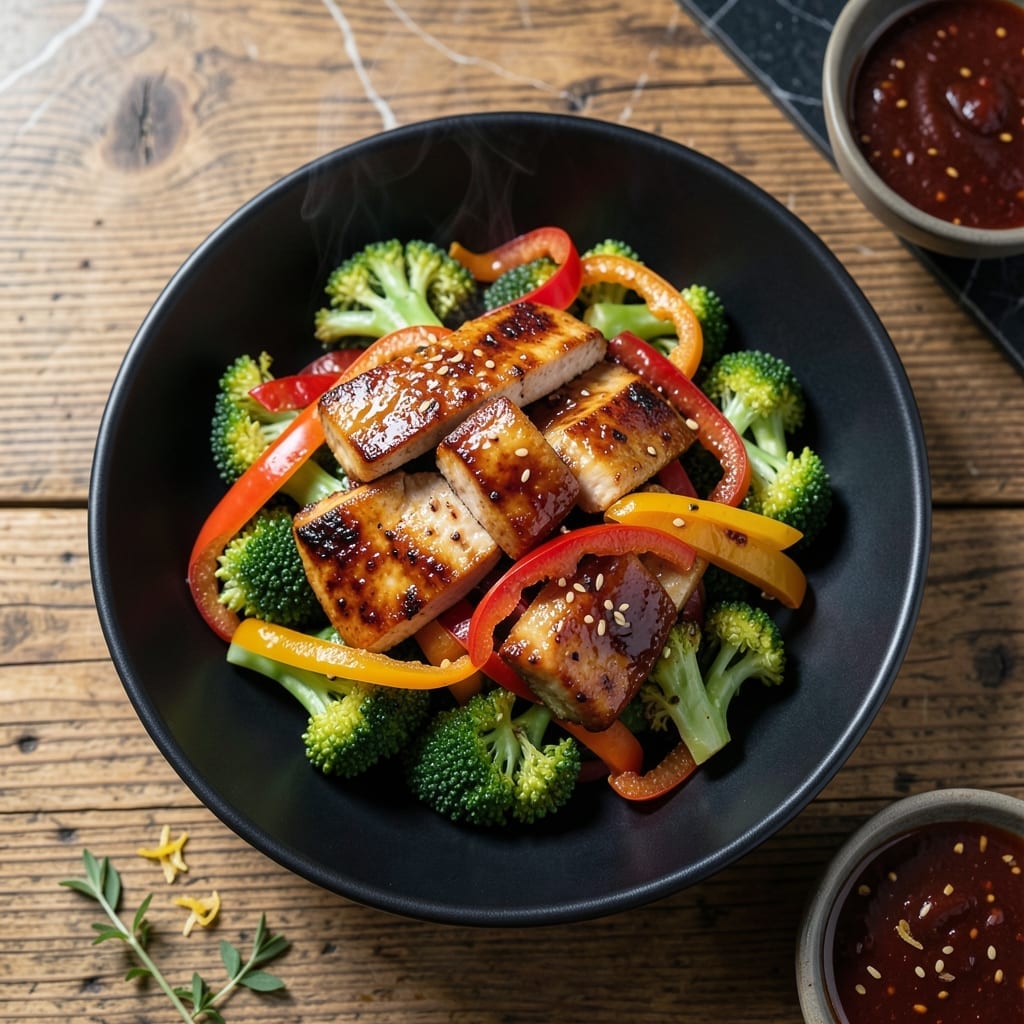
This gochujang stir fry delivers bold Korean flavors in 20 minutes with minimal effort. The spicy fermented chili paste combines with savory soy and sweet honey for a sauce that coats every ingredient perfectly.
I developed this recipe to bring restaurant-quality flavors to weeknight cooking. The key is high heat and quick cooking, which keeps vegetables crisp while allowing the sauce to thicken and caramelize slightly.
You will end up with tender protein, crisp vegetables, and a glossy sauce that clings to every bite. The balance of spicy, sweet, and umami makes this dish irresistibly flavorful.
Serve over steamed rice for a complete meal that tastes like it came from your favorite Korean kitchen. The flavors only improve as they meld together.
Ingredients for Gochujang Stir Fry
Bold Korean flavors start with fresh veggies, tender chicken, and that signature spicy-sweet sauce.
| Ingredient | Amount | Notes |
|---|---|---|
| Chicken Breast 🍗 | 1 ½ lb | Boneless, skinless, thinly sliced |
| Bell Peppers 🌶️ | 2 whole | Thinly sliced, any color |
| Broccoli Florets 🥦 | 3 cups | Fresh or frozen, thawed |
| Carrots 🥕 | 2 whole | Julienned or thinly sliced |
| Gochujang 🌶️ | 3 tbsp | Korean fermented chili paste |
| Soy Sauce 🫙 | 3 tbsp | Low-sodium preferred |
| Honey 🍯 | 2 tbsp | For sweetness in sauce |
| Sesame Oil 🫒 | 1 tbsp | Toasted for aroma |
| Garlic Cloves 🧄 | 4 cloves | Minced for sauce |
| Ginger Root 🌿 | 1 tbsp | Fresh, grated |
| Cornstarch 🌾 | 1 tbsp | For thickening sauce |
| Vegetable Oil 🫒 | 2 tbsp | For stir-frying |
| Green Onions 🧅 | ½ cup | Sliced for garnish |
| Sesame Seeds 🌰 | 1 tbsp | Toasted for garnish |
[recipe_ingredient_scaler]
The gochujang is non-negotiable—H-Mart or a well-stocked Asian market will have it. I like the Sempio brand for consistent heat and depth. Chicken should be sliced thin so it cooks through in minutes (freeze for 20 minutes first for easier slicing). Bell peppers add crunch and color—use a mix if you want that restaurant look. Fresh ginger and garlic make all the difference here, so don’t skip them.
No gochujang? Sriracha plus miso paste gets you close but won’t be quite the same. Maple syrup can stand in for honey. Swap chicken for tofu or shrimp if you prefer. The veggies are flexible too—snap peas, zucchini, or mushrooms all work great. Just keep everything cut thin so it cooks fast at high heat.
Sauce keeps in the fridge for up to 1 week—store it separately if prepping ahead. Cooked stir fry is best fresh but leftovers reheat well (add a splash of water to loosen the sauce). Freezes for 3 months if you double the batch.
Why You’ll Love This Recipe
- One Pan Wonder: I toss everything in at once—chicken, bell peppers, broccoli—and 15 minutes later, dinner’s ready.
- Crave-Worthy Kick: That gochujang brings this sweet-spicy heat that makes me sneak bites straight from the pan.
- Meal Prep Hero: I double the batch and it reheats perfectly for lunches all week. Honestly, it tastes even better the next day.
- Budget Stretcher: A little gochujang goes a long way, and chicken breast keeps this dish filling without breaking the bank.
Step-by-Step Instructions for Gochujang Stir Fry
Here’s how I nail this dish every time with maximum flavor and minimum fuss.
Step 1: Prep and Marinate the Chicken
Start by slicing the 1.5 lb Chicken Breast into thin, even strips. I find cutting against the grain makes it more tender. In a bowl, whisk together the 3 tbsp Gochujang, 3 tbsp Soy Sauce, 2 tbsp Honey, and 1 tbsp Cornstarch until smooth.
Add the chicken strips to the marinade and toss to coat evenly. Let it sit for 10 minutes while you prep the rest. This short marinade time is enough to infuse flavor without making the chicken mushy.
Step 2: Stir-Fry the Vegetables
Heat 1 tbsp Vegetable Oil in a large skillet or wok over medium-high heat. Add the 2 whole Bell Peppers (thinly sliced), 2 whole Carrots (julienned), and 3 cups Broccoli Florets. Stir-fry for 5-6 minutes until the vegetables are tender-crisp and the broccoli turns bright green.
Push the vegetables to one side of the pan and add the remaining 1 tbsp Vegetable Oil. Now add the marinated chicken in a single layer. Don’t stir for the first 1-2 minutes—this gives the chicken time to develop a light crust.
Step 3: Cook the Chicken and Combine
Once the chicken starts to brown, stir everything together and cook for another 4-5 minutes until the chicken is cooked through and no longer pink. The sauce should start to thicken and coat the chicken and vegetables beautifully.
Stir in the 4 cloves Garlic Cloves (minced) and 1 tbsp Ginger Root (grated). Cook for 30 seconds until fragrant. I like to press the garlic and ginger into the chicken with the back of my spatula to really infuse the flavor.
Step 4: Finish with Aromatics and Serve
Drizzle the 1 tbsp Sesame Oil over everything and give it a final toss. Remove from heat and let it sit for 1 minute to allow the flavors to meld together. The sesame oil adds a nutty aroma that ties all the flavors together.
Garnish with the 0.5 cup Green Onions (sliced) and 1 tbsp Sesame Seeds (toasted). Serve immediately while hot. The green onions add a fresh crunch, and the sesame seeds give it that final visual and textural pop.
Pro Tips For Making Gochujang Stir Fry
- Velvet the Chicken: Toss chicken breast with 1 tsp cornstarch and 1 tbsp soy sauce before cooking—I learned this the hard way after too many dry, rubbery stir-fry disasters.
- Blanch the Broccoli: Par-cook broccoli florets in boiling water for 60 seconds, then shock in ice water. It keeps them crisp-tender instead of mushy in the final stir-fry.
- Thin the Gochujang: Mix gochujang with 1-2 tbsp water or broth before adding to the pan—sounds weird, but it prevents clumping and helps coat everything evenly.
- High Heat Only: Crank the heat to max and work in batches. Crowding the pan steams the veggies, and nobody wants soggy bell peppers in their stir-fry.
Common Mistakes When Making This Recipe
Overcrowding the Pan
This is the most common mistake I see. If you dump all 1.5 lb Chicken Breast and veggies in at once, the temperature drops, causing steaming instead of stir-frying. Cook in batches if needed—your pan should sizzle loudly when ingredients hit it. 🔥
Skipping the Cornstarch
The 1 tbsp Cornstarch in the marinade isn’t just for thickening—it creates a protective layer that keeps chicken juicy at high heat. Without it, your protein can turn rubbery. I learned this the hard way during my early kitchen experiments.
Low Heat Cooking
Stir-fry demands medium-high heat to achieve that signature sear and caramelization. If your oil isn’t shimmering or your veggies aren’t sizzling, crank it up. A wok works best, but a heavy skillet can substitute.
Overcooking the Veggies
Those 3 cups Broccoli Florets and bell peppers should stay crisp. Cook them just until bright and tender-crisp—about 5-6 minutes. They’ll soften more while resting with the hot chicken and sauce.
Neglecting the Sauce
The 3 tbsp Gochujang and soy mixture needs to reduce slightly to coat everything properly. If it’s too thin, simmer uncovered for an extra 1-2 minutes. I taste and adjust sweetness with extra honey if needed.
Forgetting to Rest
Always let the stir-fry rest for 1 minute off heat before serving. This lets the sauce thicken and flavors meld. Skipping this step means you’ll miss the full depth of those Korean spices. 💡
Nutrition Facts
Frequently Asked Questions
Can I make this with beef or tofu instead of chicken?
Use 1 lb flank steak (thinly sliced) or 1 lb extra-firm tofu (pressed). Beef needs 1-2 minutes less cooking time, while tofu benefits from a 5-minute sear before adding veggies.
How spicy is this dish?
Gochujang brings moderate heat, but the honey and soy balance it. For milder flavor, use 2 tbsp paste. For extra kick, add 1/2 tsp red pepper flakes with the garlic.
What if my sauce is too thick?
Thin it with 1-2 tbsp water or broth while cooking. If it’s too thin, let it simmer uncovered for an extra 1-2 minutes. The cornstarch helps it cling perfectly to ingredients.
Can I prep ingredients ahead?
Slice veggies and chicken up to 1 day ahead; store separately in the fridge. Mix the sauce up to 3 days ahead. Keep cornstarch separate until ready to cook.

Trained in classic French technique but raised on slow-cooked ribs and spicy rubs, she blends culinary skill with smoke and soul.
- Recipe for Boneless Pork Chops in Cast Iron Skillet: Sear and Baste to Juicy Perfection - October 3, 2026
- Recipe for Boneless Cross Rib Roast: Slow-Roasted Beef with Herb Crust - October 3, 2026
- Hamburgers in Sauce Recipe Crock Pot: Slow-Cooked Savory Delight - October 3, 2026