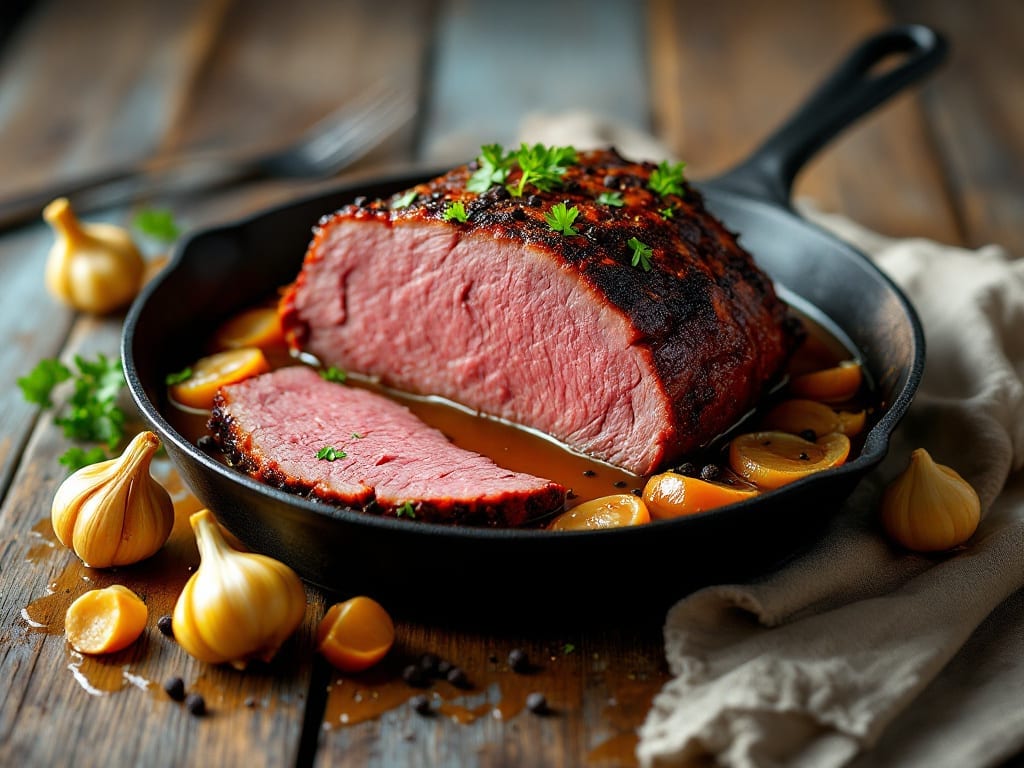
Boiled corned beef brisket transforms a simple pot of water into a centerpiece worthy of St. Patrick’s Day celebrations. The slow-simmered method I’ve perfected—inspired by my family’s backyard cookouts—yields meat so tender it practically melts at the touch, infused with deep, savory flavors that linger long after the last bite.
This isn’t just a side dish; it’s the heart of the feast, where hours of gentle cooking turn tough cuts into something extraordinary.
The secret lies in patience and precision: a proper brine, the right water-to-meat ratio, and maintaining a steady simmer for hours. I use a mix of bay leaves, peppercorns, and garlic to build layers of flavor without overpowering the beef, while the slow cook transforms the meat into fork-tender perfection.
This method is foolproof, though it does require time—something worth investing when the result is a dish that commands the table.
By the time you pull that brisket from the pot, you’ll have a rich, aromatic centerpiece with meat so tender it falls apart at the slightest touch. The broth, too, becomes a treasure—packed with flavor and perfect for serving alongside the beef.
Serve it with classic sides like creamy colcannon or buttery mashed potatoes, and you’ve got a meal that feels like a celebration, no matter the occasion.
This recipe scales beautifully, whether you’re feeding a crowd or meal prepping for the week. The key is in the details: the right cut, the proper seasoning, and that slow, steady simmer. Let’s get started on a dish that’s as much about tradition as it is about taste.
Ingredients for boiled corned beef brisket
Four pounds of brisket and a few simple pantry staples create a St. Patrick’s Day centerpiece that feels like a celebration.
| Ingredient | Amount | Notes |
|---|---|---|
| Corned Beef Brisket 🥩 | 4 lb | Packaged or whole raw cut |
| Water 💧 | 12 cups | Filtered or spring water preferred |
| Bay Leaves 🍃 | 4 whole | Fresh or high-quality dried |
| Black Peppercorns 🌶️ | 1 tbsp | Crushed lightly for flavor |
| Garlic Cloves 🧄 | 6 cloves | Peeled and lightly crushed |
| Onion 🧅 | 1 whole | Yellow or white, halved |
| Carrots 🥕 | 2 whole | Scrubbed, cut into chunks |
| Salt 🧂 | 2 tbsp | Kosher or sea salt |
| Apple Cider Vinegar 🍏 | ½ cup | For tangy depth |
| Brown Sugar 🍚 | ¼ cup | Light or dark preferred |
| Mustard Seeds 🌾 | 1 tsp | Yellow or brown variety |
| Fresh Parsley 🌿 | ¼ cup | Chopped, for garnish |
[recipe_ingredient_scaler]
The brisket is the star—look for a well-marbled cut with good fat coverage. Costco or local butchers often have the best quality, but the packaged corned beef from Kroger or Walmart works perfectly too. If you’re buying a whole brisket, ask the butcher to trim excess fat but leave some for flavor. The apple cider vinegar and brown sugar combo is what gives that classic tangy-sweet balance, so don’t skip either. I always grab extra bay leaves—they add that subtle herbal note that makes the broth sing.
No apple cider vinegar? White vinegar or lemon juice works in a pinch, though the flavor won’t be quite the same. Short on brown sugar? White sugar plus a pinch of cinnamon gets you close. The mustard seeds are non-negotiable for that traditional Irish flavor, but if you’re missing them, a dash of ground mustard will work. Fresh parsley is ideal for garnish, but dried parsley at half the amount won’t ruin the dish. The carrots and onion aren’t just for flavor—they help infuse the broth with sweetness, so don’t skip them even if you’re not a fan of eating them later.
This dish tastes even better the next day, so plan ahead. The broth keeps well for 5 days in the fridge, and the meat can be reheated gently in the same liquid. For leftovers, I like to slice the beef thin and serve it on sandwiches with a little of the reduced broth drizzled on top. The broth freezes beautifully too—just portion it into containers and thaw as needed. If you’re feeding a crowd, double the recipe and use a large stockpot or slow cooker—the slow cook method works great for big batches.
Why You’ll Love This Recipe
- Five-Ingredient Magic: I swear by this—just water, garlic, peppercorns, bay leaves, and that brisket. The prep is literally dumping everything into one pot. No chopping, no fuss, no stress. Honestly, my lazy Sundays thank me every time.
- Tender Every Bite: That slow boil turns tough brisket into melt-in-your-mouth perfection. The garlic and peppercorns infuse the meat so deeply, even the last slice tastes like the first. (Yes, even on a Tuesday night.)
- Leftovers That Win: This recipe makes so much meat—easily enough for sandwiches, hash, or fried slices the next day. I’ll be real: my freezer’s always stocked with vacuum-sealed portions because reheating this is just as good as the first bite.
- Budget-Friendly Feast: A single brisket feeds my whole family for days, and the ingredients cost less than half of fancy cuts. The bay leaves and peppercorns? They’re pantry staples. This is my go-to when money’s tight but I refuse to skimp on flavor.
Step-by-step instructions for boiled corned beef brisket
Here’s how to transform a simple pot of water into tender, flavorful corned beef brisket that feeds a crowd.
Prepare the Brisket and Aromatics
Rinse the 4 lb corned beef brisket under cold water to remove any excess curing salt or packaging residue. Pat it completely dry with paper towels—this helps the spices adhere better during cooking. In a large pot or Dutch oven, combine the 12 cups water, 4 whole bay leaves, 1 tbsp black peppercorns, 6 cloves garlic cloves, 1 whole onion (halved), and 2 whole carrots (scrubbed and cut into chunks). Bring this mixture to a full rolling boil over high heat.
Here’s the thing—don’t skip the boiling step. The initial boil helps extract flavors from the aromatics and ensures everything cooks evenly. Once boiling, reduce the heat to medium-low so the liquid maintains a gentle simmer. The goal is to keep everything just below a full boil to prevent the brisket from becoming tough.
Season and Simmer the Brisket
Add the 2 tbsp salt, 0.5 cup apple cider vinegar, 0.25 cup brown sugar, and 1 tsp mustard seeds to the simmering pot. Stir gently to dissolve the sugar and distribute the spices evenly. Carefully place the brisket into the pot, ensuring it’s fully submerged. If needed, add a small amount of extra water to cover it completely—this prevents the meat from drying out.
Return the heat to medium-low and let the brisket simmer uncovered for 3 hours. This slow cooking time is crucial—it allows the meat to become fork-tender without becoming mushy. You’ll know it’s ready when a knife slides in and out easily, and the meat pulls apart with minimal resistance. Real talk: Avoid lifting the lid during cooking. Every time you do, you release steam and add 15-20 minutes to your cook time.
Finish and Rest the Brisket
Once the brisket is tender, remove it from the pot and transfer it to a cutting board. Tent loosely with aluminum foil and let it rest for 15-20 minutes. This resting period allows the juices to redistribute throughout the meat, ensuring every slice is moist and flavorful. During this time, you can skim any excess fat from the cooking liquid or strain it for a cleaner broth if desired.
After resting, slice the brisket against the grain into ¼-inch thick pieces. Garnish with 0.25 cup chopped fresh parsley just before serving. The parsley adds a bright, fresh contrast to the rich, savory flavors of the brisket. Serve immediately with the cooking liquid reduced into a gravy, if you like, or enjoy it as-is with classic sides like cabbage and potatoes.
Pro Tips For Making Boiled Corned Beef Brisket
- USE A COLD START: I learned this the hard way—dumping a cold brisket into boiling water makes it tough as boot leather. Instead, submerge the raw brisket in cold water, then bring it to a boil. The meat will cook more evenly and stay fork-tender, not stringy.
- CRUSH THE GARLIC: Whole garlic cloves just sit there like decorative rocks. Smash them flat with the side of your knife or crush them with a heavy pan before adding—this releases their flavor into the broth. (Yes, it looks messy, but your corned beef will taste better.)
- SKIP THE BOIL-OVER: After 30 minutes, the water will foam like a latte gone wrong. Reduce heat to a gentle simmer or you’ll end up with a watery mess on the stove. A lid helps, but leave a tiny gap if your pot’s small—this keeps things controlled.
- ADD POTATOES LATER: Toss in a couple peeled potatoes (or a parsnip) for the last 20 minutes—this thickens the broth naturally without starch. (Bonus: they’ll soak up all the good flavor.) If you add them too early, they’ll turn to mush and ruin the texture.
Make-ahead tips for this recipe
Prep Ahead for Crowds
I always prep the aromatics and spices the night before—chop the onion, peel the carrots, and crush the garlic. Store them in a ziplock bag in the fridge so they’re ready to go.
The brisket itself can sit in the fridge uncovered for up to 24 hours before cooking, which helps the spices cling better. Just pat it dry right before simmering. 🌶️
Slow Cooker Shortcut
For a hands-off approach, use a 6-quart slow cooker on low for 8 hours or high for 5 hours. Add all the same ingredients, but reduce the water to 8 cups since slow cookers lose less liquid.
The gentle heat keeps the meat tender without monitoring. I’ve done this for St. Patrick’s Day brunches—just add the brisket in the morning and let it cook while you’re out.
Broth Make-Ahead Magic
The cooking liquid becomes a flavor bomb—freeze it in 1-cup portions for future soups or gravies. Label the containers with the date; it keeps for 3 months. I’ve used this broth to make corned beef hash or even a quick stew.
The key is to strain out the aromatics before freezing, so you’re left with pure flavor. ❄️
Leftovers Reinvented
Slice the brisket thin and store it in the fridge for 4 days or freeze for 3 months. Reheat gently in the broth (never microwave dry) to keep it moist.
I love turning leftovers into corned beef sandwiches with mustard and sauerkraut, or tossing slices into a potato and cabbage hash for a hearty breakfast.
Equipment Prep
Check your pot’s size—you need at least 8 quarts to fit the brisket comfortably. I use a Le Creuset Dutch oven because it distributes heat evenly, but any heavy-bottomed pot works.
If you’re cooking for a crowd, a large stockpot or slow cooker is your best bet. Just make sure it’s deep enough to submerge the brisket fully.
Timing for Stress-Free Cooking
Start the brisket cooking 3 hours before serving—this gives you plenty of time to prep sides like mashed potatoes or colcannon.
If you’re short on time, use a pressure cooker (like an Instant Pot) on high pressure for 90 minutes, then let it natural release for 15 minutes. The meat will be just as tender, and you’ll save hours. 💡
Nutrition facts
Frequently asked questions
Why does my boiled corned beef brisket turn out tough instead of tender?
The most common mistake is boiling too vigorously or lifting the lid frequently. Maintain a gentle simmer at medium-low heat and avoid peeking—every time you lift the lid, you add 15-20 minutes to your cook time. Also, make sure the brisket is fully submerged in liquid to prevent drying out. A 3-hour simmer at the right temperature is key for that melt-in-your-mouth texture.
Can I use a slow cooker for this recipe?
Use a 6-quart slow cooker on low for 8 hours or high for 5 hours. Reduce the water to 8 cups since slow cookers retain less liquid. The gentle heat keeps the meat tender without constant monitoring. I’ve used this method for St. Patrick’s Day brunches—just add everything in the morning and let it cook while you’re out.
What’s the best way to store and reheat leftovers?
Slice the brisket thin and store it in the fridge for 4 days or freeze for 3 months. Reheat gently in the cooking broth (never microwave dry) to keep it moist. For extra flavor, reheat in a pot with a splash of broth or water. I love turning leftovers into corned beef sandwiches with mustard or tossing slices into a potato and cabbage hash.
Do I need to trim the fat from the brisket before boiling?
Not necessarily! While trimming excess fat can reduce greasiness in the broth, leaving some fat helps keep the meat moist during cooking. If you prefer a cleaner broth, trim about ½ inch of fat from the surface before simmering. The fat also adds rich flavor, so don’t go overboard with trimming.
How can I make the broth clearer for serving?
After removing the brisket, strain the broth through a fine-mesh sieve or cheesecloth to remove aromatics. For an even clearer broth, chill it overnight and skim off the solidified fat from the top. You can also use a gravy separator or let it sit in the fridge for 1 hour to allow fat to solidify before carefully pouring off the clear liquid.

Trained in classic French technique but raised on slow-cooked ribs and spicy rubs, she blends culinary skill with smoke and soul.
- Best Smoked Oxtail Recipe: Deep-Rich Flavor After Low-and-Slow Cooking - October 14, 2026
- Pit Boss Smoked Prime Rib Roast Recipe: Bark-to-Bone Crispness in 4 Hours - October 14, 2026
- Smoked Tuna Steak Recipe: Seared Crust Meets Silky Centers - October 14, 2026