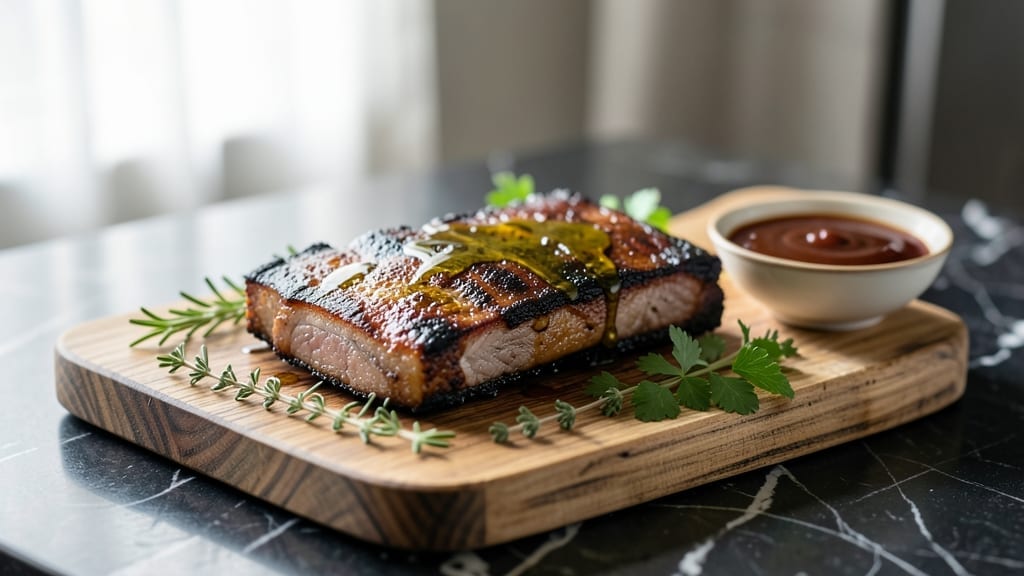
This brine recipe for smoked pork ribs transforms tough cuts into melt-in-your-mouth perfection through a precise balance of salt, sugar, and aromatics. The key lies in a 24-hour soak that tenderizes the meat while building that coveted bark during the smoke.
I developed this method after years of trial and error, finally cracking the code for ribs that separate at the slightest touch—no dry, chewy results here. 🔥
The process begins with a dry rub that clings to the ribs during the smoke, followed by a wet brine that infuses flavor deep into the meat.
Using a pellet blend of hickory and cherry wood creates the perfect balance of smoky depth and subtle fruitiness, while maintaining a constant 225°F ensures even cooking. This isn’t just another rib recipe—it’s a foolproof system that delivers restaurant-quality results every time.
What you’ll end up with is ribs so tender they fall apart with minimal effort, wrapped in a caramelized bark that crackles with each bite. The meat stays juicy and flavorful from edge to edge, with a perfect balance of saltiness and smokiness that makes these ribs irresistible.
This method works for both sparklers and offset smokers, adapting to your setup while delivering consistent results.
For those who prefer extra moisture, a quick apple cider baste in the final hour adds gloss and depth. The secret to success lies in patience—24 hours of brining followed by 12-14 hours of smoking—but the payoff is ribs that become the centerpiece of any gathering.
Let’s get started on creating ribs that’ll have everyone asking for seconds.
Ingredients for brine recipe for smoked pork ribs
A precise brine transforms tough pork ribs into melt-in-mouth perfection through 24 hours of flavor infusion.
| Ingredient | Amount | Notes |
|---|---|---|
| Diamond Crystal Kosher Salt 🧂 | 1 ½ cups | Fine grain preferred for even dissolution |
| Brown Sugar Packets 🍚 | 1 cup | Light or dark brown sugar |
| Unsalted Butter 🧈 | 1 lb | Cubed, full-fat for richness |
| Apple Cider Vinegar 🍎 | 1 cup | Raw, unfiltered for acidity |
| Garlic Cloves 🧄 | 8 whole | Peeled, head intact for infusion |
| Fresh Rosemary Sprigs 🌿 | ½ cup | Dried substitute at 1/3 quantity |
| Dried Thyme Leaves 🍃 | 1 tbsp | Whole leaves preferred |
| Black Peppercorns 🌶️ | 1 tbsp | Whole, freshly ground |
| Pork Ribs (St. Louis Style) 🐷 | 12 lb | Bone-in, membrane removed |
| Hickory and Cherry Wood Pellets 🔥 | 4 lb | Pellet blend for balanced smoke |
| Unsalted Bacon 🍖 | 1 lb | Chopped, for dry rub |
| Smoked Paprika 🌶️ | 2 tbsp | For dry rub color |
| Cayenne Pepper 🔥 | 1 tsp | Adjust heat preference |
| Apple Cider 🍎 | 1 cup | For final baste |
[recipe_ingredient_scaler]
The Diamond Crystal kosher salt is non-negotiable—it dissolves evenly without clumping, which is critical for a consistent brine. Costco offers the best value for bulk purchases, but any reputable grocery store carries it. For the brown sugar, light brown sugar yields a subtler caramelization, while dark brown adds deeper molasses notes. The unsalted butter must be full-fat; salted versions disrupt the brine’s balance. Store the butter in the freezer to maintain freshness for up to 6 months.
No apple cider vinegar? White vinegar at half the quantity works in a pinch, though it lacks the subtle fruitiness. Fresh rosemary is ideal, but dried thyme at one-third the amount delivers aromatic depth. The garlic should be whole cloves—peeling them first speeds up infusion. For the wood pellets, Traeger’s hickory-cherry blend is professional-grade, but Weber’s budget line suffices for home use. The bacon in the dry rub adds fat for bark adhesion—thick-cut country-style works best.
The pork ribs should be stored vacuum-sealed for up to 3 months or wrapped tightly in plastic for 1 week in the freezer. After brining, pat them dry thoroughly to ensure proper bark formation. The brine itself can be reused once for chicken or turkey, but discard it after that. For optimal results, prep the ribs the night before so they can brine overnight in the refrigerator, eliminating the need for a separate soaking step.
Why You’ll Love This Recipe
- No-Fuss Prep Night: Honestly, this is one of those recipes where you can prep the dry rub while you’re waiting for the brine to chill—no last-minute scrambling. Just toss that Diamond Crystal Kosher Salt, brown sugar, and butter in a bowl, and boom, you’re ahead of the game. The ribs do all the heavy lifting while you relax.
- Smoky-Sweet Perfection: That apple cider vinegar and garlic cloves in the brine? Game-changer. The acidity tenderizes the meat like magic, while the hickory and cherry wood pellets add that perfect balance of smokiness and sweetness. Trust me, the crispy bark from the bacon and butter in the rub? Chef’s kiss.
- Feeds the Crowd (or Your Cravings): This isn’t just for Sunday dinners—it’s the kind of dish that disappears at family gatherings, tailgates, or even when you’re craving something decadent on a Tuesday night. And if you have leftovers? Reheat with the foil-wrapped juices for ribs that still taste like they came straight off the smoker.
- Budget-Friendly Luxury: You’d never guess this is a steal. A pound of bacon and butter might sound pricey, but they’re used so efficiently that you’re basically getting restaurant-quality ribs without the restaurant price. Plus, the rosemary and thyme add depth without breaking the bank—just a little goes a long way.
Step-by-step instructions for brining smoked pork ribs
Here’s the method that transforms tough ribs into melt-in-your-mouth perfection through precise brining and smoking.
🥘 Step 1: Prepare the Dry Brine Rub
In a large bowl, combine the 1½ cups Diamond Crystal Kosher Salt, 1 cup Brown Sugar Packets, 2 tbsp Smoked Paprika, 1 tsp Cayenne Pepper, and 1 tbsp freshly ground Black Peppercorns. I use my hands to thoroughly mix these ingredients until they form a coarse, even-textured rub—this ensures maximum surface area contact with the ribs.
Next, add the 1 lb Unsalted Butter, chopped into small cubes, and the 1 lb Unsalted Bacon, chopped into small pieces. Work the butter and bacon into the dry mixture until fully incorporated. The fat content from these ingredients will create a flavorful crust during smoking. Store this rub in an airtight container until ready to use.
🥘 Step 2: Create the Wet Brine Solution
In a large, non-reactive container (I prefer a food-safe plastic bin with a lid), combine the 1 cup Apple Cider Vinegar, 1 cup Apple Cider, and 8 Garlic Cloves (with heads intact for maximum infusion). Add ½ cup Fresh Rosemary Sprigs and 1 tbsp Dried Thyme Leaves to the liquid. This combination creates an acidic, aromatic brine that penetrates the meat deeply.
Add enough cold water to the container to create a solution that will fully submerge the 12 lb Pork Ribs (St. Louis Style). Stir well to dissolve the vinegar and cider completely. The solution should be slightly cloudy but fully integrated—this indicates proper acidity for tenderizing.
🥘 Step 3: Brine the Ribs Overnight
Place the ribs in the brine solution, ensuring they are completely submerged. Cover the container with the lid and refrigerate for 18-24 hours. This extended brining time is crucial for achieving fall-off-the-bone tenderness. I like to turn the ribs halfway through the brining period to ensure even flavor penetration on all surfaces.
After brining, remove the ribs from the solution and pat them dry thoroughly with paper towels. This step is essential—any moisture left on the surface will prevent proper bark formation during smoking. Discard the used brine as it’s no longer safe for consumption after this process.
🔥 Step 4: Apply the Dry Rub and Smoke
Generously coat the dried ribs with the prepared dry rub, pressing it firmly into the meat to ensure good adhesion. Place the ribs on a wire rack set over a tray to allow air circulation on all sides. This setup is critical for even cooking and proper bark development.
Set up your smoker using the 4 lb Hickory and Cherry Wood Pellets to achieve a balanced smoke flavor. Maintain a consistent temperature of 225°F throughout the smoking process. Place the ribs on the smoker, bone-side down, and smoke for 3 hours before flipping them to the bone-side up.
⏰ Step 5: Wrap and Finish the Cook
After the initial 3 hours, wrap the ribs tightly in heavy-duty aluminum foil. This technique, known as the “Texas Crutch,” helps overcome the temperature stall that occurs around 165°F internal temperature. Return the wrapped ribs to the smoker and continue cooking until they reach an internal temperature of 195-203°F (about 2-3 additional hours).
Once the ribs reach the proper temperature, remove them from the smoker and let them rest for 30 minutes before serving. The resting period allows the juices to redistribute throughout the meat, ensuring maximum tenderness with each bite. Serve with the rendered juices from the foil wrap for an extra flavor boost.
Pro Tips For Making Brine Recipe For Smoked Pork Ribs
- Crush Garlic Properly: Those 8 whole garlic cloves with heads intact aren’t just for show—they’re the difference between subtle flavor and bold infusion. Smash them lightly with the side of your knife before adding to the wet brine. This releases more oils without turning to mush, so every sip of apple cider vinegar pulls maximum punch.
- Salt the Butter First: I learned this the hard way—adding cold butter cubes to the dry rub too early makes it clump like wet sand. Instead, mix the kosher salt and brown sugar first, then fold in the cubed butter until it melts just enough to coat the spices. The result? A smoother rub that sticks to ribs like glue instead of sliding off.
- Don’t Skimp on Drying: That post-brine pat-dry step isn’t optional. Use two layers of paper towels and press hard—even if it feels excessive. Leftover moisture turns your smoky bark into sad, steamy sludge. Pro move: Let the ribs air-dry uncovered on a rack for 10 minutes after patting. The difference in crust is night and day.
- Flip Ribs Early: The recipe says 3 hours bone-side down, but I’ve found flipping at 2.5 hours—when the meat starts pulling slightly away from the bone—gives you more control over bark thickness. Bone-side up for the last hour ensures even cooking without drying out the tender meat. (Yes, I know: checking every 15 minutes is annoying, but the payoff is worth it.)
Flavor customization for this recipe
Sweet & Smoky Fusion
Add a ½ cup maple syrup to your wet brine alongside the apple cider and vinegar for a caramelized depth that pairs beautifully with the smoky flavor. I like to reduce the water slightly to 3 quarts to concentrate the sweetness.
This creates ribs with a glossy bark and a subtle maple undertone that balances the saltiness—perfect for those who love a touch of sweetness in their smoke. 🍁
Spicy Heat Boost
For extra kick, increase the cayenne pepper in your dry rub to 2 tsp and add 1 tbsp chipotle powder for a smoky heat. I also recommend a 1 tbsp gochujang paste mixed into the wet brine for a Korean-inspired twist.
The heat builds slowly during smoking, creating a complex flavor profile that keeps your palate engaged. This version is a crowd-pleaser at summer cookouts!
Herbal Mediterranean Twist
Swap the thyme for 1 tbsp dried oregano and add 3 sprigs fresh oregano to the brine, along with ½ cup chopped Kalamata olives. The brine becomes briny and aromatic, while the dry rub gains Mediterranean brightness.
Finish with a drizzle of reduced balsamic glaze before serving for a tangy contrast to the smoky ribs. This version is fantastic for those who love bold, layered flavors.
Bourbon-Infused Luxury
Add ¼ cup bourbon to your wet brine solution for a rich, caramelized depth that enhances the smoky notes. I use Maker’s Mark for its smooth, vanilla-forward profile. The bourbon also helps tenderize the meat while adding a subtle boozy aroma.
For the dry rub, include 1 tsp smoked paprika and ½ tsp cinnamon to complement the bourbon’s warmth. This version feels like a gourmet experience!
Apple & Ciderwood Smolder
Infuse your wet brine with 2 apple peels (from a peeled apple) and 1 cinnamon stick for an extra fruity aroma. Use applewood pellets instead of hickory-cherry for a subtle, sweet smoke.
The result is ribs with a delicate apple cider aroma that pairs perfectly with the dry rub’s spices. This method is ideal for those who love a lighter, fruit-forward smoke flavor. 🍎
Nutrition facts
Frequently asked questions
Why is the brining time so long for smoked pork ribs?
The 18-24 hour brining period is essential because it allows the salt and acidity to deeply penetrate the meat, breaking down tough connective tissues while infusing flavor. This extended soak ensures the ribs become fork-tender, separating effortlessly from the bone during smoking. Skipping this step often results in chewy ribs, no matter how long they’re smoked.
Can I use a different type of salt in the brine?
While you can technically use table salt, Diamond Crystal kosher salt is ideal because it dissolves more evenly and doesn’t clump, ensuring consistent flavor distribution. If you’re using table salt, reduce the amount by about 25% since it’s more concentrated. The even dissolution prevents salt pockets that could make some areas overly salty.
What if I don’t have enough space for a full overnight brine?
If you’re short on time, brine the ribs for at least 12 hours in the refrigerator for noticeable tenderness, though they won’t be as fall-off-the-bone. For best results, prep the night before so you can brine overnight. If you must rush, ensure the ribs are fully submerged and refrigerated to slow bacterial growth.
How do I know when the ribs are fully cooked?
Use a meat thermometer to check the internal temperature—aim for 195-203°F in the thickest part of the meat. The ribs should also pull away easily from the bone when prodded. If they’re still tough at this temperature, they just need more time wrapped in foil (the “Texas Crutch”) to finish cooking. Patience is key!
Can I make the dry rub ahead of time?
Store the dry rub mixture in an airtight container at room temperature for up to 2 weeks. The butter and bacon will keep it moist, but if it starts to feel greasy, spread it out on a baking sheet to dry slightly before using. This saves time on the day of cooking.

Trained in classic French technique but raised on slow-cooked ribs and spicy rubs, she blends culinary skill with smoke and soul.
- Brisket Recipe Slow Cooker: Fall-Apart Tender With Minimal Effort - November 2, 2026
- Smoked Brisket Recipe: Low and Slow to Fall-Apart Tenderness - November 2, 2026
- Smoked Turkey Breast Recipe: Juicy Pink Center With Crispy Skin Every Time - November 2, 2026