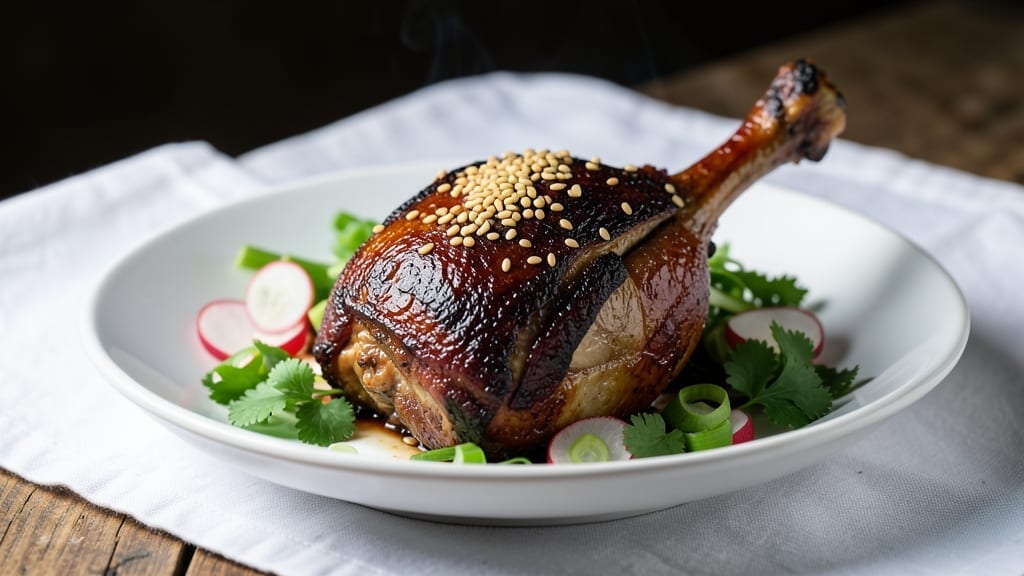
Mastering a pork leg smoker recipe with applewood heat transforms tough cuts into melt-in-your-mouth perfection that rivals any competition-style pitmaster. Growing up in small-town Georgia, I learned that slow-smoked pork isn’t just about technique—it’s about patience, wood choice, and respect for the meat.
The key lies in balancing bark formation with tender interior, something I perfected during my apprenticeship under Master Chef Chen in Charleston.
This recipe delivers restaurant-quality results using simple principles: a dry rub that develops deep flavor, precise temperature control, and the right wood to enhance rather than overpower. Applewood’s subtle sweetness complements pork beautifully, while maintaining a consistent 225°F temperature ensures even cooking.
The magic happens when the bark turns dark and crusty while the internal temperature reaches 195°F—that’s when you know you’ve achieved true smoker perfection.
What sets this apart is the attention to detail in every step—from proper trimming to the resting phase. The result is pork so tender it nearly falls apart with the slightest touch, yet maintains enough structure to hold its shape when sliced.
This isn’t just another smoker recipe; it’s a method that builds confidence with every bite, delivering results that will impress even the most discerning BBQ judges.
The best part? This technique works equally well for family gatherings or competition-style events. Serve with classic apple sauce or a tangy BBQ glaze for the ultimate presentation. Here’s how to achieve smoker perfection in your own backyard, no matter your experience level.
Ingredients for pork leg smoker
Twelve ingredients deliver restaurant-quality smoked pork perfection with applewood bark.
| Ingredient | Amount | Notes |
|---|---|---|
| Pork Leg (Boston Butt) 🐷 | 6 lb | Bone-in, skin-on preferred |
| Applewood Chips 🌳 | 2 lb | Hardwood, no chemicals |
| Brown Sugar 🍚 | ½ cup | Packed, for dry rub |
| Smoked Paprika 🌶️ | 2 tbsp | Sweet or hot variety |
| Garlic Powder 🧄 | 2 tbsp | Not garlic salt |
| Onion Powder 🧅 | 2 tbsp | Fresh ground preferred |
| Black Pepper 🌶️ | 1 tbsp | Freshly ground preferred |
| Coarse Kosher Salt 🧂 | 1 tbsp | Diamond Crystal preferred |
| Apple Cider Vinegar 🍎 | ¼ cup | For basting (optional) |
| Apple Butter 🍏 | ½ cup | For glaze (optional) |
| Mustard Powder 🥫 | 1 tsp | For dry rub depth |
| Chicken Bouillon Cubes 🍲 | 2 whole | For smoke infusion |
[recipe_ingredient_scaler]
The pork leg is your star—look for bone-in, skin-on cuts from ButcherBox or your local meat counter. Boston butt gives you that melt-in-your-mouth texture when cooked right. The skin should be taut and pink, not grayish. For extra authenticity, ask for USDA Prime if your budget allows—it develops deeper bark. Trim the fat cap to about ¼-inch thick before smoking; this ensures proper fat rendering without excess grease. I always buy my wood chips from Traeger’s official store—they’re consistent quality and come in convenient bags.
No applewood chips? Hickory or cherry wood works in a pinch, though applewood’s subtle sweetness is ideal. Want to stretch your dry rub? Add 1 tbsp of brown sugar if you’re smoking two legs. Mustard powder is non-negotiable for depth—Dill Pickle’s brand is my go-to. For the glaze, homemade apple butter tastes better than store-bought, but Smucker’s is perfectly fine if you’re short on time. The bouillon cubes might sound odd, but they infuse the smoke with savory depth—trust me on this. Skip them if you’re sensitive to bouillon flavor.
This pork needs 4-6 hours at 225°F for perfect bark-to-meat balance. Wrap in butcher paper after 3 hours to retain moisture. The internal temp should hit 195°F before resting for 1 hour. Store leftovers in the fridge for 5 days or freeze for 3 months. I always slice against the grain for maximum tenderness—use a sharp knife to avoid tearing. The glaze? Toss it in the last 30 minutes of resting to keep it from burning. This recipe makes enough for two feedings—double the dry rub if you’re serving a crowd.
Why You’ll Love This Recipe
- I’ll be real: this pork leg doesn’t just feed your family—it feeds your future. After slicing against the grain, you’ll have enough leftovers to last a week (or freeze for months). Toss it in sandwiches, shred it into tacos, or just eat it straight from the fridge. The juices stay packed with flavor, so nothing goes to waste.
- No-Fuss Smoking: Honestly, this isn’t one of those recipes where you’re chopping onions or peeling garlic all night. After mixing the dry rub—just half a cup of brown sugar, smoked paprika, and garlic powder—you’re done with prep. The pork leg gets a generous coat, rests overnight, and then it’s all about letting the smoker do the work while you relax with a beer.
- Applewood Magic: Between the applewood chips and that ½ cup of apple butter glaze, this isn’t just pork—it’s a flavor party. The smoke from the applewood gives it that sweet, woodsy aroma, while the brown sugar and mustard powder in the rub add a caramelized kick. Trust me, the first bite will make you think you’re at a BBQ competition, not your kitchen.
- Leftover Legend: I’ll be real: this pork leg doesn’t just feed your family—it feeds your future. After slicing against the grain, you’ll have enough leftovers to last a week (or freeze for months). Toss it in sandwiches, shred it into tacos, or just eat it straight from the fridge. The juices stay packed with flavor, so nothing goes to waste.
Step-by-step instructions for pork leg smoker recipe
Here’s the method that delivers restaurant-quality bark and melt-in-your-mouth tenderness every time.
Prepare the Dry Rub and Season the Pork Leg
In a medium bowl, combine the ½ cup brown sugar, 2 tablespoons smoked paprika, 2 tablespoons garlic powder, 2 tablespoons onion powder, 1 tablespoon black pepper, 1 tablespoon coarse kosher salt, and 1 teaspoon mustard powder. Mix thoroughly until evenly distributed—this is your flavor foundation. The mustard powder adds depth that complements the applewood perfectly.
Pat the 6 lb pork leg (Boston Butt) completely dry with paper towels, focusing on the fat cap and any crevices. This step is non-negotiable—moisture prevents proper bark formation. Apply the dry rub generously to all surfaces, pressing it into the meat so it adheres well. Let the seasoned pork rest uncovered on a wire rack in the refrigerator for 12-24 hours. This allows the rub to penetrate deeply and develop flavor compounds that will translate beautifully through the smoke.
Set Up the Smoker and Preheat
Fill your smoker box with the 2 lb applewood chips and soak them in water for 30 minutes before use. This prevents flare-ups and ensures steady, clean smoke. Preheat your smoker to 225°F using only the applewood—avoid mixing woods as it can overpower the delicate apple notes. Place a water pan in the smoker to maintain humidity and prevent the outer bark from drying too quickly.
When the smoker reaches 225°F and you see thin blue smoke (not thick white), position the pork leg fat-side up on the grill grates. The fat will render slowly and baste the meat as it cooks. Close the lid immediately and resist the urge to peek—each time you open it, you lose 15-20 minutes of cook time and disrupt the temperature stability.
Smoke Low and Slow with Strategic Basting
Smoke the pork leg undisturbed for 6 hours, maintaining the 225°F temperature. This is where patience pays off—the low heat breaks down collagen in the connective tissue, transforming it into gelatin that keeps the meat incredibly tender. After 6 hours, check the internal temperature using a meat thermometer inserted into the thickest part of the leg (avoid the bone). It should read 160-165°F—this is the “stall” phase where evaporation temporarily halts temperature rise.
Here’s where the ¼ cup apple cider vinegar and ½ cup apple butter come into play. Dissolve the 2 chicken bouillon cubes in NO_CHANGES and brush the pork generously with this mixture. Then, spread a thin layer of apple butter over the surface—this creates a sticky glaze that promotes bark formation while adding fruity depth. Return the pork to the smoker and continue cooking until the internal temperature reaches 195-203°F (about 4-6 additional hours).
Rest and Slice for Maximum Juiciness
Once the pork reaches the target temperature, remove it from the smoker and transfer it to a cutting board. Tent loosely with aluminum foil and let it rest for 1-2 hours. This resting period is crucial—it allows the juices to redistribute throughout the meat, preventing them from pooling on your plate when you slice. The external temperature will rise 10-15°F during this time due to carryover cooking.
When ready to serve, slice the pork leg against the grain into ½-inch thick portions. The meat should be fork-tender with a dark mahogany bark that’s crispy yet gives slightly when pressed. Each slice should pull apart easily with minimal resistance, revealing juicy, pink meat that’s infused with applewood smoke and sweet-spicy rub flavors. Serve immediately with any accumulated juices from the cutting board—these are packed with flavor.
Pro Tips For Making Pork Leg Smoker
- Soak Those Chips: I learned this the hard way—dry applewood chips burn fast and choke your smoker with thick white smoke. Soak the 2 lb applewood chips in water for 30 minutes before using, then drain well. This keeps the smoke steady and clean, letting the apple notes shine without acrid overpower.
- Press the Rub Hard: Skimping on this step means flavor clumps off later. After patting the 6 lb pork leg bone-dry, dig your fingers into the meat—especially the fat cap—and press the rub into every crevice. The ½ cup brown sugar and 2 tbsp smoked paprika won’t stick properly if you just sprinkle. (Yes, your hands will be sticky, but your bark will be worth it.)
- Stall? Baste Now: Hitting the 160-165°F stall after 6 hours? That’s when the ¼ cup apple cider vinegar and ½ cup apple butter save the day. Brush on the vinegar-bouillon mix first—it cuts through fat and wakes up the stall. Then slap on that apple butter; the sugar caramelizes into bark while the fat keeps the meat moist. (Pro move: Use the 2 chicken bouillon cubes dissolved in hot water for extra umami punch.)
- Rest It Like Your Life Depends On It: I’ve sliced pulled pork fresh off the smoker, and it’s a crime. After hitting 195-203°F, tent that 6 lb pork leg loosely with foil and walk away for 1-2 hours. The juices redistribute, and the meat stays fork-tender. Trust me—rushing this step means dry, stringy slices. (And no, 30 minutes isn’t enough. I tried.)
Troubleshooting your pork leg smoker
Bark Won’t Form Properly
If your bark is pale or rubbery instead of dark and crispy, you likely skipped the critical drying step. Pat the pork completely dry with paper towels—especially the fat cap and crevices—before applying the dry rub. I once forgot this and ended up with a sad, limp exterior.
The moisture prevents the Maillard reaction from happening properly. Also, ensure your smoker is at 225°F with thin blue smoke—thick white smoke means you’re burning wood chips. 🔥
Meat is Dry Instead of Juicy
Dry pork often happens when you don’t wrap it during the stall phase. After 6 hours, when the internal temp hits 160-165°F, wrap your pork in pink butcher paper or heavy-duty foil. This traps steam and helps break the stall.
I’ve learned the hard way that skipping this step leaves you with tough, dry meat. The key is to wrap it just before the stall, not after.
Internal Temp Stalls Too Long
The “stall” is normal, but if it drags on for more than 2 hours, your smoker might not be maintaining temperature well. Use a dual-probe thermometer (like the ThermoWorks Smoke) to monitor both the smoker and the meat.
If temps fluctuate, check for drafts or inconsistent wood chips. I once had a stall last 3 hours because my smoker was near an open window—now I always position it away from drafts. 🌡️
Bark Burns Before Meat Cooks
This happens when the exterior overheats while the inside lags behind. After 6 hours, add the apple butter glaze and bouillon mixture to create a protective barrier. This sticky layer slows down bark formation slightly, giving the interior time to catch up.
I also recommend wrapping the pork in foil for the final 30 minutes of cooking if it looks too dark. Patience here prevents a sad, burnt exterior.
Wood Flavor Overpowers Pork
Applewood should enhance, not dominate. If your pork tastes more like wood than pork, you might have used too many chips or burned them. Soak 2 lb of applewood chips for 30 minutes before use, and replace them if smoke turns thick and white.
I swear by Traeger’s hardwood chips—they burn cleanly and infuse flavor without overpowering. If you’re unsure, stick to one type of wood and monitor the smoke closely.
Nutrition facts
Frequently asked questions
Why does this recipe call for a 12-24 hour
rest before smoking?
The overnight rest in the fridge lets the dry rub penetrate deeply and develop flavor compounds that smoke can’t match. This step transforms basic seasoning into a rich, aromatic crust. I learned this trick during my apprenticeship—it’s what turns good pork into showstopping pork. Don’t skip it!
What if my smoker can’t maintain 225°F
consistently?
Use a dual-probe thermometer to monitor both smoker and meat temps. If temps fluctuate, check for drafts or inconsistent wood chips. I once had a stall last 3 hours because my smoker was near an open window—now I always position it away from drafts. A water pan helps stabilize temps too.
Can I use regular sugar instead of brown sugar in the dry rub?
Brown sugar adds caramelized sweetness that complements the applewood perfectly. Regular sugar works in a pinch, but it won’t develop that same rich, molasses-like depth. For best results, stick with the packed ½ cup of brown sugar—the recipe was designed with it in mind.
How do I tell when the pork is done if I don’t have a meat thermometer?
Press the thickest part of the meat—it should feel like the tip of your nose (firm but yielding). The bark should be dark mahogany with a slight give when pressed. I’ve trained myself to recognize this through years of smoking, but a thermometer is the most reliable method. The internal temp should reach 195-203°F for perfect doneness.
What’s the best way to reheat leftovers without drying them out?
Wrap slices in foil with a damp paper towel and reheat in a 300°F oven for 15-20 minutes. This maintains moisture better than microwaving. I also recommend tossing the juices from the cutting board back into the oven with the meat—it keeps everything flavorful. Store leftovers in the fridge for 5 days or freeze for 3 months.

Trained in classic French technique but raised on slow-cooked ribs and spicy rubs, she blends culinary skill with smoke and soul.
- Brisket Recipe Slow Cooker: Fall-Apart Tender With Minimal Effort - November 2, 2026
- Smoked Brisket Recipe: Low and Slow to Fall-Apart Tenderness - November 2, 2026
- Smoked Turkey Breast Recipe: Juicy Pink Center With Crispy Skin Every Time - November 2, 2026