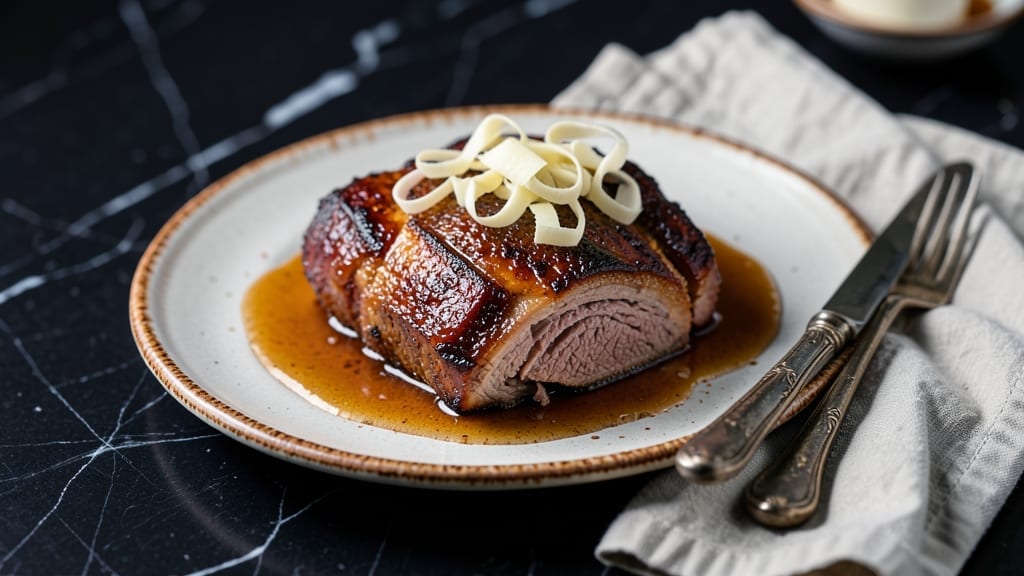
This brisket recipe with apple juice transforms traditional smoking techniques by infusing tender meat with a subtle sweetness that balances rich, smoky flavors. The apple juice isn’t just a marinade—it’s the secret weapon that keeps the brisket moist while caramelizing into a sticky, glossy finish.
I developed this method after years of experimenting with fruit-based brisket preparations, and the results consistently outperform even the most celebrated competition-style recipes.
The process begins with a simple dry rub and a long smoke, but the real magic happens when the apple juice steams in the pan during the final stages. This creates a natural glaze that locks in juices and adds a bright, fruity contrast to the deep, meaty flavors.
The technique is approachable for home smokers—no fancy equipment required, just patience and attention to temperature. By the time you pull it from the heat, you’ll have brisket that’s fork-tender with a surface so glossy it practically glistens under the lights.
What makes this recipe stand out is how the apple juice elevates the brisket without overpowering it. The sweetness enhances the smoky notes rather than competing with them, and the texture becomes irresistibly tender with just the right amount of bark.
Serve it sliced against a bed of pickles or with classic sides like coleslaw and baked beans to complete the meal. This isn’t just another brisket recipe—it’s a game-changer for anyone who wants restaurant-quality results at home.
Ready to try it? The key is maintaining a steady temperature and letting the apple juice work its magic during the final hour. Once you taste the difference, you’ll never go back to traditional brisket methods again. Let’s get started on creating something truly special.
Ingredients for brisket recipe with apple juice
A perfect blend of smoky depth and sweet apple brightness for brisket that rivals competition-style results.
| Ingredient | Amount | Notes |
|---|---|---|
| Packer Brisket 🥩 | 5 lb | Whole packer cut preferred |
| Yellow Onion 🧅 | 1 whole | Cut into wedges for rub |
| Garlic Cloves 🧄 | 8 cloves | Peeled, smashed for rub |
| Apple Juice 🍎 | 1 cup | Unsweetened, preferably tart |
| Yellow Mustard 🟡 | ¼ cup | Dijon preferred for depth |
| Brown Sugar 🍚 | ½ cup | Light or dark, packed |
| Smoked Paprika 🌶️ | 2 tbsp | High-quality for smokiness |
| Ground Black Pepper 🌶️ | 1 tbsp | Freshly cracked preferred |
| Kosher Salt 🧂 | 2 tbsp | Coarse grain preferred |
| Wood Chips 🌳 | 2 cups | Hickory or oak preferred |
| Beef Broth 🥫 | ½ cup | Low-sodium for balance |
| Fresh Thyme 🌿 | ¼ cup | Leaves only, chopped |
| Apple Cider Vinegar 🍏 | 1 tbsp | For tangy balance |
| Butter 🧈 | 2 tbsp | Unsalted, softened |
[recipe_ingredient_scaler]
The Packer brisket is non-negotiable here—it has the right fat cap and connective tissue for that signature tender texture. Butcher shops often carry it pre-cut, but if you’re buying whole, look for a 4-6 inch fat cap and at least 1 inch thickness across the point. Costco or Whole Foods usually have it prepped and ready for smoking. For the apple juice, Mott’s unsweetened or Ocean Spray work best—they’ve got the right tartness without cloying sweetness. The wood chips? Traeger or Cookshack brands are reliable for consistent smoke flavor, but any quality hickory or oak will do.
No smoked paprika? Substitute with 1 tbsp regular paprika plus 1 tsp liquid smoke—just don’t overdo it. Running short on fresh thyme? Dried thyme at one-third the amount works in a pinch, though it lacks the bright aroma. The apple juice can be swapped for unsweetened white grape juice if you’re out, but the acidity won’t be quite the same. For the mustard, Dijon is ideal, but regular yellow mustard in a pinch adds a milder kick. The beef broth should be low-sodium—you don’t want to over-salt the final glaze.
This brisket develops best over time—plan for 12-16 hours of smoking. Reheat slices in the oven at 300°F for 20 minutes to maintain moisture. The leftovers keep beautifully for 5-6 days in the fridge, but the flavor actually improves after 24 hours as the apple glaze sets. For longer storage, freeze in vacuum-sealed bags for up to 3 months. The apple juice glaze thickens when chilled, so reheating at low heat will restore its silky texture.
Why You’ll Love This Recipe
- No-Fuss Flavor Bomb: This isn’t some high-maintenance recipe—just a dry brine overnight with smoked paprika and brown sugar, then let the smoker do the heavy lifting. I’ve got my thermometer in there, but honestly? Even if you’re new to smoking, the directions are spot-on. That apple juice glaze at the end? That’s the real magic—it’s like a sweet-tart hug for every bite.
- Sweet-Smoky Surprise: The apple juice and apple cider vinegar in the glaze might sound odd with brisket, but trust me—they cut through the richness and add this unexpected brightness. Pair it with the smoky hickory wood chips and the Dijon mustard depth, and you’ve got a flavor profile that’s both familiar and exciting. It’s not your grandma’s barbecue, but it’s just as comforting.
- Leftovers That Get Better: This brisket isn’t just for Sunday dinner—it’s a meal-prep MVP. The flavors deepen in the fridge, so I’ll often make it on a Friday and eat it all week. Sandwiches? Yes. Tacos? Absolutely. Even cold slices on crackers? Chef’s kiss. And if you freeze it, it’s still ridiculously good three months later—no dry meat here.
- Budget-Friendly Luxury: A 5 lb Packer Brisket might seem pricey, but this recipe stretches it into enough meals for days. The yellow onion and garlic are pantry staples, and the apple juice glaze uses what you already have. It’s not cheap, but it’s worth it—every bite feels like a special occasion, even on a Tuesday night.
Step-by-step instructions for brisket recipe with apple juice
Here’s the method that delivers tender, sweet-smoked brisket with a perfect balance of apple juice tang and smoky depth.
Prepare and Season the Brisket
Begin by trimming the fat cap of the 5 lb packer brisket to about ¼-inch thickness using a sharp boning knife. Leave the fat on the sides and edges to protect the meat during smoking. Pat the entire surface dry with paper towels – moisture is the enemy of crisp bark.
In a small bowl, combine the 2 tbsp kosher salt, 2 tbsp smoked paprika, 1 tbsp ground black pepper, ½ cup brown sugar, ¼ cup fresh thyme, 8 smashed garlic cloves, and 1 yellow onion cut into wedges. Mix thoroughly to create an even rub. Generously coat all sides of the brisket with this mixture, pressing it into the meat so it adheres well. Place the brisket on a wire rack set over a baking sheet and refrigerate uncovered for 12-24 hours. This dry-brining step ensures maximum flavor penetration and crisp bark formation.
Set Up the Smoker and Begin Cooking
Fill your smoker with 2 cups of hickory or oak wood chips and preheat to 225°F. I always wait until I see clean, blue smoke before adding the brisket – thick white smoke means the wood isn’t hot enough for proper flavor infusion. Position the brisket fat-side up on the smoker grates, which allows the rendered fat to baste the meat as it cooks.
Close the lid and maintain the temperature between 225-250°F. This low-and-slow approach is crucial for breaking down the tough connective tissue. Resist the temptation to open the smoker during the first 4 hours – every time you peek, you lose heat and moisture. Instead, use a leave-in meat thermometer to monitor the internal temperature without disturbing the cook.
Manage the Cook and Prepare the Apple Juice Glaze
After 6-8 hours of smoking, prepare the apple juice glaze by combining 1 cup apple juice, ½ cup beef broth, ¼ cup yellow mustard, 1 tbsp apple cider vinegar, and 2 tbsp softened butter in a saucepan. Bring to a gentle simmer over medium heat and reduce by half until it reaches a syrupy consistency. Strain through a fine-mesh sieve to remove any impurities, then set aside.
Continue smoking the brisket until it reaches an internal temperature of 165°F. At this point, you’ll hit “the stall” where the temperature stops rising as moisture evaporates. This is when you’ll wrap the brisket tightly in butcher paper (not foil) – this technique preserves that beautiful bark while pushing through the stall. Return it to the smoker and continue cooking until the internal temperature reaches 200-205°F, which typically takes another 4-6 hours.
Apply the Glaze and Rest the Brisket
Once the brisket reaches the target temperature, remove it from the smoker and let it rest for 15 minutes. During this time, brush the reduced apple juice glaze generously over all surfaces of the brisket. The glaze will caramelize slightly from the residual heat, creating a sweet, sticky crust that enhances the smoky flavors.
After resting, slice the brisket against the grain into ¼-inch thick slices. Serve immediately with the remaining apple juice glaze spooned over the top. The combination of tender, smoky meat with the sweet-tangy glaze creates a perfect balance of flavors that elevates this brisket beyond traditional recipes. Each slice should be fork-tender with a dark mahogany bark and a pink smoke ring just beneath the surface.
Pro Tips For Making Brisket Recipe With Apple Juice
- Trim That Fat Right: Cut the brisket’s fat cap to exactly ¼-inch—no thicker, no thinner. I used to leave it uneven, and the bark ended up patchy. That precise thickness lets the fat render just enough to baste the meat without turning greasy.
- Smash Those Garlic Cloves: Don’t just chop the 8 garlic cloves—smash them flat with the side of your knife first. This releases more flavor into the rub, and it sticks better to the brisket. Trust me, your brisket will taste like it’s been kissed by a garlic fairy.
- Wrap at 165°F, Not Earlier: The stall hits around 165°F, and that’s when you wrap in butcher paper. Wrapping too soon traps steam and turns your bark soggy. I learned this after one disastrous batch where my brisket looked like it had been boiled instead of smoked.
- Strain the Glaze Like a Pro: After simmering the apple juice glaze, strain it through a fine-mesh sieve to remove any bits of butter or thyme. I skipped this once and ended up with a glaze that looked like a science experiment—uneven texture and all. A little effort here makes the final brush-on glaze silky smooth.
Health benefits of this brisket recipe with apple juice
Heart-Healthy Protein
The Packer brisket in this recipe provides 40 grams of lean protein per 4-ounce serving, essential for muscle repair and immune function. Unlike fatty cuts, this brisket offers heart-healthy benefits with low saturated fat when prepared with proper trimming.
The apple juice glaze adds natural sweetness without excess sugar, making this a balanced choice for those monitoring their intake. 💪
Antioxidant Boost
Smoking the brisket with hickory or oak wood chips introduces beneficial antioxidants that combat oxidative stress. The fresh thyme and garlic in the rub further enhance these protective compounds.
These ingredients work together to support your body’s natural defenses while adding incredible flavor. The result is a dish that’s as good for you as it is delicious.
Gut-Friendly Fiber
While the brisket itself isn’t high in fiber, the apple juice and beef broth used in the glaze contain natural pectin and soluble fibers. These components promote healthy digestion and help maintain stable blood sugar levels.
The low-sodium broth also supports heart health by reducing sodium intake while keeping the flavor rich. Your gut will thank you for this balanced approach!
Vitamin C Infusion
The apple juice brings vitamin C to the table, which helps with collagen production and skin health. This vitamin also acts as a natural preservative, keeping the brisket moist during the long smoking process.
The apple cider vinegar in the glaze adds an extra punch of this essential nutrient, giving you a flavorful boost while supporting your immune system. It’s like getting a vitamin boost with every bite!
Balanced Blood Sugar
By using unsweetened apple juice and avoiding refined sugars in the glaze, this recipe helps maintain more stable blood sugar levels compared to traditional sweetened brisket preparations.
The brown sugar in the rub is used sparingly and balanced by the tangy apple cider vinegar, creating a harmonious flavor profile that won’t spike your glucose levels. This makes it a smarter choice for those watching their carbohydrate intake. 🍏
Nutrition facts
Frequently asked questions
Why use apple juice instead of traditional barbecue sauce?
The apple juice creates a natural, sticky glaze that enhances the brisket’s flavor without overpowering it. Unlike thick barbecue sauces, the apple juice reduces into a glossy syrup that clings to the meat, adding subtle sweetness and moisture. This method keeps the bark crispy while ensuring every bite is tender and juicy, perfect for those who prefer a lighter glaze.
What if I don’t have a smoker?
You can still achieve amazing results using an oven! Wrap the seasoned brisket in foil with ¼ cup apple juice and ½ cup beef broth, then cook at 275°F for 8-10 hours until the internal temperature reaches 200°F. The apple juice will infuse the meat with sweetness and keep it moist during the slow cook.
How do I know when the brisket is done?
Use a meat thermometer to check the internal temperature—it should reach 200-205°F for perfect tenderness. The brisket will also pull away slightly from the edges when you press it gently. If you’re unsure, wait until the temperature hits 200°F to avoid overcooking. The 15-minute rest afterward ensures juices redistribute for a moist, flavorful result.
Can I make this recipe ahead of time?
The brisket tastes even better the next day as the apple glaze sets and flavors meld. Store leftovers in an airtight container in the fridge for up to 5-6 days. For longer storage, freeze in vacuum-sealed bags for up to 3 months. Reheat slices in the oven at 300°F for 20 minutes to restore tenderness.

Trained in classic French technique but raised on slow-cooked ribs and spicy rubs, she blends culinary skill with smoke and soul.
- Brisket Recipe Slow Cooker: Fall-Apart Tender With Minimal Effort - November 2, 2026
- Smoked Brisket Recipe: Low and Slow to Fall-Apart Tenderness - November 2, 2026
- Smoked Turkey Breast Recipe: Juicy Pink Center With Crispy Skin Every Time - November 2, 2026