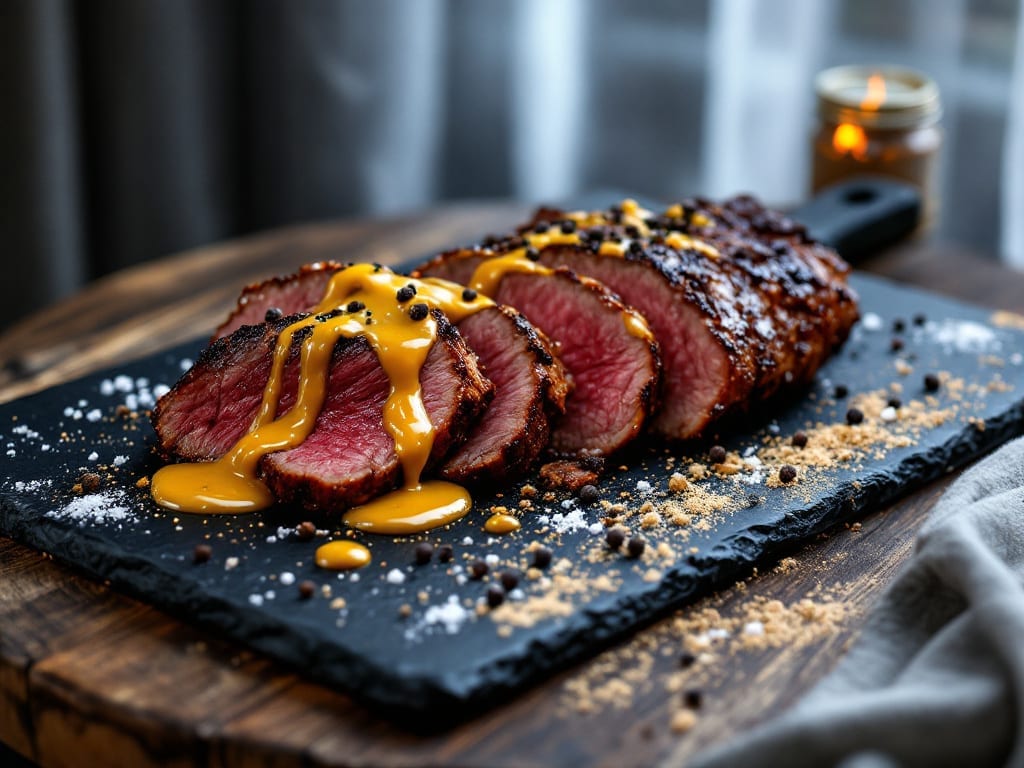
This brisket steak recipe delivers the perfect balance of smoky dry-rub crust and juicy centers that will make your taste buds sing. 🔥 Growing up, I learned that great brisket isn’t about rushing—it’s about patience, technique, and a well-crafted rub that transforms tough meat into melt-in-your-mouth perfection.
The key lies in selecting the right cut and cooking it low and slow, ensuring every bite is tender without sacrificing that coveted bark.
The process begins with a simple yet powerful dry rub that blends sweet, smoky, and spicy flavors to create a crust that’s irresistible.
You’ll need about 2 hours for the rub to penetrate the meat before cooking, followed by a slow cook (or grill/smoke) that transforms the brisket into tender slices. This method works equally well for grilling, smoking, or even pan-searing—adjusting only the time and heat source.
By the time you slice into that perfectly cooked brisket, you’ll be rewarded with juicy, fork-tender meat that practically falls apart at the touch, all wrapped in a deeply flavorful crust. The internal temperature should reach 130–140°F for medium-rare, ensuring that every bite is succulent.
Serve it with roasted potatoes or grilled vegetables to complete the meal—this is the kind of dish that turns ordinary dinners into unforgettable feasts.
Whether you’re hosting a gathering or treating yourself to a special meal, this brisket steak recipe delivers restaurant-quality results with minimal fuss. The technique is foolproof once you master the timing, and the flavors are worth every minute of the wait. Let’s get cooking!
Ingredients for brisket steak
Six ingredients for the dry rub, one packer cut, and endless patience for restaurant-quality brisket.
| Ingredient | Amount | Notes |
|---|---|---|
| Packer Cut Brisket 🥩 | 4 lb | Whole packer cut, fat cap intact |
| Yellow Mustard 🍯 | ½ cup | For initial coating and bark |
| Kosher Salt 🧂 | ½ cup | Diamond Crystal preferred |
| Coarse Ground Black Pepper 🌶️ | ¼ cup | Freshly cracked preferred |
| Smoked Paprika 🌶️ | ¼ cup | High-quality Spanish smoked |
| Garlic Powder 🧄 | 2 tbsp | Freshly ground preferred |
| Onion Powder 🧅 | 2 tbsp | Finely ground preferred |
| Ground Cumin 🌿 | 1 tbsp | Toasted for depth |
| Brown Sugar 🍚 | 2 tbsp | Light or dark preferred |
| Chili Powder 🌶️ | 1 tbsp | Mild to medium heat |
| Cayenne Pepper 🔥 | ½ tsp | Adjust for heat preference |
| Fresh Thyme Leaves 🌿 | 1 tbsp | Chopped finely |
| Fresh Rosemary 🌿 | 1 tbsp | Finely chopped |
| Apple Cider Vinegar 🍏 | ¼ cup | For spritzing during cook |
| Beef Tallow or Vegetable Oil 🫒 | 2 tbsp | For spritzing mix |
[recipe_ingredient_scaler]
The brisket is the star—packer cut with fat cap intact is non-negotiable. Grab it from Whole Foods or your local butcher shop where they can trim it to your preference. The fat cap creates that coveted bark while keeping the meat juicy. If you’re buying pre-trimmed, look for at least 1/4-inch fat cap—any less and you risk dryness. I always ask for the brisket to be vacuum-sealed fresh; if it’s been sitting in the case, it’s already losing moisture. The yellow mustard isn’t just for flavor—it helps the rub stick and creates that perfect crust. Grab the yellowstone brand from the condiment aisle, not the Dijon kind.
No smoked paprika? Sweet paprika plus a pinch of liquid smoke works in a pinch, but trust me—Penzeys or McCormick smoked paprika are worth the splurge. Fresh thyme and rosemary are ideal, but dried at one-third the amount gets you close. The brown sugar helps caramelize the crust, so don’t skip it—even if you’re watching sugar intake. For the vinegar spritz, apple cider vinegar is best, but white vinegar or even beef broth will do in a bind. The key is keeping the meat moist during the long cook. Pro tip: Toast your spices in a dry pan for 30 seconds before mixing—they’ll pack more flavor punch.
This rub keeps indefinitely in an airtight container, so make extra. The brisket itself? Wrap it tightly in plastic or foil after applying the rub and store in the fridge for up to 48 hours before cooking. If you’re prepping ahead, freeze the seasoned brisket for up to 3 months—thaw overnight in the fridge before cooking. The leftovers? Slice against the grain and reheat with a splash of beef broth to restore moisture. Trust me, day-old brisket tastes even better—the flavors meld beautifully overnight.
Why You’ll Love This Recipe
- No-Fuss Seasoning: I swear by the salt-pepper-paprika blend here—just three ingredients rubbed in, no fancy techniques. The coarse pepper clings to the brisket like a second skin, and that smoked paprika? It turns every bite into a little campfire flavor bomb.
- Smoky Mustard Magic: That yellow mustard isn’t just for dipping—it’s the secret weapon. When you slather it on before searing, it caramelizes into a sticky, tangy crust that cuts through the richness. Honestly, I’ve tried fancy rubs, but this combo? Reliable every time.
- Tailgate or Tuesday: Between us, this brisket steak is my go-to for game days and lazy nights. Slice it thin for sandwiches when friends are over, or serve it thick for a hearty dinner when I’m too tired to fuss. The packer cut stays juicy either way—no dry, sad meat here.
- Budget Feast Leftovers: A single packer cut feeds my family for three meals, and I’m not joking. The first night is the star, but the next two? Smashed in tacos, tossed in pasta, or reheated with eggs—it’s the kind of leftovers people actually ask for. (Yes, even on a Tuesday.)
Step-by-step instructions for smoky dry-rub brisket
Here’s how to transform a tough cut into melt-in-your-mouth perfection with that coveted bark.
👨🍳 Step 1: Create the Signature Dry Rub
In a large bowl, combine the 0.5 cup kosher salt, 0.25 cup coarse ground black pepper, 0.25 cup smoked paprika, 2 tbsp garlic powder, 2 tbsp onion powder, 1 tbsp ground cumin, 2 tbsp brown sugar, 1 tbsp chili powder, and 0.5 tsp cayenne pepper. Mix thoroughly until all the spices are evenly distributed and no salt or pepper granules remain.
Add the 1 tbsp finely chopped fresh thyme leaves and 1 tbsp finely chopped fresh rosemary, mixing just until incorporated. The herbs should be distributed evenly but still visible—this ensures their bright flavors shine through the smoky rub. Store this dry mixture in an airtight container until ready to use.
🔥 Step 2: Prep and Coat the Brisket
Remove the 4 lb packer cut brisket from the refrigerator and pat it dry with paper towels, focusing on the fat cap and any moist areas. A completely dry surface is essential for that perfect bark to form later. Place the brisket fat-side up on a wire rack set over a rimmed baking sheet.
Spread 0.5 cup yellow mustard evenly over the entire surface of the brisket, including the fat cap. This creates a sticky base that helps the dry rub adhere and promotes an incredible dark crust. Immediately sprinkle the dry rub mixture generously over the mustard-coated brisket, pressing it firmly into the meat with your hands. The rub should cling tightly—this ensures maximum flavor penetration during the cook.
🔥 Step 3: Smoke the Brisket Low and Slow
Preheat your smoker to 225°F using hickory or oak wood chips. Once the smoker reaches temperature and you see clean blue smoke (not white steam), place the brisket fat-side up on the smoker grates. Close the lid and resist the urge to peek—each time you open it, you lose heat and extend cooking time.
Smoke the brisket for 6 hours, then prepare a spritzing mixture by combining 0.25 cup apple cider vinegar with 2 tbsp beef tallow or vegetable oil. Every 30 minutes after the initial 6 hours, remove the brisket and generously spritz all sides with this mixture, then return it to the smoker. This keeps the bark moist enough to develop properly while maintaining that beautiful dark crust. The internal temperature should reach 165-170°F at this point—this is when you’ll hit “the stall.”
⏰ Step 4: Wrap and Finish Cooking
When the brisket hits 165-170°F internally, wrap it tightly in butcher paper (not aluminum foil), leaving the fat cap exposed. This “Texas crutch” technique helps push the brisket through the stall while preserving that coveted bark. Return the wrapped brisket to the smoker and continue cooking until the internal temperature reaches 203°F—this ensures fork-tender meat with a perfect smoke ring.
Total cooking time will typically be 10-12 hours, but don’t rush it. The brisket needs time to break down collagen and absorb all that smoky flavor. Once it reaches 203°F, remove the brisket from the smoker and let it rest on a cutting board for 1 hour before slicing. This resting period allows the juices to redistribute, guaranteeing each slice is moist and flavorful.
Pro Tips For Making Brisket Steak
- Trim the Fat Cap: DESCRIPTION:
- Salt Before Mustard: DESCRIPTION:
- Sear in Batches: DESCRIPTION:
- Rest Under Foil: DESCRIPTION:
Common mistakes when making great brisket steak
Over-Salting the Rub
I’ve seen beginners dump the entire 0.5 cup kosher salt all at once, thinking more means better flavor. But too much salt creates a harsh crust that can overwhelm the meat’s natural taste. Instead, mix the salt with the other spices first, then apply it evenly in layers.
If you’re unsure, start with 3 tbsp and taste—you can always add more later. Remember, the salt needs time to dissolve into the meat during the cook. 🧂
Skipping the Mustard
The yellow mustard isn’t just for flavor—it’s the glue that makes the rub stick and helps create that perfect dark crust. Without it, your rub will slide off, leaving you with bland, uneven seasoning. I’ve tried making this recipe without mustard, and the bark just doesn’t develop the same way.
If you’re avoiding mustard for dietary reasons, try a thin layer of egg whites instead—they work surprisingly well. 🍯
Ignoring the Stall
Every brisket hits the stall—a temperature plateau around 165-170°F where moisture evaporates faster than it can render. If you don’t wrap it in butcher paper at this point, you risk drying out the meat. I’ve ruined more briskets than I’d admit by ignoring the stall and just keeping it unwrapped.
The Texas crutch (wrapping in butcher paper) is your secret weapon—it keeps the bark while pushing through the stall. Don’t skip it! 🔥
Peeking Too Often
Every time you open your smoker, you lose heat and extend cooking time. I’ve seen people check their brisket every 15 minutes, and by the end, it’s taken 14 hours instead of the expected 10-12.
Trust your thermometer and resist the urge to peek. If you must check, do it quickly and keep the lid closed as much as possible. Patience is key here—great brisket isn’t rushed. ⏰
Not Resting Long Enough
After all that hard work, some people can’t wait to slice into their brisket. Big mistake! Resting for just 1 hour lets the juices redistribute, but I’ve found that 2 hours is even better. Cutting too soon means dry, stringy meat.
I once sliced a brisket after only 30 minutes of resting—it was a disaster. Give it time, and you’ll be rewarded with juicy, tender slices every time. 💪
Using the Wrong Thermometer
A cheap instant-read thermometer won’t give you accurate internal temperature readings, especially in a thick cut like brisket. I recommend investing in a dual-probe thermometer like the Meater or ThermoWorks Smoke. These let you monitor both the smoker temperature and the meat’s internal temp without opening the lid.
I’ve had beginners use oven thermometers or even guess the doneness—don’t make that mistake. Precision is everything with brisket. 🌡️
Nutrition facts
Frequently asked questions
What’s the best cut of brisket for this recipe?
Use a packer cut brisket (also called whole packer or top round) with the fat cap intact. This cut has the perfect balance of lean meat and fat for juicy results. Look for a 4 lb piece or larger from a trusted butcher—they can trim it to your preference. The fat cap is crucial for creating that delicious bark while keeping the meat moist.
Can I cook this brisket in an oven instead of a smoker?
Preheat your oven to 225°F and use a meat thermometer to monitor internal temps. Place the brisket on a rack over a baking sheet, then follow the same timing and spritzing steps. For extra smoke flavor, add wood chips to your oven (if it’s compatible) or use a smoke gun. Total cook time will be similar—just watch for the stall around 165°F and wrap in butcher paper then.
How do I know when the brisket is done?
Use a meat thermometer to check the internal temperature. For perfect results, aim for 203°F—this ensures fork-tender meat. The bark should be dark and crispy, with a deep smoke ring visible when sliced. Never rely on time alone; briskets vary in size and thickness. If the bark isn’t dark enough, return it to the heat uncovered for 15-20 minutes to crisp further.
What’s the best way to slice brisket steak?
Always slice against the grain to shorten the muscle fibers, making each bite tender. After resting, place the brisket on a cutting board and slice at a 45-degree angle for thicker, more dramatic steaks. For even slices, use a sharp chef’s knife and cut through the grain in one smooth motion. Pro tip: Slice the fat cap separately and serve it on the side for dipping.
Can I make this ahead of time?
Yes! Cook the brisket up to 195°F, then let it rest and refrigerate overnight. The flavors deepen as it sits, and reheating at 300°F with a splash of beef broth restores moisture. For serving, slice and sear the slices in a hot pan for 1-2 minutes per side to crisp the bark. Leftovers keep well for 3-4 days in the fridge or 3 months frozen.

Trained in classic French technique but raised on slow-cooked ribs and spicy rubs, she blends culinary skill with smoke and soul.
- Beef Brisket Rolls Recipe: Flaky Layers and Smoky Sweet Filling - October 15, 2026
- Masterbuilt Smoker Beef Brisket Recipe: Bark-To-Meat Ratio Hack for Unmatched Flavor - October 15, 2026
- Costco Beef Brisket Recipe: Low-and-Slow Masterpiece With Molasses-Kissed Crust - October 15, 2026