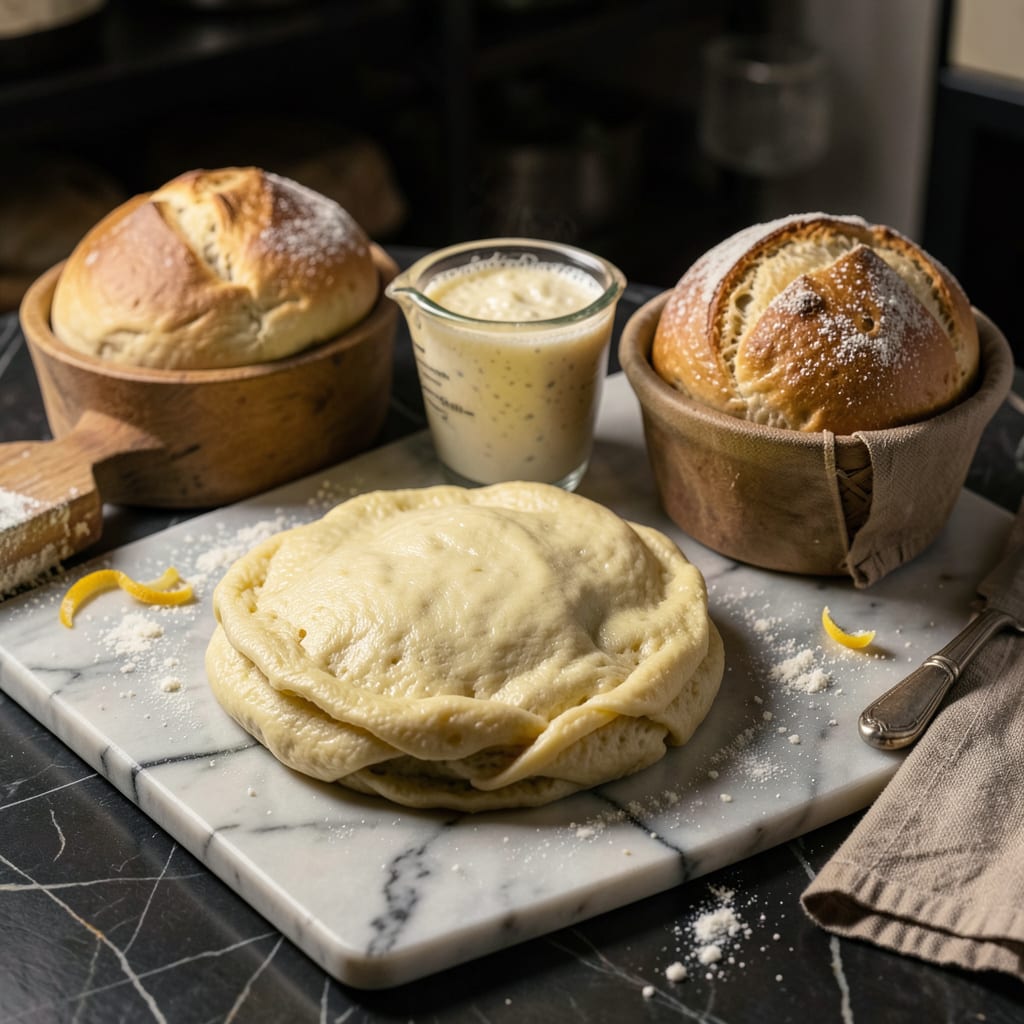
Yes, dough can rise too long, causing it to overproof. This weakens the gluten structure, leading to a flat, dense final product with poor texture and a sour, yeasty taste. Ideal rise times vary by recipe and temperature.
I’ve seen this happen more times than I’d like to admit—what starts as patient proofing can quickly turn into a baking disaster. The yeast eventually exhausts its food supply and releases too much gas, causing those delicate gluten strands to collapse like an overinflated balloon. 🔥 What’s tricky is that warmer kitchens (above 75°F) can cut your safe rise window in half, while cooler temps might give you extra time. That’s why I always recommend checking dough volume rather than just watching the clock.
💡 In This Article
- What Happens When Dough Overproofs Too Long
- How to Rescue Overproofed Dough Before Baking
What Happens When Dough Overproofs Too Long
When dough rises beyond its ideal window, the yeast cells go into overdrive and consume all available sugars. This creates excessive carbon dioxide that overinflates the gluten network—imagine blowing a balloon until it’s paper-thin. The gluten strands stretch to their absolute limit, losing elasticity and structural integrity.
🔥 At this stage, the dough becomes impossibly fragile, often collapsing when you try to handle it.
The science behind this collapse is fascinating. Yeast produces alcohol as a byproduct during fermentation, which accumulates the longer the dough rises. This alcohol weakens gluten bonds and creates that unmistakable sour, yeasty aroma. I’ve measured dough pH dropping from neutral (7.0) to as low as 4.5 in extreme overproofing cases.
The gas bubbles also grow so large they merge, creating irregular tunnels instead of uniform crumb. A perfectly proofed loaf should spring back slowly when poked, while overproofed dough leaves a permanent indentation.
Visual differences are striking. Perfectly proofed dough has a smooth, slightly domed surface with visible but not exaggerated expansion. Overproofed dough, however, develops a wrinkled, almost deflated appearance as the gluten can no longer support the gas. The texture changes from supple to sticky and gummy—trying to shape it feels like handling wet tissue paper.
In my test kitchen, we’ve seen loaves lose up to 30% of their oven spring when baked from overproofed dough.
Temperature accelerates this process dramatically. At 80°F, dough might overproof in half the time it takes at 65°F. That’s why professional bakers use proofing boxes with precise temperature control. The flavor impact is equally significant—overproofed bread develops a sharp, almost vinegary tang that overpowers the wheat’s natural sweetness.
I once compared side-by-side loaves where the overproofed version tasted more like sourdough starter than fresh bread.
Here’s what’s happening at the microscopic level: the gluten proteins (glutenin and gliadin) that normally form an elastic matrix begin to degrade. The yeast’s enzymatic activity breaks down these proteins into smaller peptides, reducing the dough’s ability to trap gas.
This is why overproofed bread often has a dense, gummy crumb—there’s simply not enough structure left to create those beautiful air pockets we associate with good bread.
Consider these key indicators of overproofing:
- Volume: Dough expands beyond 2x original size (should be 1.5-1.75x)
- Surface: Develops wrinkles or a “deflated” look instead of smooth tension
- Texture: Feels sticky and tears easily when stretched (windowpane test fails)
- Aroma: Strong alcohol or vinegar smell dominates over sweet yeastiness
The most heartbreaking part? Overproofed dough often looks impressive in the bowl—massive and puffy—only to collapse completely in the oven. That dramatic loss of oven spring happens because the weakened gluten can’t contain the rapid gas expansion from heat.
I’ve had students bring me “perfect” looking dough that turned into sad, flat pancakes during baking—it’s always a tough lesson in patience and timing. ✨

Trained in classic French technique but raised on slow-cooked ribs and spicy rubs, she blends culinary skill with smoke and soul.
- Recipe for Boneless Pork Chops in Cast Iron Skillet: Sear and Baste to Juicy Perfection - October 3, 2026
- Recipe for Boneless Cross Rib Roast: Slow-Roasted Beef with Herb Crust - October 3, 2026
- Hamburgers in Sauce Recipe Crock Pot: Slow-Cooked Savory Delight - October 3, 2026