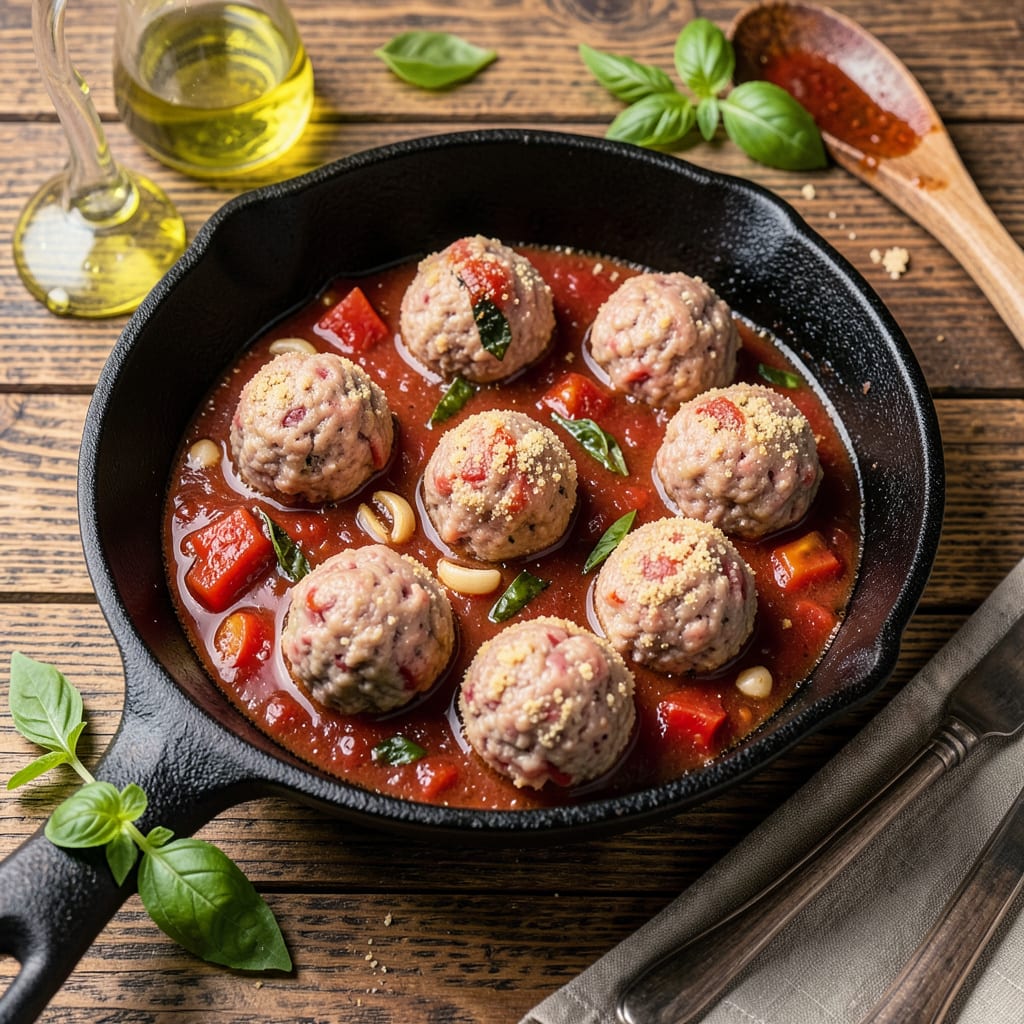
Yes, you can cook raw meatballs directly in sauce, but they must simmer long enough to reach 160°F internally. This method infuses flavor but requires careful temperature monitoring to ensure food safety.
This technique is a classic in Italian cooking because it creates a beautiful flavor exchange—your sauce absorbs the rich meat juices while the meatballs soak up aromatic tomato notes. 🔥 I always recommend using a meat thermometer to check internal temperature, especially with turkey or chicken meatballs which need precise cooking. The key is maintaining a gentle simmer rather than a rolling boil, which prevents the meatballs from breaking apart or cooking unevenly.
What many home cooks don’t realize is that the fat rendered from the meatballs actually improves your sauce’s texture and body. This method works particularly well with beef or pork blends, though I’ve had great success with plant-based meatballs too when adjusted for proper simmering times.
💡 In This Article
- How Cooking Raw Meatballs in Sauce Affects Flavor and Safety
- Step-by-Step Guide for Perfect Meatballs in Sauce
How Cooking Raw Meatballs in Sauce Affects Flavor and Safety
When raw meatballs simmer in sauce, a beautiful flavor exchange happens through osmosis and heat transfer. The meat proteins gradually denature as they cook, releasing juices, fats, and soluble flavor compounds into the surrounding liquid.
🔥 This is why Italian nonnas swear by this method—it creates a sauce that’s richer and more complex than if you cooked them separately. The tomato acids in marinara actually help tenderize the meat fibers while carrying aromatic compounds from herbs and garlic deep into the meatballs.
The science behind safe cooking lies in maintaining proper temperatures. Ground beef and pork need to reach 160°F internally to kill harmful bacteria like E. coli and salmonella, while poultry requires 165°F. What most cooks miss is that sauce temperature matters too—your simmer should stay between 180-200°F to cook meatballs evenly without scorching.
I always use a probe thermometer to check both the sauce temperature and meatball centers, especially with larger 2-ounce meatballs that take longer to cook through.
The fat content in your meat blend dramatically affects both flavor and texture. Ground chuck with 20% fat renders beautifully into the sauce, creating a velvety mouthfeel, while leaner 90% lean beef can make meatballs dry and sauce thin.
The rendered fat acts as an emulsifier, helping bind water and tomato solids for a thicker, more luxurious sauce. This is why traditional recipes often call for adding a splash of pasta water—it helps stabilize the fat emulsion.
Timing is everything with this technique. Beef or pork meatballs typically need 20-25 minutes of gentle simmering to cook through without becoming tough. Turkey or chicken require 25-30 minutes at a slightly lower simmer to prevent drying out.
The danger zone lies between 40-140°F where bacteria multiply rapidly—this is why you should never add meatballs to cold sauce and walk away. Always bring the sauce to a simmer first, then carefully add the raw meatballs.
What makes this method particularly effective is how the meatballs absorb sauce flavors while contributing their own. As the exterior cooks, it forms a thin crust that seals in juices while allowing liquid to penetrate slowly. This creates meatballs that are tender inside with concentrated flavor, rather than the uniform texture you get from baking.
The sauce benefits too—it gains meaty depth and a slight thickening from the gelatin released from connective tissues during the long simmer.
There are risks to manage, particularly with larger batches. Overcrowding the pot can drop the sauce temperature below the safe cooking zone, leading to uneven doneness. I recommend cooking in batches if making more than 2 dozen meatballs, or using a wider pot to maintain temperature.
Also consider that acidic tomato sauces can make meatballs tough if simmered too vigorously—gentle heat is key for that melt-in-your-mouth texture.
The Italian technique of “polpette al sugo” demonstrates this perfectly—meatballs poached in sauce until they’re so tender they nearly fall apart. The secret is using a mix of meats (beef, pork, veal) and keeping the simmer just below a bubble.
When done right, you’ll notice the sauce takes on a deeper red color and richer body, while the meatballs become infused with tomato and herb notes throughout, not just on the surface. ✨

Trained in classic French technique but raised on slow-cooked ribs and spicy rubs, she blends culinary skill with smoke and soul.
- Recipe for Boneless Pork Chops in Cast Iron Skillet: Sear and Baste to Juicy Perfection - October 3, 2026
- Recipe for Boneless Cross Rib Roast: Slow-Roasted Beef with Herb Crust - October 3, 2026
- Hamburgers in Sauce Recipe Crock Pot: Slow-Cooked Savory Delight - October 3, 2026