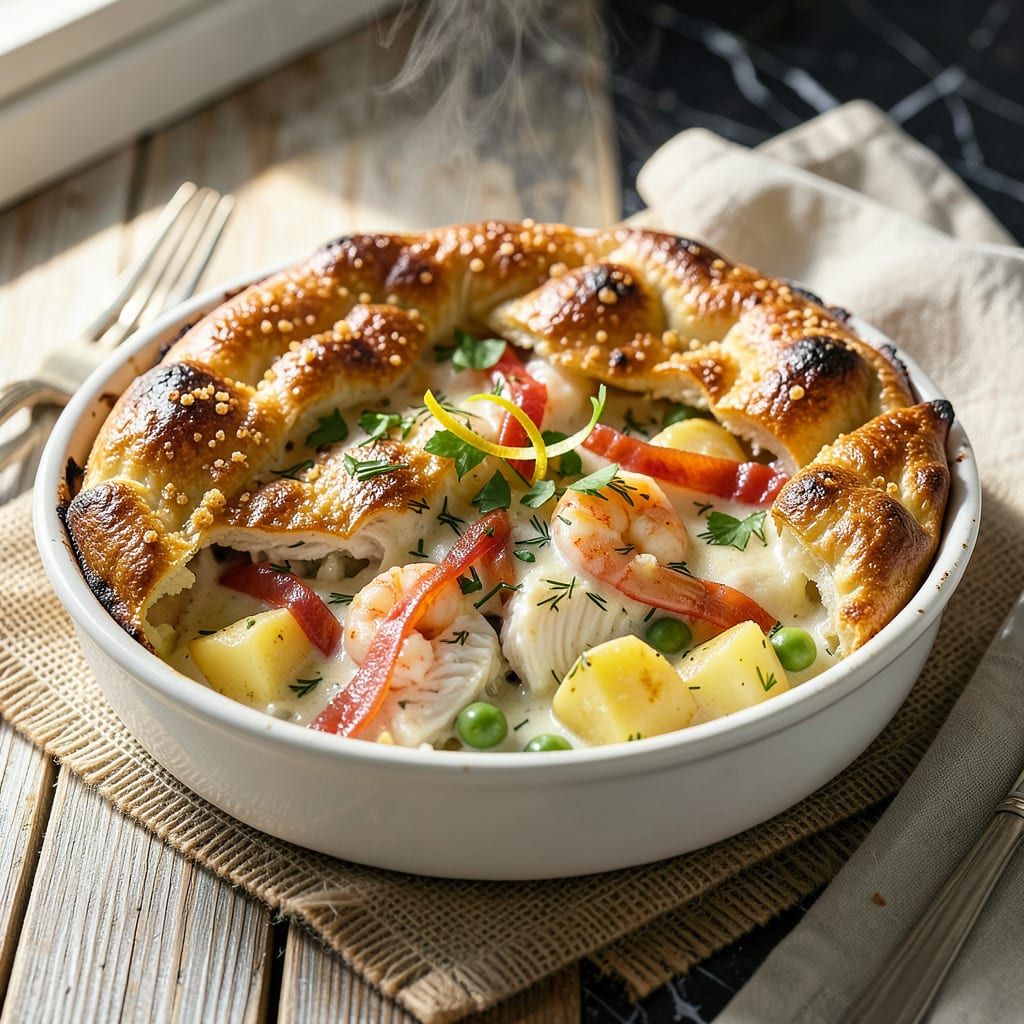
Yes, you can safely reheat a fish pie if stored properly in the fridge or freezer. Use an oven at 325°F (160°C) for even heating, ensuring the internal temperature reaches 165°F (74°C) to avoid dryness or bacterial risks.
Fish pie reheating works best when you treat it like a delicate custard—gentle, even heat preserves its creamy texture. 🔥 I’ve found that covering the pie with foil for the first 20 minutes prevents the top from drying out while the center warms through. The key is patience: rushing with high heat turns that flaky fish mealy and the sauce grainy. Always check the center with a thermometer, as visual cues can be deceiving with seafood dishes.
💡 In This Article
- Why Reheating Fish Pie Requires Special Care
- Step-by-Step Guide to Reheating Fish Pie Perfectly
Why Reheating Fish Pie Requires Special Care
Fish proteins are incredibly sensitive to heat because they begin denaturing at just 105°F (40°C)—far lower than other meats. When you reheat fish pie, these proteins tighten and squeeze out moisture, which is why overcooked fish becomes dry and rubbery.
The delicate cell structure of fish also means it breaks down faster during reheating, turning that perfect flake into a mealy texture if exposed to high heat too quickly.
The dairy-based sauces in fish pie add another layer of complexity. Sauces containing milk, cream, or cheese can separate when reheated because the emulsified fats and proteins break apart. This happens most dramatically when heated above 160°F (71°C).
🔥 To prevent this, gentle, indirect heat is crucial—it allows the sauce to warm gradually without the fat globules coalescing and the proteins curdling.
Moisture loss is the biggest enemy of reheated fish pie. Every minute in the oven without protection causes evaporation, leaving the filling dry. I’ve found that adding a splash of 2-3 tablespoons of milk or cream before reheating replaces lost moisture and helps rebuild the sauce’s creamy consistency.
The steam created under foil covering also acts as a buffer, keeping the fish tender.
Bacterial growth is another critical factor. Seafood spoils faster than other proteins because it contains more volatile nitrogen compounds. Reheating must reach 165°F (74°C) internally to kill potential bacteria like Listeria or Vibrio, which can multiply rapidly between 40-140°F (4-60°C).
This is why slow, even heating in an oven works better than a microwave’s uneven hot spots.
The pastry crust adds its own challenges. It can become soggy from steam or burn before the filling is properly heated. Preheating your oven and using the middle rack ensures even air circulation.
For extra crispness, I remove the foil during the last 5-7 minutes of reheating—just enough time to restore crunch without drying the filling.
What most people overlook is the carryover cooking effect. Fish continues cooking for 3-5 minutes after leaving the oven due to residual heat. Pulling it out at exactly 160°F (71°C) internal temperature accounts for this, preventing overcooking while still ensuring food safety. ✨

Trained in classic French technique but raised on slow-cooked ribs and spicy rubs, she blends culinary skill with smoke and soul.
- Recipe for Boneless Pork Chops in Cast Iron Skillet: Sear and Baste to Juicy Perfection - October 3, 2026
- Recipe for Boneless Cross Rib Roast: Slow-Roasted Beef with Herb Crust - October 3, 2026
- Hamburgers in Sauce Recipe Crock Pot: Slow-Cooked Savory Delight - October 3, 2026