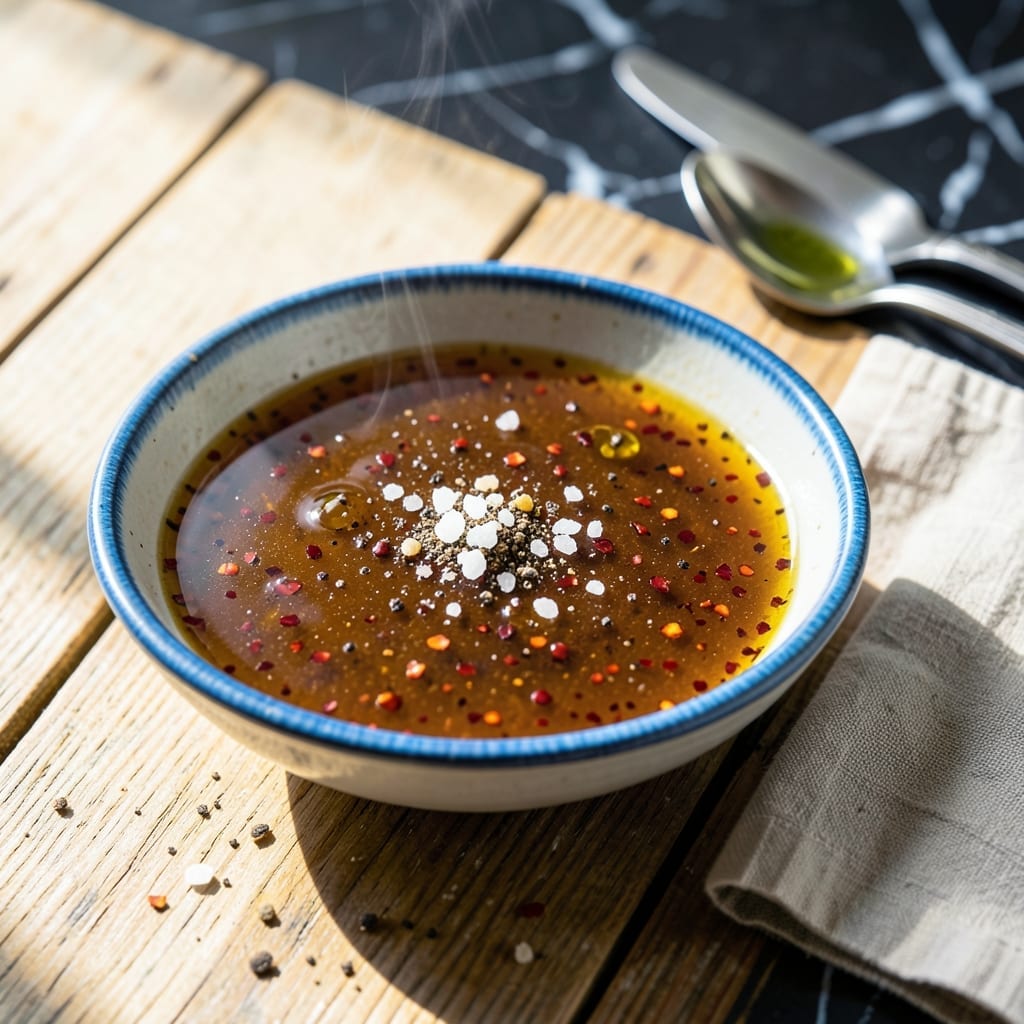
This Eastern North Carolina classic brings the bold tang that defines pitmaster traditions. The vinegar base cuts through rich meats while delivering that signature Carolina bite.
Simple ingredients combine for a foolproof sauce that’s ready in minutes and keeps for weeks. Perfect for pulled pork or as a mop during long smokes.
Ingredients for Carolina Vinegar Based Bbq Sauce
Nine ingredients deliver that signature Eastern North Carolina tang with bold vinegar punch.
| Ingredient | Amount | Notes |
|---|---|---|
| Apple Cider Vinegar 🍏 | 2 cups | Distilled white works too |
| Water 💧 | 1 cup | Filtered preferred |
| Crushed Red Pepper Flakes 🌶️ | 1 tbsp | Adjust for heat level |
| Kosher Salt 🧂 | 1 tbsp | Diamond Crystal preferred |
| Ground Black Pepper 🌶️ | 1 tbsp | Freshly ground for best flavor |
| Granulated Sugar 🍚 | ½ cup | Brown sugar alternative acceptable |
| Yellow Mustard 🟡 | ¼ cup | Dijon works in a pinch |
| Worcestershire Sauce 🍶 | 1 tbsp | Vegan version required |
| Hot Sauce 🔥 | 1 tbsp | Tabasco or similar |
[recipe_ingredient_scaler]
The vinegar is non-negotiable for authenticity. Apple cider vinegar is traditional, but distilled white vinegar (like Heinz) works identically. Look for 5% acidity—this is standard for most grocery store brands. The red pepper flakes add the signature heat; McCormick or Penzeys offer consistent quality. For the sugar, raw or turbinado will dissolve fine, but standard granulated is most reliable.
Need to cut the heat? Reduce red pepper flakes by half or omit entirely. No apple cider vinegar? White vinegar plus 1 teaspoon apple cider (or a splash of apple juice) mimics the flavor. For a sweeter profile, increase sugar by 2 tablespoons. The Worcestershire must be vegan—Annie’s or Edward & Sons are widely available. Mustard can be omitted, but it adds depth worth keeping.
This sauce keeps 3-4 weeks refrigerated in a sealed jar. The flavors meld and mellow over time—best after 24 hours. Freezing isn’t recommended as it can separate, but it won’t spoil. Shake before each use as ingredients may settle.
Why You’ll Love This Recipe
- 5-Minute Mix: I just dump everything in a bowl—vinegar, water, pepper flakes, salt, black pepper—and stir. Honestly, it’s ready before I can even preheat the grill.
- Tangy Kick: That sharp apple cider vinegar brightness with a slow burn from the red pepper flakes? It cuts through rich meats like a dream.
- Grill Season MVP: I slather it on pulled pork sandwiches, drizzle it over ribs, or even use it as a marinade for chicken. Between us, it’s my summer secret weapon.
- Pennywise Pints: A single batch costs less than a dollar and fills a quart jar. I’ll be real: it’s cheaper than store-bought and twice as good.
Step-by-Step Instructions for Carolina Vinegar Based BBQ Sauce
Master this Eastern NC classic with precise technique and authentic flavor balance.
Step 1: Combine Vinegar and Water Base
In a medium saucepan, pour in the 2 cups Apple Cider Vinegar and 1 cup Water. This vinegar-to-water ratio is fundamental to achieving the signature tangy brightness of Carolina-style sauce.
Set the saucepan over medium heat and bring the mixture to a gentle simmer. You’ll see small bubbles forming around the edges before the entire surface begins to shimmer—this is your visual cue that it’s ready for the next ingredients.
Step 2: Incorporate the Spice and Sweet Elements
Add the 1 tbsp Crushed Red Pepper Flakes, 1 tbsp Kosher Salt, 1 tbsp Ground Black Pepper, and 0.5 cup Granulated Sugar to the simmering liquid. Stir immediately to prevent the sugar from settling at the bottom and caramelizing.
The crushed red pepper flakes will begin to infuse the vinegar base with a subtle heat, while the sugar balances the sharp acidity. Maintain the simmer for 2-3 minutes, stirring occasionally, until the sugar fully dissolves and the mixture appears slightly syrupy.
Step 3: Emulsify with Mustard and Sauces
Whisk in the 0.25 cup Yellow Mustard, 1 tbsp Worcestershire Sauce, and 1 tbsp Hot Sauce until fully combined. The mustard acts as an emulsifier, binding the water and vinegar with the fat-soluble components of the sauces.
This is where the sauce develops its characteristic body and color. You’ll notice the mixture take on a pale yellow hue that will deepen slightly as it cooks. Continue simmering for an additional 5 minutes to allow the flavors to meld completely.
Step 4: Simmer to Perfection and Adjust
Reduce the heat to low and let the sauce simmer for 15-20 minutes. The goal is to reduce the volume by about 10-15%, concentrating the flavors while maintaining the thin, pourable consistency that defines Carolina BBQ sauce.
Taste and adjust the seasoning if needed, though with the precise measurements provided, it should require no additional salt. The sauce should have a bright, tangy forward note with a subtle sweetness and gentle heat from the pepper flakes. Remove from heat and let cool to room temperature before using.
Pro Tips For Making Carolina Vinegar Based Bbq Sauce
- Bloom the Pepper: Toast the crushed red pepper flakes in a dry pan for 30 seconds before adding liquids—it wakes up the flavor without making it bitter.
- Balance the Vinegar: Use a 2:1 ratio of apple cider vinegar to water; I learned this the hard way after making a batch so sharp it stripped the enamel off a fork.
- Season in Layers: Add kosher salt in two stages: half with the vinegar, half at the end—this keeps the sauce from tasting flat or one-dimensional.
- Rest Before Serving: Let the sauce sit for at least 30 minutes after cooking so the flavors meld; sounds weird, but it works.
Regional Styles of These Flavors
Texas Style 🔥
Texas BBQ is all about the beef, with a focus on salt-and-pepper rubs and slow smoking over oak or mesquite wood. The cooking process is low and slow, often at temperatures around 225-250°F, to achieve tender, smoky brisket. Sauces in Texas are typically served on the side, with a preference for tomato-free, vinegar-based mop sauces that complement rather than overpower the meat.
Carolina Style 🍖
Carolina BBQ, particularly in the eastern region, is famous for its vinegar-based sauces, often made with apple cider vinegar, red pepper flakes, and a touch of sweetness. This style emphasizes pulled pork, slow-cooked over hickory or charcoal until it’s fall-apart tender. The tangy sauce is used both as a marinade and a finishing touch, reflecting the region’s historical roots in early colonial pit cooking.
Kansas City Style 🥘
Kansas City BBQ is known for its thick, sweet, and tangy tomato-based sauces, often with molasses or brown sugar. Meats like ribs and burnt ends are slow-smoked over hickory or fruitwoods at 225-275°F. The sauce is brushed on generously during and after cooking, giving it a sticky, caramelized finish. This style became popular in the early 20th century, thanks to the city’s vibrant BBQ pit culture.
Memphis Style 🍳
Memphis BBQ is split between dry-rubbed ribs and wet ribs slathered in a tangy, tomato-based sauce. The dry rub often includes paprika, garlic, and cayenne, while the sauce balances sweetness with a hint of vinegar. Pork is king here, typically cooked over charcoal or hickory at moderate temperatures. Memphis-style BBQ reflects the city’s deep-rooted love for bold, flavorful cooking.
Nutrition Facts

Trained in classic French technique but raised on slow-cooked ribs and spicy rubs, she blends culinary skill with smoke and soul.
- Recipe for Boneless Pork Chops in Cast Iron Skillet: Sear and Baste to Juicy Perfection - October 3, 2026
- Recipe for Boneless Cross Rib Roast: Slow-Roasted Beef with Herb Crust - October 3, 2026
- Hamburgers in Sauce Recipe Crock Pot: Slow-Cooked Savory Delight - October 3, 2026