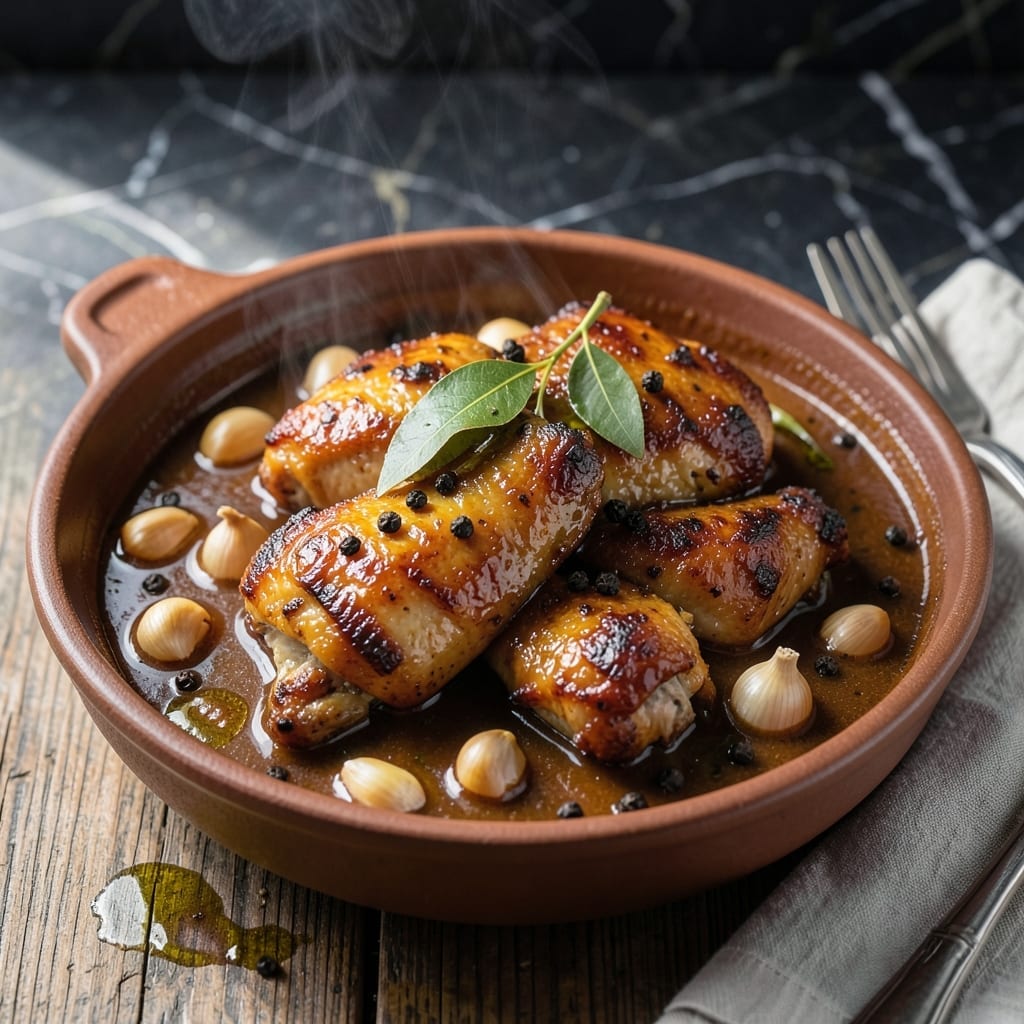
This adobo-style chicken delivers the savory-tangy balance that defines Filipino comfort food. The dish relies on vinegar, soy sauce, and garlic to create its signature depth.
Simmering the chicken in this marinade transforms tough cuts into tender, flavorful pieces. The result is a dish that tastes authentic with minimal effort.
Ingredients for Chicken Recipe Filipino
A handful of humble ingredients create this deeply flavorful Filipino classic with minimal effort.
| Ingredient | Amount | Notes |
|---|---|---|
| Chicken Thighs 🍗 | 2 lb | Boneless, skin-on preferred |
| Soy Sauce 🥢 | ¾ cup | Regular or low-sodium |
| White Vinegar 🍶 | ½ cup | Distilled or cane vinegar |
| Garlic Cloves 🧄 | 10 cloves | Peeled, smashed |
| Bay Leaves 🍃 | 3 whole | Dried, whole leaves |
| Black Peppercorns 🌶️ | 1 tbsp | Whole or cracked |
| Brown Sugar 🧈 | 2 tbsp | Light or dark variety |
| Water 💧 | 1 cup | For simmering liquid |
| Onion 🧅 | 1 whole | Medium yellow onion, sliced |
| Vegetable Oil 🫒 | 2 tbsp | For browning chicken |
| Green Onions 🌱 | 4 whole | Thinly sliced for garnish |
| Salt 🧂 | 1 tsp | Adjust to taste |
[recipe_ingredient_scaler]
The chicken is non-negotiable here—bone-in, skin-on thighs deliver the richest flavor and stay juicy during the long simmer. Filipino brands like Silver Swan or Datu Puti for the soy sauce and vinegar add authenticity, but standard grocery store versions work too. Look for vinegar with at least 5% acidity for that proper tang. Fresh garlic is essential; avoid pre-minced as it lacks the punch.
No white vinegar? Apple cider vinegar works in a pinch (the flavor difference is subtle). Soy sauce can be swapped for tamari for gluten-free, though the taste profile shifts slightly. Brown sugar can be replaced with coconut sugar for a deeper caramel note. If you’re missing bay leaves, a pinch of dried thyme adds a similar earthy depth, though it’s not traditional.
This tastes even better the next day as the flavors meld. Store in an airtight container in the fridge for up to 5 days or freeze for 3 months. Reheat gently to keep the chicken from drying out.
Why You’ll Love This Recipe
- One Pan Wonder: I toss everything in a single pot—chicken, soy sauce, vinegar—and let the stove do the work.
- Garlic Bomb Flavor: The cloves practically melt into the sauce, and that tangy-savory kick from the vinegar and soy? Pure craving.
- Feeds the Crowd: Honestly, it’s my go-to for family dinners or when friends drop by unannounced.
- Budget Stretcher: Chicken thighs stay juicy and cheap, and the pantry staples mean I’m never making a last-minute grocery run.
Step-by-Step Instructions for Adobo-Style Savory Tang With Garlic
This method delivers authentic Filipino adobo with the perfect balance of tangy, salty, and sweet flavors.
Step 1: Sear the Chicken Thighs
Heat the 2 tbsp vegetable oil in a large, heavy-bottomed pot or Dutch oven over medium-high heat. Pat the 2 lb chicken thighs dry with paper towels and season both sides with the 1 tsp salt. Add the chicken to the pot, skin-side down, and sear undisturbed for 5-6 minutes until the skin turns deep golden brown.
Flip the chicken and sear the other side for another 3-4 minutes until equally browned. This step builds a rich foundation of flavor and ensures the chicken stays moist during braising. Remove the chicken from the pot and set aside on a plate.
Step 2: Sauté Aromatics and Build the Base
In the same pot, reduce the heat to medium and add the sliced 1 whole onion. Sauté for 3 minutes until softened and lightly caramelized. Add the 10 cloves garlic cloves and cook for 30 seconds until fragrant, stirring constantly to prevent burning.
Pour in the 0.75 cup soy sauce, 0.5 cup white vinegar, and 1 cup water. Add the 3 whole bay leaves, 1 tbsp black peppercorns, and 2 tbsp brown sugar. Stir well to combine and dissolve the sugar. This liquid will transform into a rich, tangy sauce as it simmers.
Step 3: Braise the Chicken to Perfection
Return the chicken to the pot, along with any accumulated juices. The liquid should come about halfway up the chicken—if not, add a bit more water. Bring the mixture to a gentle simmer, then reduce the heat to low. Cover the pot and let it braise for 35-40 minutes.
Occasionally spoon the sauce over the chicken to baste it. The chicken is done when it reaches an internal temperature of 165°F and the meat easily pulls away from the bone. The sauce should have thickened slightly and taken on a deep, glossy appearance.
Step 4: Reduce the Sauce and Finish
Once the chicken is cooked, remove it from the pot and set it aside. Increase the heat to medium-high and let the sauce simmer uncovered for 5-7 minutes, stirring occasionally. This reduces the sauce to a thicker, more concentrated consistency that clings beautifully to the chicken.
Taste the sauce and adjust the seasoning if needed. The flavors should be bold and balanced—salty from the soy sauce, tangy from the vinegar, with a subtle sweetness from the brown sugar. Return the chicken to the pot and coat it thoroughly in the reduced sauce.
Step 5: Garnish and Serve
Transfer the chicken and sauce to a serving dish. Garnish with the thinly sliced 4 whole green onions, scattering them over the top for a fresh, vibrant finish. The green onions add a bright contrast to the rich, deeply flavored dish.
Serve the adobo hot with steamed rice to soak up the incredible sauce. The chicken should be fall-off-the-bone tender, with a glossy, caramelized exterior that glistens under the sauce. This dish only gets better as the flavors meld, so leftovers are a treasure.
Pro Tips For Making Chicken Recipe Filipino
- Simmer Low and Slow: I learned this the hard way—boiling the chicken adobo too hard makes it tough. Keep it at a gentle simmer for 30-40 minutes so the thighs stay tender.
- Balance the Vinegar: After ruining a batch with too much tang, I now use a 1:1 ratio of soy sauce to white vinegar. Taste before adding extra—you can always adjust but can’t take it out.
- Crush the Garlic: Sounds weird, but it works: lightly crush the garlic cloves before adding them whole. This releases more flavor without burning the way minced garlic can.
- Use Skin-On Thighs: My grandmother swore by this, and she was right: the skin keeps the meat juicy during the long simmer. Plus, it renders fat that deepens the sauce.
Troubleshooting Great chicken recipe filipino
Sauce Too Watery
If your adobo sauce hasn’t thickened enough, simmer uncovered on medium-high heat for 5-10 extra minutes. Stir frequently to prevent burning. I find adding a cornstarch slurry (1 tbsp cornstarch mixed with 1 tbsp water) helps if you’re in a hurry. 💡
Chicken Tough or Dry
This usually means it cooked too long or at too high heat. Braise at a gentle simmer on low heat for 35-40 minutes. Also, ensure you’re using bone-in, skin-on thighs—they stay juicier than breasts.
Overly Salty Flavor
Balance the saltiness by adding 1-2 tbsp brown sugar or a splash of white vinegar. If needed, dilute with ¼ cup water and simmer longer. I always taste before serving and adjust accordingly.
Sauce Too Sour
Counteract excess tang by stirring in 1-2 tbsp brown sugar or a pinch of baking soda (start with ⅛ tsp). The sugar enhances the caramelized depth, while baking soda neutralizes acidity without adding sweetness.
Burnt Garlic Bitter Taste
If your garlic burned, start fresh—there’s no fixing that bitterness. Next time, cook garlic on medium-low heat for only 30 seconds until fragrant. I always remove the pot from heat when adding garlic to prevent this. 🔥
Sauce Not Rich Enough
For deeper flavor, reduce the sauce longer or add 1 tbsp soy sauce and 1 tsp brown sugar. A splash of fish sauce (1 tsp) also boosts umami. Let it simmer for 5 more minutes to meld the flavors.
Nutrition Facts
Frequently Asked Questions
What cut of chicken works best?
Bone-in, skin-on thighs are ideal for this dish. They stay juicy during the long braise and absorb the sauce flavors beautifully. Avoid breasts as they can dry out.
Can I make this ahead of time?
Yes! The flavors deepen overnight. Store in an airtight container in the fridge for up to 5 days or freeze for 3 months. Reheat gently on the stove.
How do I adjust the tanginess?
For more tang, add 1-2 tbsp vinegar. If it’s too sour, balance with 1 tbsp brown sugar or a pinch of baking soda. Taste as you go.
What if I don’t have bay leaves?
A pinch of dried thyme works as a substitute, though it won’t be traditional. The dish will still taste great with just garlic, soy, and vinegar.

Trained in classic French technique but raised on slow-cooked ribs and spicy rubs, she blends culinary skill with smoke and soul.
- Recipe for Boneless Pork Chops in Cast Iron Skillet: Sear and Baste to Juicy Perfection - October 3, 2026
- Recipe for Boneless Cross Rib Roast: Slow-Roasted Beef with Herb Crust - October 3, 2026
- Hamburgers in Sauce Recipe Crock Pot: Slow-Cooked Savory Delight - October 3, 2026