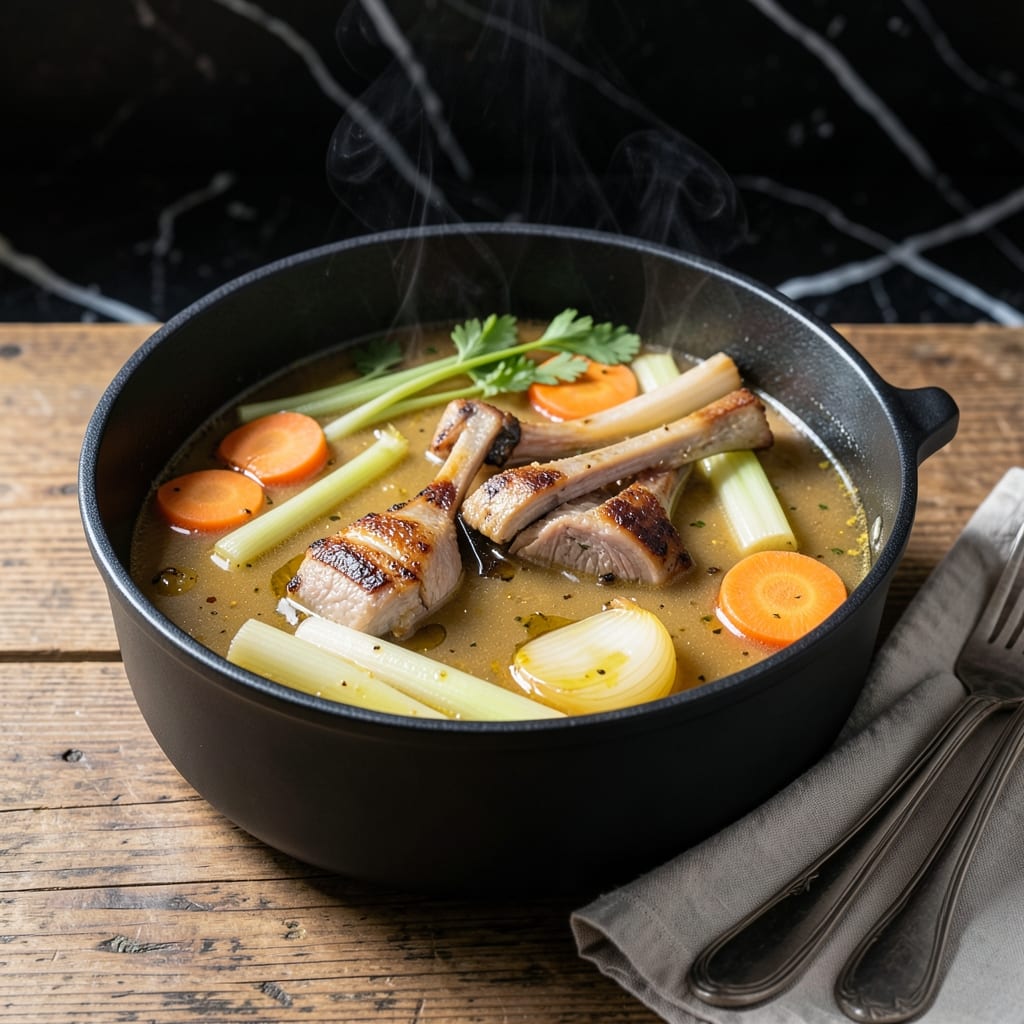
Duck bones hold incredible potential for creating a rich, deeply flavorful broth that elevates any dish it touches. This recipe unlocks that potential through a simple, hands-off simmering process that extracts maximum depth from every ingredient.
The key lies in patience—allowing the bones, vegetables, and aromatics to meld together over several hours. Skimming the surface occasionally ensures clarity without compromising the bold character you’re building in the pot.
What emerges is a versatile base for soups, sauces, or risottos, with a depth that store-bought versions simply can’t match. The aroma alone will make the effort worthwhile.
Use it immediately or freeze for future meals. Here’s how to make it.
Ingredients for Duck Broth
Transform duck bones and aromatics into a deeply flavorful, versatile broth with this simple list.
| Ingredient | Amount | Notes |
|---|---|---|
| Duck Bones 🦆 | 2 lb | Raw or roasted, include necks and wings |
| Yellow Onion 🧅 | 2 whole | Quartered, skin on for color |
| Carrots 🥕 | 3 whole | Cut into large chunks |
| Celery Stalks 🌿 | 3 whole | Cut into large chunks |
| Garlic Cloves 🧄 | 6 cloves | Smashed, unpeeled |
| Fresh Parsley Stems 🍃 | 1 cup | Tied with twine for easy removal |
| Fresh Thyme Sprigs 🍃 | 4 whole | Tied with twine for easy removal |
| Bay Leaves 🌿 | 2 whole | Dried, whole leaves |
| Black Peppercorns 🌶️ | 1 tbsp | Whole, not pre-ground |
| Cold Water 💧 | 4 cups | Enough to cover all ingredients |
| Apple Cider Vinegar 🍏 | 2 tbsp | For acidity to extract minerals |
| Kosher Salt 🧂 | 1 tsp | Added to taste during simmering |
[recipe_ingredient_scaler]
The duck bones are paramount for achieving the rich depth this broth promises. Source them from a reputable butcher or save bones from roasted duck—raw or roasted both work, though roasted bones add a deeper, caramelized note. Ensure the bones are fresh and have not been previously boiled, as this would compromise the final bold character. Include necks and wings for maximum gelatin extraction.
No duck bones? Chicken bones can substitute, though the flavor profile will differ. Yellow onion can be swapped for white or red in a pinch, but the skin-on quarters contribute color and tannins. If fresh thyme is unavailable, use dried thyme at one-third the amount. Apple cider vinegar can be replaced with white wine vinegar or lemon juice for acidity.
Broth keeps in the refrigerator for up to 5 days or can be frozen for 6 months. For best storage, cool completely, skim off any fat, and portion into airtight containers. Label with the date for easy tracking. This versatile base freezes exceptionally well, maintaining its depth for future use.
Why You’ll Love This Recipe
- Hands-Off Cooking: I just toss the duck bones and veggies into a pot and let the simmer do the work.
- Deep Umami Richness: The roasted duck bones and slow-cooked garlic create a broth so flavorful it’ll make your soups and sauces sing.
- Meal Prep Superstar: I make a big batch and freeze it in portions—perfect for risottos, ramen, or braising greens later.
- Budget-Friendly Base: Using leftover duck bones means I’m turning scraps into liquid gold for pennies.
Step-by-Step Instructions for Duck Broth
This method extracts maximum flavor while maintaining clarity and depth in every batch.
Step 1: Prepare and Par-Cook the Bones
Place the 2 lb Duck Bones in a large stockpot and cover with the 4 cups Cold Water. Add the 2 tbsp Apple Cider Vinegar—this acid helps draw minerals and collagen from the bones, resulting in a more nutrient-dense and flavorful broth.
Bring to a gentle boil over medium-high heat, then reduce to a low simmer. Skim off any foam or impurities that rise to the surface with a fine-mesh skimmer for the first 10-15 minutes. This step ensures a clean, clear finished product without cloudiness.
Step 2: Add Aromatics and Herbs
Once the bones have simmered for 30 minutes, add the 2 whole Yellow Onion (quartered, skin on), 3 whole Carrots (cut into large chunks), 3 whole Celery Stalks (cut into large chunks), and 6 cloves Garlic Cloves (smashed, unpeeled). The onion skins contribute a deep amber color to the broth.
Next, add the 1 cup Fresh Parsley Stems (tied with twine), 4 whole Fresh Thyme Sprigs (tied with twine), 2 whole Bay Leaves, and 1 tbsp Black Peppercorns. Tie the herbs with twine for easy removal later. Stir gently to combine, ensuring all ingredients are submerged.
Step 3: Simmer for Depth of Flavor
Maintain a low, steady simmer—small bubbles should occasionally break the surface, but avoid a rolling boil, which can make the broth cloudy. Partially cover the pot and simmer for 3-4 hours, skimming occasionally if more foam appears.
As the broth simmers, the bones will release their gelatin, and the aromatics will infuse the liquid with rich, layered flavors. The kitchen will fill with a savory, comforting aroma, signaling the development of deep umami notes.
Step 4: Strain and Finish the Broth
After simmering, carefully strain the broth through a fine-mesh sieve into a clean pot or large bowl, discarding all solids. Press gently on the solids with a spoon to extract as much liquid as possible, but avoid squeezing, which can introduce bitterness.
Taste the broth and season with the 1 tsp Kosher Salt, adding more if needed. If using the broth immediately, keep it warm. Otherwise, cool it quickly by placing the pot in an ice bath or dividing it into smaller containers before refrigerating. Once chilled, remove any solidified fat from the surface if a leaner broth is desired.
Pro Tips For Making Duck Broth
- Roast the Bones: Toss duck bones with a little oil and roast at 400°F for 20-25 minutes until deeply browned—this builds the rich, complex base flavor that raw bones just can’t deliver.
- Char the Veggies: Don’t just chop and drop the onion, carrots, and celery—give them a quick sear in the same pan after the bones to caramelize their sugars and add depth to the broth.
- Skim the Scum: I learned this the hard way—always skim the foam and impurities that rise to the top in the first 30 minutes, or your broth will taste bitter and cloudy.
- Simmer, Don’t Boil: Keep the heat low enough that you see gentle bubbles, not a rolling boil, or the broth will turn cloudy and the flavors will muddle after 3-4 hours.
Serving Suggestions for This Recipe
Soups and Stews
This rich broth transforms simple winter vegetable soups into restaurant-quality dishes. I especially love it with roasted butternut squash and a touch of fresh sage—the depth of flavor makes every spoonful satisfying. 💛
Sauce Foundation
Reduce it down by half to create an intense base for pan sauces after roasting duck or chicken. A splash of dry sherry and a pat of cold butter whisked in at the end makes a glossy, luxurious finish for your protein.
Risotto Base
Use it warm instead of plain stock for mushroom risotto. The duck’s richness pairs beautifully with porcini or shiitake mushrooms. Add a splash of white wine at the start for brightness.
Ramen Elevation
Swap chicken broth for this in homemade ramen. The fatty depth stands up to soft-boiled eggs, sliced pork belly, and wood ear mushrooms. I like to finish with a drizzle of chili oil for contrast.
Braising Liquid
It’s perfect for braising duck legs or short ribs. Combine with red wine and juniper berries for a French-inspired dish. The collagen in the broth helps tenderize tough cuts beautifully.
I always keep a few quarts in my freezer for these moments. 🔥
Nutrition Facts
Frequently Asked Questions
How long should I simmer the bones?
Simmer for 3-4 hours to extract maximum gelatin and flavor. Avoid boiling, which can make the broth cloudy.
Can I use a slow cooker instead?
Yes! Use the low setting for 8-10 hours. Skim foam when possible, though it’s less critical in a slow cooker.
Why add vinegar to the broth?
The 2 tbsp Apple Cider Vinegar helps draw minerals and collagen from the bones, creating a richer, more nutrient-dense result.
How do I store leftover broth?
Cool completely, skim fat, and refrigerate for up to 5 days or freeze for 6 months. Use airtight containers.

Trained in classic French technique but raised on slow-cooked ribs and spicy rubs, she blends culinary skill with smoke and soul.
- Recipe for Boneless Pork Chops in Cast Iron Skillet: Sear and Baste to Juicy Perfection - October 3, 2026
- Recipe for Boneless Cross Rib Roast: Slow-Roasted Beef with Herb Crust - October 3, 2026
- Hamburgers in Sauce Recipe Crock Pot: Slow-Cooked Savory Delight - October 3, 2026