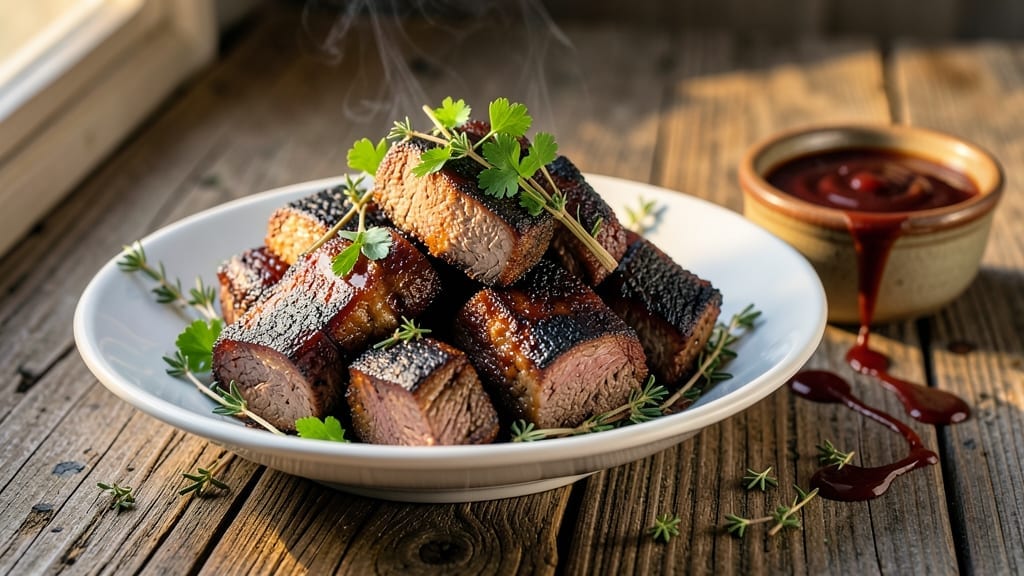
This chuck roast burnt ends smoker recipe transforms tough beef into melt-in-your-mouth perfection with smoky depth and caramelized edges. I developed it after years of perfecting slow-smoked techniques that honor both my pitmaster roots and French training—where precise timing meets bold flavors.
The key lies in low-and-slow smoking until the connective tissue breaks down, creating those legendary burnt ends that make every bite worth the wait.
The process begins with a simple yet powerful dry rub—just enough salt, pepper, and smoked paprika to build flavor without overpowering the beef’s natural richness.
We smoke the chuck roast at 225°F for 10-12 hours, using hickory or cherry wood for that signature smoky aroma that lingers in every bite. The slow cook transforms the meat into tender, pull-apart perfection, while the bark forms from the rub and natural juices caramelizing on the surface.
By the time you pull it from the smoker, the chuck roast will have separated effortlessly into rich, dark burnt ends with a glossy sheen from the rendered fat. These aren’t just ends—they’re a centerpiece, packed with flavor and texture that turns any meal into an event.
The secret? Patience and precision, two things that elevate this from a recipe to a showstopper.
Serve these burnt ends on crusty bread with a tangy BBQ sauce or over mashed potatoes for a meal that feels like a celebration. The smoky richness pairs beautifully with classic sides, making this the ultimate comfort food for gatherings or cozy weeknights alike. Let’s get smoking!
Ingredients for chuck roast burnt ends smoker
Eleven ingredients transform tough chuck roast into legendary burnt ends with smoky depth.
| Ingredient | Amount | Notes |
|---|---|---|
| Chuck Roast 🥩 | 5 lb | Bone-in preferred for flavor |
| Kosher Salt 🧂 | 2 tbsp | For dry rub |
| Black Pepper 🌶️ | 1 ½ tbsp | Freshly ground preferred |
| Smoked Paprika 🌶️ | 1 ½ tbsp | For bark development |
| Brown Sugar 🍚 | 1 tbsp | Balances smokiness |
| Onion Powder 🧅 | 1 tsp | For depth of flavor |
| Garlic Powder 🧄 | 1 tsp | Aromatic base |
| Hickory Wood Chips 🔥 | 1 package | For authentic smoky flavor |
| Apple Cider Vinegar 🍎 | ¼ cup | For bark glaze |
| Water 💧 | 1 cup | For soaking wood chips |
| BBQ Sauce 🍖 | 1 cup | For basting |
[recipe_ingredient_scaler]
The chuck roast is where the magic happens. Bone-in cuts add layers of flavor that boneless just can’t match. I always buy from local butchers or Costco for the best marbling—look for 1-2 inches of fat cap on the outside. Thaw it overnight in the fridge if frozen, and pat it very dry before applying the rub. The wood chips matter too—hickory gives that classic BBQ depth, while cherry adds a subtle sweetness. Soak them in apple cider vinegar and water for 30-60 minutes before smoking for the best smoke production.
No hickory wood chips? Cherry or pecan work great—just adjust smoke time slightly. Short on time? Dry rub with 1 tbsp extra garlic powder to compensate. The apple cider vinegar in the wood soak is non-negotiable—it helps the chips release smoke faster and gives that slight tang to the bark. For the BBQ sauce, McCormick or Stubb’s are my go-tos—they’re tangy enough to balance the smokiness without overpowering. If you prefer a sweeter sauce, Kroger’s homemade style is a great budget-friendly option that still delivers.
This recipe lives or dies by patience. Smoke at 225°F for 10-12 hours—don’t rush it! The meat will separate into tender, dark burnt ends with a glossy sheen from the rendered fat. Let it rest 1 hour before slicing to keep everything juicy. Store leftovers in the fridge for 5 days or freeze for 3 months. I portion mine into containers so I can grab a serving for lunch—trust me, it tastes even better the next day as the flavors meld. The bark will crisp up when reheated, so don’t skip the resting time or you’ll lose all that tender texture.
Why You’ll Love This Recipe
- Smoker’s Secret Weapon: That hickory smoke and the crunch of the bark from the smoked paprika and brown sugar? It’s like giving your taste buds a little vacation. The chuck roast turns from tough to tender so slowly, it’s almost magical—no fancy cuts or expensive cuts needed.
- Budget-Friendly Feast: Five pounds of chuck roast is a steal, and with just a handful of pantry staples—like that smoked paprika and apple cider vinegar—you’re looking at a meal that feeds a crowd without breaking the bank. Leftovers? They keep for five whole days in the fridge, so you’ll have seconds for breakfast.
- No-Fuss Flavor Bomb: The rub takes two minutes to mix, and the rest is just waiting—no chopping, no fuss. That 30-minute rest before smoking lets the kosher salt and black pepper do their thing, so by the time you’re basting with BBQ sauce and vinegar, every bite is packed with depth. Honestly, it’s one of those recipes where the effort feels just right.
- Crowd-Pleaser Always: Whether it’s a game day, a family dinner, or just because you’re craving something rich and smoky, these burnt ends are the kind of dish that disappears off the table. My kids fight over the last piece, and my husband always asks for seconds—no complaints, just pure satisfaction.
Step-by-step instructions for chuck roast burnt ends
Here’s how to transform a simple chuck roast into melt-in-your-mouth burnt ends with perfect smoky flavor.
Prepare the Rub and Season the Roast
In a small bowl, combine the 2 tablespoons kosher salt, 1½ tablespoons black pepper, 1½ tablespoons smoked paprika, 1 tablespoon brown sugar, 1 teaspoon onion powder, and 1 teaspoon garlic powder. Mix thoroughly until evenly distributed.
Pat the 5-pound chuck roast dry with paper towels—this helps the rub stick and creates better bark. Generously coat the roast with the spice mixture, pressing it into the meat so it adheres well. Let it sit at room temperature for 30 minutes before smoking. This step ensures the rub penetrates the meat and develops a deep, flavorful crust.
Soak the Wood Chips and Set Up the Smoker
Place the 1 package hickory wood chips in a bowl and cover with the 1 cup water. Let them soak for at least 30 minutes—this prevents them from burning too quickly and creates steady, flavorful smoke. Meanwhile, preheat your smoker to 225°F using the soaked wood chips.
Once the smoker reaches temperature and you see thin, blue smoke (not thick white steam), you’re ready to cook. The low and slow method is key here—it breaks down the connective tissue in the chuck roast, turning it into tender, pull-apart perfection.
Smoke the Roast Until Fork-Tender
Place the seasoned roast in the smoker, fat-side up, and close the lid. Smoke for 8-10 hours, maintaining a temperature between 225°F and 250°F. Avoid opening the lid during this time—every peek releases heat and moisture, extending your cook time.
After 6-7 hours, check the internal temperature using a meat thermometer. When it reaches 195°F, the roast should be fork-tender but not yet falling apart. If it stalls around 165°F, that’s normal—just give it time. The low heat slowly melts the collagen into gelatin, creating that signature burnt-end texture.
Glaze and Finish with Apple Cider Vinegar
Once the roast reaches 195°F, remove it from the smoker and let it rest for 15 minutes. While it rests, mix the ¼ cup apple cider vinegar with ½ cup BBQ sauce in a small bowl. Brush this glaze generously over the roast, focusing on the edges and any exposed meat.
Return the roast to the smoker and smoke for an additional 30-45 minutes at 250°F. The vinegar glaze caramelizes, adding a tangy sweetness that balances the smoky flavor. The roast should now be deeply browned and ready to shred.
Shred and Serve the Burnt Ends
Remove the roast from the smoker and let it rest for another 10 minutes. Using two forks, shred the meat into 2-inch chunks, discarding any large pieces of fat or connective tissue. Toss the shredded meat with the remaining ½ cup BBQ sauce to coat evenly.
Serve immediately with extra BBQ sauce on the side. The burnt ends should be tender enough to pull apart with minimal effort, with a rich, smoky-sweet flavor that’s unmistakably delicious. Pair with crusty bread or classic barbecue sides for the full experience.
Pro Tips For Making Chuck Roast Burnt Ends Smoker
- Fat-Side Up Only: DESCRIPTION:
- Soak Wood Chips Properly: DESCRIPTION:
- Don’t Rush the Glaze: DESCRIPTION:
- Shred Hot, Not Cold: DESCRIPTION:
Perfect pairings for chuck roast burnt ends smoker
Crusty Bread Pairings
Nothing complements burnt ends like a crusty artisan loaf—the perfect vessel for soaking up that smoky-sweet sauce. I swear by a sourdough or rye bread from my local butcher shop, baked until the crust is golden and crackly.
The acidity in sourdough cuts through the richness, while rye’s hearty texture holds up to the juicy meat. Toast it lightly before serving for extra crunch, and watch your guests devour every bite. 🍞
Classic BBQ Sides
For a full BBQ spread, serve these burnt ends with creamy coleslaw and buttery baked beans. The slaw’s tangy crunch balances the smoky depth, while the beans add a sweet, meaty contrast.
I make my coleslaw with apple cider vinegar and a touch of Dijon mustard—just like the glaze on the meat! For beans, I use pork butt for extra richness, slow-cooked with honey and brown sugar.
Sweet Potato Mash
A roasted sweet potato mash transforms these burnt ends into a comfort-food masterpiece. I boil sweet potatoes until fork-tender, then mash them with whipped butter, cinnamon, and a splash of maple syrup.
The natural sweetness pairs beautifully with the smoky-sweet sauce, creating a perfect balance of flavors. It’s like dessert meets BBQ! 🍠
Pickled Vegetables
Brighten up the plate with quick-pickled red onions or jalapeños—they add a sharp, tangy bite that cuts through the richness. I use apple cider vinegar, kosher salt, and a touch of sugar for a quick 10-minute pickle.
The acidity cleanses the palate between bites, making every mouthful of burnt ends even more satisfying. 🌶️
Beer and Wine Matchings
A dark, malty stout like Guinness or Samuel Adams Black Lager is my go-to for burnt ends—it balances the smoky sweetness without overpowering. For wine lovers, a bold red like Zinfandel or a smoky Syrah complements the depth of flavor.
I once paired them with a local Oregon Pinot Noir at a cookout, and the guests couldn’t stop raving about how well it worked.
Nutrition facts
Frequently asked questions
Why does the recipe call for bone-in chuck roast?
The bone-in cut adds layers of natural flavor that boneless just can’t match. The bones release collagen and minerals during smoking, enhancing the meat’s depth. Plus, the fat cap insulates the meat, ensuring even cooking and a juicier final product.
How do I know when the roast is done without a meat thermometer?
Poke the roast with a sharp knife or fork—it should feel fork-tender with little resistance. Also, the bark should be deeply browned and the meat should pull apart easily when you press it gently. If unsure, cut into the thickest part; it should be moist but not wet.
Can I use a different wood type for smoking?
Hickory is classic, but cherry adds sweetness or pecan brings a nutty depth. Just soak the chips for 30-60 minutes and adjust smoke time slightly—cherry burns faster than hickory. The key is steady, thin blue smoke, not thick white steam.
What if my smoker stalls around 165°F?
This is normal! The meat’s collagen is melting into gelatin, creating those tender burnt ends. Just keep smoking at 225°F—it’ll eventually rise to 195°F. Avoid peeking at the lid to retain heat and moisture. Patience is everything here!
How do I reheat burnt ends without drying them out?
Wrap shredded burnt ends in foil with a splash of water or BBQ sauce, then reheat in a 300°F oven for 15-20 minutes. Alternatively, warm them in a skillet over medium-low heat with a little sauce. The moisture keeps them juicy while crisping up the bark.

Trained in classic French technique but raised on slow-cooked ribs and spicy rubs, she blends culinary skill with smoke and soul.
- Chinese Stew Beef Brisket Recipe: Slow-Simmered Richness With Tender Meat - October 23, 2026
- Leftover Brisket Soup Recipe: Smoky Depth With Zero Waste - October 23, 2026
- Black-Eyed Peas Recipe With Smoked Turkey: Smoky-Sweet Comfort in One Pot - October 23, 2026