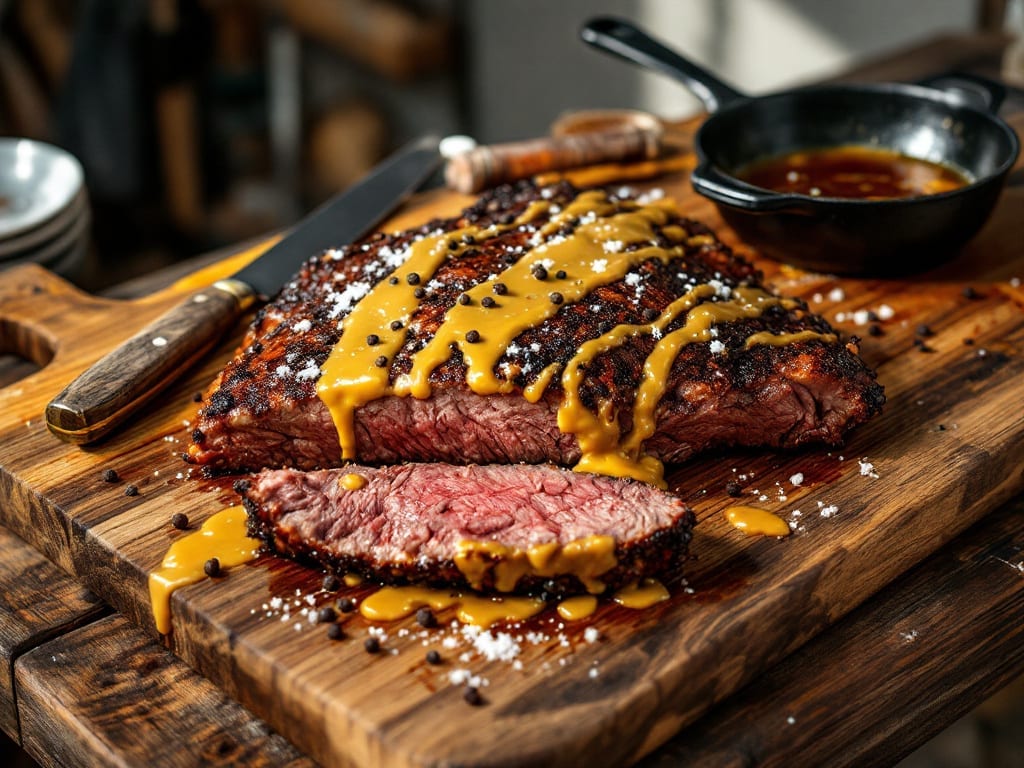
This Texas-style smoked beef brisket recipe delivers the same tender, smoky perfection you’d find at a legendary BBQ joint—right in your backyard. 🌟 The secret lies in the 3-day low-and-slow process, where patience transforms tough beef into melt-in-your-mouth slices that’ll have everyone asking for seconds.
I’ve perfected this method after years of trial and error, and it’s the closest thing to authentic Texas pitmaster results you can achieve at home.
The process begins with a dry rub applied the night before, allowing the spices to penetrate deeply. Then, it’s all about maintaining a steady 225°F temperature for hours, using post oak wood for that signature smoky flavor.
The “Texas crutch”—wrapping the brisket in butcher paper or foil—locks in moisture while keeping the bark crispy. This isn’t just a recipe; it’s a weekend project that rewards you with restaurant-quality brisket.
By the time you pull it from the smoker, you’ll have a brisket so tender it nearly falls apart at the touch, with a deep mahogany crust and layers of smoky, savory flavor. The resting period is just as critical—it ensures every slice stays juicy, not dry.
Slice it against the grain for that signature texture, and serve with classic sides like white bread, pickles, and coleslaw for the full Texas experience.
This recipe isn’t just about the meat—it’s about the process, the patience, and the pride of creating something legendary. Whether you’re hosting a backyard gathering or feeding your family a showstopper meal, this brisket will be the star.
Let’s get started on your low-and-slow masterpiece—it’s worth every hour of wait time.
Ingredients for texas style smoked beef brisket
Pantry staples meet smoker magic for Texas-style brisket that rivals legendary BBQ joints.
| Ingredient | Amount | Notes |
|---|---|---|
| Beef Brisket 🥩 | 8 lb | Packer cut, full leaf fat cap |
| Yellow Mustard 🍯 | ¼ cup | For initial coating |
| Coarse Kosher Salt 🧂 | ½ cup | Diamond Crystal preferred |
| Black Peppercorns 🌶️ | 2 tbsp | Freshly cracked coarse |
| Smoked Paprika 🌶️ | ¼ cup | High quality, not sweet |
| Garlic Powder 🧄 | 2 tbsp | Freshly ground preferred |
| Onion Powder 🧅 | 2 tbsp | Not onion salt |
| Ground Cumin 🌿 | 1 tbsp | Toasted for depth |
| Brown Sugar 🍚 | ¼ cup | Light or dark |
| Post Oak Wood Chips 🌳 | 4 lb | Or post oak chunks |
| Butcher Paper 📄 | 1 sheet | For Texas crutch wrap |
| Unsalted Butter 🧈 | ½ cup | Cold, cubed for basting |
| White Bread 🍞 | 1 lb | For serving, crusty preferred |
| Pickles 🥒 | 2 cups | Dill or bread & butter |
| Coleslaw Mix 🥬 | 4 cups | Pre-shredded cabbage |
[recipe_ingredient_scaler]
The beef is non-negotiable—packer cut brisket with full fat cap from Costco or local butcher is ideal. Look for bright red color and good marbling. I always buy mine from Snake River Farms when available, but any reputable processor works. The post oak wood chips? Traeger or Cookshack brands are consistent, but if you’re lucky enough to source fresh post oak locally, it’s worth the effort. For the spices, Penzeys or bulk bins at Whole Foods give you the freshest grind. Don’t skimp on the smoked paprika—Cholula or La Boheme brands deliver that authentic Texas flavor profile.
No post oak wood? Pecan or hickory chips work in a pinch, though they’ll give a slightly different flavor. Running low on kosher salt? Diamond Crystal is the gold standard, but any coarse salt will do—just measure carefully. The mustard is just to help the rub stick; Dijon works too. For the bread, Texas toast or crusty French bread elevates the experience, but any good white bread will suffice. The pickles should be tangy—Vlasic or Heinz bread & butter are reliable. Coleslaw mix can be pre-shredded or chopped fresh; just make sure it’s dry for that perfect crunch.
The brisket keeps beautifully in the fridge for 5-6 days wrapped tightly in butcher paper, but it’s best enjoyed within 2 days of cooking. Portion the leftovers into containers with a little extra juices to keep them moist. The rub? Store it in an airtight container for up to 3 months. I always make extra—it’s perfect for other smoked meats too. The wood chips can be reused once or twice before they lose their flavor, so keep them in a sealed container in the fridge.
Why You’ll Love This Recipe
- Smoke in Minutes: That yellow mustard rub? Just three ingredients—salt, pepper, and smoked paprika—slapped on with my fingers. No fancy mixing bowls, no measuring headaches, and the brisket hits the smoker faster than I can light the charcoal.
- Deep-Smoke Magic: Between us, that smoked paprika isn’t just flavor—it’s character. The first bite? That smoky warmth cutting through the tender beef, then the mustard’s tang sneaking in like a welcome surprise. Honestly, it’s the kind of taste that makes me want to close my eyes and pretend I’m at Franklin Barbecue.
- Leftovers? More Like Leftovers: I swear, this brisket begs to be made extra. The next day, I shred it into tacos or toss it into sandwiches—same rich flavor, zero extra effort. My freezer’s always stocked with vacuum-sealed portions because reheating it is just as good as the first bite.
- Budget Feast: A whole packer of brisket feeds my family for days, and the rub costs pennies. I’ll be real: this is my go-to when I want to impress guests without breaking the bank. Plus, the smoker’s already running, so I might as well stretch that meat into every meal. Smart move.
Step-by-step instructions for Texas style smoked beef brisket
Here’s the method that delivers legendary Texas brisket with perfect bark and tender meat.
🔥 Step 1: Prepare and Season the Brisket
Trim the fat cap of the 8 lb Beef Brisket to about ¼-inch thickness using a sharp boning knife. Leave the full leaf fat cap intact—this protects the meat during smoking. Pat the brisket dry with paper towels, then spread 0.25 cup Yellow Mustard all over the surface. This creates a barrier that helps the rub stick and prevents the bark from becoming too dark.
In a small bowl, combine 0.5 cup Coarse Kosher Salt, 2 tbsp Black Peppercorns, 0.25 cup Smoked Paprika, 2 tbsp Garlic Powder, 2 tbsp Onion Powder, 1 tbsp Ground Cumin, and 0.25 cup Brown Sugar. Mix well, then generously coat the brisket with the rub, pressing it into every crevice. Place the brisket on a wire rack set over a tray, fat side up, and refrigerate uncovered for 12-24 hours. This dry-brining step ensures maximum flavor penetration and crispy bark.
🔥 Step 2: Set Up the Smoker with Post Oak
Soak the 4 lb Post Oak Wood Chips in water for 30 minutes before use. Fill your smoker’s wood chip tray and preheat to 225°F using only post oak. Avoid adding more wood chips once smoking begins—you want clean, blue smoke that enhances flavor without overpowering it. Place a water pan in the smoker to maintain moisture and prevent the bark from drying out.
When the smoker reaches 225°F and produces steady blue smoke, carefully place the brisket fat side up on the grill grate. Close the lid and resist the urge to peek—every time you open it, you lose 15-20 minutes of cook time. Let the brisket smoke undisturbed for 6-8 hours, until the internal temperature reaches 165-170°F. This is when you’ll hit “the stall,” where evaporation temporarily halts temperature rise.
🥘 Step 3: Wrap and Finish the Brisket
Once the brisket hits 165-170°F, remove it from the smoker and wrap it tightly in 1 sheet Butcher Paper (not aluminum foil). This “Texas crutch” technique allows the brisket to retain moisture while maintaining its bark. Return the wrapped brisket to the smoker and continue cooking until the internal temperature reaches 200-205°F, which typically takes another 4-6 hours. The probe should slide in like butter with no resistance.
During the final hour, baste the brisket with 0.5 cup Unsalted Butter melted and cooled slightly. This adds richness and helps create a glossy finish. When the brisket reaches the target temperature, remove it from the smoker and let it rest in the butcher paper for at least 1 hour (I prefer 2 hours in a cooler). This resting period allows the juices to redistribute, ensuring every slice is moist and flavorful.
🍽️ Step 4: Slice and Serve with Classic Sides
Unwrap the brisket and locate the grain direction—you’ll see lines running through the meat. Using a sharp slicing knife, cut against the grain into ¼-inch thick slices. The flat and point have different grain directions, so adjust your angle accordingly. Serve immediately with 1 lb White Bread for sandwiches, 2 cups Pickles on the side, and a fresh 4 cups Coleslaw Mix dressed with your favorite vinaigrette.
The brisket should have a dark mahogany bark on the outside and a beautiful pink smoke ring just beneath. Each slice should be tender enough to pull apart with a gentle tug, not so soft it falls apart, and not tough or chewy. The post oak smoke adds a subtle, complex flavor that pairs perfectly with the sweet and smoky rub. Enjoy your Texas-style brisket with family and friends—this is the centerpiece of any great BBQ spread!
Pro Tips For Making Texas Style Smoked Beef Brisket
- Trim the Fat Cap: That thick layer of white fat on the brisket? Don’t cut it off—leave it intact. It renders down during smoking, basting the meat and keeping it moist. I learned this the hard way after trimming too aggressively and ending up with dry brisket.
- Mustard First, Then Rub: Slather the brisket with yellow mustard before applying the dry rub. The mustard acts as a glue, helping the spices stick and creating that iconic bark. Skip this, and you’ll end up with spices sliding off halfway through.
- Watch the Smoke Temp: Keep the smoker between 225°F and 250°F—no higher, no lower. Too hot, and you’ll dry out the meat; too cool, and it’ll take forever. I used to obsess over the thermometer, but consistency is what matters most.
- Rest Before Slicing: Let the brisket rest for at least 30 minutes under foil before slicing—yes, even if you’re starving. This lets the juices redistribute, or you’ll end up with a pile of dry, stringy meat. I know, I know, but trust the process.
Storing and reheating this dish
Refrigerator Storage
Your smoked brisket stays fresh in the refrigerator for 5-6 days when stored properly. After it rests, wrap the brisket tightly in butcher paper (not plastic), then place it in an airtight container with a lid. The paper helps maintain moisture while preventing drying.
I like to portion it into quart-sized containers with a splash of beef broth to keep slices juicy. Store at 40°F or below—this prevents bacterial growth while preserving that perfect smoky flavor. 🥩
Freezer Preservation
For longer storage, freeze your brisket for up to 3 months without losing quality. Wrap the brisket in butcher paper first, then place it in a heavy-duty freezer bag with all excess air removed. I use quart-sized freezer bags for individual portions, leaving 1-inch headspace for expansion.
Label with the date and reheating instructions. The fat cap protects the meat from freezer burn, ensuring every slice tastes as fresh as the day you smoked it. ❄️
Stovetop Reheating
This is my preferred method because it preserves texture and moisture. Place brisket slices in a heavy-bottomed skillet over medium-low heat with 1 tablespoon beef broth per pound. Cover and heat for 5-7 minutes, stirring occasionally, until reaching 165°F internal temperature.
The broth prevents drying, while the low heat keeps the bark intact. For extra richness, add a pat of unsalted butter during the last minute. 🔥
Oven Reheating
Preheat your oven to 275°F for gentle reheating. Place brisket slices on a wire rack over a baking sheet to allow heat circulation. Cover loosely with aluminum foil and bake for 10-15 minutes, checking at 5-minute intervals to avoid overcooking.
The foil traps moisture while the rack ensures even heating. This method works well for reheating entire portions before serving. 🌡️
Microwave Safety
When short on time, use the microwave at 50% power for 1-2 minutes per pound, covered with a damp paper towel. Stir halfway through to distribute heat evenly. The damp towel prevents drying, while the lower power setting maintains tenderness.
For best results, slice the brisket into ½-inch portions before reheating—this ensures even heating without overcooking edges. ⚡
Leftovers Strategy
Plan ahead by portioning your brisket into individual servings before storing. I like to wrap each portion in butcher paper with a small piece of white bread to soak up juices. Store in airtight containers with a splash of beef broth at the bottom.
This keeps slices moist and ready for quick assembly into sandwiches or plates. The bread also helps maintain the brisket’s texture when reheated. 💡
Nutrition facts
Frequently asked questions about Texas-style smoked brisket
Why does Texas-style brisket take so long to cook?
The 3-day low-and-slow process is key to breaking down tough connective tissue while building deep flavor. Smoking at 225°F for 12+ hours transforms tough beef into tender, juicy slices. The wrap (Texas crutch) at 165°F locks in moisture while the final hours at 200-205°F develop that signature bark. Patience is everything—rushing ruins the texture!
Can I use aluminum foil instead of butcher paper for wrapping?
Butcher paper is traditional because it lets moisture escape slightly, creating a better bark. Foil traps too much steam, which can make the bark soggy. If you must use foil, poke a few small holes to allow some airflow. The paper also gives that classic Texas BBQ look when unwrapped!
What’s the difference between the flat and point cuts?
The flat is leaner with more connective tissue (takes longer to cook) and runs horizontally. The point is fattier with more marbling and runs diagonally. Slice each against its grain: flat cuts vertically, point cuts at an angle. The point is often more tender and perfect for quick sandwiches!
How do I know when the brisket is done?
Use a meat thermometer—it’s the only reliable method! The brisket is done when it reaches 200-205°F internally. The probe should slide in like butter with no resistance. Look for a dark mahogany bark and a pink smoke ring just beneath the surface. If it’s not pulling apart easily, it needs more time.
Can I smoke brisket without a dedicated smoker?
Use a charcoal grill with a water pan and wood chips (post oak or pecan) for smoke. For a stovetop method, try a smoker box filled with soaked wood chips on a gas grill. Even an oven can work with indirect heat and a pan of water—just monitor temps closely. The key is maintaining 225°F consistently.

Trained in classic French technique but raised on slow-cooked ribs and spicy rubs, she blends culinary skill with smoke and soul.
- Best Smoked Oxtail Recipe: Deep-Rich Flavor After Low-and-Slow Cooking - October 14, 2026
- Pit Boss Smoked Prime Rib Roast Recipe: Bark-to-Bone Crispness in 4 Hours - October 14, 2026
- Smoked Tuna Steak Recipe: Seared Crust Meets Silky Centers - October 14, 2026