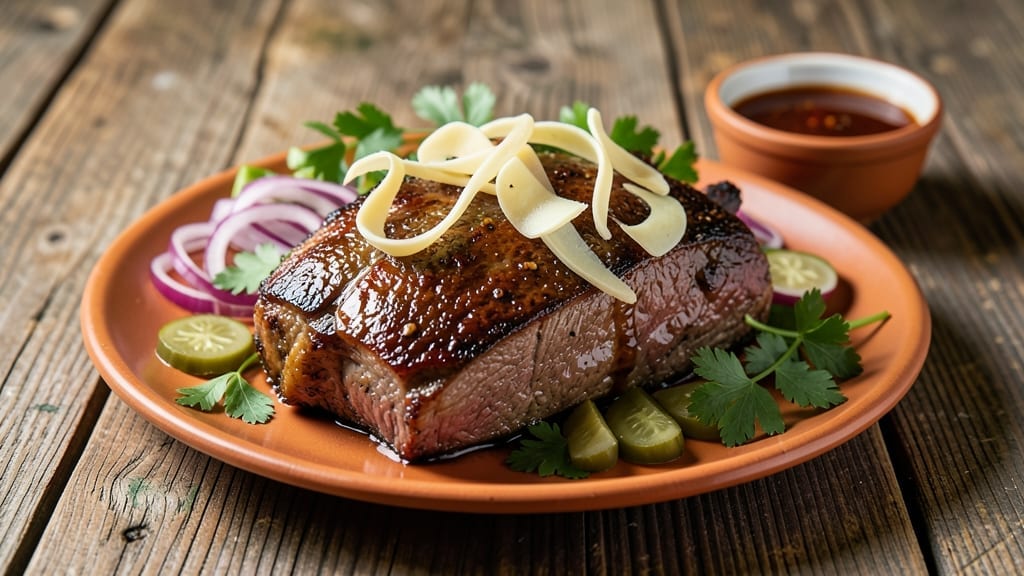
This corned beef brisket point recipe turns tough cuts into tender, fork-shredding magic with slow braising and a few key secrets. This recipe delivers restaurant-quality results with a methodical approach that respects both tradition and modern convenience.
The key lies in proper preparation: soaking, trimming, and a slow cook that develops deep, savory flavors while breaking down the toughest cuts.
What sets this method apart is the balance between time and technique—no shortcuts, just proven steps that guarantee tender results every time. You’ll start with a brisket point that’s properly prepared (soaked overnight, trimmed of excess fat) before it enters the slow cooker or Dutch oven.
The magic happens during hours of gentle simmering, where spices and aromatics meld into a rich, aromatic broth that tenderizes the meat from the inside out.
By the time you’re ready to serve, you’ll have corned beef so tender it practically dissolves on the plate, infused with smoky, spiced flavors that pair perfectly with classic sides like cabbage slaw or buttery mashed potatoes.
This is the kind of dish that transforms a simple meal into a centerpiece—ideal for St. Patrick’s Day celebrations or any occasion calling for hearty, satisfying comfort food.
The best part? Leftovers reheat beautifully, making this a recipe that gives back even more than it delivers. Whether you’re serving it on sandwiches, in stews, or straight from the pot, this corned beef brisket point will become a staple in your cooking repertoire—one that impresses without requiring advanced skills.
Ingredients for corned beef brisket point
A few key ingredients transform tough brisket into melt-in-your-mouth perfection through slow braising.
| Ingredient | Amount | Notes |
|---|---|---|
| Beef Brisket Point 🥩 | 3 lb | Trimmed of excess fat, soaked overnight |
| Yellow Onions 🧅 | 2 whole | Medium, peeled and quartered |
| Carrots 🥕 | 4 whole | Medium, peeled and halved lengthwise |
| Garlic Cloves 🧄 | 6 cloves | Peeled, smashed slightly |
| Bay Leaves 🌿 | 2 whole | Dried, standard size |
| Black Peppercorns 🌶️ | 1 tbsp | Whole, lightly crushed |
| Allspice Berries 🌶️ | 4 whole | Crushed lightly with mortar and pestle |
| Mustard Seeds 🌶️ | 2 tsp | Yellow, whole |
| Ground Ginger 🌿 | 1 tsp | Freshly ground preferred |
| Kosher Salt 🧂 | 1 cup | Non-iodized, coarse |
| Brown Sugar 🍚 | ½ cup | Packed, light variety |
| Apple Cider Vinegar 🍏 | ½ cup | Unfiltered, for tang |
| Beef Broth 🥫 | 4 cups | Low-sodium, homemade or quality |
| Beef Fat 🧈 | ½ cup | Rendered, for richness |
[recipe_ingredient_scaler]
The beef brisket point is non-negotiable here—look for well-marbled cuts with visible fat, not lean cuts that dry out. Local butchers often have the best selections, but major grocery stores like Costco or Whole Foods carry quality brisket points too. Trim excess fat to about ¼-inch thickness to prevent greasiness, but leave some for flavor. Soak the meat overnight in cold water with 1 cup vinegar and 1 tbsp salt—this tenderizes it and balances flavors. For spices, Penzeys or bulk bins at natural markets offer the freshest allspice and mustard seeds, which are critical for that classic corned beef taste.
No allspice? Cinnamon and cloves combined at half the amount work in a pinch, though purists will notice the difference. Short on time? Pre-made corned beef spice blends from Trader Joe’s save effort, though homemade delivers deeper flavor. The apple cider vinegar adds tang—substitute with white vinegar if needed, but avoid balsamic. For the broth, homemade is ideal, but quality low-sodium store-bought like Kirkland Signature works fine. The beef fat is worth rendering yourself—it adds richness that store-bought lard can’t match, but leaf lard is a decent substitute if you’re short on time.
This dish rewards patience—braise for at least 6 hours (or until fork-tender) for optimal tenderness. Store leftovers in the braising liquid for up to 5 days in the fridge, or freeze for 3 months in airtight containers. The broth thickens as it cools, so reheat gently with a splash of water if needed. For serving, slice against the grain for maximum tenderness. The meat continues to tenderize over time, so day-old corned beef is often more flavorful than fresh—plan ahead!
Why You’ll Love This Recipe
- One-Pot Magic: Honestly, this is the kind of recipe that makes me forget I ever struggled with cooking. Just sear the brisket, toss in the onions and carrots, and let the Dutch oven do the work. That 3-4 hour simmer turns a tough cut into something so tender, it practically melts on your fork.
- Caramelized Comfort: The brown sugar and apple cider vinegar create that perfect balance—sweet, tangy, and just a little spicy from the allspice berries. Every bite is like a hug in food form, especially when the garlic and ginger hit just right. Trust me, your taste buds will thank you.
- Feeds a Crowd (Without the Crowd): I made this for my book club once, and let’s just say they all wanted seconds. The brisket point stretches far enough to serve 6-8 people, and the braising liquid? That’s the secret sauce for sandwiches, mashed potatoes, or even a quick soup later. Zero waste, maximum satisfaction.
- Budget Beef Boost: A 3-pound brisket point is cheaper than you’d think, and with the beef fat and broth already rendering flavor, you’re not paying extra for fancy cuts. Plus, those leftovers? They keep for 5 days in the fridge, so you’ll have enough for lunches or dinner the next week. My wallet and my stomach both approve.
Step-by-step instructions for slow-braised corned beef brisket point
Here’s how to transform a tough cut into melt-in-your-mouth perfection through precise timing and technique.
Sear the Brisket for Deep Flavor
Heat a heavy Dutch oven over medium-high heat and add the ½ cup beef fat. Once the fat shimmers but doesn’t smoke, place the 3 lb beef brisket point fat-side down in the pan. Press gently with a spatula to ensure full contact—this prevents curling and creates a flavorful crust.
Sear for 8-10 minutes until the exterior develops a deep mahogany color. Flip the brisket and sear the other side for another 6-8 minutes. The goal is to render fat and lock in juices while building a foundation for the braise. Remove the brisket and set it aside temporarily.
Build the Corned Spice Blend and Sauté Aromatics
In the same Dutch oven, reduce heat to medium and add the 2 yellow onions, 4 carrots, and 6 garlic cloves. Cook for 5-6 minutes, stirring occasionally, until the onions soften and the carrots begin to caramelize slightly. This step develops sweetness that balances the tangy corned flavors.
Add the 1 tbsp black peppercorns, 4 allspice berries, 2 tsp mustard seeds, and 1 tsp ground ginger. Toast these spices for 1 minute until fragrant—this releases their essential oils. Stir in the 1 cup kosher salt, ½ cup brown sugar, and ½ cup apple cider vinegar, scraping up any browned bits from the bottom of the pan. These ingredients form the corned brine that tenderizes the meat.
Braise Until Fork-Tender
Return the seared brisket to the Dutch oven, fat-side up. Add the 4 cups beef broth and 2 bay leaves, then bring the mixture to a gentle simmer. Cover tightly with a lid and reduce heat to low. Braise for 3-4 hours, maintaining a gentle bubble—this ensures even cooking without boiling away the liquid.
Check for doneness after 3 hours by inserting a fork into the thickest part of the meat. If it pierces easily and the meat pulls apart slightly, it’s ready. If not, continue braising for another 30-60 minutes. The brisket should be so tender it nearly falls apart with minimal effort, with a rich, caramelized sauce surrounding it.
Rest and Serve
Remove the brisket from the braising liquid and transfer it to a cutting board. Tent loosely with foil and let it rest for 15-20 minutes. This allows the juices to redistribute, ensuring each slice remains moist. Discard the bay leaves before serving.
Slice the brisket against the grain into ¼-inch thick pieces. Ladle the braising liquid through a fine-mesh strainer to remove any remaining spices, then serve the meat with the reduced sauce spooned over the top. The result is a perfectly tender, deeply flavorful brisket with a glossy, caramelized finish.
Pro Tips For Making Corned Beef Brisket Point
- Press for Crust: That brisket point will curl like a shrimp if you don’t weigh it down. Use a heavy spatula or even a small cast-iron skillet to press it flat during searing—this guarantees even browning and prevents the edges from steaming instead of crisping. I learned this the hard way after serving someone a brisket with one side pale and the other burnt.
- Toast Spices Right: Those whole peppercorns and allspice berries need to sing—toast them for that full minute until you smell their oils popping. Skipping this step means your corned flavor will taste flat, like you used pre-ground spices from a jar. (Yes, even if you’re impatient like me.)
- Don’t Boil the Broth: A rolling boil turns your rich braising liquid into sad, watery broth. Keep it at a gentle simmer—tiny bubbles breaking the surface, maybe one or two at a time. After burning three batches, I finally figured out that patience here means sauce that clings to the meat instead of evaporating.
- Halve Carrots Lengthwise: Those carrots won’t caramelize properly if they’re left whole—slice them in half lengthwise so the flat sides get direct heat. The result? Sweet, jammy carrots that melt in your mouth instead of staying crunchy. (And yes, it’s worth the extra 30 seconds of prep.)
Storing and reheating your leftovers
Refrigerator Storage
The magic of this corned beef brisket point doesn’t stop after cooking—it actually improves over time when stored properly. Transfer the brisket and braising liquid to airtight glass containers (like Pyrex) within 2 hours of cooking.
Store at 40°F or below—the flavors meld beautifully overnight, creating a richer, more complex taste. 💛
Freezing for Later
For maximum convenience, freeze portions in quart-sized freezer bags (leave 1 inch of headspace for expansion). Label with the date—this corned beef keeps for up to 3 months without losing tenderness. I like freezing the meat and sauce separately so I can reheat just what I need later.
Reheating with Care
Grab a heavy-bottomed pot and add ¼ cup beef broth to prevent dryness. Heat on medium-low for 15-20 minutes, stirring occasionally. Avoid high heat—it can make the meat tough. For extra richness, skim off any excess fat that rises to the top during reheating.
Microwave Revival
For quick meals, use a microwave-safe dish with a damp paper towel over the top. Heat on 50% power for 3-4 minutes, stirring halfway. Add 1-2 tbsp water if it looks dry.
This method works best for smaller portions and preserves some moisture, though it’s not as ideal as stovetop reheating.
Repurposing Leftovers
Don’t waste that amazing braising liquid! Use it as a base for corned beef hash or soup. I also make quick corned beef sandwiches by layering slices on rye bread with sauerkraut and mustard. The leftovers transform into new dishes with minimal effort—trust me, it’s worth keeping some around!
Nutrition facts
Frequently asked questions
Why does the recipe call for overnight soaking of the brisket?
The overnight soak in cold water with vinegar and salt tenderizes the tough brisket fibers while balancing the saltiness. This step is essential for achieving the classic corned beef texture—it removes excess salt and ensures even cooking throughout the meat. Skipping it can result in a saltier or less tender final product.
Can I substitute allspice if I don’t have it?
Yes! Mix 1 teaspoon cinnamon with ½ teaspoon ground cloves to approximate the warm spice profile of allspice. While not identical, this blend captures the cozy, aromatic essence that allspice provides. For best results, use freshly ground spices when possible.
What’s the best way to test if the brisket is fully cooked?
Insert a fork into the thickest part of the meat—it should slide in with minimal resistance, and the fibers should begin to separate easily. The internal temperature should reach around 195°F if measured, though the fork test is more reliable for this cut. Overcooking can make it dry, so err on the side of slightly underdone if unsure.
How do I prevent the braising liquid from becoming too salty?
Use low-sodium beef broth and taste the liquid before adding the brisket. If it tastes too salty, dilute it with a little water or apple cider vinegar. The 1 cup kosher salt added during sautéing is carefully measured—don’t double it! The meat will absorb some of the salt during braising.
Can I make this recipe in a slow cooker instead of a Dutch oven?
Transfer the seared brisket and aromatics to a slow cooker, cover, and cook on Low for 8-10 hours or High for 5-6 hours. Add the broth and bay leaves at the beginning. The texture will be slightly different but still tender and flavorful. Just check for doneness after 6 hours on Low.

Trained in classic French technique but raised on slow-cooked ribs and spicy rubs, she blends culinary skill with smoke and soul.
- Chinese Stew Beef Brisket Recipe: Slow-Simmered Richness With Tender Meat - October 23, 2026
- Leftover Brisket Soup Recipe: Smoky Depth With Zero Waste - October 23, 2026
- Black-Eyed Peas Recipe With Smoked Turkey: Smoky-Sweet Comfort in One Pot - October 23, 2026