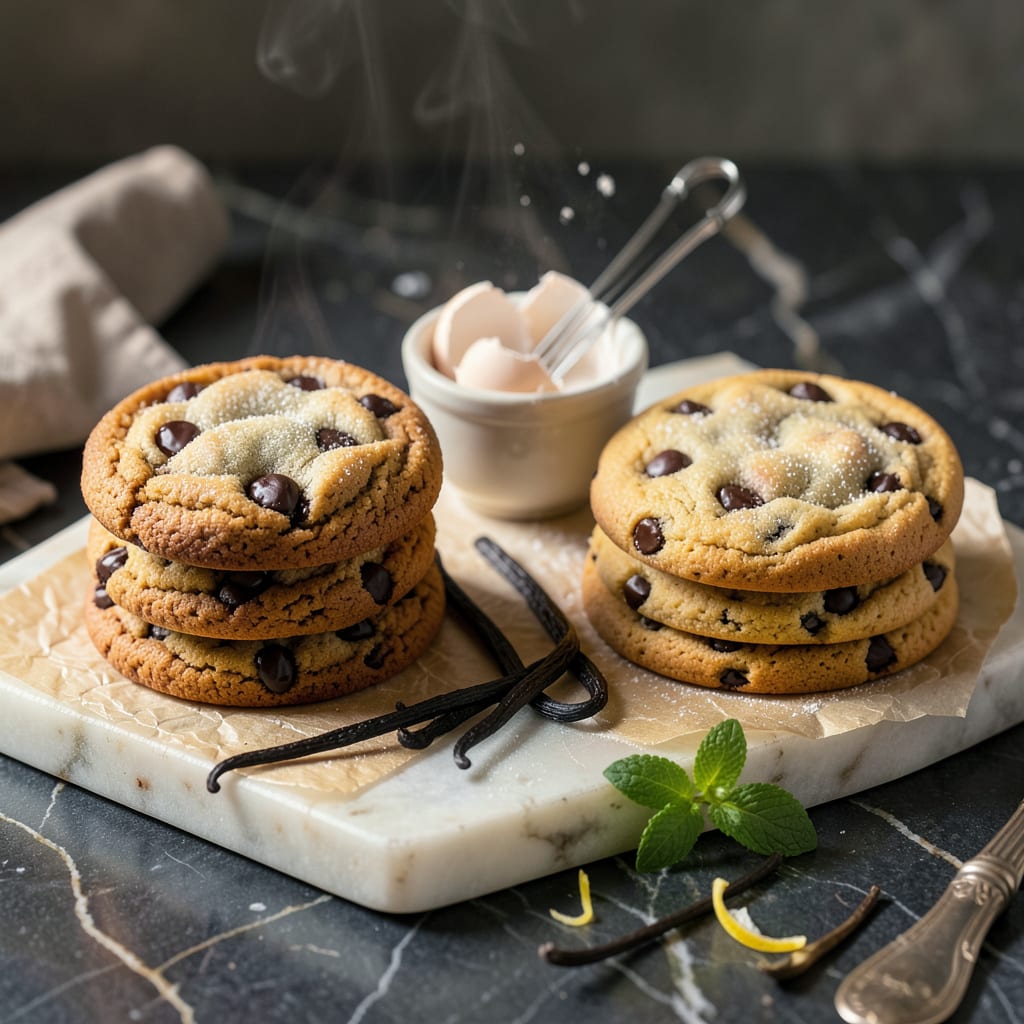
Eggs aren’t strictly necessary for cookies—they add structure, moisture, and richness, but many recipes work without them. Eggless alternatives like applesauce, flaxseed, or yogurt can replace their binding and leavening functions effectively.
I’ve tested countless cookie recipes and found that eggs act like culinary multitaskers—they help bind ingredients while adding subtle richness. 🔥 But here’s the game-changer: when you remove them, you open doors to creative substitutions that can actually enhance certain textures. For example, flaxseed adds a nutty depth that works beautifully in oatmeal cookies, while applesauce creates an ultra-tender crumb perfect for gingerbread.
What most bakers don’t realize is that eggless cookies often spread more during baking, which can be an advantage for crispy-edge lovers. ✨ The key lies in adjusting your leavening agents slightly—just a pinch more baking soda can compensate for the missing lift. I always recommend chilling eggless dough longer to prevent excessive spreading and achieve that ideal thickness.
💡 In This Article
- How Eggs Function in Cookie Recipes Scientifically
- Top Egg Substitutes for Perfect Eggless Cookies
How Eggs Function in Cookie Recipes Scientifically
Eggs transform cookie dough through four key chemical processes. First, their proteins coagulate during baking, creating a structural network that holds everything together—similar to how scaffolding supports a building. This happens at about 144°F, where egg proteins unfold and rebond.
The yolks also emulsify fats and liquids, preventing ingredients from separating and ensuring even texture throughout each bite.
Moisture control is another critical role. Eggs contain about 75% water, which converts to steam in the oven, helping cookies rise slightly before setting. This steam effect is why cookies with eggs often have a lighter interior compared to dense, eggless versions.
The fat in yolks (about 5 grams per large egg) adds tenderness, while the proteins contribute to chewiness—a balance you can actually see in the crumb structure when comparing recipes side by side.
What surprises most bakers is how eggs affect browning. The proteins and sugars in eggs participate in Maillard reactions (those complex flavor-developing chemical processes) at temperatures above 284°F. This creates deeper colors and richer flavors—especially noticeable in butter-based cookies where you want that golden edge.
Without eggs, you’ll often need to adjust baking times by 1-2 minutes to achieve similar visual results.
The difference between crispy and chewy cookies often comes down to egg content. Chewy recipes typically use 1-2 whole eggs for extra moisture retention, while crispy versions might use just yolks (for fat) or whites (for structure without excess moisture).
I’ve found that reducing eggs by 25% and adding 1 tablespoon corn syrup can create hybrid textures that satisfy both crispy-edge and soft-center lovers.
For those watching dietary needs, understanding these mechanisms helps when substituting. The binding power of one egg can be matched with 1 tablespoon ground flaxseed + 3 tablespoons water, though you’ll lose some leavening power.
Aquafaba (chickpea brine) mimics egg whites beautifully at a 3:1 ratio, whipping up to create air pockets that lighten the texture—perfect for meringue-style cookies.
The steam release from eggs also affects spread. Eggless doughs often flatten more because they lack this internal steam pressure. My pro tip: Chill eggless dough for at least 1 hour before baking to compensate.
This gives the flour time to fully hydrate and the fats time to firm up, resulting in cookies that hold their shape better during baking.
What most home bakers overlook is how egg temperature impacts results. Room-temperature eggs (70°F) incorporate more evenly into dough than cold ones, creating smoother batters and more consistent textures. This small detail can mean the difference between cookies that bake uniformly and those with uneven browning or texture variations. 🔥

Trained in classic French technique but raised on slow-cooked ribs and spicy rubs, she blends culinary skill with smoke and soul.
- Recipe for Boneless Pork Chops in Cast Iron Skillet: Sear and Baste to Juicy Perfection - October 3, 2026
- Recipe for Boneless Cross Rib Roast: Slow-Roasted Beef with Herb Crust - October 3, 2026
- Hamburgers in Sauce Recipe Crock Pot: Slow-Cooked Savory Delight - October 3, 2026