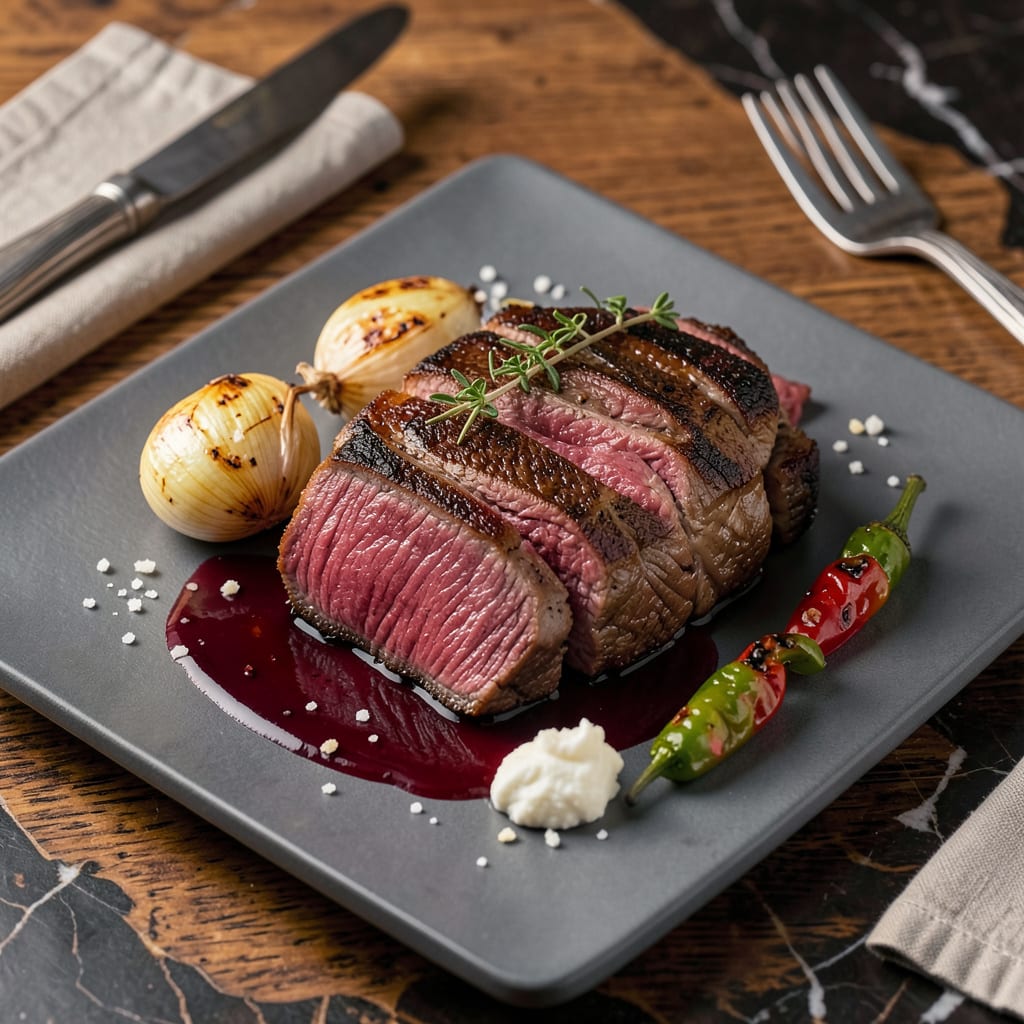
Sear steak first for thin cuts (under 1.5 inches) to develop a crust quickly, but sear last for thick cuts (reverse sear method) to ensure even doneness and better temperature control.
This timing difference comes down to heat physics and the Maillard reaction. 🔥 With thin steaks, you need that immediate high-heat contact to create a flavorful crust before the interior overcooks. But for thicker cuts, starting with a gentle oven rise lets the center reach perfect doneness without burning the outside. I’ve found this approach particularly effective with ribeyes over 2 inches thick, where the reverse sear gives you that edge-to-edge pink perfection.
The technique you choose also impacts texture and moisture retention. Thin steaks seared first maintain their juiciness because the quick cook time doesn’t allow for significant moisture loss. Meanwhile, thick cuts benefit from the gradual temperature climb of reverse searing, which breaks down connective tissue more evenly. ✨ It’s all about matching the method to the cut’s natural characteristics.
💡 In This Article
- Why Searing Timing Changes with Steak Thickness
- Step-by-Step Guide: Searing Thin vs. Thick Steaks
Why Searing Timing Changes with Steak Thickness
The secret lies in how heat travels through meat. Thin steaks (under 1.5 inches) cook through so quickly that you need to sear first to develop that golden crust before the interior overcooks. The Maillard reaction—the chemical process creating those complex flavors—happens best at 300-500°F surface temperatures.
With thin cuts, you’ve got a tiny window to achieve this before the center hits your target doneness. 🔥
Thick steaks tell a different story. A 2-inch ribeye needs time for heat to penetrate to the center without burning the exterior. Starting in a 250°F oven allows the internal temperature to rise gradually while the reverse sear method (finishing with a high-heat sear) ensures you still get that coveted crust.
This approach gives you more control over doneness—imagine a perfect medium-rare from edge to edge, not just a thin band in the middle.
Here’s what’s actually happening at the molecular level: proteins in the steak begin to denature at different rates based on thickness. Thin steaks reach their final temperature in 4-6 minutes total, while thick cuts might need 45-60 minutes of gentle heat before searing.
The gradual rise in temperature also breaks down collagen more effectively in thicker cuts, resulting in a more tender bite. ✨
Consider the surface area too. A thin steak has more exposed surface relative to its volume, meaning it loses moisture faster. That’s why you want to sear immediately—to lock in juices before they escape.
Thick steaks, with their greater mass, can afford the slow approach because their interior stays moist longer during the initial low-temperature phase.
I’ve tested this with everything from ½-inch flank steaks to 3-inch tomahawks. The thin cuts develop a crust in 90 seconds per side over screaming hot cast iron, while the thick monsters spend 1-2 hours in the oven before their final sear.
The difference in texture is night and day—crispy edges with a juicy center versus an even, velvety doneness throughout. 💫
Pro tip: Use an instant-read thermometer to track progress. For thin steaks, pull them at 5°F below your target temperature (they’ll coast up while resting). For thick cuts, monitor the internal temp during the oven phase—it should climb about 1°F per minute at 250°F. This precision is what separates good steak from extraordinary.

Trained in classic French technique but raised on slow-cooked ribs and spicy rubs, she blends culinary skill with smoke and soul.
- Recipe for Boneless Pork Chops in Cast Iron Skillet: Sear and Baste to Juicy Perfection - October 3, 2026
- Recipe for Boneless Cross Rib Roast: Slow-Roasted Beef with Herb Crust - October 3, 2026
- Hamburgers in Sauce Recipe Crock Pot: Slow-Cooked Savory Delight - October 3, 2026