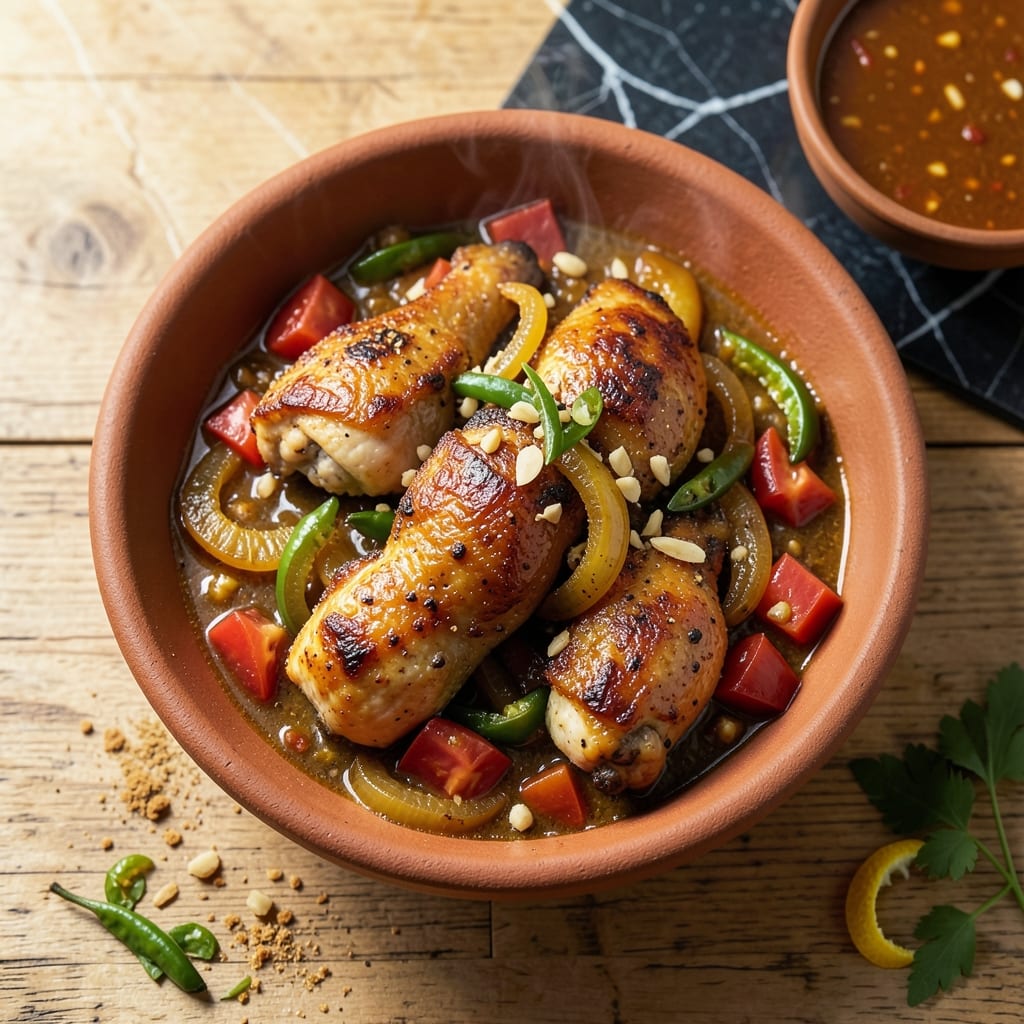
This one-pot dish brings authentic Indian flavors to your kitchen with minimal effort. I developed this technique to capture the essence of traditional dry curries without complicated methods.
The secret lies in blooming whole spices in hot oil before adding the proteins and vegetables. This creates layers of aromatic complexity that define great Indian cooking. The one-pot approach ensures everything cooks together, absorbing those spice-infused flavors.
You’ll end up with tender meat or vegetables coated in a thick, flavorful sauce that clings perfectly to each bite. The result is a restaurant-quality dish that’s ready in under an hour.
Serve with naan or rice for a complete meal. Here’s how to make it properly.
Ingredients for Dry Curry Recipe Indian
One pot, bold spices, and a handful of fresh ingredients make this happen.
| Ingredient | Amount | Notes |
|---|---|---|
| Chicken Thighs 🍗 | 1 ½ lb | Boneless, skinless, cut into bite-sized pieces |
| Yellow Onion 🧅 | 1 whole | Finely diced for even cooking |
| Garlic Cloves 🧄 | 4 cloves | Minced for maximum flavor infusion |
| Fresh Ginger 🌿 | 1 tbsp | Peeled and grated finely |
| Green Chilies 🌶️ | 2 whole | Slit lengthwise, seeds removed |
| Roma Tomatoes 🍅 | 2 whole | Diced, seeds removed for thickness |
| Cumin Seeds 🌿 | 1 tsp | Whole, for blooming in oil |
| Coriander Seeds 🌿 | 1 tsp | Whole, crushed lightly before use |
| Mustard Seeds 🌱 | ½ tsp | Black or yellow, for tempering |
| Turmeric Powder 🌶️ | ½ tsp | For color and earthy depth |
| Garam Masala 🌶️ | 1 tsp | Freshly ground if possible |
| Cayenne Pepper 🔥 | ¼ tsp | Adjust to heat preference |
| Fresh Cilantro 🌿 | ¼ cup | Chopped, for garnish |
| Vegetable Oil 🫒 | 3 tbsp | Neutral flavor, high smoke point |
| Kosher Salt 🧂 | 1 tsp | Adjust to taste at the end |
[recipe_ingredient_scaler]
The spices are the soul here. Whole cumin and coriander seeds from Indian grocery stores (or Patel Brothers) pack way more punch than pre-ground. Mustard seeds add that authentic pop—black for heat, yellow for milder flavor. I always grab my garam masala from Burlap & Barrel (worth the splurge). Fresh ginger and garlic are non-negotiable—no powdered substitutes for this recipe.
No chicken? Cauliflower or potatoes work beautifully (just adjust cooking time). Out of fresh chilies? Serrano peppers or a pinch of red chili flakes get you close. The tomatoes can be canned if fresh ones are mealy (look for San Marzano). If you’re missing a spice or two, it’ll still taste great—just lean into what you have. The cumin is doing most of the heavy lifting anyway.
Leftovers taste even better the next day once the flavors meld. Keeps 4-5 days in the fridge, freezes for 3 months. I portion mine into containers so lunches are sorted for the week (don’t forget to pack some naan).
Why You’ll Love This Recipe
- One Pan Wonder: I toss everything in a single skillet—chicken, onions, all those fresh aromatics—and it’s done in one go.
- Flavor Explosion: The ginger, garlic, and green chilies bloom into this warm, punchy dry sauce that coats every bite.
- Weeknight Savior: Honestly, it’s my go-to when I need dinner fast but still want bold, satisfying flavors.
- Stretches Far: Leftovers taste even better the next day, and it’s filling enough to feed my whole family without breaking the bank.
Step-by-Step Instructions for Indian Dry Curry
This one-pot method delivers bold flavors with minimal cleanup and maximum impact.
Step 1: Bloom the Whole Spices in Hot Oil
Heat the 3 tbsp vegetable oil in a heavy-bottomed pot over medium-high heat until it shimmers but doesn’t smoke. Add the 0.5 tsp mustard seeds and let them pop for 10-15 seconds—you’ll hear them crackle like tiny fireworks.
Immediately add the 1 tsp cumin seeds and 1 tsp coriander seeds, stirring constantly for 30-45 seconds until they turn fragrant and a shade darker. This tempering process unlocks the spices’ essential oils, creating the foundation of your curry’s aroma. Don’t let them burn or they’ll turn bitter.
Step 2: Build the Flavor Base with Aromatics
Add the finely diced yellow onion and cook for 5-6 minutes, stirring often, until it turns soft and golden brown. The onions should caramelize slightly at the edges—this sweetness balances the spices.
Stir in the minced garlic cloves, 1 tbsp grated fresh ginger, and 2 slit green chilies. Cook for 1-2 minutes until the raw smell disappears. Then add the diced roma tomatoes and cook for 3-4 minutes until they soften and release their juices.
Sprinkle in the 0.5 tsp turmeric powder, 0.25 tsp cayenne pepper, and 1 tsp kosher salt. Stir well to coat everything in the vibrant yellow turmeric—this creates that signature curry color.
Step 3: Cook the Chicken Until Tender
Add the 1.5 lb chicken thighs to the pot, stirring to coat each piece in the spiced onion-tomato masala. Increase heat to medium and cook for 5 minutes, stirring occasionally, until the chicken loses its raw look.
Cover the pot, reduce heat to medium-low, and let it cook for 15-20 minutes. You’ll know it’s ready when the chicken is tender and the liquid has mostly evaporated, leaving the spices clinging to the meat. Stir occasionally to prevent sticking.
Step 4: Finish with Garam Masala and Garnish
Sprinkle the 1 tsp garam masala over the chicken and stir well. Cook uncovered for 2-3 minutes on medium heat to toast the garam masala slightly—this deepens its warm, complex flavor.
Taste and adjust seasoning if needed. The final texture should be dry with just enough moisture to coat the chicken pieces. Garnish with the 0.25 cup chopped fresh cilantro just before serving. The cilantro adds a bright, fresh contrast to the rich spices.
Pro Tips For Making Dry Curry Recipe Indian
- Brown the Chicken Well: Cook the thighs on medium-high until deeply golden—about 5-6 minutes per side. I learned this the hard way: under-browned chicken makes the curry taste flat, not rich.
- Grate the Ginger: Skip the chunks and finely grate the ginger so it melts into the curry. Sounds fussy, but it actually changes the outcome, giving you even flavor in every bite.
- Skip the Overcrowding: Fry the onions in batches if needed—about 2 tablespoons of oil per batch. After burning three batches, I finally figured out that too many onions at once steam instead of caramelize.
- Slit the Chilies: Make a lengthwise slit in the green chilies before adding them. My grandmother swore by this, and she was right: it releases the heat and aroma without overpowering the dish.
Perfect Pairings for This Dish
Bread Pairings
Nothing soaks up those bold spice-infused juices better than warm garlic naan from your local Indian market. I also love roti—its whole wheat simplicity lets the curry shine. For a Southern twist, try buttermilk biscuits from Central Market. 💛
Rice Options
Steamed basmati rice is the classic choice—its long grains separate beautifully. For extra flavor, cook your rice with a bay leaf and 3 cardamom pods. David swears by jeera rice (cumin-infused) as his favorite pairing.
Fresh Accompaniments
A cooling cucumber raita balances the heat perfectly. I make mine with ½ cup Greek yogurt, ¼ cup grated cucumber, and a pinch of roasted cumin powder. Mango chutney from Patel Brothers adds a sweet-tangy contrast that cuts through the spices. 🥗
Vegetable Sides
Simple sautéed green beans with mustard seeds and curry leaves complement the dish without competing. Or try roasted cauliflower tossed with turmeric and a squeeze of lemon. Both keep well for leftovers.
Beverage Pairings
A cold Kingfisher beer or mango lassi are traditional choices. For wine, an off-dry Riesling from Texas Hill Country works surprisingly well. I always keep sparkling water with lime on hand for the kids.
Nutrition Facts
Frequently Asked Questions
What’s the best way to store leftovers?
Store in an airtight container in the fridge for up to 4-5 days. For longer storage, freeze for up to 3 months. Reheat gently on the stove with a splash of water to restore moisture.
Can I make this vegetarian?
Swap chicken for cauliflower or potatoes. Adjust cooking time to 12-15 minutes for cauliflower or 20-25 minutes for potatoes. The spice blend works perfectly with both.
Why do my spices taste bitter?
Overheating spices can make them bitter. Always bloom them over medium-high heat for just 30-45 seconds until fragrant. Remove from heat if they start to smoke.
How do I adjust the heat level?
Reduce or omit cayenne pepper for milder flavor. For extra heat, add 1 chopped serrano pepper or ½ tsp red chili flakes with the aromatics.

Trained in classic French technique but raised on slow-cooked ribs and spicy rubs, she blends culinary skill with smoke and soul.
- Stewed Beef Brisket Recipe: Deep-Rich Flavor After 8 Hours of Slow Simmering - October 15, 2026
- Beef Brisket Rolls Recipe: Flaky Layers and Smoky Sweet Filling - October 15, 2026
- Masterbuilt Smoker Beef Brisket Recipe: Bark-To-Meat Ratio Hack for Unmatched Flavor - October 15, 2026