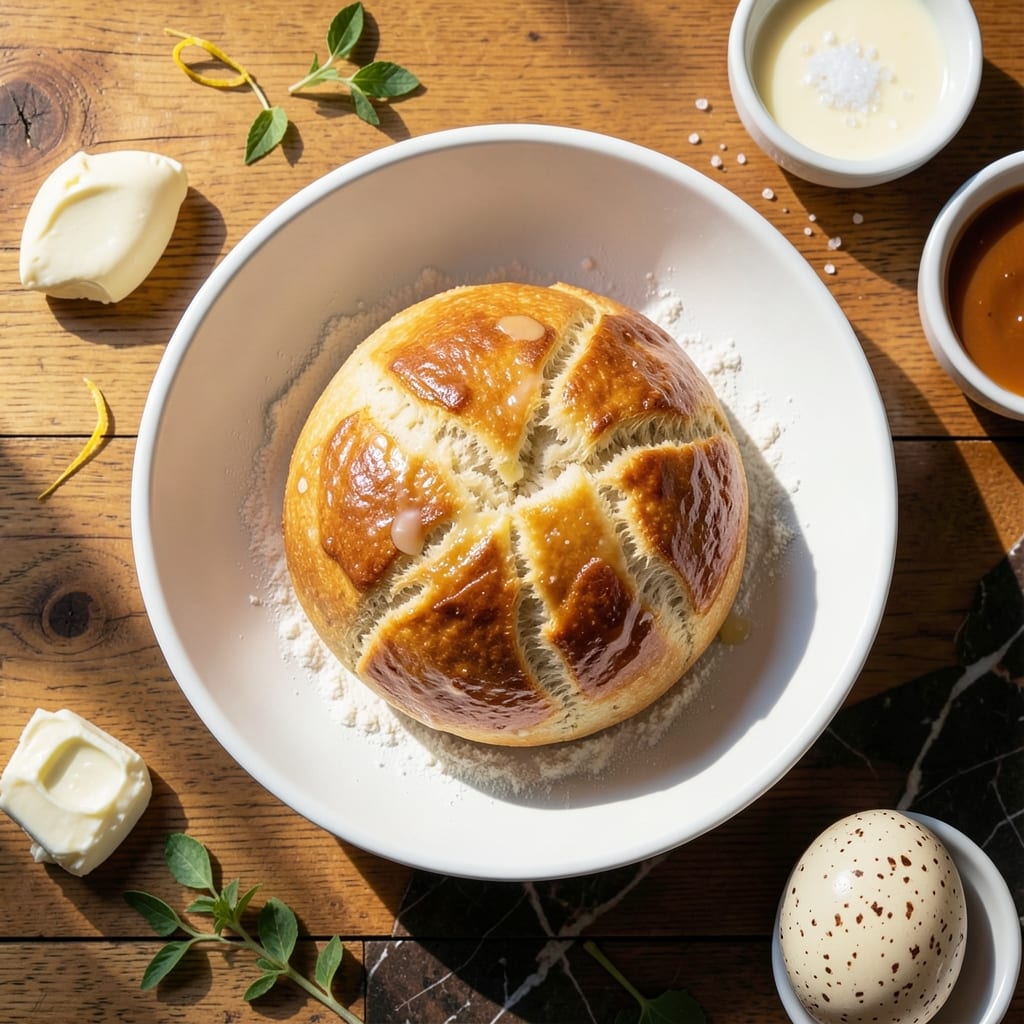
This milk bread recipe delivers that coveted soft, cloud-like texture with a simple, no-fail method. The secret lies in the right balance of ingredients and precise kneading technique.
I’ve perfected this over years of baking, ensuring every loaf comes out perfectly pillowy. The yeast works its magic during the proofing stages, creating that airy structure we all love.
What you’ll get is bread so tender it melts in your mouth, with a slightly sweet flavor that pairs perfectly with any meal. The crust stays soft for days, making it ideal for sandwiches or toast.
With just a few basic ingredients and some patience, you’ll have restaurant-quality milk bread that rivals any bakery. The process is straightforward and rewarding.
Ingredients for Easy Milk Bread Recipe with Yeast
Simple ingredients, big payoff. Soft, pillowy loaves every single time.
| Ingredient | Amount | Notes |
|---|---|---|
| Bread Flour 🌾 | 4 cups | Plus extra for dusting |
| Whole Milk 🥛 | 1 cup | Warmed to 110°F |
| Granulated Sugar 🍚 | ¼ cup | For activating yeast |
| Active Dry Yeast 🍞 | 2 ¼ tsp | One packet plus extra |
| Unsalted Butter 🧈 | ¼ cup | Softened to room temperature |
| Large Egg 🥚 | 1 whole | Room temperature preferred |
| Salt 🧂 | 1 tsp | Fine sea salt works best |
| Honey 🍯 | 2 tbsp | Optional for extra sweetness |
| Vanilla Extract 🌿 | 1 tsp | Pure extract recommended |
| All-Purpose Flour 🌾 | ½ cup | For dusting work surface |
[recipe_ingredient_scaler]
Bread flour is non-negotiable here—it has the protein content to give you that perfect structure. King Arthur is my go-to brand (their flour is consistent and reliable). The yeast needs to be fresh—check the expiration date on the packet. If it’s been sitting in your pantry for a year, grab a new packet. Whole milk adds richness, but 2% works in a pinch (just don’t go skim).
No bread flour? All-purpose plus 1 tbsp vital wheat gluten per cup gets you close. Out of honey? Granulated sugar or maple syrup works fine. The egg adds tenderness, but you can skip it if needed (the texture will be slightly denser). Using instant yeast? Cut the amount by 25% since it’s more potent and doesn’t need proofing.
Fresh loaves stay soft at room temp for 2 days. After that, slice and freeze for up to 3 months. To revive, toast slices straight from the freezer or warm the whole loaf wrapped in foil at 350°F for 10-15 minutes (don’t skip the foil or it’ll dry out).
Why You’ll Love This Recipe
- No-Knead Magic: Honestly, just mix, let it rise, and bake—no fancy techniques or stand mixer required.
- Buttery Softness: The whole milk and butter make it so rich and tender it practically melts in your mouth.
- Sandwich Star: I use this for everything from PB&J to French toast—my kids haven’t bought store bread in months.
- Budget Friendly: A few pantry staples and about 50 cents worth of ingredients yield two loaves. I’ll be real: it’s cheaper than the bakery.
Step-by-Step Instructions for Milk Bread
This method makes soft, fluffy loaves without complicated techniques or special equipment.
Step 1: Activate the Yeast
Warm the 1 cup Whole Milk to 110°F—it should feel warm but not hot to the touch. In a large bowl, whisk together the warm milk, 0.25 cup Granulated Sugar, and 2.25 tsp Active Dry Yeast.
Let this mixture sit undisturbed for 5-10 minutes until it becomes foamy and bubbly. You’ll see the yeast wake up and create a thick, frothy layer on top. If it doesn’t foam, your yeast may be expired—start over with fresh yeast.
Step 2: Mix and Knead the Dough
Add the 1 whole Large Egg, 0.25 cup Unsalted Butter (softened), 2 tbsp Honey, 1 tsp Vanilla Extract, and 1 tsp Salt to the yeast mixture. Stir until the butter is mostly incorporated. Then gradually add the 4 cups Bread Flour, mixing until a shaggy dough forms.
Turn the dough out onto a lightly floured surface (use some of the 0.5 cup All-Purpose Flour for dusting) and knead for 8-10 minutes by hand. The dough will start sticky but should become smooth and elastic. If it sticks too much, sprinkle in a little more all-purpose flour, but use a light touch—too much flour will toughen the bread.
Step 3: First Rise Until Doubled
Place the kneaded dough in a greased bowl, cover it with a clean kitchen towel or plastic wrap, and let it rise in a warm, draft-free spot. This should take about 1 to 1.5 hours, or until the dough has doubled in size.
You’ll know it’s ready when it looks puffy and an indentation made with your finger springs back slowly. If your kitchen is cool, place the bowl near a warm spot, like on top of the fridge or in an oven turned off but with the light on.
Step 4: Shape, Second Rise, and Bake
Punch down the risen dough to release the air, then divide it into equal portions for your desired loaf size (this recipe makes 1 large loaf or 2 smaller ones). Shape each portion into a smooth ball or log and place in a greased loaf pan.
Cover and let rise again for 45-60 minutes until the dough has risen just above the rim of the pan. Preheat the oven to 375°F during the last 15 minutes of rising. Bake for 25-30 minutes until the top is golden brown and the loaf sounds hollow when tapped.
Step 5: Cool Before Slicing
Remove the bread from the pan and let it cool on a wire rack for at least 20 minutes. I know it’s tempting to slice right away, but this waiting period lets the structure set so your loaf doesn’t collapse or turn gummy.
The bread should feel light and sound hollow when knocked on the bottom. Once cooled, slice and enjoy the soft, pillowy texture that makes this milk bread so special. Store leftovers in an airtight container to keep it fresh.
Pro Tips For Making Easy Milk Bread Recipe With Yeast
- Warm the Milk: Heat the whole milk to about 110°F—it should feel warm but not hot to the touch. Any hotter and you’ll kill the yeast; colder and it won’t activate properly.
- Knead Longer: I learned this the hard way—knead the dough for at least 10 minutes until it’s smooth and elastic. Under-kneading leaves you with dense, tough bread.
- Use Room-Temp Butter: Take the unsalted butter out of the fridge 30 minutes before starting. Cold butter won’t incorporate evenly, and you’ll end up with greasy streaks in the dough.
- Let It Double: Give the dough a full first rise until it’s truly doubled in size, even if it takes an extra 20 minutes. Rushing this step means flat, sad loaves.
Wine and Beer Pairings for These Flavors
Sweet Wine Pairings
For this soft, slightly sweet bread, I love pairing with a Moscato d’Asti from Italy. Its light effervescence and peach-apricot notes complement the bread’s richness beautifully. Serve chilled at 45-50°F for the best experience. 🍷
Dessert Wines
A Riesling Kabinett from Germany offers a perfect balance of sweetness and acidity. The honeyed flavor of the wine mirrors the subtle sweetness in the bread, creating a harmonious pairing. Look for bottles from the Mosel region.
Beer Options
For beer lovers, a Belgian Tripel with its fruity esters and spice notes works wonderfully. The carbonation cuts through the bread’s density while the 7-10% ABV provides a nice contrast. Try Westmalle Tripel for an authentic experience. 🍺
Coffee Pairing
At my Sunday family dinners, we often serve this with a medium roast coffee. The caramel notes in a Colombian Supremo bring out the bread’s subtle sweetness. I prefer Lavazza Qualità Rossa for its smooth, balanced profile.
Tea Alternatives
For a non-alcoholic option, Earl Grey tea with its citrusy bergamot flavor pairs surprisingly well. The floral notes complement the vanilla in the bread. Steep for exactly 3 minutes to avoid bitterness.
Nutrition Facts
Frequently Asked Questions
Can I use instant yeast instead of active dry?
Yes, but reduce the amount by 25%. Instant yeast is more potent and doesn’t need proofing. Just mix it directly with your dry ingredients.
Why didn’t my dough rise?
Check your yeast freshness and milk temperature. Yeast needs 110°F liquid to activate. If your kitchen is cold, try proofing near a warm spot like an oven with the light on.
How do I store leftover loaves?
Keep at room temperature in an airtight container for 2 days. For longer storage, slice and freeze for up to 3 months. Revive by toasting or warming in foil at 350°F.
Can I make this without a stand mixer?
Knead by hand for 8-10 minutes until smooth. The dough will be sticky at first but becomes elastic. Use minimal extra flour to avoid toughening the bread.

Trained in classic French technique but raised on slow-cooked ribs and spicy rubs, she blends culinary skill with smoke and soul.
- Recipe for Boneless Pork Chops in Cast Iron Skillet: Sear and Baste to Juicy Perfection - October 3, 2026
- Recipe for Boneless Cross Rib Roast: Slow-Roasted Beef with Herb Crust - October 3, 2026
- Hamburgers in Sauce Recipe Crock Pot: Slow-Cooked Savory Delight - October 3, 2026