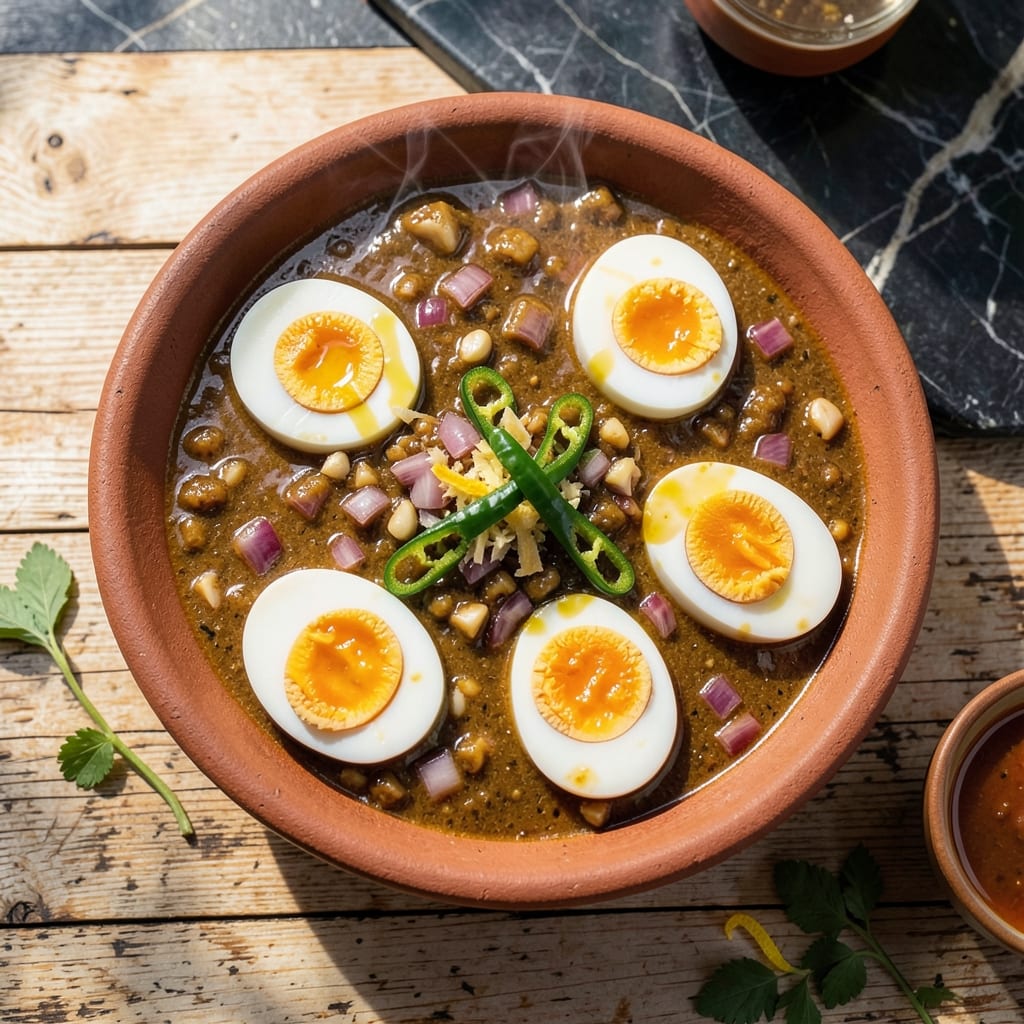
This egg curry delivers the authentic flavors of Sri Lanka right to your kitchen table. The islands’ signature spice blend transforms simple hard-boiled eggs into a dish rich with tradition and depth.
I’ve perfected this method to balance the warmth of Ceylon cinnamon, the earthiness of curry leaves, and the gentle heat of green chilies. These are the same spices that have defined Sri Lankan cooking for generations.
What emerges is a vibrant, aromatic curry with tender eggs soaking up every layer of flavor. The sauce reduces to a perfect consistency that clings beautifully to each bite.
Serve with steamed rice or hoppers to complete this taste of Sri Lanka. The process respects tradition while fitting seamlessly into modern home kitchens.
Ingredients for Egg Curry Recipe Sri Lanka
Pantry staples plus a few Sri Lankan essentials. Nothing you can’t find at a good market.
| Ingredient | Amount | Notes |
|---|---|---|
| Large Eggs 🥚 | 6 whole | Hard-boiled, peeled |
| Coconut Oil 🥥 | 2 tbsp | Or vegetable oil |
| Red Onion 🧅 | 1 whole | Finely chopped |
| Garlic Cloves 🧄 | 4 cloves | Minced fine |
| Fresh Ginger 🌿 | 1 tbsp | Peeled, grated |
| Green Chilies 🌶️ | 2 whole | Sliced lengthwise |
| Curry Leaves 🍃 | 10 whole | Fresh preferred |
| Ground Turmeric 🌿 | 1 tsp | For color and earthiness |
| Ground Cumin 🌿 | 1 tsp | Toasted for depth |
| Ground Coriander 🌿 | 1 tsp | Freshly ground preferred |
| Ceylon Cinnamon Stick 🌿 | 1 whole | 2-inch piece |
| Diced Tomatoes 🍅 | 1 can | 14.5 oz can, undrained |
| Coconut Milk 🥥 | 1 can | 13.5 oz, full-fat preferred |
| Salt 🧂 | 1 tsp | Adjust to taste |
| Fresh Cilantro 🌿 | ¼ cup | Chopped, for garnish |
[recipe_ingredient_scaler]
The curry leaves and Ceylon cinnamon are non-negotiable here. Indian or Sri Lankan grocery stores will have both—look for fresh leaves in the produce section and true cinnamon sticks (not cassia). I grab mine from Patel Brothers or any local South Asian market. The green chilies should be bright and firm, not wrinkled. If fresh aren’t available, frozen curry leaves work in a pinch (just thaw before using).
No fresh ginger? Ground ginger at half the amount in a pinch. Out of coconut milk? Heavy cream with a splash of water gets you close, though it won’t have the same depth. The turmeric, cumin, and coriander are the backbone—don’t skip them. If you’ve got Garam Masala, a pinch can replace the cinnamon. The tomatoes can be fresh (about 2 medium) if you prefer, but canned is more consistent.
This curry tastes even better the next day once the flavors meld. Store in an airtight container in the fridge for up to 4 days, or freeze for 3 months (the eggs hold up surprisingly well). Reheat gently to keep the sauce from separating.
Why You’ll Love This Recipe
- One Pot Wonder: I love that this comes together in a single pan—just boil the eggs, sauté the red onion, garlic, and ginger in coconut oil, and let the flavors meld.
- Flavor Bomb: The combination of fresh ginger, garlic, and coconut oil creates a rich, aromatic base that makes the eggs taste absolutely irresistible.
- Weeknight Saver: Honestly, it’s my go-to for busy evenings—ready in under 30 minutes and pairs perfectly with rice or bread.
- Budget Friendly: Eggs are cheap, and this recipe stretches them into a filling meal that even tastes better the next day.
Step-by-Step Instructions for Egg Curry Sri Lanka
Authentic Sri Lankan flavors come together with simple techniques and fresh spices.
Step 1: Hard-Boil and Peel the Eggs
Place the 6 whole Large Eggs in a pot and cover with cold water by about an inch. Bring to a boil over high heat, then immediately reduce to a simmer. Cook for 9-10 minutes—this gives you perfectly set yolks that won’t crumble when you peel them.
Drain the hot water and transfer the eggs to an ice bath for 5 minutes to stop the cooking process. Peel them under cool running water, which helps the shells come off more easily. Set the peeled eggs aside while you prepare the rest of the dish.
Step 2: Build the Aromatic Base
Heat the 2 tbsp Coconut Oil in a deep pan over medium heat. Add the 1 whole Red Onion (finely chopped) and sauté for 4-5 minutes until it turns soft and translucent. You want it to start caramelizing slightly—this builds the sweetness that balances the spices.
Stir in the 4 cloves Garlic Cloves (minced), 1 tbsp Fresh Ginger (grated), 2 whole Green Chilies (sliced), and 10 whole Curry Leaves. Cook for 1-2 minutes until the garlic turns light golden brown and the curry leaves release their citrusy aroma. This is where the authentic Ceylon flavor starts to develop.
Step 3: Toast the Spices and Add Tomatoes
Add the 1 tsp Ground Turmeric, 1 tsp Ground Cumin, 1 tsp Ground Coriander, and 1 whole Ceylon Cinnamon Stick to the pan. Stir constantly for 30 seconds to toast the spices—this wakes up their flavors and prevents bitterness.
Pour in the 1 can Diced Tomatoes (undrained) and cook for 3-4 minutes until the mixture thickens slightly and the tomatoes start to break down. The sauce should look rich and fragrant at this point, with oil starting to separate at the edges.
Step 4: Simmer with Coconut Milk and Eggs
Pour in the 1 can Coconut Milk and add the 1 tsp Salt. Stir well and bring to a gentle simmer over medium-low heat. Carefully add the peeled eggs and simmer for 8-10 minutes, turning them occasionally so they absorb the flavors evenly.
The sauce should thicken enough to coat the back of a spoon. You’ll know it’s ready when the edges of the sauce start to pull away slightly from the pan and the surface looks glossy. Taste and adjust the salt if needed.
Step 5: Garnish and Serve
Remove the Ceylon Cinnamon Stick and discard it. Sprinkle the 0.25 cup Fresh Cilantro (chopped) over the curry. Let it sit for 2-3 minutes off the heat so the flavors meld together.
Serve the egg curry hot with steamed rice or fresh roti. The eggs should be fully infused with the rich, aromatic sauce, and each bite should deliver the warm, complex flavors of Sri Lankan spices. This dish tastes even better the next day as the flavors continue to develop.
Pro Tips For Making Egg Curry Recipe Sri Lanka
- Boil Eggs First: Hard-boil your eggs separately before adding to the curry—this guarantees they stay intact and absorb the spiced coconut gravy without turning rubbery. I learned this the hard way after pulling apart scrambled eggs from my first attempt.
- Bloom Spices Slow: Cook the red onion, garlic, and ginger in coconut oil on medium-low heat until golden, about 8-10 minutes. Rushing this step leaves the curry tasting raw and harsh.
- Skip the Overcrowd: Fry your boiled eggs in batches if needed—crowding the pan steams them instead of searing, and you lose that slight crisp edge that soaks up the sauce.
- Use Fresh Coconut: Sounds weird, but freshly grated coconut milk makes a real difference compared to canned. My grandmother swore by it, and she was right: the flavor is brighter and the texture richer.
Storing and Reheating This Dish
Fridge Storage
Let the curry cool completely before transferring to an airtight container. Store in the fridge at 40°F or below for up to 4 days. The flavors actually deepen overnight as the spices meld together beautifully. ❄️
Freezer Storage
This dish freezes surprisingly well. Portion into freezer-safe containers with 1-inch headspace for expansion. It’ll keep for up to 3 months without losing quality. I use quart-sized zip-top bags for easy stacking.
Stovetop Reheating
My preferred method for best texture. Reheat in a saucepan over medium-low heat for 8-10 minutes, stirring occasionally. Add a splash of water or coconut milk if the sauce looks too thick.
Microwave Reheating
For quick meals, microwave individual portions covered with a damp paper towel. Use 70% power for 2-3 minutes, stir, then continue in 30-second bursts until hot. 🔥
Egg Texture Tip
If reheating from frozen, thaw overnight in the fridge first. This prevents the eggs from becoming rubbery. Avoid boiling the curry during reheating to maintain the perfect egg texture.
Flavor Revival
Taste after reheating and adjust seasonings. Often needs a pinch of salt or a squeeze of lime to brighten the flavors. Fresh cilantro on top brings back that vibrant finish.
Nutrition Facts
Frequently Asked Questions
Can I use regular cinnamon instead of Ceylon?
Yes, but Ceylon cinnamon has a milder, citrusy flavor. Regular cassia works in a pinch, though it’s stronger and slightly bitter. Use half the amount if substituting.
How do I make it spicier?
Add an extra green chili or a pinch of cayenne pepper. For depth, include 1 tsp of red chili powder when toasting the spices.
Can I skip hard-boiling the eggs first?
No—raw eggs will overcook and crumble in the sauce. Hard-boiling ensures they stay intact and soak up the flavors without turning rubbery.
What’s the best way to peel the eggs?
Shock them in an ice bath for 5 minutes after boiling. Peel under running water to help the shells slide off easily.

Trained in classic French technique but raised on slow-cooked ribs and spicy rubs, she blends culinary skill with smoke and soul.
- Recipe for Boneless Pork Chops in Cast Iron Skillet: Sear and Baste to Juicy Perfection - October 3, 2026
- Recipe for Boneless Cross Rib Roast: Slow-Roasted Beef with Herb Crust - October 3, 2026
- Hamburgers in Sauce Recipe Crock Pot: Slow-Cooked Savory Delight - October 3, 2026