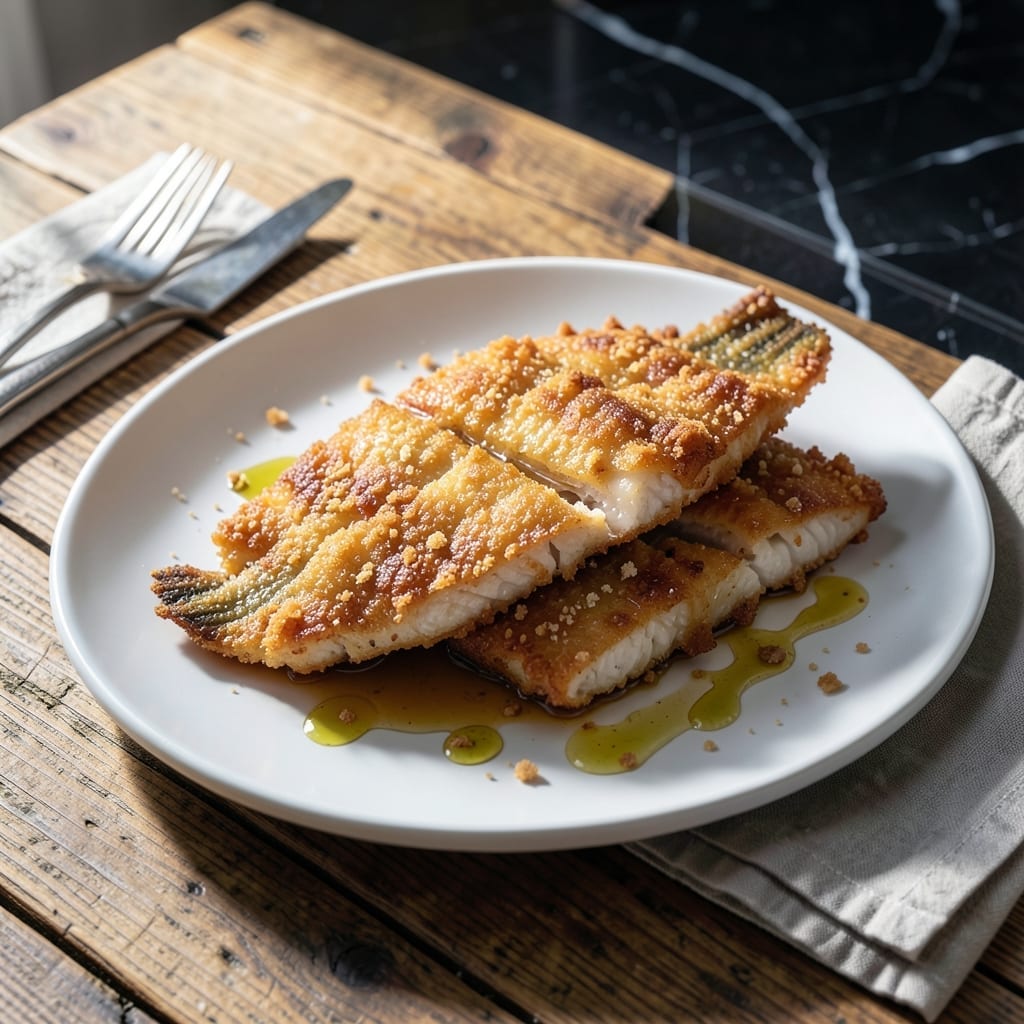
This flour-based fish fry delivers a crispy golden exterior every time without complicated batters or messy cleanup. I developed this method after testing countless variations in my kitchen.
Simple ingredients and precise technique create that perfect crunch we all crave. The flour coating adheres beautifully to the fish, creating a barrier that locks in moisture while achieving that signature golden finish.
What you get is tender, flaky fish encased in a shatteringly crispy crust. The method works with any firm white fish and requires just basic pantry staples.
Serve immediately for maximum crunch. Here’s how to make it perfectly on your first try.
Ingredients for Fish Fry Recipe with Flour
Pantry staples plus fresh fish. That is all you need for this.
| Ingredient | Amount | Notes |
|---|---|---|
| Firm White Fish Fillets 🐟 | 1 ½ lb | Cod, haddock, or tilapia work best |
| All-Purpose Flour 🌾 | 1 ½ cups | For dredging fish evenly |
| Cornstarch 🌾 | ¼ cup | Ensures extra crispiness |
| Salt 🧂 | 1 ½ tsp | Diamond Crystal kosher preferred |
| Ground Black Pepper 🌶️ | ½ tsp | Freshly ground for best flavor |
| Garlic Powder 🧄 | 1 tsp | Adds savory depth to coating |
| Paprika 🌶️ | 1 tsp | Sweet or smoked for color |
| Large Egg 🥚 | 1 whole | For egg wash binding |
| Whole Milk 🥛 | ¼ cup | Creates rich egg wash |
| Vegetable Oil 🫒 | 2 cups | For frying, high smoke point |
| Lemon Wedges 🍋 | 4 pieces | For serving fresh |
| Fresh Parsley 🌿 | ¼ cup | Chopped, for garnish |
[recipe_ingredient_scaler]
The fish is the star here. Wild-caught cod or haddock from Whole Foods or your local seafood counter gives the best texture—firm, flaky, and holds up to frying. If you’re buying frozen, thaw it in the fridge overnight (the microwave method makes it mushy). Look for fillets that are even in thickness so they cook uniformly. The flour and cornstarch combo is what delivers that shatteringly crispy crust.
No cornstarch? Instant mashed potato flakes work in a pinch for crispiness. Swap the paprika for Cajun seasoning if you want a spicier kick. Any neutral oil with a high smoke point works—peanut or canola oil are great alternatives to vegetable. For a lighter coating, skip the egg wash and just dredge in flour mixed with a little water to make a thin batter.
Fry in small batches so the oil stays hot—crowding drops the temp and makes everything greasy. Leftovers? They won’t be as crispy, but they keep in the fridge for 1-2 days. Reheat in a 400°F oven for 10 minutes to revive some crunch (microwaving is a sad idea).
Why You’ll Love This Recipe
- One Pan Wonder: I just coat the fillets in flour and cornstarch, then fry—no fancy prep or extra dishes.
- Crispy Perfection: That golden crust from the flour and cornstarch combo? It shatters with every bite.
- Family Approved: Honestly, even the pickiest eaters at my table clean their plates with this.
- Budget Friendly: A few affordable fillets and pantry staples feed everyone without breaking the bank.
Step-by-Step Instructions for Fish Fry
Here’s the method I use for perfectly crispy fish every time, no exceptions.
Step 1: Season and Prepare the Dredging Mixture
In a shallow dish, combine the 1.5 cups all-purpose flour, 0.25 cup cornstarch, 1.5 tsp salt, 0.5 tsp ground black pepper, 1 tsp garlic powder, and 1 tsp paprika. I whisk everything together so the cornstarch distributes evenly—this is what gives the coating that extra crunch.
Pat the 1.5 lb firm white fish fillets completely dry with paper towels. This is critical; any moisture will prevent the dredging from sticking properly. Season both sides lightly with a pinch of salt and pepper before dredging.
Step 2: Create the Egg Wash for Binding
In a separate shallow bowl, whisk together the 1 whole large egg and 0.25 cup whole milk until fully combined. The milk makes the egg wash richer and helps the dredging adhere better to the fish.
Here’s the thing—I always let the egg wash sit for 2 minutes after whisking. This gives the proteins time to relax, making the mixture slightly thinner and more effective for coating.
Step 3: Dredge and Coat the Fish Thoroughly
Dip each fish fillet into the egg wash, letting any excess drip off for 5 seconds. Then press it firmly into the dredging mixture, making sure both sides are completely coated. I like to use one hand for dipping in the egg wash and the other for the dredge to keep things clean.
Place the coated fillets on a wire rack set over a baking sheet. This allows air to circulate underneath, preventing the coating from getting soggy while you finish the rest. Let them rest for 5 minutes before frying—this helps the coating set and stick better during cooking.
Step 4: Fry to Golden Perfection
Heat the 2 cups vegetable oil in a deep, heavy-bottomed skillet over medium-high heat to 350-375°F. Use a deep-fry thermometer for accuracy; the oil needs to be hot enough to sizzle immediately when the fish hits it, but not so hot it burns the outside before the inside cooks.
Carefully place the fish fillets in the hot oil, working in batches if necessary to avoid crowding. Fry for 3-4 minutes per side until golden brown and crispy. The fish should float and the coating should be uniformly golden. Use a slotted spatula to transfer the cooked fish to a paper towel-lined plate to drain.
Step 5: Serve Immediately with Fresh Garnishes
Serve the fish right away while it’s still hot and crispy. Garnish with the 0.25 cup fresh parsley, chopped, and serve with the 4 pieces lemon wedges on the side. I always recommend squeezing a bit of lemon over each piece just before eating—it brightens up the flavor perfectly.
The coating should be crisp and golden, with a light, airy crunch that gives way to tender, flaky fish inside. If you need to keep the fish warm for a few minutes, place it on a wire rack in a 200°F oven—this prevents the coating from getting soggy.
Pro Tips For Making Fish Fry Recipe With Flour
- Pat Fish Dry: Use paper towels to remove all moisture from the fillets before dredging—I learned this the hard way after my first few batches turned out soggy instead of crisp.
- Heat the Oil First: Get your oil to 350-375°F before adding the fish; after burning three batches, I finally figured out that cold oil just soaks into the coating.
- Mix Flour and Cornstarch: Replace about 2 tablespoons of flour with cornstarch in your dredge for extra crunch—sounds weird, but it works.
- Skip the Overcrowding: Fry in batches with space between pieces, or the temperature drops and you’ll end up with greasy, steamed fish instead of golden, crispy fillets.
Pro Cooking Tips for Perfect Results
Oil Temperature Control
Maintaining 350-375°F oil temperature is non-negotiable for that perfect crunch. I use a Taylor deep-fry thermometer clipped to the pan—David swears by it. If the oil smokes, it’s too hot; if the fish sinks, it’s too cool. 🌡️
Batch Frying Strategy
Never crowd the pan—fry in batches with at least 1 inch between fillets. Crowding drops the oil temp, creating greasy instead of crispy results. I test the first batch and adjust heat as needed.
Dredging Pro Tip
Double-dredge for extra crunch: dip in egg wash, coat in flour, repeat once more. The second coating creates that restaurant-quality thickness. Let each layer rest 5 minutes before frying.
Resting Time
After frying, rest fillets on a wire rack, not paper towels. This keeps the bottom crispy while excess oil drips away. I learned this trick at Nana Mae’s diner.
Oil Reuse
Strain and reuse oil up to 3 times if it stays clear and odor-free. Store in a cool, dark place in an airtight container. Discard if it darkens or smells off.
Equipment Choice
Use a heavy-bottomed skillet like Lodge cast iron—it distributes heat evenly and maintains temperature. Avoid nonstick; the high heat can damage the coating.
Nutrition Facts
Frequently Asked Questions
What’s the best oil temperature for frying?
Maintain 350-375°F for ideal crispiness. Use a thermometer to check—oil that’s too cool makes greasy fish, while too hot burns the coating.
Can I use a different type of flour?
All-purpose works best, but self-rising flour adds a lighter texture. Avoid whole wheat—it’s too dense and won’t crisp properly.
How do I keep the coating from falling off?
Pat the fish completely dry before dredging and let it rest 5 minutes after coating. This helps the flour adhere tightly during frying.
What fish works best for this method?
Firm white fish like cod, haddock, or tilapia hold up best. Avoid delicate fish like sole—they can fall apart during frying.

Trained in classic French technique but raised on slow-cooked ribs and spicy rubs, she blends culinary skill with smoke and soul.
- Recipe for Boneless Pork Chops in Cast Iron Skillet: Sear and Baste to Juicy Perfection - October 3, 2026
- Recipe for Boneless Cross Rib Roast: Slow-Roasted Beef with Herb Crust - October 3, 2026
- Hamburgers in Sauce Recipe Crock Pot: Slow-Cooked Savory Delight - October 3, 2026