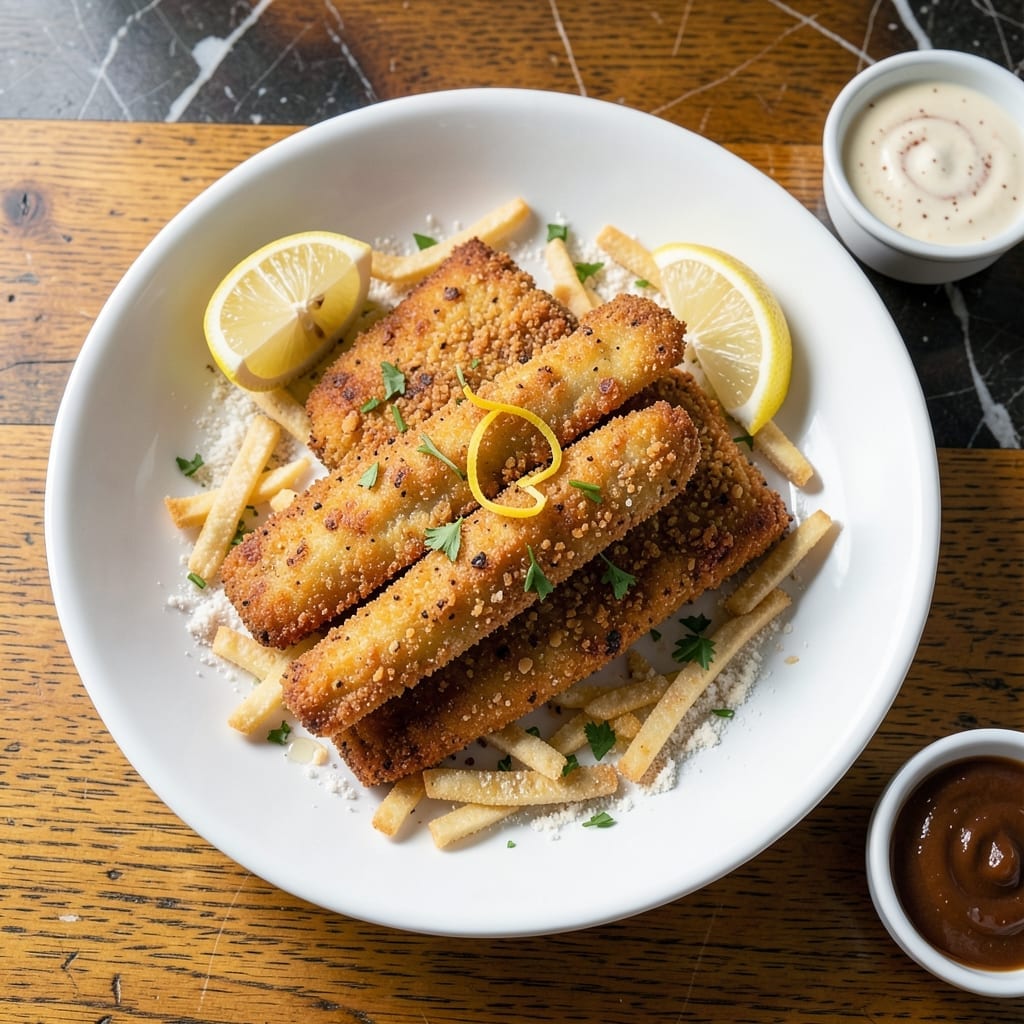
I developed this almond flour coating after testing countless alternatives to cornmeal for frying catfish. The result delivers crispy, golden-brown perfection every time, with a texture that rivals traditional methods.
Almond flour creates a delicate, flavorful crust that adheres beautifully to catfish fillets. The nutty undertones complement the mild fish without overpowering it, and the coating fries up satisfyingly crispy with proper technique.
This method requires precise temperature control and a two-step breading process. The almond flour coating forms a secure barrier that locks in moisture while achieving that coveted crunch.
Serve immediately for best results, as the coating maintains its crispy texture straight from the fryer. The technique works equally well for both fillets and nuggets.
Ingredients for Fried Catfish Recipe No Cornmeal
Almond flour and catfish deliver crispy, golden perfection without cornmeal. Simple, flavorful, and foolproof.
| Ingredient | Amount | Notes |
|---|---|---|
| Catfish Fillets 🐟 | 1 ½ lb | Skinless, cut into strips |
| Almond Flour 🌰 | 2 cups | Fine, blanched variety |
| Large Eggs 🥚 | 2 whole | Beaten for binding |
| Buttermilk 🥛 | 1 cup | Full-fat for richness |
| All-Purpose Flour 🌾 | ½ cup | For initial dredging |
| Baking Powder 🧂 | 1 tsp | Enhances crispiness |
| Salt 🧂 | 1 ½ tsp | Diamond Crystal kosher |
| Black Pepper 🌶️ | 1 tsp | Freshly ground preferred |
| Garlic Powder 🧄 | 1 tsp | For savory depth |
| Onion Powder 🧅 | 1 tsp | Balances flavor profile |
| Paprika 🌶️ | 1 tsp | Sweet or smoked variety |
| Cayenne Pepper 🔥 | ¼ tsp | Adjust to heat preference |
| Vegetable Oil 🫒 | 4 cups | High smoke point for frying |
| Lemon Wedges 🍋 | 4 pieces | For serving |
[recipe_ingredient_scaler]
The almond flour is non-negotiable for texture. Bob’s Red Mill offers consistent quality with fine, blanched varieties ideal for frying. Catfish should be fresh or thawed completely—pat dry thoroughly to ensure crispiness. For the buttermilk, full-fat provides the best adhesion and richness. Most Whole Foods or Kroger locations stock these staples year-round.
No buttermilk? Whole milk plus 1 tbsp vinegar works in a pinch. Almond flour can be swapped for hazelnut flour (similar texture) but avoid coconut flour—it absorbs too much moisture. For extra crunch, add 1/4 cup crushed pork rinds to the coating (not vegan, but pescatarian-friendly). The oil must have a high smoke point—peanut or avocado oil are solid alternatives.
Fry in batches to maintain oil temperature—350°F is ideal. Drain on a wire rack, not paper towels, to preserve crispiness. Best consumed immediately, but leftovers reheat well in a toaster oven at 400°F for 5-7 minutes. Coating stays fresh for 1 day if stored separately from fish.
Why You’ll Love This Recipe
- One Pan Wonder: I mix the almond flour and all-purpose right in the same bowl I use for dredging—less cleanup, same crispy result.
- Crave-Worthy Crunch: The buttermilk soak keeps the catfish juicy while the almond flour gives it that nutty, golden crust I can’t resist.
- Weeknight Hero: Honestly, it’s my go-to for busy Tuesdays when I need something fast that still feels like a treat.
- Budget Stretcher: Catfish fillets are affordable, and a little almond flour goes a long way to feed my whole family.
Step-by-Step Instructions for Fried Catfish Without Cornmeal
This method delivers an exceptionally crisp coating using almond flour for a gluten-free alternative.
Step 1: Prepare the Catfish Fillets and Initial Dredge
Pat the 1.5 lb catfish fillets completely dry with paper towels to ensure the coating adheres properly. Cut into even strips if not pre-cut. In a shallow bowl, combine the 0.5 cup all-purpose flour, 1 tsp baking powder, 1.5 tsp salt, 1 tsp black pepper, 1 tsp garlic powder, 1 tsp onion powder, 1 tsp paprika, and 0.25 tsp cayenne pepper.
Dredge each fillet in the seasoned flour mixture, pressing gently to coat evenly. Shake off any excess flour. This initial layer helps the wet mixture cling to the catfish and enhances the crispiness by creating a textured base for the almond flour to adhere to.
Step 2: Create the Wet and Dry Breading Stations
In a second shallow bowl, whisk together the 2 whole large eggs and 1 cup buttermilk until smooth. This mixture acts as the binder for the coating. In a third bowl, place the 2 cups almond flour—its fine texture will create a delicate, crisp crust.
Dip each floured catfish fillet into the egg-buttermilk mixture, allowing any excess to drip off. Then immediately transfer it to the almond flour, pressing gently to ensure full coverage. The buttermilk in the wet mixture adds tang and helps tenderize the fish, while the almond flour provides a nutty flavor.
Step 3: Heat the Oil and Fry to Golden Perfection
In a deep, heavy-bottomed skillet or Dutch oven, heat the 4 cups vegetable oil to 350°F. Use a deep-fry thermometer to monitor the temperature accurately. Maintaining the correct oil temperature is crucial—too low, and the catfish will absorb oil and become greasy; too high, and the coating will burn before the fish cooks through.
Carefully lower 2-3 breaded fillets into the hot oil, ensuring they are not crowded. Fry for 3-4 minutes per side or until the coating is golden brown and the fish flakes easily with a fork. The almond flour will brown quickly, so keep a close eye on the color. Drain on a wire rack set over a baking sheet to maintain crispiness.
Step 4: Serve Immediately with Lemon Wedges
Transfer the fried catfish to a serving plate lined with paper towels to absorb any residual oil. The coating should be uniformly golden brown and audibly crisp when touched. Serve immediately with the 4 pieces lemon wedges on the side for a bright, acidic contrast.
Real talk: this dish is best enjoyed fresh out of the oil. The almond flour coating remains crisp for a short window, so gather your diners quickly. Squeeze fresh lemon over the top just before eating to enhance the flavors and cut through the richness of the fried fish.
Pro Tips For Making Fried Catfish Recipe No Cornmeal
- Dry the Fillets: Pat the catfish fillets completely dry before dredging—I learned this the hard way when my first batch turned soggy instead of crispy.
- Double Dredge: Dip in buttermilk, then flour, then buttermilk again, and finally almond flour for a crust that actually stays put.
- Hot Oil Only: Wait until the oil reaches 350°F before adding the fish, or the coating will absorb grease like a sponge.
- Rest Before Frying: Let the dredged fillets sit for 5 minutes before frying—it helps the coating adhere better, especially with almond flour.
Serving Suggestions for This Dish
Classic Southern Sides
Serve with creamy coleslaw—the cool, tangy crunch balances the crispy catfish perfectly. I use Duke’s mayonnaise and a splash of apple cider vinegar for that authentic Southern flavor. 💛
Fresh Vegetable Accompaniments
Steamed green beans with garlic and butter add a light, fresh element. For a Boston twist, try roasted Brussels sprouts with a balsamic glaze—my Irish-Italian family loves this combo.
Starchy Comfort
Buttery mashed potatoes or cornbread soak up any extra flavor. I prefer fluffy potatoes with a touch of buttermilk, just like Nonna made in our tiny triple-decker kitchen.
Dipping Sauces
Offer remoulade or tartar sauce for dipping. I mix ½ cup mayo, 1 tbsp capers, and 1 tsp lemon juice for a quick tartar that lets the catfish shine.
Bright Finishes
Garnish with fresh parsley and extra lemon wedges. The acidity cuts through the richness, and the green adds a pop of color. Honestly, this simple touch makes it feel restaurant-worthy.
Nutrition Facts
Frequently Asked Questions
What can I use instead of buttermilk?
Mix 1 cup whole milk with 1 tbsp vinegar and let sit for 5 minutes. This creates a tangy substitute that works just as well for binding the coating.
Can I bake instead of frying?
Bake at 400°F for 12-15 minutes on a wire rack for crispiness. The texture won’t be identical to frying, but it’s a healthier option that still delivers good crunch.
Why is my coating falling off?
Pat the fish completely dry before dredging, and ensure the oil is hot enough (350°F). Cold oil or excess moisture prevents the coating from adhering properly.

Trained in classic French technique but raised on slow-cooked ribs and spicy rubs, she blends culinary skill with smoke and soul.
- Recipe for Boneless Pork Chops in Cast Iron Skillet: Sear and Baste to Juicy Perfection - October 3, 2026
- Recipe for Boneless Cross Rib Roast: Slow-Roasted Beef with Herb Crust - October 3, 2026
- Hamburgers in Sauce Recipe Crock Pot: Slow-Cooked Savory Delight - October 3, 2026