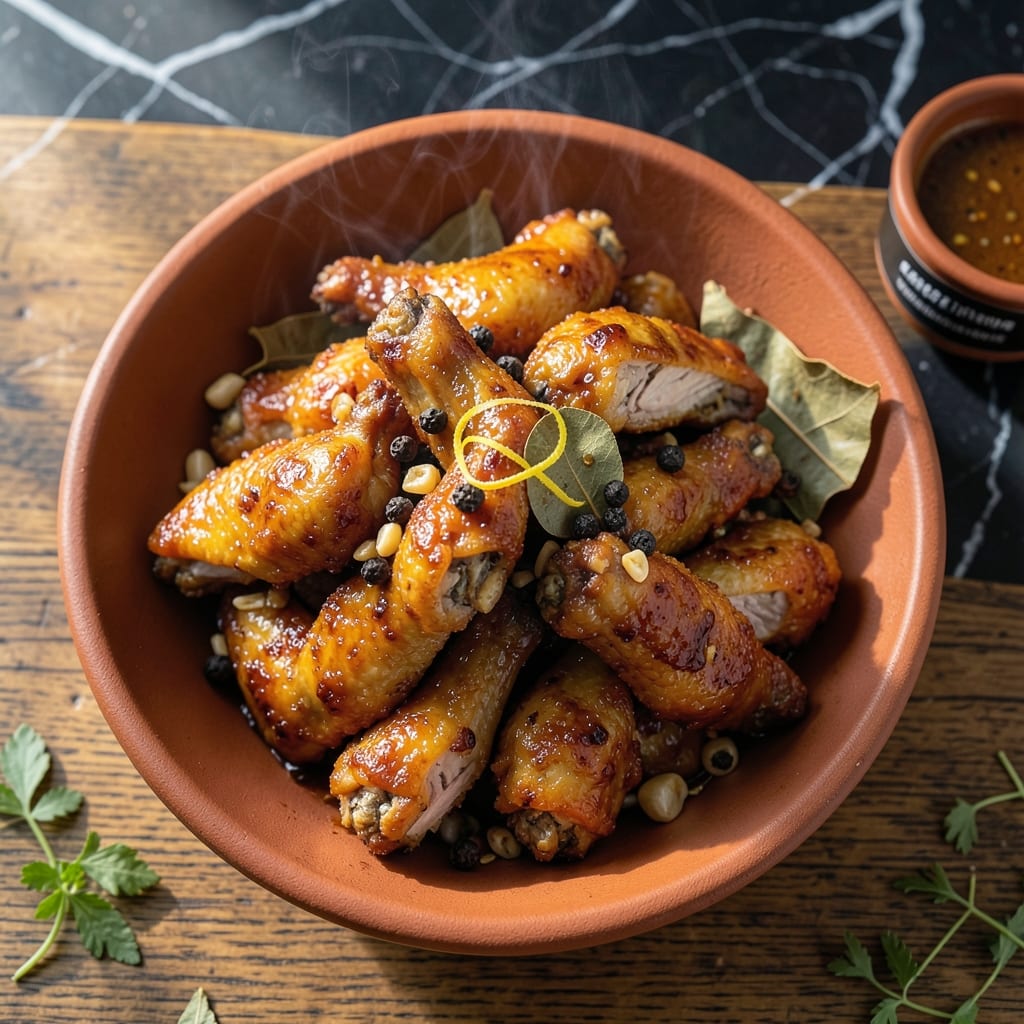
This Filipino-style fried chicken wings recipe delivers crispy perfection with a bold adobo marinade. I developed this method after testing countless variations to achieve that ideal balance of savory, tangy, and slightly sweet flavors.
The secret lies in marinating the wings overnight in a mixture of soy sauce, vinegar, garlic, and black pepper. This tenderizes the meat while infusing it with authentic Filipino taste. The double-frying technique ensures an ultra-crispy exterior.
The result is fall-off-the-bone tender wings with a shatteringly crispy coating that’s packed with umami depth. Each bite offers layers of flavor from the marinade that penetrates deep into the meat.
Serve these with spicy vinegar dip or traditional banana ketchup for the full experience. The wings stay crispy for hours, making them perfect for gatherings.
Ingredients for Fried Chicken Wings Recipe Filipino Style
Marinated overnight, double-fried to crispy perfection with bold Filipino flavors throughout.
| Ingredient | Amount | Notes |
|---|---|---|
| Chicken Wings 🍗 | 2 lb | Split into drumettes and flats |
| Soy Sauce 🫒 | ½ cup | Filipino brand preferred |
| Cane Vinegar 🍶 | ¼ cup | White or apple cider works |
| Garlic Cloves 🧄 | 8 cloves | Minced for marinade |
| Black Peppercorns 🌶️ | 1 tbsp | Freshly cracked preferred |
| Bay Leaves 🍃 | 3 pieces | Dried or fresh |
| Brown Sugar 🍚 | 2 tbsp | Balances acidity |
| Cornstarch 🌾 | ½ cup | For extra crispiness |
| Vegetable Oil 🫒 | 4 cups | For double frying |
| Salt 🧂 | 1 tsp | Adjust to taste |
| Banana Ketchup 🍌 | ½ cup | For traditional serving |
| Red Chili Flakes 🌶️ | 1 tsp | Optional for heat |
[recipe_ingredient_scaler]
The soy sauce foundation must be robust. Filipino brands like Silver Swan or Datu Puti deliver authentic depth—avoid low-sodium varieties for this application. Fresh garlic is non-negotiable; the pre-minced jars lack the sharpness that defines adobo flavor profiles. Asian markets typically stock the right vinegar (cane or palm) that balances the marinade’s acidity without overpowering.
No cane vinegar? Apple cider vinegar at equal volume works nearly as well. Skip the bay leaves if necessary (they’re subtle but traditional). For a gluten-free version, tamari instead of soy sauce maintains the umami. The cornstarch coating is critical—do not substitute flour, as it won’t achieve the same shatter. Rice flour can work in a pinch for a slightly different texture.
Marinate wings for 12-24 hours for maximum flavor penetration. Fried wings hold their crispness at room temperature for 2-3 hours—perfect for parties. Store leftovers in the fridge for up to 4 days, though they’re best fresh. Reheat in a hot oven to revive some crunch.
Why You’ll Love This Recipe
- One Pan Wonder: I just toss the wings with soy sauce, vinegar, and crushed garlic, then fry—no fancy prep or multiple bowls.
- Addictive Tang: The cane vinegar and black peppercorns give that sharp, savory kick that makes you reach for another.
- Weeknight Hero: I make a big batch on Sunday and reheat for quick lunches—still crispy, still flavorful.
- Budget Stretcher: A kilo of wings, a few pantry staples, and I’ve fed four hungry people for less than a fiver.
Step-by-Step Instructions for Filipino-Style Adobo Chicken Wings
Master this classic technique for wings that are crispy outside and packed with adobo flavor.
Step 1: Marinate the Chicken Wings in Adobo Mixture
Combine the 2 lb chicken wings with 0.5 cup soy sauce, 0.25 cup cane vinegar, minced 8 cloves garlic cloves, 1 tbsp black peppercorns, 3 pieces bay leaves, and 2 tbsp brown sugar in a large bowl. I crack the peppercorns lightly to release their aroma before adding.
Mix thoroughly until all pieces are coated evenly. Cover and refrigerate for at least 4 hours, preferably overnight. This extended marination ensures the adobo flavors penetrate deeply, creating that signature Filipino tangy-savory profile. The vinegar will tenderize the meat while the soy sauce infuses it with umami.
Step 2: Dredge in Cornstarch for Extra Crispiness
Remove the wings from the marinade (reserve the marinade) and pat them dry with paper towels. This step is crucial—excess moisture prevents the cornstarch from adhering properly and would create steam instead of crispiness.
Place the 0.5 cup cornstarch in a shallow dish. Toss the wings in the cornstarch until fully coated, pressing lightly to ensure an even layer. The cornstarch creates a shatteringly crisp exterior that stays crunchy even after glazing. Set the dredged wings aside while you heat the oil.
Step 3: Double-Fry for Maximum Crispness
Heat the 4 cups vegetable oil in a deep, heavy pot to 325°F. I use a candy thermometer for precision—this temperature is ideal for the first fry. Working in batches to avoid crowding, fry the wings for 8-10 minutes until they turn a very light golden color and the coating sets.
Remove the wings and let them drain on a wire rack for 5 minutes. Increase the oil temperature to 375°F and fry the wings again for 4-5 minutes until deep golden brown and ultra-crispy. This double-frying technique, common in Filipino cooking, ensures the interior cooks through while the exterior achieves maximum crunch.
Step 4: Glaze with Reduced Marinade
While the wings fry the second time, pour the reserved marinade into a saucepan and bring to a boil. Reduce the heat to medium and simmer for 10-12 minutes until the liquid thickens into a glossy glaze. The mixture should coat the back of a spoon. This step is essential to concentrate the flavors and kill any bacteria from the raw chicken.
Toss the hot, crispy wings in the reduced adobo glaze until evenly coated. The contrast between the sticky-sweet-savory glaze and the crispy cornstarch crust is what makes this dish exceptional. Season with 1 tsp salt to taste, remembering that the soy sauce already contributes significant saltiness.
Step 5: Serve with Banana Ketchup
Transfer the wings to a serving platter and let them rest for 2 minutes to allow the glaze to set slightly. This brief rest prevents the glaze from dripping excessively when served.
Serve immediately with 0.5 cup banana ketchup on the side for dipping. For those who prefer heat, sprinkle with 1 tsp red chili flakes before serving. The banana ketchup’s sweetness complements the tangy adobo perfectly, while the chili flakes add a subtle kick that enhances the dish’s complexity.
Pro Tips For Making Fried Chicken Wings Recipe Filipino Style
- Double fry for crisp: Fry the wings once at 325°F until cooked through, then crank the heat to 375°F for a second fry to get that shatter-crisp skin Filipino-style adobo wings are known for.
- Marinate overnight: Soak the wings in soy sauce, cane vinegar, and crushed garlic for at least 4 hours—I learned this the hard way after making bland wings with just a 30-minute marinade.
- Pat wings dry: Skip the soggy coating by thoroughly patting the marinated wings dry with paper towels before frying; the vinegar in the marinade makes this non-negotiable for crispiness.
- Smash the garlic: Lightly crush the garlic cloves instead of mincing them so they infuse the oil during frying without burning—your kitchen will smell incredible, and the flavor will be just right.
Troubleshooting This Recipe
Soggy Wing Fix
If your wings lose crispiness after glazing, return them to the 375°F oil for 1-2 minutes to re-crisp. I always use a wire rack instead of paper towels for draining to prevent steam buildup underneath. 💡
Glaze Too Thin
Simmer the reserved marinade for an additional 5-7 minutes until it reaches a syrup-like consistency. If it reduces too much, add 1-2 tbsp water and re-simmer. The glaze should coat the wings without pooling at the bottom.
Cornstarch Not Sticking
Pat the wings completely dry with paper towels before dredging. Any moisture creates a barrier. I also lightly dust the wings with 1 tsp cornstarch first, let it sit for 2 minutes, then add the full coating.
Oil Temperature Issues
Use a candy thermometer for accuracy—325°F for first fry, 375°F for second. If your oil smokes excessively, it’s too hot. If wings absorb oil and look greasy, the temperature is too low. Adjust your burner gradually.
Marinade Imbalance
If the adobo tastes too sharp, add 1 tbsp brown sugar to balance. For excessive saltiness, stir in 1 tbsp cane vinegar to mellow. Taste before glazing and adjust—remember the glaze reduces and intensifies flavors. 🌟
Uneven Cooking
Ensure all wing pieces are similar in size. Larger pieces need 1-2 extra minutes per fry. Don’t overcrowd the pot—leave at least 1 inch between pieces for even circulation. Rotate the wings halfway through each frying session.
Nutrition Facts
Frequently Asked Questions
Can I skip the overnight marinade?
Minimum marinating time is 4 hours for flavor development. Overnight is ideal, but 4-6 hours works in a pinch. The vinegar needs time to tenderize the meat properly.
Why double-fry the wings?
First fry at 325°F cooks the meat through. Second fry at 375°F creates that ultra-crispy exterior. This Filipino technique ensures perfect texture inside and out.
Can I bake instead of fry?
Yes, bake at 400°F for 45-50 minutes, flipping halfway. Toss in glaze after baking. The texture won’t be as crispy, but it’s a healthier alternative.
What if my glaze is too salty?
Balance it with 1 tbsp brown sugar or 1 tbsp vinegar. Remember the glaze reduces and concentrates flavors, so taste before adding to wings.

Trained in classic French technique but raised on slow-cooked ribs and spicy rubs, she blends culinary skill with smoke and soul.
- Recipe for Boneless Pork Chops in Cast Iron Skillet: Sear and Baste to Juicy Perfection - October 3, 2026
- Recipe for Boneless Cross Rib Roast: Slow-Roasted Beef with Herb Crust - October 3, 2026
- Hamburgers in Sauce Recipe Crock Pot: Slow-Cooked Savory Delight - October 3, 2026